

 Se i rommet
 Del som digitalt kort
 Del
Del
 Detaljer
 Studentguide

 Last ned
 Liknende objekter
 Røntgen
 Lysbildefremvisning
 Besøksstatistikk
Lochside Scene


 Les mer
Giclée / Kunsttrykk
Giclée- eller lerretsprint av museumskvalitet med rask produksjon og fleksible valgmuligheter for etterbehandling. ( Bestill håndmalt reproduksjon Gå til digitalt bilde)




P118B Nkr10

P118H Nkr10

P118W Nkr10

P438Z Nkr10

P508JH Nkr12

P508YH Nkr12

P805H Nkr10

P805Z Nkr10

P919BZ Nkr10

P919G Nkr10

P919XJ Nkr10

P959ZH Nkr10

P968JZ Nkr12

W106C Nkr8

W218G Nkr10

W218JH Nkr8

W218Y Nkr10

W307PJ Nkr10

W316G Nkr10

W316PJ Nkr8

W316Y Nkr10

W398PJ Nkr8

W4111J Nkr10

W500HY Nkr15

W500JH Nkr15

W692G Nkr12

W849H Nkr8

W940BG Nkr15

W953PJ Nkr8




Velg mellom våre forhåndsdefinerte størrelser som bevarer kunstverkets opprinnelige proporsjoner.

Skriv inn bredden og høyden du trenger, slik at den passer til din ramme eller vegg. Et trykk kan kun beskjæres, aldri gjøres større enn bildet, så et format med en annen form vil miste en del av motivet. Vi sender deg en digital mockup for godkjenning før vi trykker noe som helst. Bildet som vises på denne siden viser ikke den faktiske beskjæringen — det er kun mockuppen som gjør det.
Verdensomspennende levering () på 2 uker i stedet for standard 4/5 uker. (28 October)

Gratis ekspressfrakt over hele verden

Lerretsduk av høykvalitets lin

Full transportforsikring

Garanti for refusjon av toll og importavgifter

Garantert fargeekthet

100 dagers returrett ved fabrikasjonsfeil

100% pengene tilbake-garanti

Mengderabatt
 Glassalternativet er kun tilgjengelig i størrelser under 110 cm

Lochside Scene
Giclée / Kunsttrykk
Format på reproduksjon
-


Totalpris
Nkr 762
A Moment of Highland Grace: James William Giles’s “Lochside Scene”
James William Giles' "Lochside Scene," painted in 1838, isn’t merely a depiction of a Scottish landscape; it’s a carefully constructed tableau brimming with the quiet dignity and understated beauty characteristic of the artist’s oeuvre. The scene unfolds along the shores of a loch – likely Loch Lomond or a similar expanse of water – where two figures stand poised on the bank, seemingly lost in contemplation beneath the fading light of a sunset. This isn't a dramatic vista of towering mountains or violent storms; instead, Giles offers us a serene moment, a pocket of tranquility captured with remarkable precision and imbued with a palpable sense of melancholy and reflection.
Giles, born in Aberdeen in 1801, was deeply rooted in the artistic traditions of his region. His early training, largely self-directed within the domestic sphere under his father’s guidance, instilled a profound understanding of light, shadow, and the subtle nuances of color – skills he would later hone through commissions for royalty and aristocratic patrons. His work frequently draws upon the dramatic landscapes of northern Scotland, but it's in this particular piece that we see a shift towards a more intimate and contemplative style. The figures themselves are deliberately indistinct, their faces obscured by the gathering dusk, inviting the viewer to project their own emotions and experiences onto the scene.
The Language of Light and Color
Giles’s technique is characterized by a meticulous attention to detail and an almost photographic realism. He employs a restrained palette – predominantly muted blues, greens, and browns – that perfectly captures the atmospheric conditions of twilight. The light isn't aggressively bright; rather, it’s diffused and softened, creating a sense of gentle melancholy. Notice how he builds up layers of color with delicate brushstrokes, suggesting texture in the water, the foliage, and even the clothing of the figures. The use of chiaroscuro – the dramatic contrast between light and dark – is particularly effective in highlighting the forms and adding depth to the composition. The subtle gradations of tone create a sense of movement and atmosphere, as if the scene is slowly dissolving into the approaching night.
Furthermore, Giles’s mastery lies in his ability to evoke mood through color. The dominant blues and greens speak to the vastness and mystery of the loch, while the warm hues of the setting sun hint at a fleeting moment of beauty before darkness descends. The overall effect is one of quiet contemplation – an invitation to pause and appreciate the simple pleasures of nature.
Symbolism and Context
“Lochside Scene” was painted during a period of significant social and political change in Scotland, following the Highland Clearances and the rise of industrialization. While seemingly a straightforward landscape, the painting can be interpreted as a reflection on themes of loss, memory, and the passage of time. The indistinct figures suggest a sense of isolation and loneliness – perhaps representing individuals grappling with the uncertainties of their era. It’s also worth noting that Giles was commissioned by prominent Scottish families, including the Earl of Aberdeen, suggesting an interest in documenting and celebrating the beauty of his homeland.
The inclusion of the dog, partially obscured in the background, adds another layer of intrigue. Dogs were often associated with loyalty, companionship, and a connection to the natural world – elements that resonated deeply with the Scottish identity. It’s possible that Giles intended the animal to symbolize a bond between the figures or perhaps a longing for simpler times.
A Legacy in Reproduction
Today, “Lochside Scene” is readily available as a high-quality reproduction, allowing art lovers and interior designers alike to bring this evocative landscape into their homes. The meticulous detail and atmospheric quality of the original are faithfully reproduced, capturing the essence of Giles’s artistic vision. Whether adorning a study or a living room, this painting offers a timeless reminder of the beauty and tranquility of the Scottish Highlands – a moment frozen in time, inviting us to contemplate the mysteries of nature and the complexities of human experience.
Spørsmål og svar
Hvilken palett og hvilken følelse forener "Lochside Scene"?
I "Lochside Scene" ledsages en Tranquil følelse av Earthy farger.
Hvem er opphavspersonen til "Lochside Scene", og i hvilken retning?
"Lochside Scene" ble skapt av James William Giles i Romanticism-stil. Kunstneren og stilen identifiserer verkets tradisjon.
Hvor kan jeg kjøpe et trykk av "Lochside Scene" av James William Giles?
"Lochside Scene" er tilgjengelig som et kunsttrykk på bomullslerret eller arkivbestandig lerretspapir. Bestillinger legges inn på siden for Kunsttrykk i høy kvalitet, i den størrelsen du selv velger.
Kunstnerbiografi
A Life Etched in Light: The Story of James William Giles
James William Giles, born in Glasgow in 1801 amidst the burgeoning textile industry, embarked on an artistic journey far removed from the gilded halls of established academies. His formative years were shaped not by formal instruction alone, but by a profound connection to his father’s artistry – a designer and painter himself – who instilled within young James a deep appreciation for visual expression. This early nurturing was tragically disrupted when his father abandoned the family, thrusting upon him the responsibility of supporting his mother and sister. This difficult period, however, forged an unyielding determination within him, fueling his dedication to honing his burgeoning talent. Already at thirteen, he found solace and sustenance in art, meticulously adorning snuffbox lids with delicate portraits – miniature testaments to a skill exceeding his age. These early commissions, coupled with teaching opportunities secured after the family’s relocation to Aberdeen around 1805, provided both financial stability and invaluable experience. Formal training at the Aberdeen Art School offered foundational knowledge, yet it was an insatiable curiosity and a desire for broader horizons that propelled him towards London in 1823, seeking initial instruction, and subsequently to Paris under the esteemed Jean François Regnault.The Italian Awakening and Artistic Development
A pivotal year unfolded between 1824 and 1825 as Giles embarked on a transformative journey through Italy – an immersion into the very heart of artistic heritage. This sojourn wasn’t merely a geographical relocation; it was a profound dialogue with the Old Masters, a deliberate attempt to absorb their techniques and philosophies. He dedicated himself to meticulously copying forty masterpieces, works he later exhibited in Oxford – a testament to their enduring quality and his unwavering commitment to mastering technique. More significantly, Italy gifted him with something intangible: an understanding of light unlike any he had previously encountered. The radiant Mediterranean sun, the subtle nuances of shadow across ancient ruins, the ethereal haze that softened distant landscapes—these elements seeped into his artistic consciousness, becoming defining characteristics of his mature style. He studied the works of masters like Raphael and Titian, not simply copying their brushstrokes but striving to understand *how* they captured light and atmosphere. Upon his return to Scotland, Giles initially focused on portraiture, capturing the likenesses and character of prominent figures within Aberdeen society. However, it was his growing fascination with landscape that would ultimately shape his legacy – a shift towards depicting not just scenes, but experiences.A Master of Atmosphere: Style and Influences
James William Giles carved a unique niche for himself as a painter of classic landscapes imbued with an exceptional sensitivity to atmospheric effects. He wasn’t simply representing places; he was conveying *feelings*—the crisp chill of a Highland storm, the golden warmth of a sunset over rolling hills, the ethereal quality of mist clinging to ancient trees. His sky studies were particularly celebrated for their originality and boldness, demonstrating a keen understanding of meteorological phenomena and an ability to render them with breathtaking realism. The influence of J.M.W. Turner is undeniably present in Giles’s work; he admired Turner's daring use of color and his mastery of atmospheric perspective, incorporating similar techniques into his own compositions. However, Giles wasn’t merely imitating; he was synthesizing these influences with his own distinct vision, creating landscapes that were both dramatic and deeply personal. Beyond the grandeur of sweeping vistas, Giles also revealed a fondness for more intimate scenes – frequently depicting angling scenes – reflecting his lifelong passion for fishing. These paintings offer glimpses into leisurely pursuits, capturing the quiet beauty of rural life and the harmonious relationship between man and nature. His work is characterized by a loose, expressive brushstroke, a willingness to experiment with color, and a remarkable ability to evoke mood through subtle shifts in tone and texture.Royal Favor and Lasting Recognition
Giles’s talent didn't go unnoticed by those in positions of power. He received commissions from Queen Victoria and members of the Scottish aristocracy – a testament to his growing reputation and artistic merit. His views of Balmoral Castle proved particularly significant; they so captivated Queen Victoria and Prince Albert that they were convinced to lease – and later purchase – the estate. Giles played an integral role in shaping the grounds surrounding the castle, assisting with the layout of gardens and parkland, further cementing his connection to the royal family. In 1829, he achieved another milestone: election as an Academician of the Royal Scottish Academy, a prestigious honor that acknowledged his artistic contributions. He was also a founding member of the Aberdeen Artists Society in 1827 alongside Archibald Simpson, demonstrating his commitment to fostering a vibrant artistic community within his hometown. Despite this recognition during his lifetime, Giles’s work remained relatively obscure after his death in 1870 – perhaps due to his decision to remain largely based in Aberdeen rather than seeking the spotlight of London's art scene. However, recent years have witnessed a resurgence of interest in his paintings, fueled by a growing appreciation for his unique style and his significant contribution to Scottish art.Legacy and Notable Works
- A Falconer: A captivating example of Giles’s skill in capturing both animal grace and atmospheric detail.
- Figures By A Palace: Showcasing aristocratic leisure within a grand garden setting, demonstrating his Rococo/Neoclassical influences.
- A Sportsman With Gundogs On A Woodland Path: Reflecting his passion for angling and the beauty of rural life.
- Drawings of Aberdeenshire Castles: Commissioned by Lord Aberdeen, these watercolors reveal a fine impression of Scottish architecture.

James William Giles
1801 - 1870 , Storbritannia
Kort om kunstneren
- Artistic Movement Or Style: Landskapsmaleri
- Artists Or Movements Influenced By This Artist: ['Turner']
- Artists Who Influenced This Artist:
- Turner
- Regnault
- Date Of Birth: 1801
- Date Of Death: 1870
- Full Name: James William Giles
- Nationality: Skotsk
- Notable Artworks:
- En Falker
- Figurer ved et palass
- Jaktmann med hundegårder
- Place Of Birth: Glasgow, Storbritannia
Relaterte artikler

Romantiske landskap: Topp 10 mesterverk for hjemmet – Kunst fra OriginalUniqueArt.com
Oppdag de 10 mest ikoniske romantiske landskapsmaleriene! Fra Caspar David Friedrich til Turner – utforsk kunsthistorien, stemningen og fargepalettene. Finn museumskvalitets reproduksjoner på OriginalUniqueArt.com.

James Abbott McNeill Whistler: Topp 25 Kunstverk – Skjønnhet og Harmoni for Ditt Hjem
Utforsk James Abbott McNeill Whistlers 25 mest ikoniske kunstverk! Oppdag historien bak Nocturnes, portretter og impresjonistisk harmoni. Finn museumskvalitets reproduksjoner & interiørinspirasjon på OriginalUniqueArt.com.

Sir Alfred James Munnings' 25 Mesterverk: En Hyllest til Heste og Engelsk Landskap | OriginalUniqueArt.com
Oppdag Sir Alfred James Munnings' 25 mest ikoniske malerier! Fordyp deg i hestemalerier, engelsk landskapskunst og impresjonistisk skjønnhet. Finn museumskvalitets reproduksjoner & interiørinspirasjon på OriginalUniqueArt.com.

James Giles: Capturing Scottish Life Through the Lens of British Realism
Explore the life & work of James Giles (1801-1870), a master of Scottish landscape painting and favored artist of Queen Victoria. Discover his atmospheric realism & royal commissions.
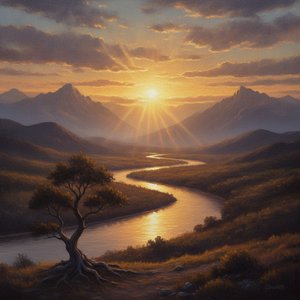
Golden Hour Magic: Capturing the Ethereal Beauty of Sunset Landscapes in Fine Art
Embark on a visual journey through the golden hour. Discover how master painters capture the ethereal glow of sunsets, from Monet's Impressionism to the Hudson River School. Explore timeless techniques and bring the magic of twilight into your home with exquisite fine art reproductions.
