Meny
Gratis kunstkonsultasjon
ForhåndsvisningForhåndsvisning Se i ARSe i AR Kjøp trykk Kjøp trykkKjøp bilde Kjøp bilde SendSend
Vis detaljerVis detaljer Legg til i favoritter Legg til i favoritter Last ned bildetLast ned bildet Liknende objekterLiknende objekter RøntgenundersøkelseRøntgenundersøkelse LysbildefremvisningLysbildefremvisning

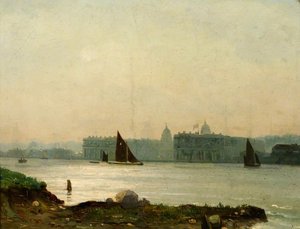
Hampstead Heath, Sunset

Discover James Francis Danby’s "Hampstead Heath, Sunset." A Romantic landscape painting of serene beauty & dramatic skies. Oil on canvas, 1845. #art #landscape #romanticism

James Francis Danby (1793-1861) var en irsk kunstner kjent for sine dramatiske og følelsesladede landskap i romantisk stil. Hans verk, ofte store og atmosfæriske, utforsker det sublime og har inspirert mange kunstnere.

Håndlaget oljereproduksjon

Håndmalt olje på lerret i din valgte størrelse og ramme, laget på bestilling av våre kunstnere. (Kjøp trykk Kjøp trykkKjøp bilde Kjøp bilde)

P118B $10
P118H $10
P118W $10
P438Z $10
P508JH $12
P508YH $12
P805H $10
P805Z $10
P919BZ $10
P919G $10
P919XJ $10
P959ZH $10
P968JZ $12
W106C $8
W218G $10
W218JH $8
W218Y $10
W307PJ $10
W316G $10
W316PJ $8
W316Y $10
W398PJ $8
W4111J $10
W500HY $15
W500JH $15
W692G $12
W849H $8
W940BG $15
W953PJ $8

Standard
custom
CM
INCH

Velg mellom våre forhåndsdefinerte størrelser som bevarer kunstverkets opprinnelige proporsjoner.

bredde
høyde

Du kan angi egne mål for å tilpasse en spesifikk ramme eller plass. Dersom den valgte størrelsen ikke samsvarer med originalbildets proporsjoner, vil vi enten beskjære kunstverket eller utvide maleriet med ytterligere håndmalte elementer. En digital mockup vil bli sendt til din godkjenning før produksjonen starter.
Vennligst merk at forhåndsvisningen på skjermen ikke gjenspeiler den faktiske beskjæringen eller utvidelsen. Kun mockuppen vil vise den endelige komposisjonen nøyaktig.
Selv om tilpassede størrelser er tilgjengelige, anbefaler vi å velge et mål fra den forhåndsdefinerte listen for å bevare de originale proporsjonene.

Eksempler på hva som kan endres: Erstatt ansikt med bilde av kunden; Legg til kjæledyr (f.eks. bytt ut katt med hund); Inkluder en skjult melding i bakgrunnen; Endre bakgrunnslandskap eller elementer.
Etter bestilling vil OriginalUniqueArt.com-teamet sende e-post til kunden for instruksjoner og sende et utkast (mockup) som forhåndsvisning.

Verdensomspennende levering () på 3–4 uker i stedet for standard 5 uker. (17 August). Ingen kompromisser med kvaliteten.

why_choose_icon
Gratis ekspressfrakt over hele verden
why_choose_icon
Lerretsduk av høykvalitets lin
why_choose_icon
Full forsikring under transport
why_choose_icon
Garanti for refusjon av toll og importavgifter
why_choose_icon
Garantert korrekt fargegjengivelse
why_choose_icon
60 dagers returrett (kun ved feil)
why_choose_icon
100% pengene tilbake-garanti
why_choose_icon
Rabatt ved flere kjøp

Totalpris for bestilling

$ 300

reproduction

Hampstead Heath, Sunset

Teknikk for reproduksjon

Størrelse på reproduksjon

-

Endelig pris

$ 300

Kort om verket

  • Medium: Oil on canvas
  • Dimensions: 387U174789 × 286U174789 mm
  • Notable elements or techniques: Impasto, Atmospheric perspective
  • Subject or theme: Landscape
  • Title: Hampstead Heath, Sunset
  • Artist: James Francis Danby
  • Year: 1845

Kunstighetsquiz

Det er kun ett riktig svar på hvert spørsmål.

Spørsmål 1:
What artistic movement is Hampstead Heath, Sunset primarily associated with?
Spørsmål 2:
The painting utilizes a dominant color palette characterized by:
Spørsmål 3:
What technique is Danby known for employing in his landscapes?
Spørsmål 4:
The hazy horizon contributes to what artistic concept?
Spørsmål 5:
James Francis Danby's work often explores themes of:

Beskrivelse av kunstverket

James Francis Danby: A Romantic Visionary

James Francis Danby (1793–1861) stands as a pivotal figure in British Romantic landscape painting, crafting canvases that resonate with dramatic intensity and profound emotion—a legacy firmly rooted in his Irish upbringing and artistic evolution. Unlike many of his contemporaries who embraced theatrical grandeur or fantastical narratives, Danby’s approach prioritized capturing the sublime beauty of nature through meticulous observation and masterful execution. His output reflects a deep engagement with the philosophical currents of the era, particularly Coleridge's exploration of imagination and emotion as pathways to spiritual understanding. Danby’s formative years were shaped by considerable upheaval; the untimely death of his father in 1807 necessitated relocation to Dublin, where he embarked on formal artistic training under James Arthur O’Connor at the Royal Dublin Society’s schools alongside George Petrie. This early education instilled not only technical proficiency but also a fundamental conviction that landscape could serve as an expressive medium unparalleled in its capacity to convey human experience—a cornerstone of Romantic aesthetics. The influence of Turner, whose atmospheric landscapes captivated audiences and championed scientific observation alongside artistic intuition, undoubtedly played a role in shaping Danby’s stylistic sensibilities. A defining moment arrived in 1813 when Danby traveled to Italy with O’Connor, immersing himself in the artistic traditions of Pompeii and Rome. This journey ignited his passion for classical art and architecture, fostering an appreciation for idealized forms and harmonious compositions—elements that would subtly permeate his subsequent works. He returned to Dublin invigorated by newfound inspiration, continuing his studies and honing his skills under Petrie’s guidance, solidifying his position as a leading voice within the burgeoning Romantic movement. ### Hampstead Heath, Sunset: A Study in Atmospheric Luminosity “Hampstead Heath, Sunset” exemplifies Danby's signature style—a luminous landscape painting characterized by an unwavering commitment to capturing the fleeting effects of light and atmosphere. Executed in 1845, this piece depicts a solitary pine tree dominating a coastal vista bathed in the warm hues of twilight. The composition prioritizes verticality, emphasized by the towering pine trunk, creating a palpable sense of grandeur and conveying a feeling of contemplative solitude. Danby skillfully employs Luminist techniques—drawing inspiration from Turner’s pioneering explorations of atmospheric perspective—to achieve an ethereal quality that transcends mere representation. The color palette is deliberately muted yet vibrant, dominated by cool blues and greens interspersed with streaks of golden light filtering through the haze. Loose brushstrokes convey a sense of immediacy and spontaneity, mirroring the artist's fascination with capturing transient moments in time. Texture is achieved through impasto—thickly applied paint—particularly evident in the sky and foliage, adding depth and visual richness to the scene. Danby’s meticulous attention to detail—evident in the rendering of bark texture and subtle variations in color—underscores his dedication to conveying not just what he saw but also how he felt when observing the landscape. ### Symbolism and Emotional Resonance Beyond its aesthetic beauty, “Hampstead Heath, Sunset” carries symbolic weight reflecting Danby’s Romantic worldview. The solitary pine tree serves as a potent emblem of resilience—a symbol of endurance against adversity—while simultaneously embodying the profound stillness and contemplation associated with communion with nature. The expansive coastal horizon evokes the sublime—the awe-inspiring grandeur of the natural world that inspires feelings of humility and wonder. Danby’s masterful depiction captures not merely a visual record but also an emotional response, inviting viewers to contemplate the mysteries of existence and appreciate the transformative power of beauty. ### Technique: Oil Painting with Visible Brushwork Danby's technique—primarily oil painting—is characterized by its deliberate embrace of visible brushstrokes, reflecting his conviction that artistic expression should prioritize capturing the artist’s process alongside the finished product. The resulting surface possesses a tactile quality—a palpable sense of materiality—that enhances the artwork’s visual impact and contributes to its overall emotional resonance. This approach aligns seamlessly with Luminist principles, prioritizing atmospheric effects and conveying an impressionistic rendering of reality rather than striving for photographic accuracy. Danby's unwavering dedication to mastering his craft cemented his place as one of Britain’s most influential landscape painters—a legacy celebrated by institutions like Yale University who hold a significant collection of his works.

Om kunstneren

A Romantic Visionary: The Life and Art of James Francis Danby

Born in County Wexford, Ireland, in 1793, James Francis Danby emerged as a significant figure within the British Romantic movement, crafting landscapes imbued with dramatic intensity and emotional resonance. His canvases, often vast in scale and steeped in atmospheric effects, stand alongside those of contemporaries like John Martin and J.M.W. Turner, yet possess a unique character rooted in his Irish origins and artistic journey. Danby’s early life was marked by upheaval; the death of his father in 1807 forced a relocation to Dublin, where he began formal art training at the Royal Dublin Society's schools under James Arthur O’Connor and alongside George Petrie. This foundational period instilled in him not only technical skills but also an appreciation for landscape as a vehicle for expressing profound feeling—a hallmark of the burgeoning Romantic sensibility. A pivotal moment arrived in 1813 when Danby, accompanied by O’Connor and Petrie, ventured to London seeking artistic opportunities. Initial struggles led them to Bristol, where Danby discovered success selling watercolor drawings, an experience that proved crucial in shaping his developing style.

The Flourishing of the Bristol School

Bristol became a fertile ground for Danby’s artistic growth, as he quickly rose to prominence within the informal collective known as the Bristol School. Initially centered around Edward Bird, this group fostered an environment of shared sketching excursions and mutual influence. Danby soon succeeded Bird as its leading figure, inheriting a naturalistic approach characterized by fresh colors and meticulous observation. Works like “Boys Sailing a Little Boat” (circa 1821) exemplify this early style, showcasing his ability to capture the subtle nuances of light and atmosphere. However, Danby’s ambition extended beyond mere representation; encouraged by figures such as Edward Villiers Rippingille, Francis Gold, and notably George Cumberland—a friend of William Blake—he began to explore more imaginative and poetic subjects. Cumberland's influence was particularly significant, suggesting themes for paintings and potentially introducing Danby to the visionary power of Blake’s art. This exposure ignited a shift towards grander, more emotionally charged compositions that would define his mature style. The Bristol School provided not just technical guidance but also a vital network of support and encouragement as Danby began to forge his own distinct artistic path.

Dramatic Visions and Critical Acclaim

Danby’s breakthrough arrived with “The Upas Tree of Java” (1820), a painting that garnered immediate recognition and secured his election as an Associate Member of the Royal Academy. This work, depicting a poisonous tree from Indonesian folklore, showcased his mastery of dramatic composition and atmospheric effects—qualities that resonated deeply with the Byronic taste prevalent in the 1820s. He continued to produce ambitious canvases such as “Disappointed Love” (1821), demonstrating his characteristic poetical approach to landscape, potentially influenced by the writings of Samuel Taylor Coleridge. "An Enchanted Island" (1825) proved particularly influential, inspiring other Bristol School artists and earning praise from Letitia Elizabeth Landon in her celebrated collection, “The Troubadour.” His ambition reached new heights with “Opening of the Sixth Seal” (1828), a large-scale narrative scene purchased by the discerning collector William Beckford. These works established Danby as a leading exponent of Romantic landscape painting, renowned for his ability to evoke powerful emotions and transport viewers to realms of imagination and awe. His style is characterized by vast illusionist canvases depicting grand, gloomy, and fantastic subjects – themes that resonated with the Byronic taste of the 1820s.

Later Years and Enduring Legacy

Following a period spent on the shores of Lake Geneva in Switzerland and a brief sojourn in Paris, Danby returned to England in 1840, revitalizing his reputation with “The Deluge” – a monumental work that showcased his continued mastery of dramatic composition. While some later paintings, such as "The Woodnymph's Hymn to the Rising Sun" (1845), displayed a calmer aesthetic, he ultimately returned to his earlier, more theatrical mode with pieces like “The Shipwreck” (1859). Throughout his career, Danby grappled with financial difficulties and critical fluctuations, yet he remained committed to his artistic vision. He continued exhibiting regularly, showcasing both new works and revisiting themes from his earlier successes. James Francis Danby died in 1861, leaving behind a body of work that continues to captivate audiences today. His legacy rests on his significant contribution to British Romantic art. Along with John Martin and J.M.W. Turner, he is celebrated for his imaginative landscapes and ability to evoke powerful emotions through his paintings, solidifying his place as a visionary artist of the 19th century.

Key Characteristics of Danby’s Art

  • Dramatic Landscapes: Vast, sweeping vistas often featuring turbulent skies and seas.
  • Emotional Intensity: Paintings imbued with a sense of awe, mystery, and emotional depth.
  • Romantic Themes: Exploration of themes such as the sublime, the power of nature, and human vulnerability.
  • Illusionistic Technique: Masterful use of light, shadow, and perspective to create a sense of realism and grandeur.
  • Narrative Elements: Many works incorporate narrative elements drawn from mythology, literature, or biblical stories.
James Francis Danby

James Francis Danby

1793 - 1861 , Irland

Kort om kunstneren

  • Artistic Movement Or Style: Romantikk
  • Artists Or Movements Influenced By This Artist: ['Bristol School']
  • Artists Who Influenced This Artist:
    • John Martin
    • Blake
  • Date Of Birth: 1793
  • Date Of Death: 1861
  • Full Name: James Francis Danby
  • Nationality: Irsk
  • Notable Artworks:
    • The Upas Tree
    • Disappointed Love
    • Deluge
  • Place Of Birth: Wexford, Irland
Utforsk kunstverk organisert etter temaer, stiler og kjennetegn.