

 Forhåndsvisning
 Send
Send Del med andre
 Vis detaljer

 Last ned bildet
 Liknende objekter
 Røntgenundersøkelse
 Lysbildefremvisning
Self Portrait


 Vis hele teksten
Giclée / Kunsttrykk
Giclée- eller lerretsprint av museumskvalitet med rask produksjon og fleksible valgmuligheter for etterbehandling. ( Bytt til håndmalt maleri Bytt til bilde)




P118B $10

P118H $10

P118W $10

P438Z $10

P508JH $12

P508YH $12

P805H $10

P805Z $10

P919BZ $10

P919G $10

P919XJ $10

P959ZH $10

P968JZ $12

W106C $8

W218G $10

W218JH $8

W218Y $10

W307PJ $10

W316G $10

W316PJ $8

W316Y $10

W398PJ $8

W4111J $10

W500HY $15

W500JH $15

W692G $12

W849H $8

W940BG $15

W953PJ $8




Velg mellom våre forhåndsdefinerte størrelser som bevarer kunstverkets opprinnelige proporsjoner.

Du kan oppgi egne mål for å tilpasse en spesifikk ramme eller et bestemt område. Dersom den valgte størrelsen ikke samsvarer med det originale bildets proporsjoner, vil vi enten beskjære kunstverket eller utvide bildet med en speilet eller ensfarget kant. En digital mockup vil bli sendt til din godkjenning før produksjonen starter.
Vennligst merk at forhåndsvisningen på skjermen ikke gjenspeiler den faktiske beskjæringen eller utvidelsen. Kun mockuppen vil vise den endelige komposisjonen nøyaktig.
Selv om tilpassede størrelser er tilgjengelige, anbefaler vi å velge et mål fra den forhåndsdefinerte listen for å bevare de originale proporsjonene.
Verdensomspennende levering () på 2 uker i stedet for standard 4/5 uker. (11 August)

Gratis ekspressfrakt over hele verden

Lerretsduk av høykvalitets lin

Full forsikring under transport

Garanti for refusjon av toll og importavgifter

Garantert korrekt fargegjengivelse

60 dagers returrett (kun ved feil)

100% pengene tilbake-garanti

Rabatt ved flere kjøp
 Glassalternativet er kun tilgjengelig i størrelser under 110 cm

Self Portrait
Giclée / Kunsttrykk
Størrelse på reproduksjon
-


Endelig pris
$ 80
Beskrivelse av samleobjektet
A Gaze Into American Realism: Self Portrait by James Carroll Beckwith
To stand before this self-portrait is to encounter not merely paint on canvas, but a carefully curated moment of introspection captured at the turn of the century. James Carroll Beckwith presents himself with an undeniable gravity; his gaze, directed straight out from the frame, seems to pierce through the veil of time and connect directly with the modern viewer. The subject—a man of evident maturity, sporting distinguished gray hair and a neatly trimmed mustache—is rendered with a profound sense of dignity. He is clad in the sober elegance of a dark suit, contrasted sharply by the crisp white of his shirt and the precise knot of his black bow tie. This portrait speaks volumes about the societal expectations and the quiet confidence of the late 19th-century American gentleman.
Mastery of Light and Shadow: Technical Brilliance
Beckwith’s technique here is a masterclass in academic realism, a style that demands meticulous observation and skilled handling of pigment. Notice how the artist utilizes light not just to illuminate, but to sculpt. The interplay between the highlights catching on his forehead and the deep shadows pooling beneath his jawline gives the figure an almost three-dimensional presence. This careful modulation of value—the subtle shifts from near-black to pale gray—is what lends the work its palpable texture, making the fabric of his suit feel weighty and real. The background, deliberately restrained with its dark red wall and the suggestion of a white door handle, serves only to push the focus inexorably back to the sitter’s compelling presence.
The Context of American Ambition
Painted in 1898, this work emerges from a period of immense transformation in America. The nation was solidifying its industrial might, and portraiture often served as both commemoration and declaration of status. Beckwith, whose own journey involved the crucible of tragedy and reinvention—from the devastation of Chicago to the refinement found in Paris—brings that narrative resilience into his art. This self-portrait is therefore more than a likeness; it is an assertion of survival, intellect, and enduring artistic purpose against a backdrop of rapid change.
Emotional Resonance for the Modern Collector
For the contemporary collector or designer seeking to infuse a space with history and depth, this piece offers immediate emotional grounding. The seriousness in Beckwith’s expression invites contemplation; it asks the viewer to consider their own self-portraits—the versions of themselves they wish to project. Reproducing this work allows one to possess a tangible connection to the dedication of the late Victorian artistic spirit. It is an anchor of classicism, perfect for a formal study, a library, or any space that demands an air of cultivated thoughtfulness and enduring style.
Om kunstneren
James Carroll Beckwith (1852-1917): A Life Etched in Realism
James Carroll Beckwith, born September 23rd, 1852, in Hannibal, Missouri—a town steeped in literary history thanks to Twain’s *Huckleberry Finn*—was an American landscape, portrait and genre painter whose naturalist style cemented his place as a respected figure in late nineteenth and early twentieth-century American art. His journey began amidst considerable hardship; the Great Fire of Chicago in 1871 tragically destroyed much of his initial artistic endeavors, forcing him eastward toward New York City and ultimately propelling him across the Atlantic to Paris—a pivotal relocation that irrevocably shaped his artistic trajectory.Parisian Refinement and Artistic Foundations
Beckwith’s formative years were spent in Paris (1873-1878), where he immersed himself in the rigorous training offered by Adolphe Yvon for drawing and Carolus Duran for painting. Duran, a celebrated portraitist of his time, recognized Beckwith's talent and entrusted him with assisting on a monumental mural project for the Palais du Luxembourg—a commission that exposed Beckwith to large-scale composition and demanded mastery of monumental art techniques. This experience wasn’t merely about acquiring skills; it fostered an understanding of artistic history and established a foundational aesthetic sensibility. Crucially, he befriended John Singer Sargent during this period, sharing studio space and engaging in spirited discussions about artistic philosophies—a relationship that would prove influential throughout their careers. Beckwith absorbed the prevailing Impressionist currents while maintaining a distinctly American perspective, skillfully blending European influences with his own innate sensibilities.A Prominent Voice in American Art
Returning to the United States in 1878, Beckwith quickly established himself as a leading voice within the burgeoning American art scene. He secured a professorship at the Art Students League of New York—a position he held intermittently for nearly two decades—where he instilled his meticulous draftsmanship and realist approach into generations of aspiring artists. Beyond teaching, Beckwith’s artistic output was remarkably diverse. While landscapes remained an important element of his oeuvre, he achieved particular renown as a portrait painter, capturing the essence of his subjects with remarkable sensitivity and psychological insight. His portraits weren't simply likenesses; they were explorations of character—revealing inner lives alongside outward appearances. Notable commissions included depictions of William Merritt Chase, Mark Twain, Theodore Roosevelt, and Thomas Allibone Janvier – each piece demonstrating Beckwith’s ability to convey emotion and nuance. He also undertook significant mural projects, notably at the World Columbian Exposition in Chicago in 1893—a testament to his ambition and artistic vision.Recognition and Legacy
Throughout his life, James Carroll Beckwith garnered considerable acclaim for his artistic accomplishments. Awards bestowed upon him included honorable mentions at the Paris Exposition of 1889 and gold medals at both the Atlanta Exposition in 1895 and the Exposition Universelle in Paris in 1899—recognitions that underscored the esteem with which he was held by fellow artists and critics alike. His paintings—such as “Woman with Guitar,” “Sylvan Toilette,” “A Wistful Look”, "Bassin de Neptune Versailles", “L'Empereur” and “Cathédrale Notre-Dame du Puy”—stand as enduring symbols of American art at the turn of the century, reflecting a harmonious blend of European artistic traditions and uniquely American aesthetic sensibilities. Beckwith’s meticulous draftsmanship, combined with his profound understanding of color and light—traits honed during his Parisian studies—contributed to his distinctive style and cemented his legacy as one of America's most accomplished landscape and portrait painters. His work continues to inspire admiration for its technical precision and emotional depth. James Carroll Beckwith’s enduring contribution to American art resides not only in the beauty of his paintings but also in his unwavering dedication to artistic excellence—a testament to a life profoundly shaped by both circumstance and conviction
James Carroll Beckwith
1852 - 1917 , USA
Kort om kunstneren
- Artistic Movement Or Style: Naturalist
- Artists Who Influenced This Artist:
- Adolphe Yvon
- Carolus Duran
- Date Of Birth: September 23, 1852
- Date Of Death: October 24, 1917
- Full Name: James Carroll Beckwith
- Nationality: Amerikaner
- Notable Artworks:
- Normandy Girl
- Brunette Combing Her Hair
- L' Empereur
- Place Of Birth: Hannibal, USA
Relaterte artikler

James Abbott McNeill Whistler: Topp 25 Kunstverk – Skjønnhet og Harmoni for Ditt Hjem
Utforsk James Abbott McNeill Whistlers 25 mest ikoniske kunstverk! Oppdag historien bak Nocturnes, portretter og impresjonistisk harmoni. Finn museumskvalitets reproduksjoner & interiørinspirasjon på OriginalUniqueArt.com.

Sir Alfred James Munnings' 25 Mesterverk: En Hyllest til Heste og Engelsk Landskap | OriginalUniqueArt.com
Oppdag Sir Alfred James Munnings' 25 mest ikoniske malerier! Fordyp deg i hestemalerier, engelsk landskapskunst og impresjonistisk skjønnhet. Finn museumskvalitets reproduksjoner & interiørinspirasjon på OriginalUniqueArt.com.

James Carroll Beckwith: Luminism, Spirituality & the American Landscape Tradition
Explore the captivating world of James Carroll Beckwith (1852-1917), a leading figure in American Luminism. Discover his landscapes, portraits & spiritual influences – a deep dive for art enthusiasts and collectors.
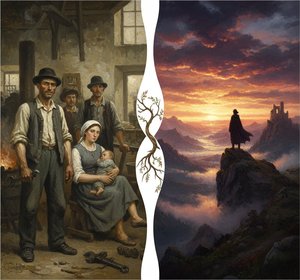
Romantic Realism's Finest: 10 Masterpieces for Your Home | OriginalUniqueArt
Explore 10 defining masterpieces of Romantic Realism! Discover Courbet, Millet & Daumier's powerful paintings—capturing emotion and social realities. Find museum-quality reproductions for your home at OriginalUniqueArt.com.

James Stark: Evoking the Human Condition Through Contemporary Realism
Explore the captivating landscapes of James Stark (1794-1859), a leading Norwich School painter. Discover his Dutch Master influences, critical acclaim, and enduring legacy in contemporary realism. Art collecting insights & investment potential.

