Bytt til trykk
 Vis hele teksten







































 For kunstverk eller reproduksjoner som er større enn 105 cm (ca. 41 tommer) på noen side, vil rammen bli sendt som et sett som må monteres. Denne metoden sikrer trygg levering og forhindrer skader under transport.


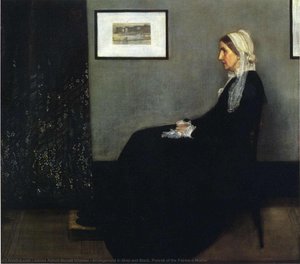
Brown and Gold: A Symphony of Calm
James Abbott McNeill Whistler’s ‘Brown and Gold’ stands as a cornerstone of the Tonalism movement, an artistic rebellion against the prevailing Victorian obsession with vibrant color palettes. Created in the late 1890s, this oil painting transcends mere representation; it strives to capture the very essence of mood and atmosphere—a feat achieved through masterful manipulation of light and shadow. The artwork’s simplicity is deceptive – within its muted tones lies a profound exploration of perception and emotion.The Artist: James Abbott McNeill Whistler
James Abbott McNeill Whistler (1834-1903) was an American artist who fiercely championed the concept of ‘art for art’s sake,’ distancing his work from didactic narratives or moral judgments. He rejected the conventions of academic painting, prioritizing aesthetic beauty above all else. Whistler's signature—a stylized butterfly adorned with a long stinger—became emblematic of his artistic persona: delicate yet resolute. This symbol reflects Whistler’s belief that an artist must possess both subtlety and conviction to truly express their vision.The Tonalism Art Movement
Tonalism emerged in the American art landscape during the 1880s, challenging the dominant Impressionist preoccupation with capturing fleeting moments of color. Artists like Whistler embraced tonal values—the subtle gradations of light and shade—as primary tools for conveying emotion and creating a sense of contemplative stillness. Unlike Impressionists who sought to reproduce visual sensations as accurately as possible, Tonalist painters aimed to evoke feelings rather than depict objects objectively. Whistler’s ‘Brown and Gold’ exemplifies this approach perfectly, inviting viewers into a space defined by tranquility and introspection. To delve deeper into the principles of Tonalism, explore OriginalUniqueArt.com.Influence of Japanese Art
Whistler’s artistic sensibilities were profoundly shaped by his exposure to Japanese art during his travels abroad. The Japanese aesthetic—characterized by flattened perspectives, bold outlines, and a deliberate rejection of illusionistic detail—influenced Whistler's compositional choices and brushwork techniques. Specifically, the painting incorporates straight brushstrokes reminiscent of Japanese calligraphy characters, mirroring the Japanese emphasis on simplicity and elegance. This stylistic homage underscores Whistler’s commitment to exploring alternative artistic traditions. Discover more about Whistler’s journey and his fascination with Japan on OriginalUniqueArt.com.A Reproduction Worthy of Distinction
OriginalUniqueArt offers exceptional reproductions of Whistler’s ‘Brown and Gold,’ meticulously crafted by skilled artisans using archival-quality pigments on premium canvas. Each piece captures the painting's luminous quality and subtle tonal nuances—a testament to Whistler’s artistic genius. Explore our collection of oil paintings by color and find your perfect match. Learn about James Abbott McNeill Whistler and his works on OriginalUniqueArt.com. Shop now: Hand-made oil painting reproductions.Spørsmål og svar
Hvor lys er "Brown og Gull" totalt sett?
Alt i alt er "Brown og Gull" registrert som dype skygger. Oppfattet lysstyrke beskriver hvor lyst eller mørkt verket fremstår.
Hvordan forenes kontrast og harmoni i "Brown og Gull"?
Fargeanalysen av "Brown og Gull" av James Abbott McNeill Whistler viser en Harmonisk kontrast og en Enhetlig palett harmoni.
Er James Abbott McNeill Whistler, skaperen av "Brown og Gull", kjent under andre navn?
James Abbott McNeill Whistler er også kjent under navnene James Abbot McNeill Whistler, Whistler.
 Forhåndsvisning
 Send
Send Del
Del
 Vis detaljer
 Utskriftsvennlig guide

 Last ned bilde
 Liknende objekter
 Røntgenundersøkelse
 Lysbildefremvisning
 Spørsmål og svar
 Statistikk