

 Del som digitalt kort
 Del
Del
 Detaljer
 Studentguide

 Last ned
 Liknende objekter
 Lysbildefremvisning
 Besøksstatistikk
Temptation
 Marble
- Sculpture
- Early Renaissance
 1425
1425 99.0 x 92.0 cm
 San Petronio
 Les mer
Giclée / Kunsttrykk
Giclée- eller lerretsprint av museumskvalitet med rask produksjon og fleksible valgmuligheter for etterbehandling. ( Bestill håndmalt reproduksjon Gå til digitalt bilde)




































Velg mellom våre forhåndsdefinerte størrelser som bevarer kunstverkets opprinnelige proporsjoner.

Skriv inn bredden og høyden du trenger, slik at den passer til din ramme eller vegg. Et trykk kan kun beskjæres, aldri gjøres større enn bildet, så et format med en annen form vil miste en del av motivet. Vi sender deg en digital mockup for godkjenning før vi trykker noe som helst. Bildet som vises på denne siden viser ikke den faktiske beskjæringen — det er kun mockuppen som gjør det.
Verdensomspennende levering () på 2 uker i stedet for standard 4/5 uker. (23 October)

Gratis ekspressfrakt over hele verden

Lerretsduk av høykvalitets lin

Full transportforsikring

Garanti for refusjon av toll og importavgifter

Garantert fargeekthet

100 dagers returrett ved fabrikasjonsfeil

100% pengene tilbake-garanti

Mengderabatt
 Glassalternativet er kun tilgjengelig i størrelser under 110 cm

Temptation
Giclée / Kunsttrykk
Format på reproduksjon
-


Totalpris
Nkr 760
The Genesis of Desire: Unveiling “Temptation”
Jacopo della Quercia’s “Temptation,” a captivating marble relief sculpture dating back to 1425, stands as a pivotal work bridging the stylistic shifts between the late Gothic and burgeoning Renaissance periods. More than simply a depiction of a biblical narrative, it's a profound meditation on choice, consequence, and the very essence of human desire – a subject that continues to resonate powerfully today. The sculpture, housed within the Museo del Duomo in Ferrara, Italy, offers a rare glimpse into the mind of an artist grappling with both classical ideals and the evolving sensibilities of his time, making it a cornerstone of early Renaissance art.
- Subject Matter: The scene unfolds from the Book of Genesis, portraying Eve succumbing to the serpent’s temptation and offering the forbidden fruit to Adam.
- Style & Technique: Della Quercia masterfully employs a technique that blends Gothic expressiveness with nascent Renaissance realism. Note the dramatic poses, the meticulous anatomical detail – particularly evident in the musculature of Adam and Eve – and the sophisticated use of light and shadow to create a palpable sense of depth and volume within the relief.
A Dialogue of Forms: Composition and Symbolism
The composition is remarkably balanced, yet charged with emotional intensity. The figures are arranged in a triangular format, drawing the eye from Adam’s contemplative stance on the left to Eve's yielding gesture in the center, culminating in the serpent’s coiled form on the right. Each figure’s posture and expression communicate a distinct narrative layer. Adam’s downward gaze suggests introspection and a struggle with temptation, while Eve’s outstretched hand embodies both allure and regret. The serpent itself is not merely a symbol of evil but a cunning manipulator, its scales rendered with remarkable detail, hinting at the deceptive nature of sin.
Symbolism abounds within the sculpture:- The Fruit: Represents knowledge, both divine and forbidden.
- The Serpent: Embodies temptation and deceit.
- Adam & Eve’s Clothing: Reflects their status as innocent beings, stripped of their garments by the fall.
Renaissance Roots: Context and Influence
“Temptation” is deeply rooted in the artistic landscape of 15th-century Italy. Della Quercia’s work reflects a conscious engagement with both classical antiquity – particularly evident in the idealized forms and the use of pyramidal composition – and the emerging Renaissance emphasis on humanism and naturalism. His training under his father, a skilled woodcarver, instilled a deep appreciation for craftsmanship, while his exposure to Roman sculpture through visits to Pisa informed his understanding of anatomy and perspective. Notably, the influence of Donatello is palpable in Della Quercia’s dramatic use of light and shadow, as well as his ability to convey emotion through gesture.
Further Research:- Jacopo della Quercia - Wikipedia
- Left reliefs on the portal: 3. Original Sin by QUERCIA, Jacopo della – The Web Gallery of Art
- Jacopo della Quercia - Bluffton University
A Timeless Reflection: Emotional Impact and Artistic Legacy
“Temptation” transcends its biblical subject matter to offer a timeless meditation on the human condition. The sculpture’s enduring power lies in its ability to evoke a complex range of emotions – from curiosity and desire to regret and remorse. It serves as a potent reminder of our capacity for both good and evil, and the profound consequences that can arise from even the smallest choices. Today, “Temptation” remains a celebrated masterpiece, exemplifying Della Quercia’s artistic genius and his pivotal role in shaping the course of Renaissance sculpture.
Spørsmål og svar
Hvilken atmosfære har "Temptation"?
"Temptation" av Jacopo Della Quercia beskrives med en Calm stemning. Denne klassifiseringen kan bidra til å matche verket med et passende miljø.
Kan jeg se "Temptation" som et lysbildefremvisning i fullskjerm?
"Temptation" av Jacopo Della Quercia kan vises som et lysbildefremvisning på verkets Lysbildefremvisning-side.
Hvilken fargeharmoni utviser "Temptation" av Jacopo Della Quercia?
Fargeharmonien i "Temptation" er beskrevet som Unified Palette.
Kunstnerbiografi
Jacopo della Quercia: Bridging the Gothic and Embracing Renaissance Vision
Jacopo della Quercia, a name synonymous with artistic transition in 15th-century Italy, stands as a pivotal figure bridging the lingering shadows of the Gothic era with the burgeoning brilliance of the Italian Renaissance. Born in Monteroni di Lecce around 1374 and tragically dying in Bologna in 1438, his life was a tapestry woven with commissions, rivalries, and a profound engagement with both classical antiquity and the evolving sensibilities of his time. He wasn’t merely a sculptor; he was an architect of style, a translator between traditions, and ultimately, a harbinger of the revolutionary artistic shifts that would define the Renaissance.
His early training, meticulously honed under his father, Piero d'Angelo – a skilled woodcarver and goldsmith – laid the foundation for his burgeoning talent. This formative period instilled in him not just technical proficiency but also an appreciation for craftsmanship and the enduring power of traditional techniques. Crucially, however, young Jacopo’s artistic journey was profoundly shaped by his exposure to the monumental works of Nicola Pisano and Arnolfo di Cambio adorning the pulpit of Siena Cathedral. These encounters ignited a fascination with narrative sculpture, dynamic composition, and the expressive potential of human form – elements that would become hallmarks of his distinctive style.
The Early Years: Lucca and the Seeds of Innovation
Jacopo’s career truly blossomed in Lucca, a city strategically positioned at the crossroads of artistic influence. His relocation to Lucca with his father in 1386, driven by political instability, proved to be a catalyst for significant artistic development. It was here that he began to establish himself as a sculptor of considerable promise, undertaking projects such as the poignant “Man of Sorrows” for the altar of the Sacrament and a relief depicting St. Aniello on a tomb. These early works already demonstrated a nascent ability to imbue stone with emotional depth – a characteristic that would become increasingly pronounced in his later career.
A pivotal moment arrived in 1401 when Jacopo entered the prestigious competition to design the bronze doors for Florence’s Baptistery, a contest ultimately won by Ghiberti. Though he didn't secure the commission itself, this experience exposed him to the highest standards of Florentine artistry and fueled his ambition. The whereabouts of the designs themselves remain a tantalizing mystery, adding an element of intrigue to his already fascinating story.
Ferrara and the Influence of Roman Antiquity
Jacopo’s journey continued eastward to Ferrara in 1403, where he was commissioned to sculpt the marble Virgin and Child for the city’s cathedral. This work marked a significant shift towards greater naturalism and classical influence – a reflection of his growing engagement with the artistic legacy of ancient Rome. He also undertook the creation of a statuette of St. Maurice during this period, now housed in the Museo del Duomo, showcasing his ability to seamlessly blend Gothic sensibilities with emerging Renaissance ideals.
The city of Ferrara provided him with access to an extraordinary collection of Roman sculptures and sarcophagi, sparking a deep appreciation for the elegance, proportion, and narrative power of classical antiquity. These encounters profoundly shaped his artistic vision, leading him to incorporate elements of classical drapery, anatomy, and composition into his own work – subtly yet decisively transforming the Gothic style he had inherited.
Fonte Gaia: A Masterpiece of Civic Pride and Artistic Innovation
Perhaps Jacopo della Quercia’s most enduring legacy is undoubtedly Fonte Gaia, a monumental fountain commissioned in 1406 by Paolo Guinigi, the ruler of Lucca. This ambitious project represented not only a significant civic investment but also a bold artistic statement – a deliberate rejection of the pagan Venus statue that had previously adorned the square and been blamed for outbreaks of plague. The fountain itself is a marvel of engineering and artistry, constructed from gleaming white marble and adorned with numerous statues and spouts, creating a vibrant spectacle of water and light.
Fonte Gaia stands as a testament to Jacopo’s ability to synthesize diverse influences – Gothic elegance, classical proportion, and the burgeoning spirit of the Renaissance. The inclusion of nude putti flanking the fountain's base—a daring departure from traditional sculptural conventions—clearly signaled his embrace of classical ideals while retaining a distinctly humanistic sensibility. The project, however, was a protracted undertaking, spanning over a decade and reflecting the challenges inherent in managing multiple commissions simultaneously.
Later Works and a Legacy of Transition
Throughout the remainder of his career, Jacopo della Quercia continued to work on a diverse range of projects, including the Trenta Chapel in San Frediano, Lucca, and tomb slabs for Lorenzo Trenta and his wife. His involvement in the design of a hexagonal basin with bronze panels for Siena’s Baptistery, alongside his rival Ghiberti, resulted in the completion of only one relief – “The Annunciation to Zacharias” – due to his simultaneous commitments to other projects. This episode highlights his cautious approach to working with bronze and his preference for the more manageable medium of marble.
Jacopo della Quercia’s life was tragically cut short in 1438, but his artistic legacy endures as a bridge between the Gothic and Renaissance worlds. He wasn't simply a skilled craftsman; he was an innovator, a visionary, and a key figure in shaping the trajectory of Italian art. His work foreshadowed the revolutionary developments championed by Michelangelo, solidifying his place as one of the most important sculptors of the Early Renaissance.

Jacopo Della Quercia
1374 - 1438 , Italia
Kort om kunstneren
- Artistic Movement Or Style: Tidlig renessanse
- Artists Or Movements Influenced By This Artist: ['Michelangelo']
- Artists Who Influenced This Artist:
- Nicola Pisano
- Arnolfo di Cambio
- Date Of Birth: c. 1374
- Date Of Death: 1438
- Full Name: Jacopo di Pietro d'Agnolo Di Guarnieri
- Nationality: Italiensk
- Notable Artworks:
- Fonte Gaia
- Tomb Ilaria
- Zacharias
- Place Of Birth: Monteroni di Lecce, Italia
Relaterte artikler

The Enduring Form: Exploring Themes & Techniques in Sculpture Across Historical Periods
Explore the rich history of sculpture from ancient masterpieces to contemporary innovations. Discover key techniques, influential artists & investment potential for discerning art collectors.

Timeless Elegance: A Complete Guide to the Sublime Beauty and Artistry of Marble Sculpture
Discover the sublime beauty of marble art through an expert exploration of Renaissance and Neoclassical masterpieces. From the delicate textures of Carpeaux to the grandeur of Sansovino, immerse yourself in a guide to timeless elegance and sculptural perfection.

Bronseklassikere: 10 skulpturer som revolusjonerte kunsten | OriginalUniqueArt
Utforsk 10 legendariske bronseskulpturer som formet kunsthistorien! Fra Rodin til Michelangelo – oppdag historiene, teknikkene og skjønnheten bak tidløse mesterverk. Finn din perfekte veggkunst eller interiørdekor på OriginalUniqueArt.com.
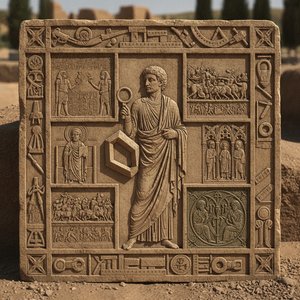
Mastering Dimension: An Art Historian's Guide to the Elegance of Sculptural Relief Art
Explore the profound beauty of sculptural relief art. From classical bas-relief to modern geometric textures, discover how depth and light transform spaces through an expert guide on art history and sophisticated curation for discerning collectors.

The Enduring Allure of Marble in Art History: From Classical Sculpture to Modern Abstraction
Explore the captivating history of marble sculpture from ancient Greece to modern art. Discover renowned artists like Canova & Michelangelo, carving techniques, and investment insights at OriginalUniqueArt.

