
 Forhåndsvisning
 Send
Send Del
Del
 Vis detaljer
 Utskriftsvennlig guide

 Last ned bilde
 Liknende objekter
 Røntgenundersøkelse
 Lysbildefremvisning
 Spørsmål og svar
 Statistikk
Argus, Mercury and Io

- 204.0 x 193.0 cm


 Vis hele teksten
Giclée / Kunsttrykk
Giclée- eller lerretsprint av museumskvalitet med rask produksjon og fleksible valgmuligheter for etterbehandling. ( Kjøp håndmalt maleri Bytt til digitalt bilde)




P118B Nkr10

P118H Nkr10

P118W Nkr10

P438Z Nkr10

P508JH Nkr12

P508YH Nkr12

P805H Nkr10

P805Z Nkr10

P919BZ Nkr10

P919G Nkr10

P919XJ Nkr10

P959ZH Nkr10

P968JZ Nkr12

W106C Nkr8

W218G Nkr10

W218JH Nkr8

W218Y Nkr10

W307PJ Nkr10

W316G Nkr10

W316PJ Nkr8

W316Y Nkr10

W398PJ Nkr8

W4111J Nkr10

W500HY Nkr15

W500JH Nkr15

W692G Nkr12

W849H Nkr8

W940BG Nkr15

W953PJ Nkr8




Velg mellom våre forhåndsdefinerte størrelser som bevarer kunstverkets opprinnelige proporsjoner.

Skriv inn ønsket bredde og høyde for å tilpasse trykket til din ramme eller vegg. Et trykk kan kun beskjæres, aldri skaleres opp utover motivets opprinnelige størrelse, noe som betyr at et format med andre proporsjoner vil føre til tap av deler av bildet. Vi sender deg en digital mockup for godkjenning før vi starter trykkeprosessen. Bildet som vises på denne siden viser ikke den faktiske beskjæringen — det er kun mockuppen som viser dette.
Verdensomspennende levering () på 2 uker i stedet for standard 4/5 uker. (4 November)

Gratis ekspressfrakt over hele verden

Lerretsduk av lin av høy kvalitet

Full transportforsikring

Garanti for refusjon av toll og importavgifter

Garantert fargegjengivelse

100 dagers returrett ved fabrikasjonsfeil

100% pengene tilbake-garanti

Rabatt ved flere kjøp
 Glassalternativet er kun tilgjengelig i størrelser under 110 cm

Argus, Mercury and Io
Giclée / Kunsttrykk
Størrelse på reproduksjon
-


Totalpris for valgte alternativer
Nkr 774
A Baroque Symphony of Myth and Mastery
In the heart of the Dutch Golden Age, a period defined by opulent patronage and an unwavering pursuit of beauty, Jacob van Campen breathed life into a scene of divine tension and mythological drama. His 1630 masterpiece, Argus, Mercury and Io, is far more than a mere depiction of ancient legend; it is an immersive experience that captures the very essence of the Baroque period. The canvas unfolds a narrative steeped in the complexities of Greek mythology, presenting a tableau where the boundaries between the divine and the mortal blur under a turbulent, stormy sky. As the viewer gazes upon this monumental oil on canvas, they are transported to a world where celestial intervention meets earthly vulnerability.
The painting portrays a dramatic moment involving Mercury, Argus Panoptes—the giant with a hundred eyes—and Io, the wife of Zeus caught in a harrowing predicament. The scene unfolds upon the ground, bathed in an ethereal luminescence that underscores the gravity of their situation. Io, pursued relentlessly by the jealous Hera, seeks refuge beneath the rough bark of a tree trunk, a symbol of resilience amidst adversity. Amidst this tension, Mercury attempts to soothe Io’s suffering with music, representing the power of reason and solace against overwhelming emotion. The inclusion of watchful dogs adds an element of primal instinct, while the presence of sheep and a distant cow grounds the divine drama in a pastoral reality, creating a striking contrast between the eternal and the everyday.
The Precision of Dutch Classicism
Van Campen's style embodies the burgeoning influence of Classical ideals within the broader Baroque aesthetic. Unlike many of his contemporaries who favored flamboyant ornamentation and chaotic movement, Van Campen prioritized clarity, balance, and architectural precision. This approach aligns him with the principles of Dutch Classicism, a movement that sought to marry native textures with the refined Vitruvian principles he encountered during his time in Italy. His technique is nothing short of breathtaking; he meticulously renders a variety of textures—from the smooth, luminous skin of Io to the rugged, tactile bark of the sheltering tree.
The artist demonstrates an unparalleled command of chiaroscuro, using the masterful manipulation of light and shadow to create profound depth. This play of light does more than just define form; it guides the viewer's gaze across the composition, pulling the eye from the central figures toward the periphery of the pastoral landscape. For the discerning collector or interior designer, this technique offers a captivating visual rhythm that can serve as a commanding focal point in any sophisticated space, providing both a sense of movement and a profound stillness.
An Eternal Legacy for the Modern Collector
Beyond its technical brilliance, Argus, Mercury and Io resonates with an emotional depth that transcends centuries. It is a study of protection, fear, and the search for peace amidst chaos. The painting’s ability to evoke such a wide spectrum of human emotion—from the anxiety of pursuit to the tranquility of melodic solace—makes it a timeless piece of storytelling. For those seeking to adorn their homes or galleries with works that inspire contemplation, this reproduction offers a window into the soul of the 17th century.
Owning a high-quality reproduction of such a significant work allows for the integration of historical grandeur into contemporary living. Whether placed in a sunlit study or a formal dining hall, the painting’s rich palette and dramatic narrative provide an unparalleled sense of prestige and intellectual depth. It is not merely a decoration; it is an invitation to engage with the legends of antiquity and the masterful hand of one of the Netherlands' greatest artistic minds.
Spørsmål og svar
Hvor kan jeg finne kunstverk som ligner på "Argus, Mercury and Io" av Jacob van Campen?
Finn lignende kunstverk til "Argus, Mercury and Io" av Jacob van Campen på verkets Lignende verk-side.
Hva er den dominerende fargetonen i "Argus, Mercury and Io" av Jacob van Campen?
Den dominerende fargen i "Argus, Mercury and Io" av Jacob van Campen er Ochre to Sepia. Denne fargen utgjør den underliggende tonen i paletten.
Hvor kan jeg kjøpe et trykk av "Argus, Mercury and Io" av Jacob van Campen?
For å bestille et trykk av "Argus, Mercury and Io" av Jacob van Campen, kan du enkelt gjøre det på siden for Kunsttrykk i høy kvalitet: et kunsttrykk på bomullslerret eller arkivbestandig lerretspapir.
Om kunstneren
Jacob van Campen: Life and Legacy
Early Life and Background
Jacob van Campen was born in Haarlem, Netherlands, in 1596. He came from a relatively prosperous background, inheriting the estate of Randenbroek near Amersfoort from his mother. He significantly expanded and embellished this estate, later commissioning Caesar van Everdingen to decorate it. Van Campen never married but had one son, Alexander van Campen.
Artistic Development and Influences
Van Campen was a selective artist, carefully choosing his projects. His artistic development saw him move towards a distinctive style blending architectural precision with Baroque dynamism. He was notably influenced by Paulus Bor, one of the founders of the Bentvueghels – a group of Dutch painters known for their unconventional and often satirical work. This influence is visible in some similarities between Van Campen’s paintings and wall decorations, such as those at Paleis Huis ten Bosch.
Architectural Achievements
Van Campen's primary legacy lies in his architectural contributions. He designed numerous churches, including those at Renswoude and Hooge Zwaluwe, and the Nieuwe Kerk in Haarlem. The Nieuwe Kerk’s design was so significant that Pieter Saenredam created three paintings and eight engravings documenting it. Beyond churches, he also designed gates and towers for prominent Amsterdam landmarks like the Westerkerk and Nieuwe Kerk.
- Mauritshuis: Perhaps his most famous work, this palace in The Hague now houses a renowned collection of Dutch Golden Age paintings.
- Amsterdam's Royal Palace: Van Campen played a key role in the design of this iconic building, originally conceived as Amsterdam’s Town Hall.
Painting and Decorative Work
While primarily known as an architect, Van Campen was also a skilled painter. He created notable still life paintings, often featuring intricate arrangements of objects symbolizing mortality and the passage of time. His wall decorations, particularly at Paleis Huis ten Bosch, demonstrate his ability to integrate painting with architectural space.
- Still Life Themes: Van Campen’s still lifes frequently included books, musical instruments, scientific instruments (like celestial globes), and symbolic objects like skulls and owls.
Historical Significance
Jacob van Campen was a pivotal figure in introducing Classicism to Dutch Baroque design. He bridged the gap between earlier Renaissance influences and the evolving artistic sensibilities of the 17th century. His architectural designs helped shape the urban landscape of the Netherlands, and his work continues to be admired for its elegance, precision, and innovative use of space. He died in 1657 and was buried at Randenbroek, the estate he so carefully cultivated.

Jacob van Campen
1596 - 1657 , Netherlands
Kort om kunstneren
- Name: Jacob van Campen
- Movement: Dutch Golden Age, Dutch Classicism, Baroque
- Birth Date: 1596
- Death Date: 1657
- Influenced: Pieter Saenredam
- Birth Place: Haarlem, Netherlands
- Nationality: Dutch
- Date Of Birth: 1596
- Date Of Death: 1657
- Influenced By: Paulus Bor
- Notable Works: Mauritshuis, Amsterdam's Royal Palace, Nieuwe Kerk (Haarlem)
- Place Of Birth: Haarlem, Netherlands
Relaterte artikler

Rembrandts Mesterverk: Topp 25 Kunstverk for Din Vegg | OriginalUniqueArt.no
Utforsk Rembrandts 25 mest ikoniske kunstverk! Oppdag historiene bak mestermalerier, portretter og bibelske scener fra den nederlandske barokken. Finn museumskvalitets reproduksjoner & interiørinspirasjon på OriginalUniqueArt.com.

Barokkens Mesterverk: Topp 10 Kunstverk som Definerte en Epoke | OriginalUniqueArt.no
Opplev barokkens prakt! Utforsk Rembrandts, Caravaggios og Rubenses mest ikoniske verk. Lær om historien bak disse mesterverkene og finn inspirasjon til din interiørdekor på OriginalUniqueArt.com. Museums kvalitet kunsttrykk.
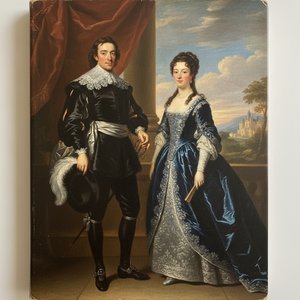
Sir Anthony van Dyck: Courtly Portraiture & the Shaping of Baroque Identity
Explore the life & legacy of Sir Anthony van Dyck, the leading court painter of his era. Discover his innovative portraiture, Baroque masterpieces, and investment potential for discerning collectors. Learn more at OriginalUniqueArt.

Charles-André van Loo: A Study in Rococo Portraiture & the French Court's Artistic Dynamics
Explore the elegant world of Charles-André van Loo, a master of Rococo portraiture at the French court. Discover his life, techniques, and enduring influence on 18th-century art. Hand-painted reproductions available.

De 10 Mesterverkene Som Definerte Nederlandsk Barokk – Kunst og Inspirasjon | OriginalUniqueArt.no
Oppdag de 10 ikoniske mesterverkene som definerte nederlandsk barokk! Rembrandt, Vermeer og mer – lær historien bak kunsten og finn inspirasjon til ditt hjem. Museumskvalitet reproduksjoner på OriginalUniqueArt.no. Utforsk samlingen online!