

 Se i rommet
 Del som digitalt kort
 Del
Del
 Detaljer
 Studentguide

 Last ned
 Liknende objekter
 Røntgen
 Lysbildefremvisning
 Besøksstatistikk
Wegener's theory
 Acrylic On Canvas
- WallArt
- Surrealism
 2001
2001- Modern
 54.0 x 61.0 cm
 Les mer
Giclée / Kunsttrykk
Giclée- eller lerretsprint av museumskvalitet med rask produksjon og fleksible valgmuligheter for etterbehandling. ( Bestill håndmalt reproduksjon Gå til digitalt bilde)




P118B $10

P118H $10

P118W $10

P438Z $10

P508JH $12

P508YH $12

P805H $10

P805Z $10

P919BZ $10

P919G $10

P919XJ $10

P959ZH $10

P968JZ $12

W106C $8

W218G $10

W218JH $8

W218Y $10

W307PJ $10

W316G $10

W316PJ $8

W316Y $10

W398PJ $8

W4111J $10

W500HY $15

W500JH $15

W692G $12

W849H $8

W940BG $15

W953PJ $8




Velg mellom våre forhåndsdefinerte størrelser som bevarer kunstverkets opprinnelige proporsjoner.

Du kan oppgi egne mål for å tilpasse en spesifikk ramme eller et bestemt område. Dersom den valgte størrelsen ikke samsvarer med det originale bildets proporsjoner, vil vi enten beskjære kunstverket eller utvide bildet med en speilet eller ensfarget kant. En digital mockup vil bli sendt til din godkjenning før produksjonen starter.
Vennligst merk at forhåndsvisningen på skjermen ikke gjenspeiler den faktiske beskjæringen eller utvidelsen. Kun mockuppen vil vise den endelige komposisjonen nøyaktig.
Selv om tilpassede størrelser er tilgjengelige, anbefaler vi å velge et mål fra den forhåndsdefinerte listen for å bevare de originale proporsjonene.
Verdensomspennende levering () på 2 uker i stedet for standard 4/5 uker. (26 September)

Gratis ekspressfrakt over hele verden

Lerretsduk av høykvalitets lin

Full transportforsikring

Garanti for refusjon av toll og importavgifter

Garantert fargeekthet

100 dagers returrett ved fabrikasjonsfeil

100% pengene tilbake-garanti

Mengderabatt
 Glassalternativet er kun tilgjengelig i størrelser under 110 cm

Wegener's theory
Giclée / Kunsttrykk
Format på reproduksjon
-


Totalpris
$ 80
Jacek Yerka's 'Wegener’s Theory': A Surreal Dive into Geological Imagination
- Subject Matter: Jacek Yerka’s ‘Wegener’s Theory’, painted in 2001, presents a strikingly surreal depiction of the ocean floor. It’s not merely an underwater scene; it's a meticulously constructed dreamscape populated with floating islands, diverse marine life, and enigmatic structures – a visual exploration of the controversial continental drift theory proposed by Alfred Wegener.
- Style & Technique: The painting exemplifies Yerka’s signature surrealist style, characterized by meticulous detail and a blending of realistic observation with fantastical elements. Employing a layered technique reminiscent of Flemish masters, Yerka builds up textures and forms through multiple glazes of ink and pigment, creating a rich, almost tactile surface. This painstaking approach lends the artwork an incredible depth and luminosity, drawing the viewer into its intricate world.
A Reflection on Scientific Theory and the Subconscious Mind
- Historical Context: ‘Wegener’s Theory’ is deeply rooted in the early 20th-century scientific debate surrounding continental drift. Alfred Wegener's hypothesis, initially met with skepticism, proposed that continents were once joined together and had gradually drifted apart over millions of years. Yerka’s artwork can be interpreted as a visual representation of this challenging idea – a world where geological processes manifest in an imaginative, dreamlike realm. The painting also subtly references the Lettrism Art Movement, which sought to apply theoretical concepts to artistic expression, mirroring Wegener's own approach to scientific inquiry.
- Symbolic Elements: The central floating island, housing a building, immediately disrupts our expectations of reality, inviting contemplation about the nature of knowledge and perception. The diverse marine life – from colossal fish to octopuses and squid – symbolizes the vastness and mystery of the ocean depths, while the scattered islands represent fragmented pieces of evidence in Wegener’s theory.
Yerka's Surrealist Vision: A Dialogue with Masters
- Artistic Influences: Yerka’s work shares affinities with other surrealist artists like Joan Miró and Michael So, particularly in its exploration of dreamlike scenarios and abstract forms. However, unlike some purely fantastical works, ‘Wegener’s Theory’ grounds itself in a specific scientific concept, elevating the surreal to a level of intellectual engagement.
- Emotional Impact: The painting evokes a sense of wonder, mystery, and perhaps even unease. Its intricate details and unsettling juxtaposition of elements invite viewers to question their assumptions about reality and consider the profound implications of scientific discovery.
Dimensions & Details
- Size: 54 x 61 cm
- Date: 2001
- Artist: Jacek Yerka
- Birth Year: 1952
- Medium: Ink and Pigment on Canvas
Kunstnerbiografi
Jacek Yerka: A Surrealist Visionary
Born in 1952 in Toruń, Poland, Jacek Yerka emerged from a deeply artistic family. Both his parents were graduates of the local Fine Art Academy, immersing him in a world of paints, inks, and brushes from an early age. This formative environment profoundly shaped his future career path. As a child, Yerka preferred solitary creative pursuits – drawing and sculpting – over outdoor play, leading to social challenges during primary school which he described as a “grey, sometimes horrifying reality.” However, his talent for sketching earned him respect in high school.Early Life and Artistic Beginnings
Yerka’s artistic journey began before formal education, fueled by an innate fascination with visual expression. His parents' dedication to art instilled in him a lifelong appreciation for meticulous craftsmanship and imaginative storytelling. From the outset, he demonstrated a preference for introspection—creating artwork independently rather than engaging in conventional social activities—a characteristic that would continue to define his artistic persona.
Artistic Journey and Development
Initially considering careers in astronomy or medicine – pursuits driven by intellectual curiosity – Yerka ultimately prioritized fine art and graphic design. During his studies at Nicolaus Copernicus University in Toruń, he resisted pressure to adopt prevailing stylistic trends, steadfastly upholding the classic Flemish technique that became synonymous with his artistic identity. This unwavering commitment to detail and traditional methods distinguished him from many of his contemporaries.
Influences and Inspirations
Yerka’s artistic vision draws heavily upon the legacy of masters past. He cites Hieronymus Bosch, Pieter Bruegel, Cagliostro, Jan van Eyck, and Hugo van der Goes as pivotal influences. These artists instilled in him a profound appreciation for intricate detail, symbolic imagery, and fantastical narratives—elements that permeate his oeuvre.
Key Characteristics of His Work
Yerka’s paintings are firmly rooted in the surrealist tradition, seamlessly blending reality with dreamlike visions. He employs a meticulous and detailed painting style reminiscent of the Flemish masters, characterized by an astonishing level of realism achieved through painstaking observation and execution. Recurring motifs include fantastical landscapes populated with bizarre creatures and extraordinary architecture—a testament to Yerka’s boundless imagination.
Notable Works and Achievements
Yerka's portfolio boasts numerous acclaimed pieces, notably “The Angels’ Kitchen” and “Wegener’s Theory,” which have garnered international recognition. His collaborative effort with Hollywood producer Renee Daalder on designs for the science fiction film “Strawberry Fields” further solidified his reputation as a versatile artist.
Yerka's distinctive style—a harmonious blend of scientific precision and surreal fantasy—has cemented his place in contemporary art history. He continues to inspire artists worldwide with his captivating creations, demonstrating an enduring commitment to artistic excellence and imaginative exploration.
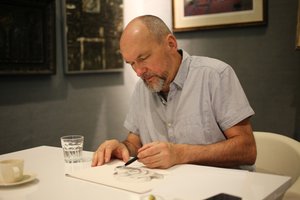
Jacek Yerka
1952 - , Polen
Kort om kunstneren
- Artistic Movement Or Style: Surrealisme
- Artists Or Movements Influenced By This Artist: ['Flemish Painting']
- Artists Who Influenced This Artist:
- Hieronymus Bosch
- Pieter Bruegel
- Jan van Eyck
- Date Of Birth: 1952
- Full Name: Jacek Yerka Kowalski
- Nationality: Polsk
- Notable Artworks:
- The Angels' Kitchen
- Wegener's theory
- Place Of Birth: Toruń, Polen
Relaterte artikler
Dreamscapes & Disrupted Realities: Exploring Surrealism's Enduring Influence
Explore the fascinating world of Surrealism! Discover its origins, key artists like Dalí & Magritte, and enduring influence on art & culture. Expert insights & high-quality reproductions at OriginalUniqueArt.
Surrealismens 10 Mesterverk: Kunst som utfordrer virkeligheten – OriginalUniqueArt.com
Utforsk surrealismens 10 mest ikoniske mesterverk – Dalí, Magritte & mer! Lær historien bak disse drømmende verkene og finn kunst som inspirerer. Museumskvalitet reproduksjoner på OriginalUniqueArt.com.

Katsushika Hokusais 25 Mesterverk: Japansk Kunst for Ditt Hjem | OriginalUniqueArt.no
Utforsk Katsushika Hokusais 25 mest ikoniske kunstverk! Oppdag historiene bak The Great Wave, ukiyo-e tresnitt og japansk estetikk. Finn museumskvalitets reproduksjoner & interiørinspirasjon på OriginalUniqueArt.com.

Jacek Yerka: Surreal Visions & Nostalgia in Contemporary Polish Painting
Explore the captivating surreal worlds of Jacek Yerka, a leading Polish painter renowned for his meticulous Flemish technique & dreamlike landscapes. Discover his unique style and learn about collecting this exceptional artist's work.
Salvador Dalís 25 Mesterverk: En Surrealistisk Reise for Kunstelskere
Utforsk Salvador Dalís 25 mest ikoniske kunstverk! Fordyp deg i surrealismens verden, drømmende symbolikk og spansk kunsthistorie. Finn inspirasjon til interiørdesign & kjøp museumskvalitets reproduksjoner på OriginalUniqueArt.com.