

 Se i rommet
 Del som digitalt kort
 Del
Del
 Detaljer
 Studentguide

 Last ned
 Liknende objekter
 Røntgen
 Lysbildefremvisning
 Besøksstatistikk
The Angels' Kitchen
 Oil On Canvas
- WallArt
- Surrealism
 2005
2005 59.0 x 47.0 cm
 Les mer
Kunstverket som vises på denne siden er beskyttet av opphavsretten, noe som betyr at vi ikke har juridisk tillatelse til å lage eller selge identiske reproduksjoner. Denne beskyttelsen håndheves i henhold til internasjonale avtaler som for eksempel Bernerkonvensjonen og av nasjonale lover, inkludert de som er fastsatt i Amerikansk opphavsrettslov – Tittel 17.
Denne metoden er i fullt samsvar med opphavsrettslige regler, da den ikke innebærer kopiering eller duplisering av det beskyttede kunstverket. I stedet er det snakk om en kreativ nytolkning – et nytt maleri som er inspirert av originalen, men ikke identisk med den.
Giclée / Kunsttrykk
Giclée- eller lerretsprint av museumskvalitet med rask produksjon og fleksible valgmuligheter for etterbehandling. ( Bestill håndmalt reproduksjon Gå til digitalt bilde)




P118B Nkr10

P118H Nkr10

P118W Nkr10

P438Z Nkr10

P508JH Nkr12

P508YH Nkr12

P805H Nkr10

P805Z Nkr10

P919BZ Nkr10

P919G Nkr10

P919XJ Nkr10

P959ZH Nkr10

P968JZ Nkr12

W106C Nkr8

W218G Nkr10

W218JH Nkr8

W218Y Nkr10

W307PJ Nkr10

W316G Nkr10

W316PJ Nkr8

W316Y Nkr10

W398PJ Nkr8

W4111J Nkr10

W500HY Nkr15

W500JH Nkr15

W692G Nkr12

W849H Nkr8

W940BG Nkr15

W953PJ Nkr8




Velg mellom våre forhåndsdefinerte størrelser som bevarer kunstverkets opprinnelige proporsjoner.

Du kan oppgi egne mål for å tilpasse en spesifikk ramme eller et bestemt område. Dersom den valgte størrelsen ikke samsvarer med det originale bildets proporsjoner, vil vi enten beskjære kunstverket eller utvide bildet med en speilet eller ensfarget kant. En digital mockup vil bli sendt til din godkjenning før produksjonen starter.
Vennligst merk at forhåndsvisningen på skjermen ikke gjenspeiler den faktiske beskjæringen eller utvidelsen. Kun mockuppen vil vise den endelige komposisjonen nøyaktig.
Selv om tilpassede størrelser er tilgjengelige, anbefaler vi å velge et mål fra den forhåndsdefinerte listen for å bevare de originale proporsjonene.
Verdensomspennende levering () på 2 uker i stedet for standard 4/5 uker. (11 October)

Gratis ekspressfrakt over hele verden

Lerretsduk av høykvalitets lin

Full transportforsikring

Garanti for refusjon av toll og importavgifter

Garantert fargeekthet

100 dagers returrett ved fabrikasjonsfeil

100% pengene tilbake-garanti

Mengderabatt
 Glassalternativet er kun tilgjengelig i størrelser under 110 cm

The Angels' Kitchen
Giclée / Kunsttrykk
Format på reproduksjon
-


Totalpris
Nkr 743
The Angels' Kitchen: A Surrealist Reverie by Jacek Yerka
Jacek Yerka’s “The Angels’ Kitchen,” painted in 2005, is more than just a depiction of a domestic scene; it’s an immersive journey into a meticulously crafted surrealist dream. Measuring 59 x 47 cm, this artwork immediately captivates with its juxtaposition of the familiar – a kitchen brimming with everyday objects – and the extraordinary – a fully-fledged angel engaged in culinary activities amidst an orchard bursting with life.
- A Flemish Masterpiece: Yerka’s dedication to the classic Flemish technique, honed through years of study and unwavering commitment, is strikingly evident. The painting's rich detail, meticulous rendering of textures, and masterful use of light evoke the spirit of masters like Jan van Eyck and Pieter Bruegel, while simultaneously forging a distinctly modern vision.
- A Dreamscape in Detail: The composition itself is layered with symbolic richness. A cat calmly observes from the sink, an apple tree dominates the center – laden with fruit – and bottles are scattered across surfaces, adding to the whimsical atmosphere. This isn’t simply a kitchen; it's a carefully constructed world where the mundane and the divine intertwine.
Yerka’s artistic lineage is profoundly influential, drawing inspiration from figures like Hieronymus Bosch and Hugo van der Goes. This influence manifests in the painting’s slightly unsettling yet undeniably beautiful depiction of fantastical elements – a blend of recognizable objects and imaginative additions that invites contemplation on themes of creation, nourishment, and perhaps even spiritual grace.
Decoding the Symbolism
“The Angels’ Kitchen” is replete with symbolic meaning. The angel itself represents purity and divine intervention, yet it's presented in an utterly ordinary setting – preparing food. This deliberate contrast elevates the painting beyond a simple still life; it prompts us to consider the intersection of the sacred and the secular. The kitchen, traditionally associated with nourishment and earthly pursuits, becomes imbued with spiritual significance within Yerka’s vision.
- The Apple Tree: Symbolizing abundance, fertility, and knowledge – a recurring motif in Western art – the apple tree is central to the painting's narrative.
- The Cat: Often associated with mystery and intuition, the cat’s presence adds an element of quiet observation and perhaps even guardianship.
The overall effect is one of serene contemplation, inviting viewers to lose themselves in Yerka’s meticulously rendered world. The diffused lighting and soft edges contribute to a sense of dreamlike tranquility, further enhancing the painting's emotional impact.
Technique and Materials
Yerka employs a predominantly watercolor or gouache technique on paper, evidenced by the painting’s subtle blending, soft edges, and delicate textures. This approach lends the artwork a luminous quality, capturing light with remarkable sensitivity. The artist’s attention to detail is breathtaking, from the individual strands of grass in the foreground to the polished surfaces of the kitchen implements.
- Traditional Supplies: The use of traditional painting supplies – likely watercolor or gouache – reinforces the connection to the Flemish masters and contributes to the artwork’s timeless appeal.
- Layered Approach: Yerka's masterful layering creates depth and complexity, drawing the viewer into the scene and inviting repeated observation.
A Legacy of Surrealist Vision
"The Angels’ Kitchen" stands as a testament to Jacek Yerka’s artistic vision – a bold exploration of surrealism that seamlessly blends reality with fantasy. Exhibited across continents, including Poland, Germany, Monaco, France, and the United States, Yerka's work has garnered significant recognition within the art world. This piece is not merely a beautiful image; it’s an invitation to embrace the unexpected, question conventional perceptions, and discover beauty in the most unlikely of places.
Spørsmål og svar
Hvor gammel var Jacek Yerka da hen laget "The Angels' Kitchen"?
Da "The Angels' Kitchen" ble skapt i 2005, var Jacek Yerka – født i 1952 – 53 år gammel.
Er fargene i "The Angels' Kitchen" av Jacek Yerka livlige eller dempede?
Fargen i "The Angels' Kitchen" har en metning på Subtle Color og en intensitet på Balanced.
Hvilken fargeharmoni utviser "The Angels' Kitchen" av Jacek Yerka?
Fargene i "The Angels' Kitchen" av Jacek Yerka viser en Softly Mixed Palette harmoni. Harmoni beskriver hvordan fargene forholder seg til hverandre.
I hvilket år ble "The Angels' Kitchen" av Jacek Yerka skapt?
"The Angels' Kitchen" av Jacek Yerka ble skapt i 2005.
Hvilken kunstner kan "The Angels' Kitchen" tilskrives?
Kunstneren bak "The Angels' Kitchen" er Jacek Yerka. Verket er katalogisert under Jacek Yerka sitt navn.
Hva foreslås brukt til "The Angels' Kitchen" av Jacek Yerka?
Anbefalt bruk av et trykk av "The Angels' Kitchen" er Statement.
Når ble "The Angels' Kitchen" skapt, og hvilken kunstretning tilhører den?
"The Angels' Kitchen" ble laget i 2005, innenfor Surrealism-retningen.
Kunstnerbiografi
Jacek Yerka: A Surrealist Visionary
Born in 1952 in Toruń, Poland, Jacek Yerka emerged from a deeply artistic family. Both his parents were graduates of the local Fine Art Academy, immersing him in a world of paints, inks, and brushes from an early age. This formative environment profoundly shaped his future career path. As a child, Yerka preferred solitary creative pursuits – drawing and sculpting – over outdoor play, leading to social challenges during primary school which he described as a “grey, sometimes horrifying reality.” However, his talent for sketching earned him respect in high school.Early Life and Artistic Beginnings
Yerka’s artistic journey began before formal education, fueled by an innate fascination with visual expression. His parents' dedication to art instilled in him a lifelong appreciation for meticulous craftsmanship and imaginative storytelling. From the outset, he demonstrated a preference for introspection—creating artwork independently rather than engaging in conventional social activities—a characteristic that would continue to define his artistic persona.
Artistic Journey and Development
Initially considering careers in astronomy or medicine – pursuits driven by intellectual curiosity – Yerka ultimately prioritized fine art and graphic design. During his studies at Nicolaus Copernicus University in Toruń, he resisted pressure to adopt prevailing stylistic trends, steadfastly upholding the classic Flemish technique that became synonymous with his artistic identity. This unwavering commitment to detail and traditional methods distinguished him from many of his contemporaries.
Influences and Inspirations
Yerka’s artistic vision draws heavily upon the legacy of masters past. He cites Hieronymus Bosch, Pieter Bruegel, Cagliostro, Jan van Eyck, and Hugo van der Goes as pivotal influences. These artists instilled in him a profound appreciation for intricate detail, symbolic imagery, and fantastical narratives—elements that permeate his oeuvre.
Key Characteristics of His Work
Yerka’s paintings are firmly rooted in the surrealist tradition, seamlessly blending reality with dreamlike visions. He employs a meticulous and detailed painting style reminiscent of the Flemish masters, characterized by an astonishing level of realism achieved through painstaking observation and execution. Recurring motifs include fantastical landscapes populated with bizarre creatures and extraordinary architecture—a testament to Yerka’s boundless imagination.
Notable Works and Achievements
Yerka's portfolio boasts numerous acclaimed pieces, notably “The Angels’ Kitchen” and “Wegener’s Theory,” which have garnered international recognition. His collaborative effort with Hollywood producer Renee Daalder on designs for the science fiction film “Strawberry Fields” further solidified his reputation as a versatile artist.
Yerka's distinctive style—a harmonious blend of scientific precision and surreal fantasy—has cemented his place in contemporary art history. He continues to inspire artists worldwide with his captivating creations, demonstrating an enduring commitment to artistic excellence and imaginative exploration.
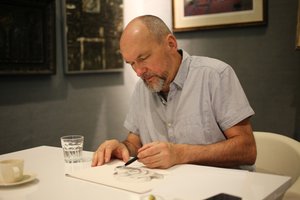
Jacek Yerka
1952 - , Polen
Kort om kunstneren
- Artistic Movement Or Style: Surrealisme
- Artists Or Movements Influenced By This Artist: ['Flemish Painting']
- Artists Who Influenced This Artist:
- Hieronymus Bosch
- Pieter Bruegel
- Jan van Eyck
- Date Of Birth: 1952
- Full Name: Jacek Yerka Kowalski
- Nationality: Polsk
- Notable Artworks:
- The Angels' Kitchen
- Wegener's theory
- Place Of Birth: Toruń, Polen
Relaterte artikler
Divine Beauty: A Curated Guide to the Celestial Majesty of Angelic Figures in Art History
Explore the profound beauty of angelic figures in art history. From Renaissance masterpieces to celestial symbolism, our expert guide offers a sophisticated journey through the divine imagery of the Old Masters for discerning collectors and art enthusiasts.

Celestial Messengers: Angels in Painting – A Historical & Artistic Exploration
Explore the captivating history of angels in painting! Discover symbolism, iconic Renaissance & Byzantine masterpieces, and renowned artists. Expert insights for art lovers & collectors at OriginalUniqueArt.

Jacek Yerka: Surreal Visions & Nostalgia in Contemporary Polish Painting
Explore the captivating surreal worlds of Jacek Yerka, a leading Polish painter renowned for his meticulous Flemish technique & dreamlike landscapes. Discover his unique style and learn about collecting this exceptional artist's work.
Surrealismens 10 Mesterverk: Kunst som utfordrer virkeligheten – OriginalUniqueArt.no
Utforsk surrealismens 10 mest ikoniske malerier! Oppdag Salvador Dalí, René Magritte og andre mestere. Lær om drømmekunst, teknikker & historien bak disse tidløse verkene. Finn museumskvalitets kunsttrykk for ditt hjem på OriginalUniqueArt.com.

Celestial Messengers: A Comprehensive Exploration of Angelic Representation in Art History
Explore the captivating history of angels in art! Discover symbolism, iconic Renaissance masterpieces & renowned artists. Expert insights for art lovers & collectors at OriginalUniqueArt.