Romanticism · 1790
Painters (Hubert Robert, 1790)
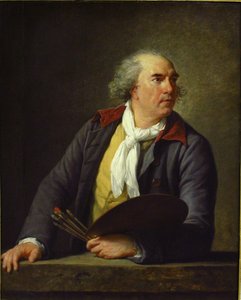
Hubert Robert (1733–1808) har laget Painters. Den er fra 1790. Det tilhører Romanticism-bevegelsen. Den er laget i Acrylic On Canvas. Verket er bevart ved Eremitasjen i St. Petersburg, Russland. Mål: 24 × 32 cm
- 1790
- Acrylic On Canvas
- 24 × 32 cm
- Eremitasjen, St. Petersburg

 Forhåndsvisning

 Håndmalt oljemaleri
 Send
 Del
 Faktablad


 Last ned bilde
 Liknende objekter
 Røntgenundersøkelse
 Lysbildefremvisning
 Spørsmål og svar

 Statistikk
Painters, kort fortalt
- Tittel
- Painters
- Kunstner
- Hubert Robert (1733–1808)
- Kunstner født i
- Paris, Frankrike
- Dato
- 1790
- Medium
- Acrylic On Canvas
- Dimensjoner
- 24 × 32 cm
- Hvor det kan ses
- Eremitasjen, St. Petersburg, Russland
- Bevegelse
- Romanticism
- Motiv
- landscapes, ruins, figures, daytime, field, workers
Hva forestiller Painters?
Hubert Robert’s “Painters”: A Vision of Ruin and Remembrance
Hubert Robert's "Painters," painted in 1790, isn’t merely a depiction of laborers at work; it’s a carefully constructed meditation on labor, time, and the enduring power of memory. The scene unfolds within a rugged, almost theatrical landscape – a dramatic vista dominated by a towering rock formation, its weathered surface hinting at centuries of exposure to the elements. Two figures, rendered with a subtle realism that belies Robert's penchant for romanticized ruins, are engaged in the arduous task of carving stone. One, positioned atop the rock, directs the work with a commanding presence, while the other, lower down, meticulously shapes the material beneath him. The composition isn’t about capturing a specific moment; it’s about evoking a feeling – a sense of timelessness and the relentless passage of time, beautifully intertwined with the human effort to impose order upon nature.
Robert's style is distinctly rooted in the Neoclassical tradition, yet infused with the burgeoning Romantic sensibility that was beginning to challenge its rigid formality. He masterfully employs atmospheric perspective – the subtle blurring and darkening of distant elements – to create a profound sense of depth and space. The light, diffused and golden, washes over the scene, casting long shadows and highlighting the textures of the rock and the figures’ clothing. Notice how Robert utilizes loose brushstrokes, particularly in the depiction of the landscape, creating an impressionistic effect that anticipates later developments in art history. This deliberate softness contrasts with the sharper detail given to the men themselves, suggesting a focus on their individual struggles within the grand scheme of nature.
The Context of Labor and Ruin
To fully appreciate “Painters,” it’s crucial to understand Robert's artistic interests – particularly his fascination with ruins. Following the upheavals of the French Revolution, a renewed interest in antiquity and the past emerged, fueled by archaeological discoveries and a desire to reconnect with a perceived lost sense of order and stability. Robert, like many artists of his time, found inspiration in the decaying grandeur of Roman temples and medieval castles, transforming these remnants into evocative landscapes – ‘capriccios’ as he called them. These weren't simply artistic exercises; they were explorations of memory, loss, and the cyclical nature of history. The very act of painting ruins became a way to preserve a fading past, imbuing it with new life and meaning.
The figures depicted in “Painters” represent a specific segment of 18th-century French society – laborers engaged in essential but often overlooked work. Robert’s choice to portray them within such a dramatic landscape elevates their status, suggesting that even the most humble tasks are worthy of artistic attention. The scene subtly critiques the social hierarchies of the time, presenting these men not as mere workers, but as active participants in shaping the world around them. The rock formation itself can be interpreted as a symbol of enduring strength and resilience – a testament to the power of human labor against the forces of nature.
Symbolism and Emotional Resonance
Beyond its straightforward depiction of work, “Painters” is rich in symbolic meaning. The towering rock formation, with its weathered surface, represents the weight of history and the passage of time. The figures’ focused expressions convey a sense of dedication and perseverance, but also hint at the physical strain of their labor. Robert's use of color – predominantly earthy tones punctuated by flashes of gold – evokes feelings of warmth, nostalgia, and perhaps even melancholy. The overall effect is one of quiet contemplation, inviting the viewer to reflect on the relationship between humanity and nature, work and memory.
The inclusion of animals—a horse and a dog—adds another layer of complexity to the scene. Animals have long been associated with labor and service in art, symbolizing loyalty, strength, and connection to the natural world. Their presence reinforces the theme of human interaction with the environment, suggesting a harmonious coexistence – albeit one marked by hard work and enduring effort. “Painters” is not simply a landscape; it’s a carefully orchestrated tableau that speaks volumes about the values and anxieties of its time.
A Timeless Masterpiece: Reproduction Considerations
Reproductions of Hubert Robert's “Painters” offer a remarkable opportunity to bring this evocative artwork into your home or office. The meticulous detail captured by Robert’s brushstrokes, combined with his masterful use of light and shadow, translates beautifully to high-quality reproductions. When selecting a reproduction, pay close attention to the texture and color accuracy – features that are crucial for capturing the painting's atmospheric depth and emotional resonance. OriginalUniqueArt offers meticulously crafted hand-painted reproductions that faithfully recreate Robert’s original vision, ensuring that you experience the full impact of this timeless masterpiece.
Hvilket museum har Painters?
Eremitasjen
St. Petersburg, Russland
Eremitasjens opprinnelse og historie Eremitasjen har sine røtter helt tilbake til 1764, da museets fundament ble lagt gjennom anskaffelsen av en samling på 225 malerier fra kjøpmannen Johann Ernst Gotzkowsky i Berlin. Det var Katarina den store som satte i gang denne samleprosessen, og hennes visjon etablerte museets tilstedeværelse i St. Petersburg, Russland.


Høyoppløselige bilder av Painters

Fritlig eiendom: kunstneren døde i 1808.
Andre størrelser, beskjæringer og sitering →Hubert Robert, Painters (1790), Eremitasjen. Felleseie
Spørsmål om Painters, besvart
Hvor kan jeg se originalen av "Painters" av Hubert Robert?
"Painters" av Hubert Robert er utstilt på Eremitasjen, St. Petersburg, Russland. Museumsoppføringen refererer til originalverket, ikke til reproduksjoner.
Hva er dateringen til "Painters" av Hubert Robert?
"Painters" dateres til 1790. Denne datoen plasserer verket innenfor Hubert Robert sin karriere og sin epoke.
Hvilken teknikk er brukt i "Painters" av Hubert Robert?
Hubert Robert brukte Acrylic On Canvas-teknikken i "Painters". Teknikken definerer det materielle uttrykket til det originale verket.
Hva er målene på det originale verket "Painters"?
"Painters" måler 24 x 32 cm i sin originale form. Originalmålene er en nyttig referanse når du skal velge størrelse på en reproduksjon.
Hva forestiller "Painters" av Hubert Robert?
"Painters" av Hubert Robert avbilder: landscapes, ruins, figures, daytime, field, workers, composition, xviii century.
Er "Painters" fri for opphavsrett?
"Painters" av Hubert Robert er fritt tilgjengelig – opphavsretten har utløpt. Denne statusen avgjør hvordan bildet av verket kan reproduseres.
Hvem er kunstneren bak "Painters"?
"Painters" tilskrives Hubert Robert.
Hvilken kunstretning tilhører "Painters" av Hubert Robert?
"Painters" er et verk innenfor Romanticism. Retningen angir den kunstneriske tradisjonen verket er en del av.
Hvilken periode i Hubert Robert sin karriere tilhører "Painters"?
"Painters" representerer Hubert Robert sin Mature Period.
Om kunstneren, Hubert Robert
1733–1808, Frankrike
Hubert Robert
Tidlig liv, familie og kunstnerisk utdanning Da Hubert Robert ble født i Paris i 1733, trådte han inn i en verden der familiens sosiale status var tett knyttet til tjeneste for andre. Hans far, Nicolas Robert, innehadde en stilling i husholdningen til en fremtredende skikkelse – en forbindelse som etter hvert skulle legge til rette for den unge mannens ferd gjennom de øvre sjikt av det franske samfunnet. Denne tidlige stabiliteten la grunnlaget for en formell utdannelse, som han fullførte i de strukturerte omgivelsene ved Collège de Navarre. Innen 1751 hadde han fullført studiene under jesuittene, noe som ga ham en disiplinert intellektuell bakgrunn før han rettet blikket mot de visuelle kunstartene.
Også av Hubert Robert
 The Pont du Gard1787
 The Finding of the Laocoön1773
 Le port de Ripetta
 PROJET D'AMENAGEMENT DE LA GRANDE GALERIE DU LOUVRE

Essays om Painters
 Impresjonismens Mesterverk: Topp 10 Maler som Definerte en Epoke | OriginalUniqueArtOppdag de 10 mest ikoniske impresjonistiske maleriene! Lær historien bak Monet, Degas og Renoir. Finn inspirasjon til interiørdesign & kjøp…
 Hubert Robert: Picturing Ruins, Preserving Memory – A Study of Romantic Antiquarianism & Artistic InnovationExplore the captivating world of Hubert Robert, master of Romantic landscape painting & 'capriccio' ruins. Discover his historical context,…
 Emotion vs. Observation: A Guide to Romanticism and RealismMaster the differences between Romanticism and Realism through expert analysis. Discover the art of emotion versus observation now.