Del som digitalt kort
 Del
Del
 Detaljer
 Studentguide

 Last ned
 Liknende objekter
 Lysbildefremvisning
 Besøksstatistikk
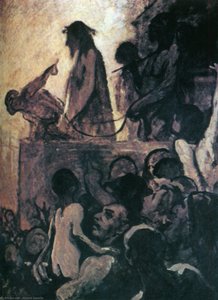
Ratapoil (front view)


 Les mer
Giclée / Kunsttrykk
Giclée- eller lerretsprint av museumskvalitet med rask produksjon og fleksible valgmuligheter for etterbehandling. ( Bestill håndmalt reproduksjon Gå til digitalt bilde)




































Velg mellom våre forhåndsdefinerte størrelser som bevarer kunstverkets opprinnelige proporsjoner.

Skriv inn bredden og høyden du trenger, slik at den passer til din ramme eller vegg. Et trykk kan kun beskjæres, aldri gjøres større enn bildet, så et format med en annen form vil miste en del av motivet. Vi sender deg en digital mockup for godkjenning før vi trykker noe som helst. Bildet som vises på denne siden viser ikke den faktiske beskjæringen — det er kun mockuppen som gjør det.
Verdensomspennende levering () på 2 uker i stedet for standard 4/5 uker. (24 October)

Gratis ekspressfrakt over hele verden

Lerretsduk av høykvalitets lin

Full transportforsikring

Garanti for refusjon av toll og importavgifter

Garantert fargeekthet

100 dagers returrett ved fabrikasjonsfeil

100% pengene tilbake-garanti

Mengderabatt
 Glassalternativet er kun tilgjengelig i størrelser under 110 cm

Ratapoil (front view)
Giclée / Kunsttrykk
Format på reproduksjon
-


Totalpris
Nkr 760
A Glimpse into Victorian Satire: Honoré Daumier’s “Ratapoil”
Honoré Daumier's "Ratapoil (front view)," created around 1850, is more than just a bronze sculpture; it’s a potent distillation of 19th-century French social commentary and political critique. This arresting figure, rendered with remarkable dynamism and a touch of unsettling realism, offers a captivating window into the turbulent world of post-Revolutionary France – a world grappling with nascent democracy, imperial ambitions, and the pervasive inequalities of its society. The sculpture’s enduring power lies not only in Daumier's masterful technical skill but also in his ability to imbue a single figure with layers of meaning and emotional resonance.
The Figure and Its Context
“Ratapoil,” derived from the word “rastapoil” (a term for a shady agent or vagrant), immediately establishes a subject ripe for satire. Daumier, a staunch Republican, used his art to challenge the established order, often targeting those he perceived as corrupt and manipulative within the political landscape. This particular sculpture represents a key figure in Louis-Napoleon Bonaparte’s propaganda machine – an “agent-provocateur,” as Daumier himself described him, tasked with stirring up public opinion through deceit and manipulation. The title itself is a deliberate jab at the man's methods, suggesting a character who thrives on exploiting vulnerabilities and sowing discord.
The sculpture’s creation coincided with a period of intense political maneuvering in France, as Louis-Napoleon sought to consolidate his power following his election as President of the Second Republic. Daumier’s work served as a direct critique of this propaganda campaign, exposing its underlying tactics and highlighting the dangers of unchecked ambition. The fact that “Ratapoil” was initially hidden during the Empire's reign underscores the sculpture’s subversive nature – a silent protest against an oppressive regime.
Craftsmanship and Technique: A Bronze Masterpiece
Daumier’s skill as a sculptor is immediately apparent in “Ratapoil.” The bronze itself, cast using the traditional technique of lost-wax casting, possesses a rich, dark patina that speaks to its age and exposure to the elements. This patination isn't merely decorative; it adds depth and texture, emphasizing the contours of the figure’s body and clothing. Notice the careful rendering of the musculature, the flowing drapery—a deliberate choice to emphasize movement—and the subtly expressive face. The use of curved lines to depict the folds of the fabric contrasts sharply with the more angular lines of the base, creating a dynamic tension within the composition.
The sculpture’s placement on a simple, rectangular pedestal serves both as a grounding element and a visual device, elevating the figure and drawing attention to its form. The overall effect is one of controlled chaos—a powerful representation of a man caught in the throes of action, embodying both strength and vulnerability.
Symbolism and Emotional Resonance
Beyond its political context, “Ratapoil” resonates with broader themes of struggle, resilience, and the human condition. The figure’s dynamic pose—one arm extended outward, the other bent at the elbow—suggests a sense of urgency and determination, perhaps even desperation. The slightly crumpled clothing and furrowed brow hint at hardship and the burdens of a difficult life. The sculpture's inherent ambiguity invites viewers to project their own interpretations onto the figure, fostering a deeper connection with its story.
Daumier’s masterful use of light and shadow further enhances the sculpture’s emotional impact. The diffused lighting creates soft shadows that accentuate the form of the figure without harsh contrasts, lending it an air of timelessness and gravitas. “Ratapoil” is not simply a caricature; it's a poignant portrait of a man caught in the currents of history, a testament to the enduring power of art to expose injustice and provoke reflection.
OriginalUniqueArt offers meticulously hand-painted reproductions of this iconic work, allowing you to bring Daumier’s powerful vision into your home or office. Each reproduction captures the essence of the original sculpture with exceptional detail and fidelity, ensuring that its message continues to resonate for generations to come.
Spørsmål og svar
Hvilken størrelse bør jeg velge for trykk av "Ratapoil (front view)" til rommet mitt?
Anbefalt kombinasjon for "Ratapoil (front view)" av Honoré Daumier: et trykk i størrelsen Large til et Living Room.
Er "Ratapoil (front view)" av Honoré Daumier et lyst eller mørkt kunstverk?
Når det gjelder oppfattet lysstyrke, er "Ratapoil (front view)" av Honoré Daumier brilliant.
Hvilken palett og hvilken følelse forener "Ratapoil (front view)"?
Den Neutrals fargepaletten i "Ratapoil (front view)" av Honoré Daumier harmonerer med dens Somber emosjonelle tone. Farge er en av måtene et verk formidler følelser på.
Kunstnerbiografi
A Life Etched in Satire: The World of Honoré Daumier
Honoré-Victorin Daumier’s life unfolded against the backdrop of a rapidly changing France, a nation grappling with revolution and social upheaval. Born in Marseille in 1808, his early years were shaped by a lineage steeped in artistic tradition—his father, a poet and glazier, and his grandfather, a sculptor—instilling within him an appreciation for both visual and literary expression. However, Daumier’s path diverged from the expected, driven not by a desire for poetic acclaim but by a profound empathy for the plight of ordinary people and a burning need to expose societal injustices. His father's relocation to Paris in 1814 exposed young Honoré to the vibrant artistic atmosphere of the capital, a crucible where classical influences mingled with nascent Romantic ideals. Despite initial plans for a legal career, Daumier’s heart belonged to art, an inclination nurtured through apprenticeships under Alexandre Lenoir, absorbing the techniques and sensibilities of the old masters, particularly Rubens and Titian. His training at the Académie Suisse provided a formal foundation, but it was his innate sensitivity—a keen awareness of human suffering and political corruption—that truly defined his artistic vision.The Sharpened Pen: Caricature and Social Commentary
Daumier’s career ignited with explosive force in the wake of the 1830 Revolution, a watershed moment that unleashed a torrent of social and political change. He quickly established himself as a master lithographer, initially working anonymously for various publications before gaining recognition through his provocative work with *Le Charivari*, a fiercely independent comic journal founded by Charles Philipon. It was within this radical publication that Daumier’s genius truly blossomed. His caricatures weren't mere humorous illustrations; they were biting critiques of the bourgeoisie, the legal system, and the political establishment—a relentless assault on hypocrisy and corruption. He fearlessly lampooned King Louis-Philippe, a figure he viewed as detached from the realities of his people, earning himself a six-month imprisonment in 1832 for a particularly stinging caricature. This act of defiance, far from silencing him, solidified his commitment to using art as a weapon against oppression. His lithographs became visual manifestos, capturing the spirit of dissent and offering a stark portrayal of the social ills plaguing France. The sheer volume of his output during this period is staggering—thousands of images that served as both popular entertainment and potent political statements. Daumier’s work was not simply satirical; it possessed a raw emotional honesty, reflecting the hardships faced by the working class and the inequalities inherent in French society.Beyond Caricature: Painting and Sculptural Visions
While Daumier is most celebrated for his lithographs, to reduce him solely to caricature would be a profound oversight. He was also a dedicated painter and sculptor, though recognition for these works came later in his life. His paintings, often depicting scenes of everyday Parisian life—the cramped third-class carriages, the weary laundresses, the pompous lawyers—are imbued with a remarkable sense of realism and empathy. Unlike idealized depictions of nobility or heroism, Daumier’s subjects were ordinary people, struggling to survive in a world dominated by wealth and privilege. He masterfully employed loose brushwork and dramatic lighting to convey emotion and atmosphere, foreshadowing some of the techniques later embraced by the Impressionists—a subtle shift towards capturing fleeting moments and subjective impressions. His sculptural work, largely created in clay during his lifetime (many pieces remaining unbaked), reveals a similar commitment to capturing the human form with honesty and emotional depth. These sculptures, rediscovered after his death, demonstrate a remarkable talent for modeling and an ability to convey psychological complexity through physical gesture—a testament to his profound understanding of the human condition.A Lasting Legacy: Influence and Historical Significance
Honoré Daumier’s impact on art history is undeniable. He bridged the gap between Romanticism and Realism, laying the groundwork for future generations of artists who sought to depict the world as it truly was—warts and all. His unflinching social commentary influenced artists like Gustave Courbet and Édouard Manet, both of whom embraced a more direct approach to portraying social realities. Daumier’s innovative use of lithography revolutionized printmaking, transforming it from a primarily decorative medium into a powerful tool for political expression and social critique. His work continues to resonate today, reminding us of the enduring power of art to challenge authority, expose injustice, and bear witness to the human condition. The Musée d'Orsay in Paris houses a significant collection of his paintings and sculptures, offering visitors a poignant glimpse into the world he so vividly portrayed. Furthermore, his lithographs are widely accessible through collections like those found on OriginalUniqueArt, ensuring that his satirical genius continues to provoke thought and inspire dialogue across generations. Daumier wasn’t merely an artist; he was a chronicler of his time—a visual poet who used his talent to give voice to the voiceless and hold power accountable. His legacy endures as a testament to the enduring relevance of art as a force for social change, a reminder that even a single image can spark revolution.
Honoré Daumier
1808 - 1879 , Frankrike
Kort om kunstneren
- Artistic Movement Or Style: Realisme, Satire
- Artists Or Movements Influenced By This Artist:
- Impressionisme
- Moderne kunst
- Artists Who Influenced This Artist:
- Alexandre Lenoir
- David
- Date Of Birth: 26. februar 1808
- Date Of Death: 10. februar 1879
- Full Name: Honoré-Victorin Daumier
- Nationality: Fransk
- Notable Artworks:
- Rue Transnonain
- Les gens de justice
- Place Of Birth: Marseille, Frankrike
Relaterte artikler

Bronseklassikere: 10 skulpturer som revolusjonerte kunsten | OriginalUniqueArt
Utforsk 10 legendariske bronseskulpturer som formet kunsthistorien! Fra Rodin til Michelangelo – oppdag historiene, teknikkene og skjønnheten bak tidløse mesterverk. Finn din perfekte veggkunst eller interiørdekor på OriginalUniqueArt.com.

The Enduring Legacy of Bronze: A Historical & Artistic Exploration for the Collector
Explore the rich history & enduring appeal of bronze sculpture with expert insights for collectors at OriginalUniqueArt. Learn about casting techniques, iconic artists, collecting tips & contemporary interpretations.
Bronse skulpturers varige arv: Historie, teknikker og samtidstolkninger
Utforsk bronseskulpturers fascinerende historie og teknikker. Ekspertinnsikt for kunstsamlere, investeringstips og moderne tolkninger. Lær mer nå!

Bronzens Mesterverk: 10 Skulpturer Som Forandret Kunsthistorien | OriginalUniqueArt
Oppdag 10 legendariske bronse skulpturer som revolusjonerte kunsthistorien! Fra Michelangelo til Rodin – lær om teknikker, historier og tidløs skjønnhet. Finn museumskvalitets reproduksjoner & interiørinspirasjon på OriginalUniqueArt.com.
The Enduring Legacy of Bronze: History, Technique & Artistic Expression for the Collector
Explore the rich history & enduring appeal of bronze sculpture with expert insights for collectors at OriginalUniqueArt. Learn about casting techniques, iconic artists, and collecting tips.