Se i rommet
 Del som digitalt kort
 Del
Del
 Detaljer
 Studentguide

 Last ned
 Liknende objekter
 Røntgen
 Lysbildefremvisning
 Besøksstatistikk
Hermit Saints Triptych (left panel)
 Oil On Panel
- WallArt
- Surrealist Movement
 1505
1505- Renaissance
 86.0 x 29.0 cm
 Palazzo Ducale
 Les mer
Håndlaget oljereproduksjon
Håndmalt olje på lerret i din valgte størrelse og ramme, laget på bestilling av våre kunstnere. ( Bytt til trykkversjon Gå til digitalt bilde)




P118B Nkr10

P118H Nkr10

P118W Nkr10

P438Z Nkr10

P508JH Nkr12

P508YH Nkr12

P805H Nkr10

P805Z Nkr10

P919BZ Nkr10

P919G Nkr10

P919XJ Nkr10

P959ZH Nkr10

P968JZ Nkr12

W106C Nkr8

W218G Nkr10

W218JH Nkr8

W218Y Nkr10

W307PJ Nkr10

W316G Nkr10

W316PJ Nkr8

W316Y Nkr10

W398PJ Nkr8

W4111J Nkr10

W500HY Nkr15

W500JH Nkr15

W692G Nkr12

W849H Nkr8

W940BG Nkr15

W953PJ Nkr8




Velg mellom våre forhåndsdefinerte størrelser som bevarer kunstverkets opprinnelige proporsjoner.

Skriv inn bredden og høyden du trenger, slik at den passer til din ramme eller vegg. Dette er håndmalt, så for en størrelse med en annen form kan kunstneren male litt mer rundt bildet, eller beskjære det noe — du velger selv. Vi sender deg en digital mockup for godkjenning før maleriet påbegynnes. Bildet som vises på denne siden viser ikke det faktiske resultatet — kun mockuppen gjør det.
Etter bestilling vil OriginalUniqueArt.com-teamet sende e-post til kunden for instruksjoner og sende et utkast (mockup) som forhåndsvisning.
Verdensomspennende levering () på 3–4 uker i stedet for standard 5 uker. (24 October). Ingen kompromisser med kvaliteten.

Gratis ekspressfrakt over hele verden

Lerretsduk av høykvalitets lin

Full transportforsikring

Garanti for refusjon av toll og importavgifter

Garantert fargeekthet

100 dagers returrett ved fabrikasjonsfeil

100% pengene tilbake-garanti

Mengderabatt
 Glassalternativet er kun tilgjengelig i størrelser under 110 cm

Hermit Saints Triptych (left panel)
Reproduksjonsmetode
Format på reproduksjon
-


Totalpris
Nkr 3088
A Descent into Surreal Reflection
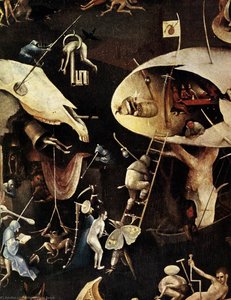
In the hauntingly beautiful left panel of Hieronymus Bosch’s Hermit Saints Triptych, viewers are invited to step into a dreamlike realm where the boundaries between reality and nightmare dissolve. Painted around 1505, this work serves as a profound testament to the artist's ability to distill the deep-seated anxieties of the High Renaissance into a single, visceral visual experience. The scene presents a desolate, rocky landscape that feels both ancient and otherworldly, teeming with a chaotic tableau of grotesque figures. As one gazes upon the panel, the eye is immediately drawn to the unsettling movement of animalistic creatures—birds with human faces and bizarre hybrids—that crawl across a terrain littered with decaying bones. This deliberate disregard for conventional perspective creates a pervasive sense of disorientation, pulling the observer into a world where the familiar has been irrevocably transformed by spiritual and psychological unrest.
The emotional impact of the piece is amplified by Bosch’s masterful use of light and shadow. Through a dramatic application of chiaroscuro, the artist creates an atmosphere of palpable dread, where deep blacks and earthy browns dominate the composition. Yet, amidst this oppressive darkness, sudden splashes of orange and red emanate from distant fires, acting as flickering reminders of chaos. A pale white highlight on a central figure serves as an unsettling beacon, emphasizing a sense of profound isolation and vulnerability against the encroaching gloom. For the collector or admirer, this interplay of light does more than just illuminate the scene; it breathes life into the very concept of spiritual struggle, making the artwork feel as though it is pulsing with a quiet, restless energy.
Symbolism and the Mastery of Technique
Beyond its surface-level strangeness, the panel is a rich tapestry of medieval Christian iconography. Bosch utilizes every element of the landscape to weave a narrative of moral consequence. The hermit figure, captured in a moment of deep contemplation or perhaps penitence, stands as a symbol of the soul's attempt to find solace amidst worldly corruption. Surrounding him, the grotesque creatures are not merely decorative oddities but are carefully crafted embodiments of temptation and vice. Even the presence of scattered bones serves as a poignant memento mori, prompting the viewer to reflect on the ephemeral nature of earthly existence and the inevitability of mortality. This layer of symbolic depth ensures that the artwork remains an intellectual journey as much as a visual one.
The technical execution of this panel reveals the meticulous craftsmanship characteristic of the Netherlandish tradition. Working with oil paints on a wooden panel, Bosch employed sophisticated layering and glazing techniques to achieve a remarkable tonal richness. This painstaking process allows for subtle gradations in color that capture the gritty textures of stone and the unsettling softness of flesh with astonishing accuracy. The intricate lines used to delineate each small, bizarre creature demonstrate a level of detail that rewards prolonged study. For those seeking to incorporate such a masterpiece into a curated space, a high-quality reproduction offers more than just decoration; it provides a window into the complex psyche of a visionary artist, bringing a sense of historical gravity and profound mystery to any interior setting.
Spørsmål og svar
Hva er den fargemessige identiteten til "Hermit Saints Triptych (left panel)" av Hieronymus Bosch?
"Hermit Saints Triptych (left panel)" av Hieronymus Bosch bruker en Earthy-palett, med Black (#130b0c) som den dominerende fargen.
Er "Hermit Saints Triptych (left panel)" et kjent kunstverk innen Surrealist Movement?
Innenfor Surrealist Movement-retningen har "Hermit Saints Triptych (left panel)" et Iconic popularitetsnivå.
Hvilken teknikk ble brukt for "Hermit Saints Triptych (left panel)", og når ble den laget?
"Hermit Saints Triptych (left panel)" ble skapt i 1505 ved bruk av teknikken Oil On Panel. Materiale og dato beskriver hvordan og når originalen ble laget.
Kunstnerbiografi
A Netherlandish Enigma: The Life and Art of Hieronymus Bosch
Born around 1450 in the vibrant, bustling town of ’s-Hertogenbosch in the Netherlands—then part of Brabant—Hieronymus Bosch, originally Jheronimus van Aken, remains one of art history’s most compelling and mysterious figures. His world was steeped in late medieval religious fervor, folklore, and a growing sense of societal unease, all of which would profoundly shape his uniquely unsettling artistic vision. Coming from a family with a long tradition of painting—his grandfather, Jan van Aken, and father, Anthonius van Aken, were both artists—Bosch likely received his earliest training within the family workshop, absorbing the techniques and conventions of Netherlandish painting. However, even in his formative years, he began to diverge from established norms, hinting at the extraordinary imagination that would define his career. Biographical details are frustratingly scarce; records are fragmented, leaving much open to speculation and interpretation, adding to the aura of mystique surrounding both the man and his work. He married Aleyt Goyaerts van den Meerveen sometime before 1481, a union that provided him with some financial security through her family’s holdings, but little else is known about their personal life.Fantastical Visions and Symbolic Depths
Bosch's artistic style is instantly recognizable—a captivating blend of meticulous detail and wildly imaginative imagery. He primarily worked with oil on oak panels, demonstrating a masterful command of the medium, achieving luminous colors and intricate textures. While his early works show influences from traditional Netherlandish painting, particularly in their realism and attention to detail, he quickly moved beyond mere imitation, developing a profoundly original vision. His paintings are not simply representations of reality; they are allegorical landscapes populated by bizarre creatures, hybrid beings, and unsettling scenes that seem plucked from dreams—or nightmares. Religious themes form the core of much of his work, but these are rarely straightforward depictions of biblical stories. Instead, Bosch uses symbolism to explore complex moral and theological concepts, often focusing on the dangers of sin, the fragility of earthly pleasures, and the inevitability of divine judgment. His creatures—grotesque demons, fantastical animals, and strangely human figures—are not merely decorative elements; they are embodiments of vice, temptation, and spiritual corruption. The blending of the sacred and the profane, the beautiful and the grotesque, creates a uniquely unsettling effect that continues to captivate viewers centuries later.Masterpieces of Moral Allegory
Among Bosch’s most celebrated achievements is The Garden of Earthly Delights (c. 1490-1510), a triptych that remains one of the most enigmatic and debated works in art history. When opened, it presents a panoramic vision of paradise, earthly life, and hell—a complex allegorical representation of humanity’s fall from grace. The left panel depicts the Garden of Eden, teeming with fantastical creatures and lush vegetation; the central panel portrays a world consumed by sensual pleasure and unrestrained desire; and the right panel offers a terrifying glimpse into the torments of hell. The Triptych of the Last Judgement (c. 1480-1490) is another powerful example of his skill in portraying both heavenly bliss and infernal torment, while The Ascent of the Blessed (c. 1480-1490) demonstrates his ability to create ethereal and dreamlike scenes. Even smaller works like Epiphany (c. 1495) showcase his innovative use of oil on wood and complex symbolism, revealing a mind constantly grappling with profound questions about faith, morality, and the human condition.Influences and Artistic Development
Identifying Bosch’s direct influences is a challenging task, given the originality of his vision. Scholars suggest possible connections to medieval folklore, religious texts—particularly those emphasizing apocalyptic themes—and the prevailing anxieties of the time, including fears of heresy and social upheaval. However, it's clear that he synthesized these elements into something entirely new and uniquely his own. His early works show a clear debt to traditional Netherlandish painting, particularly in their realism and attention to detail. Yet, as he matured, Bosch began to experiment with bolder colors, more dynamic compositions, and increasingly surreal imagery. He drew inspiration from the work of other artists, including Jan van Eyck and Rogier van der Weyden, but ultimately forged his own distinctive style—one characterized by its unsettling atmosphere, complex symbolism, and profound psychological depth. The influence of contemporary woodcuts and engravings is also evident in some of his works, suggesting that he was familiar with a wider range of visual sources than previously thought.Legacy and Enduring Influence
Hieronymus Bosch’s work continues to fascinate and provoke debate centuries after its creation. His paintings offer valuable insights into the religious, social, and psychological climate of the late 15th and early 16th centuries, challenging conventional norms and paving the way for new forms of artistic expression. Artists like Pieter Bruegel the Elder directly followed in his footsteps, adopting similar themes and compositional techniques, while later movements, such as Surrealism, also drew inspiration from Bosch’s dreamlike imagery and exploration of the subconscious. His unsettling visions have resonated with audiences across generations, solidifying his place as a master of Netherlandish painting and a visionary artist whose influence extends far beyond his own time. He died in 1516, leaving behind a body of work that continues to haunt and inspire, ensuring his enduring legacy as one of art history’s most singular and unforgettable voices.
Hieronymus Bosch
1450 - 1516 , Nederland
Kort om kunstneren
- Artistic Movement Or Style: Surrealisme, Symbolikk
- Artists Or Movements Influenced By This Artist: ['Pieter Bruegel']
- Date Of Birth: c. 1450
- Date Of Death: 1516
- Full Name: Hieronymus Bosch
- Nationality: Nederlands
- Notable Artworks:
- Hagens gleder
- Sju synder
- Helbredelse
- Place Of Birth: Den Bosch, Nederland
Relaterte artikler

Evocations of Place: A Historical Journey Through Landscape Art
Explore the rich history of landscape art with OriginalUniqueArt. Discover renowned artists, movements like Impressionism & Romanticism, and expert guidance for collecting timeless pieces. Find your perfect serene escape today!

Romantiske landskap: Topp 10 mesterverk for hjemmet – Kunst fra OriginalUniqueArt.com
Oppdag de 10 mest ikoniske romantiske landskapsmaleriene! Fra Caspar David Friedrich til Turner – utforsk kunsthistorien, stemningen og fargepalettene. Finn museumskvalitets reproduksjoner på OriginalUniqueArt.com.
Hieronymus Bosch: Decoding the Visions of a Netherlandish Master
Explore the captivating world of Hieronymus Bosch! Delve into the symbolism, religious context, and artistic innovation of this Netherlandish master with OriginalUniqueArt's expert analysis. Discover his iconic paintings & lasting influence.

John Constable: Topp 25 Maler – Engelsk Landskapskunst i Ditt Hjem
Opplev John Constables 25 mest ikoniske malerier! Fordyp deg i engelsk romantikk, landskapskunst og atmosfæriske scener. Finn museumskvalitets reproduksjoner & interiørinspirasjon på OriginalUniqueArt.com. Utforsk samlingen online!
Hieronymus Bosch's 25 Mesterverk: Kunst, Symbolikk og Dekor for Hjemmet | OriginalUniqueArt
Utforsk Hieronymus Bosch's 25 mest ikoniske malerier! Fordyp deg i symbolikk, religiøse temaer og flamsk renessansekunst. Finn museumskvalitets reproduksjoner og interiørinspirasjon på OriginalUniqueArt.com.