Contemporary Realism · 1957
Falling Warrior (Henry Moore, 1957)
Henry Moore (1898–1986) har laget Falling Warrior. Den er fra 1957. Det tilhører Contemporary Realism-bevegelsen. Den er laget i Bronze. Verket er bevart ved Nasjonalmuseene Liverpool i Liverpool, Storbritannia. Mål: 48 × 147 cm
- 1957
- Bronze
- 48 × 147 cm
- Nasjonalmuseene Liverpool

 Håndmalt oljemaleri
 Send
 Del
 Faktablad


 Last ned bilde
 Liknende objekter
 Lysbildefremvisning
 Spørsmål og svar

 Statistikk
Falling Warrior, kort fortalt
- Tittel
- Falling Warrior
- Kunstner
- Henry Moore (1898–1986)
- Kunstner født i
- Castleford, Storbritannia
- Dato
- 1957
- Medium
- Bronze
- Dimensjoner
- 48 × 147 cm
- Hvor det kan ses
- Nasjonalmuseene Liverpool, Liverpool, Storbritannia
- Bevegelse
- Contemporary Realism
- Periode
- Modern
- Motiv
- bronze sculpture, female figure, reclining pose, minimalism, organic form, tranquility
Hva forestiller Falling Warrior?
A Symphony of Bronze and Bone: The Essence of Falling Warrior
In the quiet halls of Tate Britain, there exists a moment of profound stillness captured in bronze—a masterpiece that breathes with the weight of history and the lightness of spirit. Henry Moore’s “Falling Warrior,” created between 1956 and 1957, is far more than a mere sculpture; it is a meditation on the very nature of existence. As one approaches this monumental work, the eye is immediately drawn to the fluid, undulating lines that define the female form. The figure lies horizontally, her body a landscape of soft curves and deliberate voids, evoking a sense of both immense strength and heartbreaking vulnerability. It is a piece that does not merely occupy space but commands it, inviting the viewer into a silent dialogue about resilience in the face of inevitable decline.
The brilliance of Moore’s technique lies in his ability to marry the tactile reality of metal with the ethereal quality of movement. Through a masterful process of modeling clay and subsequent bronze casting, Moore achieved a surface texture that feels alive. One can trace the subtle depressions and ridges that mimic the contours of flesh and bone, creating a rhythmic vitality that suggests the figure is caught in a single, breathless moment of transition. His pioneering use of negative space—the intentional piercing of the form—allows light to pass through the sculpture, integrating the surrounding environment into the artwork itself. This interplay of solid mass and hollow void creates a dynamic tension, making the bronze appear deceptively supple, as if the warrior might stir at any moment.
Modernism Rooted in the Earth
To understand the soul of “Falling Warrior,” one must look to the rugged landscapes of Yorkshire, where Henry Moore first learned to see the world. The rolling hills and weathered stones of his youth are echoed in the organic abstractions of this piece. While the sculpture sits firmly within the mid-century movements of Abstract Expressionism and Surrealism, it avoids the coldness often associated with pure abstraction. Instead, Moore utilizes a semi-abstract language to explore deep psychological states. The pose—a female figure with an arm outstretched in what could be interpreted as either defiance or surrender—serves as a universal symbol for the human condition. It captures the duality of our existence: the struggle to remain upright and the eventual, graceful acceptance of our own mortality.
For the discerning collector or interior designer, “Falling Warrior” represents an unparalleled opportunity to introduce a sense of timelessness and intellectual depth into a space. A high-quality reproduction of this work brings with it the prestige of British Modernism and the calming influence of organic form. Whether placed in a sunlit gallery, a sophisticated study, or as a focal point in a contemporary living space, the sculpture’s presence is transformative. It offers more than decoration; it provides a window into a profound aesthetic experience, where the boundaries between the human body and the natural world dissolve into a single, hauntingly beautiful expression of life.
Hvilket museum har Falling Warrior?
Nasjonalmuseene Liverpool
Liverpool, Storbritannia
A Legacy Etched in Stone and Canvas: Unveiling National Museums Liverpool Iste urbis cor, Liverpool, urbs historica, industriae et artis fons, sedet National Museums Liverpool – institutio quae non solum artefactorum thesaurus est, sed etiam humanae creativitatis millennariorum testimonium. Non tantum antiqua, centralia musea Londinii culturae orbiti intra circumlocutionem, NML propria regionalis identitas per virtutem et accessibilitatem praebet. Historia eius anno 1851 cum Derby Museo initia est, ex domino Earlis naturalium historiae amore concussa, sed celeriter in octo locis diversis mutavit – omnis humanitatis experientiae et culturalis evolutionis perspicua.


Høyoppløselige bilder av Falling Warrior

Protected by copyright: these files are for personal reference, not a licence to republish.
Henry Moore, Falling Warrior (1957), Nasjonalmuseene Liverpool.
Spørsmål om Falling Warrior, besvart
Hvilket museum har det originale verket "Falling Warrior"?
Originalen av "Falling Warrior" av Henry Moore oppbevares i Nasjonalmuseene Liverpool, Liverpool, Storbritannia. En reproduksjon gjør det mulig å stille ut verket i eget hjem.
Hva er dateringen til "Falling Warrior" av Henry Moore?
"Falling Warrior" av Henry Moore ble skapt i 1957.
Hvilken teknikk er brukt i "Falling Warrior" av Henry Moore?
Henry Moore brukte Bronze-teknikken i "Falling Warrior". Teknikken definerer det materielle uttrykket til det originale verket.
Hva er målene på det originale verket "Falling Warrior" av Henry Moore?
Det originale verket "Falling Warrior" av Henry Moore måler 147 x 48 cm.
Hva forestiller "Falling Warrior" av Henry Moore?
Motivene i "Falling Warrior" er bronze sculpture, female figure, reclining pose, minimalism, organic form, tranquility, monumental art.
Er bildet av "Falling Warrior" av Henry Moore i det frie domene?
Opphavsrettslig status for "Falling Warrior" av Henry Moore: verket er fortsatt beskyttet av opphavsretten. Dette avgjør om det er tillatt å lage frie reproduksjoner av bildet.
Hvem har skapt "Falling Warrior"?
"Falling Warrior" ble skapt av Henry Moore. Informasjonen på denne siden beskriver Henry Moore sitt originale verk.
Hvilken kunstretning tilhører "Falling Warrior" av Henry Moore?
Kunstretningen knyttet til "Falling Warrior" av Henry Moore er Contemporary Realism. Denne klassifiseringen plasserer verket sammen med relaterte kunstnere og kunstverk.
Hvilken periode i Henry Moore sin karriere tilhører "Falling Warrior"?
I Henry Moore sin karriere tilhører "Falling Warrior" Mature Period. Denne perioden gjør det mulig å sammenligne verket med kunstnerens øvrige arbeider.
Om kunstneren, Henry Moore

1898–1986, Storbritannia
Henry Moore
A Life Sculpted in Form: The World of Henry Moore Henry Spencer Moore, født i den Yorkshirenske gruveby Castleford i 1898, etablerte seg som en av Storbritannias mest betydningsfulle og internasjonalt anerkjente skulptører på det tyvende århundre. Hans reise fra ydmyke opprinnelser til global berømmelse er et bevis på hans urokkelige dedikasjon til kunstnerisk utforsking og hans dype forbindelse til den menneskelige formen og naturen. Moores far, en selvlært mann med en lidenskap for læring, la grunnlaget for hans vei ved å oppmuntre ham bort fra livet som gruvearbeider mot formell utdanning. Selv som ung gutt viste Moore en iboende talent for å modellere leire og skjære tre, noe som varslet veien han ville ta i livet.
Også av Henry Moore
 Reclining Figure
 Sculptural Objects (Cramer 47)
 Sheep 1
 A Miner at Work1942
Essays om Falling Warrior
 Romantic Realism's Finest: 10 Masterpieces for Your Home | OriginalUniqueArtExplore 10 defining masterpieces of Romantic Realism! Discover Courbet, Millet & Daumier's powerful paintings—capturing emotion and social …
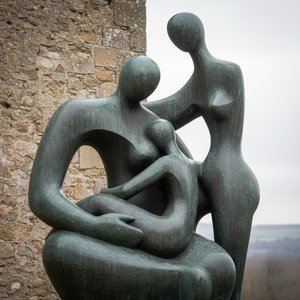 Henry Moore: Sculpting Modernity – Form, Emotion & the Human ConditionExplore the revolutionary sculptures of Henry Moore – abstract forms, reclining figures & powerful expressions of the human condition. Disc…
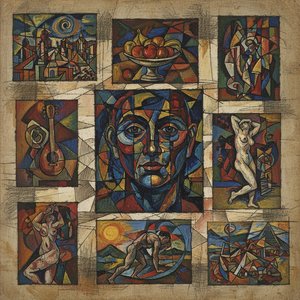 Kubistisk Ekspresjonisme: Topp 10 Mesterverk som Formet Kunsten | OriginalUniqueArt.noUtforsk de 10 mest innflytelsesrike kubistiske og ekspresjonistiske mesterverkene fra Picasso, Braque & Gris. Lær historien bak ikoniske ma…