Bytt til trykk
 Vis hele teksten







































 For kunstverk eller reproduksjoner som er større enn 105 cm (ca. 41 tommer) på noen side, vil rammen bli sendt som et sett som må monteres. Denne metoden sikrer trygg levering og forhindrer skader under transport.


A Pastoral Symphony: The Gentle Grace of Packing Stocks
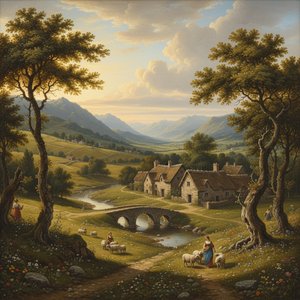
In the quietude of a sun-drenched afternoon, Henry Herbert La Thangue captures a moment of profound connection between humanity and the earth in his evocative masterpiece, Packing Stocks. This exquisite oil on canvas invites the viewer into a lush, floral sanctuary where a woman, draped in the simple elegance of her attire, bends gracefully over her task. The scene is far more than a mere depiction of agricultural labor; it is a poetic meditation on the rhythms of rural life. Surrounded by a vibrant tapestry of wildflowers and carefully tended potted plants, the subject becomes an integral part of the landscape itself. As she works, the soft interplay of light and shadow dances across the petals and her form, creating a sense of warmth that feels almost tangible to the observer.
The composition is masterfully layered, offering depth that draws the eye from the intimate foreground into the gentle distance. While the woman remains our primary focus, La Thangue subtly introduces other figures in the background—shadowy presences that suggest a communal spirit or perhaps a shared seasonal event. This addition transforms the painting from a solitary portrait into a narrative of community and tradition. The presence of a nearby building provides a structural anchor to the organic chaos of the garden, grounding the ethereal beauty of the flowers within the reality of a lived-in, working landscape. It is this delicate balance between the wildness of nature and the order of human habitation that gives the work its enduring charm.
Mastery of Light and the Newlyn Influence
As a prominent figure associated with the Newlyn School, La Thangue brings a sophisticated command of plein air techniques to this work. His training in Paris under Jean-Léon Gérôme and his exposure to the Barbizon School are evident in the way he captures the fleeting atmosphere of the English countryside. The technique is characterized by a rich, textured application of oil paint that lends a tactile quality to the canvas. One can almost feel the weight of the petals and the coarse texture of the earth. His palette, though grounded in naturalistic tones, is infused with a luminous quality; the light does not merely illuminate the scene but seems to emanately from within the very fabric of the landscape.
For the discerning collector or interior designer, Packing Stocks offers an unparalleled opportunity to introduce a sense of tranquility and timelessness into a space. The painting’s ability to evoke a nostalgic, romanticized vision of the British countryside makes it a versatile centerpiece for any sophisticated interior. Whether placed in a sunlit morning room or a stately library, the work serves as a window into a more serene era. A high-quality reproduction of this piece allows one to possess not just a beautiful image, but a fragment of art history—a way to surround oneself with the warmth, light, and enduring peace that La Thangue so masterfully distilled onto his canvas.
Spørsmål og svar
Når ble "Packing Stocks" av Henry Herbert La Thangue laget, og hvilken stilart tilhører den?
"Packing Stocks" ble skapt i 1920 som et verk innenfor Newlyn School-retningen. Datoen og kunstretningen forankrer verket i kunsthistorien.
Kan jeg bruke utvidet virkelighet (AR) for å se "Packing Stocks" av Henry Herbert La Thangue i mitt eget rom?
"Packing Stocks" har en forhåndsvisning med utvidet virkelighet: Se i AR-siden til kunstverket viser det i ditt eget rom på en kompatibel enhet.
Kan "Packing Stocks" av Henry Herbert La Thangue, som er en del av samlingen til Oldham Art Gallery, reproduseres lovlig?
Opphavsretten til "Packing Stocks" av Henry Herbert La Thangue er klar: verket er fritt tilgjengelig – opphavsretten har utløpt. At det befinner seg hos Oldham Art Gallery, endrer ikke denne statusen.
 Forhåndsvisning
 Send
Send Del
Del
 Vis detaljer
 Utskriftsvennlig guide

 Last ned bilde
 Liknende objekter
 Røntgenundersøkelse
 Lysbildefremvisning
 Q&A
Q&A Statistikk