

 Se i rommet
 Del som digitalt kort
 Del
Del
 Detaljer
 Studentguide

 Last ned
 Liknende objekter
 Røntgen
 Lysbildefremvisning
 Besøksstatistikk
Le Pavillon
 Oil On Canvas
- WallArt
- Impressionism
 1909
1909- 19th Century
 81.0 x 100.0 cm
 Les mer
Giclée / Kunsttrykk
Giclée- eller lerretsprint av museumskvalitet med rask produksjon og fleksible valgmuligheter for etterbehandling. ( Bestill håndmalt reproduksjon Gå til digitalt bilde)




P118B Nkr10

P118H Nkr10

P118W Nkr10

P438Z Nkr10

P508JH Nkr12

P508YH Nkr12

P805H Nkr10

P805Z Nkr10

P919BZ Nkr10

P919G Nkr10

P919XJ Nkr10

P959ZH Nkr10

P968JZ Nkr12

W106C Nkr8

W218G Nkr10

W218JH Nkr8

W218Y Nkr10

W307PJ Nkr10

W316G Nkr10

W316PJ Nkr8

W316Y Nkr10

W398PJ Nkr8

W4111J Nkr10

W500HY Nkr15

W500JH Nkr15

W692G Nkr12

W849H Nkr8

W940BG Nkr15

W953PJ Nkr8




Velg mellom våre forhåndsdefinerte størrelser som bevarer kunstverkets opprinnelige proporsjoner.

Skriv inn bredden og høyden du trenger, slik at den passer til din ramme eller vegg. Et trykk kan kun beskjæres, aldri gjøres større enn bildet, så et format med en annen form vil miste en del av motivet. Vi sender deg en digital mockup for godkjenning før vi trykker noe som helst. Bildet som vises på denne siden viser ikke den faktiske beskjæringen — det er kun mockuppen som gjør det.
Verdensomspennende levering () på 2 uker i stedet for standard 4/5 uker. (27 October)

Gratis ekspressfrakt over hele verden

Lerretsduk av høykvalitets lin

Full transportforsikring

Garanti for refusjon av toll og importavgifter

Garantert fargeekthet

100 dagers returrett ved fabrikasjonsfeil

100% pengene tilbake-garanti

Mengderabatt
 Glassalternativet er kun tilgjengelig i størrelser under 110 cm

Le Pavillon
Giclée / Kunsttrykk
Format på reproduksjon
-


Totalpris
Nkr 762
Le Pavillon: A Glimpse of Tranquility by Henri Le Sidaner
Henri Le Sidaner's "Le Pavillon," painted in 1909, is an exquisite example of Intimist painting, capturing a serene garden scene with remarkable atmospheric depth. Measuring 81 x 100 cm, this oil on canvas artwork transports viewers to a world of quiet beauty and gentle contemplation. The piece exemplifies Le Sidaner's signature style – characterized by soft light, muted colors, and an almost dreamlike quality—and offers a window into the artist’s personal haven in Gerberoy.
Subject & Composition: A Garden Sanctuary
"Le Pavillon" depicts a picturesque garden setting centered around a circular fountain adorned with roses. The fountain's presence serves as a focal point, drawing the eye and establishing a sense of harmony within the composition. Lush greenery surrounds the fountain, creating a vibrant backdrop that contrasts beautifully with the soft pink hues of the flowers. A charming cottage nestled in the background adds depth and context to the scene, suggesting a secluded retreat from the bustle of everyday life. The perspective is subtly flattened, enhancing the painting's atmospheric quality and contributing to its overall sense of tranquility. The foreground features a circular bed covered with white flowers and green moss, leading the eye towards the central fountain. Behind the fountain, a small cottage with a thatched roof provides a focal point. The background consists of dense foliage and rolling hills, further blurring the lines between objects and creating a sense of atmospheric perspective.
Style & Technique: Impressionistic Nuances
Le Sidaner’s style is deeply rooted in Impressionism but transcends it with his unique Intimist approach. He masterfully employs loose brushstrokes and subtle color variations to capture the fleeting effects of light and atmosphere. Unlike some Impressionists who focused on capturing a moment's vibrancy, Le Sidaner sought to evoke a sense of quiet introspection and peaceful solitude. The painting’s palette leans towards muted greens, pinks, and browns, creating a harmonious and calming visual experience. The technique involves layering paint in short, broken strokes to build up color and form. This creates a hazy effect that enhances the dreamlike quality of the scene. Le Sidaner's use of light is particularly noteworthy; he skillfully depicts diffused sunlight filtering through the foliage, casting soft shadows and highlighting the delicate details of the flowers and fountain.
Historical Context & Symbolism: Gerberoy’s Embrace
“Le Pavillon” was created during a period when Impressionism had evolved into various artistic movements. Le Sidaner, however, remained true to his Intimist sensibilities, focusing on intimate scenes of domesticity and nature. The painting is intrinsically linked to the artist's life in Gerberoy, a village he adopted as his home in the early 20th century. He restored a medieval fortress there and cultivated enchanting gardens, which became recurring subjects in his mature works. The garden itself symbolizes tranquility, refuge, and the beauty of simple pleasures. The fountain can be interpreted as a source of life and renewal, while the cottage represents comfort and security. Symbolically, the scene evokes themes of nostalgia, peaceful solitude, and the enduring power of nature to soothe the soul.
Emotional Impact & Legacy: A Timeless Retreat
"Le Pavillon" resonates with viewers through its ability to evoke a sense of calm and serenity. The painting’s gentle colors, soft light, and harmonious composition create an atmosphere of peaceful contemplation. It offers a visual escape from the stresses of modern life, inviting viewers to immerse themselves in a world of quiet beauty. Le Sidaner's work continues to be admired for its dreamlike allure and its striking blend of impressionistic technique with contemplative themes. For those interested in purchasing handmade oil painting reproductions of this stunning garden scene, OriginalUniqueArt.com offers a wide range of options.
Spørsmål og svar
Er en høyoppløselig nedlasting av "Le Pavillon" tilgjengelig?
Et digitalt bilde av "Le Pavillon" av Henri Le Sidaner kan kjøpes på siden for Digitalt bilde: nedlasting av et digitalt bilde i høy oppløsning.
Hvor kjent er "Le Pavillon" av Henri Le Sidaner?
"Le Pavillon" er klassifisert som Recognized.
Hvilken følelse formidler "Le Pavillon" av Henri Le Sidaner?
I "Le Pavillon" ledsages en Serene stemning av en Tranquil følelse.
Kunstnerbiografi
Early Life and Background
Henri Le Sidaner, a name synonymous with evocative domestic scenes and tranquil landscapes, was born on August 7th, 1862, in the vibrant port city of Port Louis, Mauritius. His origins were deeply rooted in Breton heritage – his father, Jean Marie Le Sidaner, worked as a ship inspector for Lloyd’s, a position that brought the family back to France in 1872. This relocation marked a significant shift, leading them to settle in Dunkerque, a bustling coastal town in northern France. From an early age, Henri displayed a keen interest in art, nurtured by his parents' support and a burgeoning artistic talent.
His formative years were spent at the Collège et Lycée Notre Dame des Dunes in Dunkerque, where he honed his academic skills while simultaneously cultivating his passion for painting. A fortunate opportunity presented itself through a scholarship awarded by the city council – a key moment that enabled him to pursue his artistic ambitions in Paris, the heart of French art and culture. This move was pivotal, opening doors to prestigious institutions like the École nationale supérieure des beaux-arts, where he would encounter influential figures and refine his burgeoning style.
Artistic Training and Influences
The École des Beaux-Arts proved to be a crucible for Le Sidaner’s artistic development. While under the tutelage of Alexandre Cabanel, a celebrated master known for his academic realism, he eventually found himself at odds with the school's rigid approach. This divergence led him to seek inspiration elsewhere, drawing heavily from the revolutionary techniques and philosophies of Impressionism and Pointillism. The works of Édouard Manet, with his bold brushstrokes and exploration of modern life, and Claude Monet, whose masterful use of light and color captured fleeting moments in time, profoundly influenced Le Sidaner’s artistic vision.
Seeking further refinement and a collaborative environment, he joined the Colonie artistique d'Étaples – a collective of artists dedicated to shared practice and mutual growth. This association provided invaluable experience and fostered a deeper understanding of artistic principles. The Pointillists, with their innovative use of small, distinct dots of color, also left an indelible mark on Le Sidaner’s technique, shaping his approach to creating atmosphere and depth.
Artistic Style and Development
Le Sidaner's distinctive style is immediately recognizable – a delicate balance between Impressionism and Symbolism. He eschewed the bright, saturated colors often associated with Impressionism, instead favoring a subdued palette of greys, opals, and muted tones. His brushstrokes were deliberately uneven and dappled, creating a sense of atmospheric depth and subtle movement. This technique wasn’t merely decorative; it was a deliberate choice to evoke mood and emotion, capturing the quiet beauty of everyday life.
He became particularly renowned for his nocturnes – paintings of twilight scenes that captured the ethereal quality of light and shadow. These works were not simply depictions of darkness but rather explorations of atmosphere, mystery, and introspection. Over time, Le Sidaner’s style evolved, moving away from purely academic influences towards a more personal expression rooted in his own observations and experiences. After establishing himself at Gerberoy in the Picardy countryside for over thirty years, he created a series of captivating gardens within the ruins of a medieval fortress – scenes bathed in dappled sunlight and adorned with roses, solidifying his reputation as a master of light and atmosphere.
Major Works and Recognition
Le Sidaner’s artistic output spanned decades, resulting in a substantial body of work that continues to be celebrated today. Notable paintings include “Still Life and a Window, Gisors,” a masterful study of domestic tranquility, and "A Beauvais Square by Moonlight," which perfectly captures the evocative beauty of twilight. His works have been exhibited at prestigious venues such as the Musée des Beaux-Arts Tournai in Belgium, showcasing his enduring appeal to art enthusiasts.
Throughout his career, Le Sidaner received numerous accolades, including a bronze medal at the Universal Exposition in Paris in 1891 and, later, the rank of Chevalier of the Legion of Honor in 1913 – a testament to his contributions to French art. His Venice paintings, exhibited with great acclaim in London and Paris in 1905, further cemented his international recognition.
Historical Significance
Henri Le Sidaner is often considered a pivotal figure bridging the gap between Impressionism and Post-Impressionism. While he embraced many of the techniques associated with both movements, he developed a uniquely personal style that set him apart from his contemporaries. His paintings capture not just visual reality but also the emotional resonance of everyday life – the quiet intimacy of domestic interiors, the serene beauty of gardens, and the subtle poetry of twilight.
Le Sidaner’s legacy continues to inspire artists and art lovers alike. His works are readily available for viewing and appreciation, demonstrating his enduring artistic merit and solidifying his place as a significant figure in French art history. The availability of his paintings on platforms like OriginalUniqueArt.com ensures that his evocative visions continue to reach a wider audience.
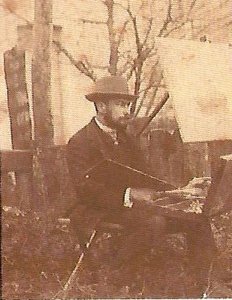
Henri Le Sidaner
1862 - 1939 , Mauritius
Kort om kunstneren
- Artistic Movement Or Style: Intimisme, Impressjonisme
- Artists Or Movements Influenced By This Artist:
- Cubisme
- Impressionisme
- Artists Who Influenced This Artist:
- Édouard Manet
- Monet
- Pointillister
- Date Of Birth: 7 august 1862
- Date Of Death: 14 juli 1939
- Full Name: Henri Eugène Augustin Le Sidaner
- Nationality: Fransk
- Notable Artworks:
- Still life og vindu
- Beauvais torg ved månen
- Place Of Birth: Port Louis, Mauritius
Relaterte artikler

Paul Cézannes 25 Mesterverk: En Kunstnerisk Reise for Ditt Hjem
Utforsk Paul Cézannes 25 mest ikoniske malerier! Oppdag historien bak impresjonismens mesterverk, fra stilleben til landskap. Finn kunsttrykk av høy kvalitet og interiørinspirasjon på OriginalUniqueArt.com.

Evocations of Place: A Historical Journey Through Landscape Art
Explore the rich history of landscape art with OriginalUniqueArt. Discover renowned artists, movements like Impressionism & Romanticism, and expert guidance for collecting timeless pieces. Find your perfect serene escape today!

John Constable: Topp 25 Maler – Engelsk Landskapskunst i Ditt Hjem
Opplev John Constables 25 mest ikoniske malerier! Fordyp deg i engelsk romantikk, landskapskunst og atmosfæriske scener. Finn museumskvalitets reproduksjoner & interiørinspirasjon på OriginalUniqueArt.com. Utforsk samlingen online!
Cultivating Paradise: A Historical & Artistic Exploration of Gardens in Painting
Explore the rich history of gardens in painting! Discover masterpieces from Renaissance to Impressionism & beyond. Learn about symbolism, artists like Monet & Klimt, and find your perfect artwork at OriginalUniqueArt.
Henri Le Sidaner: Evoking Atmosphere & Intimacy in Post-Impressionist Landscapes
Discover the evocative world of Henri Le Sidaner, a master of Intimist painting. Explore his tranquil landscapes & atmospheric interiors – a celebration of light and intimacy. Learn about his life, style, and lasting legacy.