

 Forhåndsvisning
 Send
Send Del med andre
 Vis detaljer

 Last ned bildet
 Liknende objekter
 Røntgenundersøkelse
 Lysbildefremvisning
Clair de lune
 Barbizon School
 1897
1897 20.0 x 28.0 cm
 Museum of Gloucester
 Vis hele teksten
Håndlaget oljereproduksjon
Håndmalt olje på lerret i din valgte størrelse og ramme, laget på bestilling av våre kunstnere. ( Kjøp trykk Kjøp bilde)




































Velg mellom våre forhåndsdefinerte størrelser som bevarer kunstverkets opprinnelige proporsjoner.

Du kan angi egne mål for å tilpasse en spesifikk ramme eller plass. Dersom den valgte størrelsen ikke samsvarer med originalbildets proporsjoner, vil vi enten beskjære kunstverket eller utvide maleriet med ytterligere håndmalte elementer. En digital mockup vil bli sendt til din godkjenning før produksjonen starter.
Vennligst merk at forhåndsvisningen på skjermen ikke gjenspeiler den faktiske beskjæringen eller utvidelsen. Kun mockuppen vil vise den endelige komposisjonen nøyaktig.
Selv om tilpassede størrelser er tilgjengelige, anbefaler vi å velge et mål fra den forhåndsdefinerte listen for å bevare de originale proporsjonene.
Etter bestilling vil OriginalUniqueArt.com-teamet sende e-post til kunden for instruksjoner og sende et utkast (mockup) som forhåndsvisning.
Verdensomspennende levering () på 3–4 uker i stedet for standard 5 uker. (21 August). Ingen kompromisser med kvaliteten.

Gratis ekspressfrakt over hele verden

Lerretsduk av høykvalitets lin

Full forsikring under transport

Garanti for refusjon av toll og importavgifter

Garantert korrekt fargegjengivelse

60 dagers returrett (kun ved feil)

100% pengene tilbake-garanti

Rabatt ved flere kjøp
 Glassalternativet er kun tilgjengelig i størrelser under 110 cm

Clair de lune
Teknikk for reproduksjon
Størrelse på reproduksjon
-


Endelig pris
$ 300
Beskrivelse av kunstverket
Artistic Style and Influences
Henri-Joseph Harpignies' style is characterized by his use of soft, muted colors and delicate brushstrokes. His work was influenced by the Barbizon school, a group of French landscape painters who emphasized the importance of capturing the natural world. The Clair de Lune painting is a prime example of this style, with its dreamy, ethereal quality and focus on the play of light and shadow.Similar Works and Artists
Other notable artists who explored similar themes and styles include Johan Christian Clausen Dahl, known for his moonlit landscapes like Lake Esrom by Moonlight, available as a handmade oil painting reproduction on OriginalUniqueArt.com. Another example is William Merritt Chase, an American artist who created stunning oil-on-panel works like Terrace at the Mall, Central Park, also available on OriginalUniqueArt.com.- Soft, muted colors and delicate brushstrokes characterize Henri-Joseph Harpignies' style.
- The Barbizon school influenced his work, emphasizing the importance of capturing the natural world.
- Similar artists include Johan Christian Clausen Dahl and William Merritt Chase, whose works are available on OriginalUniqueArt.com.
The Clair de Lune painting is a beautiful example of late 19th-century landscape art, showcasing the serene beauty of a moonlit night scene. With its soft colors and delicate brushstrokes, this piece is sure to captivate art lovers and inspire a sense of peace and tranquility. For more information on Henri-Joseph Harpignies and his works, visit OriginalUniqueArt.com.
Om kunstneren
Early Life and Training
Henri-Joseph Harpignies’ journey into the world of art began in a context far removed from the artistic circles he would later inhabit. Born on June 28, 1819, in Valenciennes, France, his initial path was dictated by familial expectations – a future as a businessman lay firmly planned for him. However, from a young age, a profound and undeniable passion for art ignited within him, a desire that ultimately superseded all other considerations. Of Belgian origin, his family’s roots were deeply intertwined with the industrial landscape of northern France, but it was in the quieter beauty of Valenciennes that his artistic sensibilities first began to blossom. His early years were marked by a traditional upbringing, yet he found solace and inspiration in observing the natural world around him. He displayed an exceptional aptitude for drawing from a remarkably young age – at just four years old, he was already sketching with enthusiasm. This innate talent led to formal training at the Collège Communal in Valenciennes, where he excelled not only in art but also in geography and music, demonstrating a well-rounded intellect. It was during these formative years that his parents, recognizing his unwavering dedication to painting, conceded to allow him to pursue his artistic ambitions, a pivotal moment that set him on the course of his life’s work. He entered the atelier of Jean Achard in Paris at the age of twenty-seven, an experience that provided him with a solid foundation in draughtsmanship – a skill he would consistently rely upon throughout his career.The Barbizon School and Italian Influence
Following two years of intensive training under Achard, Harpignies embarked on a transformative journey to Italy in 1848. This sojourn proved to be far more than a mere vacation; it was a profound catalyst for artistic development. The landscapes of Italy – the rolling hills, dramatic coastlines, and ancient ruins – captivated his imagination and fundamentally reshaped his artistic vision. Upon his return to France in 1850, he quickly became acquainted with the leading figures of the Barbizon School, including the esteemed Jean-Baptiste-Camille Corot. The Barbizon painters’ distinctive approach—a commitment to direct observation of nature and a realistic portrayal of rural life—resonated deeply with Harpignies' sensibilities. He was particularly drawn to Corot’s ability to capture the subtle nuances of light and atmosphere, a skill he would strive to emulate in his own work. In 1860, Harpignies further solidified his artistic connection with Corot through a collaborative trip back to Italy, an experience that undoubtedly enriched their mutual understanding and influence. This period of shared exploration served as a crucial stage in the development of both artists’ individual styles. The Italian landscape became a constant source of inspiration for Harpignies throughout his career, informing his compositions and color palettes.Artistic Development and Style
Harpignies' artistic style is characterized by its serene and idyllic depictions of the French countryside. He possessed an extraordinary ability to capture the subtle nuances of light and atmosphere, creating landscapes that evoke a profound sense of tranquility and harmony. His technique was rooted in careful observation combined with a refined understanding of composition – he meticulously studied his subjects before translating them onto canvas. While undeniably influenced by the Barbizon School’s emphasis on realism, Harpignies developed his own distinct voice, imbuing his work with a poetic sensibility that set him apart from his contemporaries. He wasn't simply replicating what he saw; he was conveying an emotional response to the beauty of nature. His paintings often feature rows of trees, winding paths, and glimpses of rural life—elements that contribute to their sense of peacefulness and timelessness. Harpignies’ masterful use of color – muted earth tones, soft blues, and delicate greens – further enhances this effect, creating a visual experience that is both calming and evocative. He was particularly adept at capturing the effects of light on water and foliage, imbuing his landscapes with a sense of luminosity and depth.Notable Works
Harpignies’ oeuvre includes several iconic works that exemplify his artistic style and technical skill. Soir sur les bords de la Loire (Evening on the Banks of the Loire) – 1861 is perhaps his most celebrated painting, a quintessential example of his atmospheric landscapes. The scene depicts the tranquil beauty of the Loire Valley at dusk, with its shimmering water, silhouetted trees, and soft, diffused light. Les corbeaux (The Ravens) – 1865 demonstrates his skill in capturing mood and detail within a natural setting—a flock of ravens soaring across a bleak landscape. Other notable works include Le soir (Evening) – 1866, which captures the quiet beauty of twilight; La loire (The Loire) – 1882, another stunning depiction of the river’s meandering course; and Vue de Saint-Privé (View of Saint-Privé) – 1883, a charming portrayal of a typical French village.Legacy and Influence
Henri-Joseph Harpignies' artistic legacy extends far beyond his own individual creations. He was not only a talented painter but also a dedicated teacher, imparting his knowledge and skills to numerous students, including Émile Appay (1876-1935) and James Wilson Morrice (1865-1924). His influence can be seen in the development of French landscape painting throughout the late 19th and early 20th centuries. He played a significant role in shaping the Barbizon School’s impact on subsequent generations of artists, encouraging them to embrace direct observation of nature and prioritize emotional expression in their work. Harpignies' paintings are now held in prominent museum collections across France and internationally, including the Musée des Beaux-Arts Valence, ensuring his enduring recognition as a master of landscape art. His commitment to capturing the beauty of the French countryside—and his ability to convey that beauty with such grace and sensitivity—continues to inspire artists and viewers alike.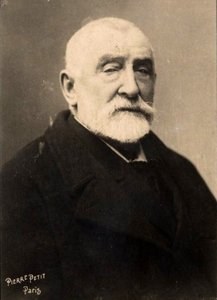
Henri-Joseph Harpignies
1819 - 1916 , Frankrike
Kort om kunstneren
- Artistic Movement Or Style: Barbizon skole
- Artists Or Movements Influenced By This Artist: ['Barbizon skole']
- Artists Who Influenced This Artist:
- Jean Achard
- Jean Baptiste Camille Corot
- Date Of Birth: 28 juni 1819
- Date Of Death: 28 august 1916
- Full Name: Henri-Joseph Harpignies
- Nationality: Fransk
- Notable Artworks:
- Soir sur les bords de la Loire
- Les Corbeaux
- Le Soir
- Le Saut-du-Loup
- La Loire
- Place Of Birth: Valenciennes, Frankrike
Relaterte artikler
Henri-Joseph Harpignies: Capturing the Poetic Essence of the French Landscape
Explore the serene landscapes of Henri-Joseph Harpignies, a master of the Barbizon School. Discover his atmospheric paintings, recurring themes & enduring legacy in 19th-century French art. Learn more at OriginalUniqueArt.

Impressionismens landskapskunst: Topp 10 mesterverk som definerte en epoke | OriginalUniqueArt.no
Opplev impressionismens magi! Utforsk 10 ikoniske landskapsmalerier av Monet, Renoir og Van Gogh. Lær om kunsthistorien bak mesterverkene & finn din perfekte veggkunst på OriginalUniqueArt.com – museumskvalitet for ditt hjem.

Impresjonistiske landskap: 10 mesterverk som definerte en kunstbevegelse | OriginalUniqueArt.no
Opplev impresjonismens magi! Utforsk 10 ikoniske landskapsmalerier av Monet, Renoir og Degas. Lær historien bak mesterverkene & finn din perfekte kunsttrykk på OriginalUniqueArt.com.
Capturing Light: A Masterclass in the Ethereal Beauty of Impressionistic Landscapes
Explore the ethereal beauty of Impressionist landscapes. Discover how masters like Monet captured fleeting light through color and texture, and learn to curate these timeless, luminous masterpieces for your home collection.
Paul Huet: Capturing the Essence of French Romanticism Through Light and Landscape
Explore the captivating world of Paul Huet (1803-1869), a master of French Romantic landscape painting. Discover his influence on Barbizon & Impressionism, and browse high-quality reproductions at OriginalUniqueArt.


