

 Se i rommet
 Del som digitalt kort
 Del
Del
 Detaljer
 Studentguide

 Last ned
 Liknende objekter
 Røntgen
 Lysbildefremvisning
 Besøksstatistikk
Inside St. Mark's, Venice

 Les mer
Håndlaget oljereproduksjon
Håndmalt olje på lerret i din valgte størrelse og ramme, laget på bestilling av våre kunstnere. ( Bytt til trykkversjon Gå til digitalt bilde)




































Velg mellom våre forhåndsdefinerte størrelser som bevarer kunstverkets opprinnelige proporsjoner.

Du kan angi egne mål for å tilpasse en spesifikk ramme eller plass. Dersom den valgte størrelsen ikke samsvarer med originalbildets proporsjoner, vil vi enten beskjære kunstverket eller utvide maleriet med ytterligere håndmalte elementer. En digital mockup vil bli sendt til din godkjenning før produksjonen starter.
Vennligst merk at forhåndsvisningen på skjermen ikke gjenspeiler den faktiske beskjæringen eller utvidelsen. Kun mockuppen vil vise den endelige komposisjonen nøyaktig.
Selv om tilpassede størrelser er tilgjengelige, anbefaler vi å velge et mål fra den forhåndsdefinerte listen for å bevare de originale proporsjonene.
Etter bestilling vil OriginalUniqueArt.com-teamet sende e-post til kunden for instruksjoner og sende et utkast (mockup) som forhåndsvisning.
Verdensomspennende levering () på 3–4 uker i stedet for standard 5 uker. (26 September). Ingen kompromisser med kvaliteten.

Gratis ekspressfrakt over hele verden

Lerretsduk av høykvalitets lin

Full transportforsikring

Garanti for refusjon av toll og importavgifter

Garantert fargeekthet

100 dagers returrett ved fabrikasjonsfeil

100% pengene tilbake-garanti

Mengderabatt
 Glassalternativet er kun tilgjengelig i størrelser under 110 cm

Inside St. Mark's, Venice
Reproduksjonsmetode
Format på reproduksjon
-


Totalpris
$ 300
Kunstnerbiografi
Heinrich Hermanns (1862 – 1942): A Landscape Painter Rooted in Tradition
Heinrich Hermanns was born in Düsseldorf, Germany, on May 19, 1862, into a family with artistic inclinations. His father, Wilhelm Hermanns, was a professor of German language and literature at the University of Düsseldorf, fostering an environment that encouraged intellectual curiosity and creative pursuits. From a young age, Heinrich demonstrated a passion for drawing and painting, honing his skills through self-study and informal instruction. He enrolled in the Düsseldorf Art Academy in 1883, where he studied under Eugen Dücker, a prominent landscape painter who championed the Düsseldorf School of Painting—a movement characterized by its meticulous observation of nature and its commitment to tonal realism. This formative experience profoundly shaped Hermanns’ artistic vision and technique.- Early Influences: Hermanns' artistic sensibilities were deeply influenced by Romanticism, particularly the works of Caspar David Friedrich and Wilhelm Leibl. These artists emphasized sublime landscapes imbued with spiritual significance, inspiring Hermanns to explore similar themes in his own paintings.
- The Düsseldorf School of Painting: Hermanns joined forces with fellow students—including Karl Böcklin, Wilhelm Trübschenne, and Max Liebermann—to establish the ‘Lucas-Club’ in 1889. This collective aimed to advance landscape painting through rigorous study and experimentation, prioritizing tonal harmony and atmospheric perspective.
- Notable Works: Hermanns gained recognition for his depictions of the Hümmling landscapes—particularly “The Hümmlinger Moor” (1893)—which exemplify the Düsseldorf School’s aesthetic principles. His paintings also captured scenes from Venice, showcasing his fascination with architectural grandeur and urban vistas.
Venetian Visions: Architectural Detail and Atmospheric Depth
Among Hermanns' most celebrated canvases is “Inside St. Mark’s, Venice” (1897), a monumental oil painting that captures the splendor of Saint Mark’s Basilica with remarkable precision. Hermanns meticulously rendered the basilica’s intricate façade—the Byzantine mosaics, soaring arches, and ornate sculptures—employing a masterful use of tonal gradation to convey depth and luminosity. The artist skillfully manipulated light and shadow, creating an immersive experience for the viewer that reflects the grandeur of Venetian architecture. This work stands as a testament to Hermanns' dedication to capturing both visual accuracy and emotional resonance.Dutch Landscapes: Impressionistic Sensibility
Inspired by the Dutch landscape tradition—particularly the works of Jacob Maris and Anton Mauve—Hermanns embraced an impressionistic approach in several paintings. “Early Autumn in the Countryside” (1903) exemplifies this style, characterized by loose brushstrokes and vibrant color palettes that convey fleeting moments of beauty. Hermanns skillfully blended pigments to achieve atmospheric effects—misty mornings, dappled sunlight—creating landscapes that pulse with life and immediacy.Recognition and Legacy
Heinrich Hermanns’ artistic achievements were recognized during his lifetime through participation in major German art exhibitions. His paintings were exhibited at Munich, Berlin and Düsseldorf until the 1930s, securing him a prominent position within the Düsseldorf School of Painting and cementing his reputation as one of Germany's foremost landscape painters. Hermanns died in Düsseldorf on December 21, 1942, leaving behind a substantial body of work that continues to inspire admiration for its tonal realism, compositional elegance, and profound engagement with the natural world. His legacy resides in his contribution to German art history and his embodiment of the Düsseldorf School’s enduring aesthetic ideals.
heinrich hermanns
1862 - 1942
Kort om kunstneren
- Artistic Movement Or Style: Düsseldorfer Malerschule
- Artists Or Movements Influenced By This Artist: ['Romanticism']
- Artists Who Influenced This Artist: ['Eugen Dücker']
- Date Of Death: 1942
- Full Name: Heinrich Hermanns
- Nationality: German
- Notable Artworks:
- A Morning Chat
- Inside St. Mark’s, Venice
- Early autumn in the countryside
- Place Of Birth: Düsseldorf, Germany
Relaterte artikler
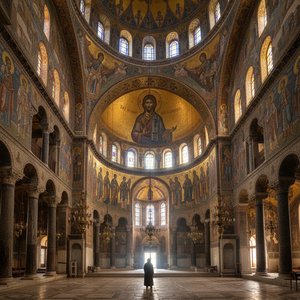
Illuminating Eternity: A Comprehensive Exploration of Byzantine Art's Legacy
Explore the rich history & stunning artistry of the Byzantine Empire! Discover iconic mosaics, profound symbolism, and lasting influence on Western art. A comprehensive guide for history lovers.
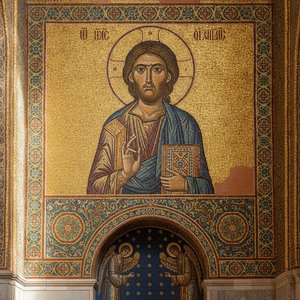
Byzantine Art Unveiled: The Divine Radiance of Golden Mosaics and Sacred Iconography
Journey through the luminous history of Byzantine art. Unveil the profound symbolism of sacred icons and the breathtaking brilliance of gold-leaf mosaics in this expert cultural retrospective. A soulful exploration for the discerning art lover.

The Enduring Legacy of Oil on Canvas: Technique, History & Aesthetic Impact
Explore the rich history & techniques of oil painting – from Renaissance masters to Impressionism. Discover pigments, layering methods, and why this timeless medium endures. Expert insights for artists & art enthusiasts.

Oil on Canvas: A Historical & Technical Exploration of a Timeless Artistic Medium
Explore the rich history & enduring techniques of oil painting on canvas. Discover the science behind its longevity, conservation practices, and contemporary relevance. Expert insights for art enthusiasts.

The Enduring Power of Painting: A Historical & Contemporary Exploration of Form and Emotion
Explore the rich history & enduring techniques of oil painting with OriginalUniqueArt. Discover masterpieces, learn about art collecting, and find authentic handmade reproductions crafted by skilled artists.