Se i rommet
 Del som digitalt kort
 Del
Del
 Detaljer
 Studentguide

 Last ned
 Liknende objekter
 Røntgen
 Lysbildefremvisning
 Besøksstatistikk
The Painter's Studio


 Les mer
Håndlaget oljereproduksjon
Håndmalt olje på lerret i din valgte størrelse og ramme, laget på bestilling av våre kunstnere. ( Bytt til trykkversjon Gå til digitalt bilde)




P118B Nkr10

P118H Nkr10

P118W Nkr10

P438Z Nkr10

P508JH Nkr12

P508YH Nkr12

P805H Nkr10

P805Z Nkr10

P919BZ Nkr10

P919G Nkr10

P919XJ Nkr10

P959ZH Nkr10

P968JZ Nkr12

W106C Nkr8

W218G Nkr10

W218JH Nkr8

W218Y Nkr10

W307PJ Nkr10

W316G Nkr10

W316PJ Nkr8

W316Y Nkr10

W398PJ Nkr8

W4111J Nkr10

W500HY Nkr15

W500JH Nkr15

W692G Nkr12

W849H Nkr8

W940BG Nkr15

W953PJ Nkr8




Velg mellom våre forhåndsdefinerte størrelser som bevarer kunstverkets opprinnelige proporsjoner.

Skriv inn bredden og høyden du trenger, slik at den passer til din ramme eller vegg. Dette er håndmalt, så for en størrelse med en annen form kan kunstneren male litt mer rundt bildet, eller beskjære det noe — du velger selv. Vi sender deg en digital mockup for godkjenning før maleriet påbegynnes. Bildet som vises på denne siden viser ikke det faktiske resultatet — kun mockuppen gjør det.
Etter bestilling vil OriginalUniqueArt.com-teamet sende e-post til kunden for instruksjoner og sende et utkast (mockup) som forhåndsvisning.
Verdensomspennende levering () på 3–4 uker i stedet for standard 5 uker. (23 October). Ingen kompromisser med kvaliteten.

Gratis ekspressfrakt over hele verden

Lerretsduk av høykvalitets lin

Full transportforsikring

Garanti for refusjon av toll og importavgifter

Garantert fargeekthet

100 dagers returrett ved fabrikasjonsfeil

100% pengene tilbake-garanti

Mengderabatt
 Glassalternativet er kun tilgjengelig i størrelser under 110 cm

The Painter's Studio
Reproduksjonsmetode
Format på reproduksjon
-


Totalpris
Nkr 2851
A Bold Declaration of Realism: Gustave Courbet’s The Painter's Studio
Dr. Steven Zucker begins his exploration of Gustave Courbet’s monumental painting, “The Painter’s Studio,” by highlighting its significance within the broader artistic landscape of mid-19th century France. He emphasizes that Courbet’s decision to organize an independent exhibition—a defiant act against the restrictive conventions of the Académie des Beaux-Arts—was crucial in ensuring accessibility and fostering a dialogue about artistic expression beyond official channels. This bold move cemented Courbet's reputation as a revolutionary figure who championed realism, rejecting idealized representations for unflinching depictions of everyday life.- Subject Matter & Composition: The painting presents an ambitious tableau vivant—a “living picture”—featuring intellectuals and artists engaged in conversation within a cluttered studio space. Courbet meticulously populated the scene with figures representing diverse professions and social strata, including philosophers, critics, writers, a priest, a merchant, a hunter (symbolic of Napoleon III), and even a marginalized worker and child beggar. This deliberate inclusion wasn’t merely decorative; it served as a powerful commentary on societal inequalities.
- Stylistic Influences & Technique: Courbet's style draws inspiration from both Neoclassicism and Romanticism, yet decisively abandons their formal constraints. He employs a thick impasto technique—applying paint in heavy layers—creating textured surfaces that convey palpable physicality and immediacy. This tactile approach contrasts sharply with the polished smoothness favored by academic painters of the era.
Allegory & Symbolism: Decoding Courbet’s Manifesto
Beyond its realistic portrayal, “The Painter’s Studio” operates as a complex allegory exploring themes of artistic freedom and social responsibility. The central figure—Courbet himself—is surrounded by symbols representing truth (the nude woman), innocence (the child), and contemplation. Notably, the inclusion of instruments like a guitar and dagger serves to denounce academic art's perceived rigidity and moral conservatism. The figures positioned around Courbet represent various facets of intellectual life and societal values.
- The Figures: Each participant embodies a specific role or perspective—Alfred Bruchas, the art collector; Proudhon, the philosopher; Baudelaire, the poet—reflecting the intellectual currents of the time. The woman-muse symbolizes artistic inspiration and purity, while the cat represents independence and cunning.
- Symbolic Objects: Items like the guitar and dagger are deliberately placed to challenge established artistic dogma. They represent defiance against convention and a commitment to portraying reality without embellishment.
Historical Context & Significance
Painted in 1855, “The Painter’s Studio” arrived at a pivotal moment in art history—immediately following the rejection of Courbet's submission for the Universal Exhibition. This snub fueled his determination to showcase his work independently, establishing the Pavilion of Realism and demonstrating that artistic excellence could exist outside the confines of official patronage. The painting solidified Courbet’s position as a champion of realism and profoundly impacted subsequent generations of artists.
Emotional Impact & Artistic Legacy
Courbet's masterful depiction captures not only the visual details of the studio but also its atmosphere—a space brimming with intellectual curiosity and creative energy. The painting’s raw materiality and unflinching gaze invite viewers to confront uncomfortable truths about societal norms and artistic ambition. “The Painter’s Studio” remains a testament to Courbet’s unwavering conviction in portraying the world as he experienced it, securing his place as one of the most influential figures in modern art.
Spørsmål og svar
Hvor kan jeg se originalen av "The Painter's Studio" av Gustave Courbet?
"The Painter's Studio" av Gustave Courbet er utstilt på Musée d'Orsay, Paris, France. Museumsoppføringen refererer til originalverket, ikke til reproduksjoner.
Hvilken bruk og hvilket rom anbefales for "The Painter's Studio" av Gustave Courbet?
Bruk (Accent) og plass (Living Room) er de to anbefalingene som er oppgitt for "The Painter's Studio" av Gustave Courbet.
Hvor kommer de besøkende til "The Painter's Studio" av Gustave Courbet fra?
En Statistikk-side eksisterer for "The Painter's Studio". Den viser månedlige besøkstall for kunstverket og kunstnerens andre verk, med oppdeling etter land og språk.
Kunstnerbiografi
A Rebel’s Brush: The Life and Legacy of Gustave Courbet
Jean Désiré Gustave Courbet, born in Ornans, France, on June 10, 1819, stands as a monumental figure in the history of art – a defiant iconoclast who irrevocably altered the trajectory of painting during the mid-nineteenth century. More than simply capturing visual impressions; his artistic journey embodies a profound rejection of convention and an unwavering dedication to portraying reality with uncompromising honesty. His upbringing within a moderately prosperous bourgeois family fostered an early appreciation for artistic pursuits, nurtured by his mother’s encouragement – a formative influence that propelled him toward a revolutionary vision of artistic expression. Formal training commenced at the École des Beaux-Arts in Paris in 1839, yet Courbet swiftly recognized the limitations imposed by the prevailing academic doctrines and Romantic idealism. While acknowledging connections to artists like Eugène Delacroix and Théodore Géricault – figures who wrestled with grand narratives and emotional intensity – Courbet deliberately distanced himself from these approaches, prioritizing observation over imagination and truth above all else. He sought not to embellish or glorify but to confront viewers with the unvarnished face of existence.The Birth of Realism: Challenging Artistic Conventions
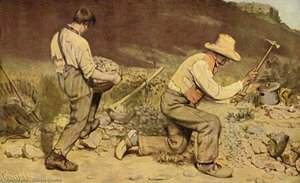
Courbet’s artistic breakthrough arrived through a radical departure from established aesthetic standards. Unlike Romantic painters who favored mythological tales and heroic portrayals, he turned his gaze toward the everyday lives of ordinary individuals – laborers, peasants, and rural communities – subjects largely ignored by the art world of his time. This commitment to depicting reality without embellishment—a stance that would become synonymous with Realism—immediately provoked censure from critics accustomed to idealized representations steeped in beauty and grandeur. Early canvases explored landscapes and portraits, yet he soon gravitated toward scenes of working-class life, rendered on a scale traditionally reserved for monumental historical paintings. This deliberate decision wasn’t merely stylistic; it was an assertion of dignity and importance – recognizing the inherent value within these marginalized segments of society. The masterpiece *The Stone Breakers* (1849), tragically destroyed during World War II, exemplifies this ethos—a stark depiction of two laborers engaged in arduous toil, their faces obscured by exhaustion and grime. This painting challenged the very notion of what constituted “worthy” subject matter for artistic endeavor.Major Works and Artistic Philosophy
Courbet’s artistic philosophy extended beyond mere subject matter; it encompassed a revolutionary technique – *impasto*. He applied paint thickly onto the canvas, creating textured surfaces that captured the physicality of the medium itself. This method mirrored his belief in portraying reality as accurately as possible, rejecting illusionistic techniques favored by earlier artists. Notable works like *A Burial at Ornans* (1850-51) and *The Painter’s Studio* (1855) solidified his reputation as a provocateur who championed artistic freedom and confronted societal prejudices. The latter painting served as an allegorical manifesto, reflecting Courbet's conviction that art should engage with pressing social issues—a stance that resonated powerfully with contemporaries and cemented his legacy as a champion of intellectual independence. His participation in the Salon des Refusés in 1863 – an exhibition showcasing rejected artworks deemed unsuitable by the official Salon – underscored his defiance against artistic orthodoxy and reaffirmed his commitment to challenging conventional norms. Landscapes like *View in the Forest of Fontainebleau* (1855) were imbued with a similar spirit of realism, capturing the natural beauty without romantic embellishment.Legacy and Historical Significance
Gustave Courbet’s influence on subsequent art movements is undeniable. While he acknowledged influences from artists such as Caravaggio for their dramatic use of light and shadow—a stylistic homage to artistic predecessors—his impact transcended mere imitation. He fundamentally reshaped the landscape of painting by liberating Impressionists and Post-Impressionists from the constraints of academic tradition, encouraging them to explore new avenues of perception and representation. His unwavering advocacy for artistic liberty served as an inspiration to generations of artists who sought to express their convictions through creative endeavors. Courbet died in Paris on April 29, 1877, leaving behind a corpus of work that continues to captivate audiences worldwide—a testament to the enduring power of art to provoke thought and inspire transformative change. He remains an unparalleled figure in artistic history, forever remembered as the herald of Realism and a courageous voice for artistic integrity.
Gustave Courbet
1819 - 1877 , Frankrike
Kort om kunstneren
- Artistic Movement Or Style: Realisme
- Artists Or Movements Influenced By This Artist:
- Impressionisme
- Postimpressionisme
- Artists Who Influenced This Artist:
- Eugène Delacroix
- Théodore Géricault
- Caravaggio
- Date Of Birth: 10 Juni 1819
- Date Of Death: 31 Desember 1877
- Full Name: Gustave Courbet
- Nationality: Fransk
- Notable Artworks:
- Steinknackare
- Begravning i Ornans
- Målarens Studio
- Place Of Birth: Orléans, Frankrike
Relaterte artikler

Romantic Realism's Finest: 10 Masterpieces for Your Home | OriginalUniqueArt
Explore 10 defining masterpieces of Romantic Realism! Discover Courbet, Millet & Daumier's powerful paintings—capturing emotion and social realities. Find museum-quality reproductions for your home at OriginalUniqueArt.com.
Realismens Mestre: Topp 10 Kunstverk som Definerer Virkeligheten – OriginalUniqueArt.no
Oppdag realismens 10 mest ikoniske kunstverk! Fra Courbet til Rembrandt – lær historiene bak mesterverkene, teknikken og fargene. Finn inspirasjon & museumskvalitets reproduksjoner på OriginalUniqueArt.com.
Realismens Mesterverk: Topp 10 Kunstverk som Definerte Epoken – OriginalUniqueArt.no
Utforsk realismens 10 største mesterverk! Oppdag Gustave Courbet, Millet og Daumier – historiene bak ikoniske malerier. Finn inspirasjon til interiøret & kjøp kunst online hos OriginalUniqueArt.no. Utforsk samlingen nå!

Gustav Klimts 25 Mesterverk: Kunst, Historie og Dekor for Hjemmet | OriginalUniqueArt
Utforsk Gustav Klimts 25 mest ikoniske kunstverk! Fordyp deg i Jugendstilens gullalder, symbolisme og portretter av kvinner. Finn inspirasjon til interiørdesign & kjøp eksklusive reproduksjoner på OriginalUniqueArt.com.
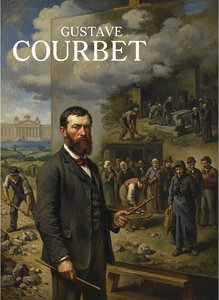
Gustave Courbet: Realism's Revolutionary Vision & the Social Canvas of 19th-Century France
Explore the revolutionary art of Gustave Courbet, pioneer of Realism. Discover his iconic paintings, social commentary, and lasting impact on 19th-century French art history. Expert analysis & insights.