

 Se i rommet
 Del som digitalt kort
 Del
Del
 Detaljer
 Studentguide

 Last ned
 Liknende objekter
 Røntgen
 Lysbildefremvisning
 Besøksstatistikk
Fruit Displayed on a Stand
 Acrylic On Canvas
- WallArt
- Impressionist Painting
 1882
1882 76.0 x 100.0 cm
 Museum of Fine Arts
 Les mer
Håndlaget oljereproduksjon
Håndmalt olje på lerret i din valgte størrelse og ramme, laget på bestilling av våre kunstnere. ( Bytt til trykkversjon Gå til digitalt bilde)




P118B Nkr10

P118H Nkr10

P118W Nkr10

P438Z Nkr10

P508JH Nkr12

P508YH Nkr12

P805H Nkr10

P805Z Nkr10

P919BZ Nkr10

P919G Nkr10

P919XJ Nkr10

P959ZH Nkr10

P968JZ Nkr12

W106C Nkr8

W218G Nkr10

W218JH Nkr8

W218Y Nkr10

W307PJ Nkr10

W316G Nkr10

W316PJ Nkr8

W316Y Nkr10

W398PJ Nkr8

W4111J Nkr10

W500HY Nkr15

W500JH Nkr15

W692G Nkr12

W849H Nkr8

W940BG Nkr15

W953PJ Nkr8




Velg mellom våre forhåndsdefinerte størrelser som bevarer kunstverkets opprinnelige proporsjoner.

Skriv inn bredden og høyden du trenger, slik at den passer til din ramme eller vegg. Dette er håndmalt, så for en størrelse med en annen form kan kunstneren male litt mer rundt bildet, eller beskjære det noe — du velger selv. Vi sender deg en digital mockup for godkjenning før maleriet påbegynnes. Bildet som vises på denne siden viser ikke det faktiske resultatet — kun mockuppen gjør det.
Etter bestilling vil OriginalUniqueArt.com-teamet sende e-post til kunden for instruksjoner og sende et utkast (mockup) som forhåndsvisning.
Verdensomspennende levering () på 3–4 uker i stedet for standard 5 uker. (26 October). Ingen kompromisser med kvaliteten.

Gratis ekspressfrakt over hele verden

Lerretsduk av høykvalitets lin

Full transportforsikring

Garanti for refusjon av toll og importavgifter

Garantert fargeekthet

100 dagers returrett ved fabrikasjonsfeil

100% pengene tilbake-garanti

Mengderabatt
 Glassalternativet er kun tilgjengelig i størrelser under 110 cm

Fruit Displayed on a Stand
Reproduksjonsmetode
Format på reproduksjon
-


Totalpris
Nkr 2854
A Snapshot of Parisian Modernity
Gustave Caillebotte's "Fruit Displayed on a Stand," painted in 1882, isn’t merely a still life; it’s a meticulously observed fragment of late 19th-century Paris. Far removed from the grand historical narratives favored by many of his contemporaries, Caillebotte chose to capture an ordinary moment – the arrangement of fruit on market stalls – transforming it into a compelling study of light, form, and urban life. This seemingly simple composition reveals a keen awareness of the burgeoning modern world, reflecting the rapid transformations occurring within the city’s bustling streets and evolving social landscape.
The painting immediately draws the eye to Caillebotte's masterful manipulation of light. He employs a broken, almost fragmented approach, utilizing short, distinct brushstrokes to capture the interplay of sunlight on the various fruits. This technique, characteristic of Impressionism, avoids smooth blending and instead creates a vibrant mosaic of color and texture. The light isn’t uniform; it pools and dances across the surfaces of the apples, oranges, grapes, and bananas, lending each element an individual luminosity. Notice how he uses reflected light – the way the fruit subtly illuminates the surrounding space – to create a sense of depth and realism that belies the painting's relatively small scale.
The Influence of Photography
Caillebotte’s artistic vision was profoundly shaped by his early fascination with photography. He saw in the medium’s ability to capture fleeting moments and precise details a new approach to representation. This influence is evident in "Fruit Displayed on a Stand" through its careful composition, sharp focus, and realistic depiction of textures – from the smooth skin of an orange to the delicate fuzz of a grape. Unlike traditional still life painters who sought to idealize their subjects, Caillebotte embraced the imperfections and irregularities of the natural world, mirroring the photographic aesthetic he admired.
Furthermore, the painting’s arrangement echoes the compositional strategies found in photographs of the time. The fruits are presented with a sense of immediacy, as if captured mid-display. The slightly tilted stand adds to this feeling of spontaneity and realism, suggesting a candid observation rather than a staged presentation. This deliberate choice reflects Caillebotte's desire to move beyond the conventions of academic painting and embrace a more direct and truthful representation of reality.
Symbolism and Urban Life
While seemingly straightforward, "Fruit Displayed on a Stand" carries subtle symbolic weight. The abundance of fruit can be interpreted as a celebration of life and prosperity – a visual metaphor for the vitality of Paris during this period of rapid industrialization and economic growth. However, the fruits themselves are not presented in an idealized manner; they are slightly bruised, imperfect, and arranged on humble market stalls. This juxtaposition hints at the realities of urban life—the contrast between wealth and poverty, abundance and scarcity.
The painting also offers a glimpse into the everyday commerce of Parisian streets. The fruit stands were vital components of the city’s economy, providing sustenance to its diverse population. Caillebotte's depiction captures this essential aspect of urban life, transforming a commonplace scene into a work of art that invites contemplation and reflection. It is a testament to his ability to find beauty and significance in the ordinary.
A Timeless Masterpiece
“Fruit Displayed on a Stand” remains a captivating example of Impressionist painting, showcasing Caillebotte’s innovative approach to light, composition, and subject matter. Its enduring appeal lies not only in its technical brilliance but also in its ability to evoke a sense of place and time—a vivid snapshot of Parisian life at the cusp of modernity. Reproductions of this work offer a remarkable opportunity to experience the artist's unique vision and appreciate the beauty found within the seemingly mundane.
Spørsmål og svar
Hvilken følelse skaper fargene i "Fruit Displayed on a Stand" av Gustave Caillebotte?
Den Neutrals fargepaletten i "Fruit Displayed on a Stand" av Gustave Caillebotte harmonerer med dens Reflective emosjonelle tone. Farge er en av måtene et verk formidler følelser på.
Kan jeg bruke utvidet virkelighet (AR) for å se "Fruit Displayed on a Stand" av Gustave Caillebotte i rommet mitt?
Siden for AR-forhåndsvisning av "Fruit Displayed on a Stand" av Gustave Caillebotte bruker utvidet virkelighet (AR) for å vise kunstverket i ditt eget rom, på en kompatibel enhet.
Når og med hvilke materialer ble "Fruit Displayed on a Stand" laget?
"Fruit Displayed on a Stand" ble laget i 1882, i Acrylic On Canvas.
Kunstnerbiografi
A Parisian of the New Age: The Life and Art of Gustave Caillebotte
Gustave Caillebotte, born in Paris in 1848, was an artist uniquely positioned to witness and capture the dramatic transformations sweeping through his city. His father, Martial Caillebotte, a successful textile businessman and judge, provided Gustave with both financial stability and a privileged vantage point—allowing him to observe firsthand the burgeoning modernity of Parisian life. Initially drawn to the structured world of law, earning degrees in 1868 and 1870, Caillebotte’s true passion ignited within the realm of art. He began his formal training under Léon Bonnat, immersing himself in painting while simultaneously developing a keen fascination with photography—a relatively new medium that would profoundly shape his artistic vision and approach to composition. This early exposure to photographic principles – its framing, perspective, and ability to freeze fleeting moments – became integral to his distinctive style, influencing how he captured the dynamism of urban life. Caillebotte wasn’t simply documenting change; he was actively engaging with the aesthetic possibilities presented by this rapidly evolving world.Realism Meets Impressionist Light
Caillebotte's artistic trajectory diverged from the rigid traditions of academic painting, yet he never fully embraced the purely optical explorations championed by many of his Impressionist contemporaries. He found a kindred spirit in artists like Edgar Degas and Giuseppe de Nittis, sharing a fascination with modern life but approaching it through a lens of meticulous realism. His early masterpiece, Les Raboteurs de Parquet (The Floor Scrapers), exhibited at the 1875 Salon, immediately established his reputation as a bold and unconventional painter. The work depicts three laborers painstakingly scraping a wooden floor – a scene rarely depicted in the high art of the time – rendered with an unflinching honesty that both shocked and captivated viewers. It wasn’t merely the subject matter—the depiction of the working class—but also the composition itself: cropped, almost jarringly direct, and deliberately devoid of sentimental idealization or romantic embellishment. This commitment to portraying contemporary life without resorting to idealized representations continued in works like View of Rooftops (Snow), where he masterfully employed a high vantage point and atmospheric effects, subtly influenced by his early interest in photography and the aesthetics of Japanese prints. However, Caillebotte wasn’t immune to the allure of Impressionism; gradually, his palette lightened, and he began experimenting with broken brushstrokes and capturing the ephemeral qualities of light – particularly evident in his stunning depictions of Parisian rooftops blanketed in snow.A Patron and a Pioneer: Navigating the Art World
Beyond his own artistic pursuits, Gustave Caillebotte played an unexpectedly significant role in supporting the burgeoning Impressionist movement. His family’s considerable wealth provided him with financial independence, allowing him to become a crucial patron of many leading artists – including Monet, Renoir, Pissarro, Cézanne, Degas, and Sisley. He wasn't merely a collector; he actively championed these artists, organizing and financing several of the Impressionist exhibitions that challenged the established norms of the official Salon. This dedication to fostering innovation extended beyond his own collection, as he meticulously curated works for galleries and museums, contributing significantly to their collections. Caillebotte’s unique perspective also manifested in his compositions; works like Boulevard vu d’en haut (Boulevard Seen from Above), painted in 1880, demonstrate a strikingly modern sensibility – employing an elevated viewpoint and dynamic cropping that subtly foreshadowed the photographic perspectives of the 20th century. This innovative approach to composition, possibly influenced by Japanese prints and his own photographic experiments, set him apart as a true pioneer within the Parisian art scene.Notable Works
- Les Raboteurs de Parquet (The Floor Scrapers) (1875): A groundbreaking work showcasing Caillebotte’s realism and unconventional composition.
- View of Rooftops (Snow) (1878): Demonstrates his use of high vantage points and atmospheric effects, influenced by photography and Japanese prints.
- Boulevard vu d’en haut (Boulevard Seen from Above) (1880): A strikingly modern composition with a dynamic perspective.
- Paris Street; Rainy Day (1877): Perhaps his most famous work, capturing the bustling energy of Parisian life in a unique and evocative manner.
- The Bezique Game(1881) : A captivating Impressionist painting of Parisian leisure.
Legacy and Rediscovery: A Modern Master Reclaimed
For decades following his death in 1894, Caillebotte’s work remained largely overlooked— overshadowed by the more celebrated figures of Impressionism. It wasn't until the late 20th century that a comprehensive reassessment of his art began to take place, fueled by scholarly research and major exhibitions. This rediscovery revealed an artist of remarkable technical skill, intellectual depth, and visionary insight. Caillebotte’s paintings are not simply depictions of modern life; they are profound meditations on the complexities of urban existence, the changing social landscape, and the evolving relationship between art and reality. His ability to seamlessly blend realism with Impressionist techniques, his innovative compositions, and his unwavering commitment to portraying the world around him have secured his place as a pivotal figure in 19th-century art—a master whose unique perspective is now widely recognized and celebrated.
Gustave Caillebotte
1848 - 1894 , Frankrike
Kort om kunstneren
- Artistic Movement Or Style: Impressionisme og Realisme
- Artists Or Movements Influenced By This Artist: ['Bonnat']
- Artists Who Influenced This Artist:
- Degas
- Nittis
- Date Of Birth: 19. august 1848
- Date Of Death: 21. februar 1894
- Full Name: Gustave Caillebotte
- Nationality: Fransk
- Notable Artworks:
- Les Raboteurs de Parquet
- Rooftop View
- Boulevard Seen
- Place Of Birth: Paris, Frankrike
Relaterte artikler
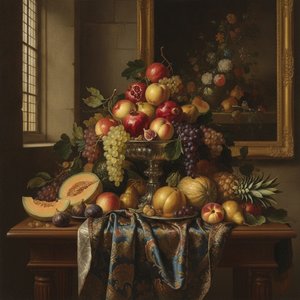
Nature's Bounty: The Art History of Fruit Arrangement Masterpieces and the Baroque Still Life Tradition
Explore the profound beauty of fruit arrangement masterpieces. From Dutch Golden Age opulence to Baroque chiaroscuro, discover the art history, symbolism, and timeless elegance of classical still life paintings for the discerning collector.
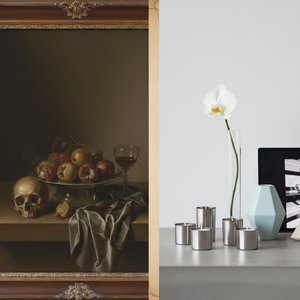
The Enduring Appeal of Still Life: A Historical & Contemporary Exploration
Explore the rich history & symbolism of still life painting with OriginalUniqueArt. Discover masterpieces from the Dutch Golden Age, learn about vanitas art, and find expert guidance for collecting timeless artworks.
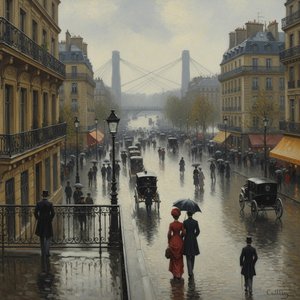
Gustave Caillebotte: Bridging Realism & Modernity in Parisian Life
Explore the life & art of Gustave Caillebotte, a pivotal figure bridging Realism & Impressionism. Discover his iconic Parisian scenes and lasting legacy with OriginalUniqueArt.

The Bountiful Still Life: Symbolism & Artistic Representation of Fruit Across Art History
Explore the rich history of still life painting & the symbolism of fruit across art movements. Discover masterpieces from Caravaggio to Cézanne with OriginalUniqueArt – expert guidance & museum-quality reproductions.

Paul Cézannes 25 Mesterverk: En Kunstnerisk Reise for Ditt Hjem
Utforsk Paul Cézannes 25 mest ikoniske malerier! Oppdag historien bak impresjonismens mesterverk, fra stilleben til landskap. Finn kunsttrykk av høy kvalitet og interiørinspirasjon på OriginalUniqueArt.com.


