Symbolisme · 1896
Junius (Gustav Klimt, 1896)
Gustav Klimt (1862–1918) har laget Junius. Den er fra 1896. Det tilhører Symbolisme-bevegelsen. Den er laget i Akryl på lerret. Mål: 41 × 31 cm
- 1896
- Akryl på lerret
- 41 × 31 cm

 Forhåndsvisning

 Håndmalt oljemaleri
 Send
 Del
 Faktablad


 Last ned bilde
 Liknende objekter
 Røntgenundersøkelse
 Lysbildefremvisning
 Spørsmål og svar

 Statistikk
Junius, kort fortalt
- Tittel
- Junius
- Kunstner
- Gustav Klimt (1862–1918)
- Kunstner født i
- Baumgarten, Østerrike
- Dato
- 1896
- Medium
- Akryl på lerret
- Dimensjoner
- 41 × 31 cm
- Bevegelse
- Symbolisme
- Motiv
- allegori, kroner, kontemplasjon, symbolikk, figurer, renaissance
Hva forestiller Junius?
Junius: A Symbolist Vision of Power and Reflection
Gustav Klimt’s “Junius,” created in 1896 during his formative years as a Symbolist painter, stands as a cornerstone of his artistic legacy—a mesmerizing blend of meticulous detail and profound symbolic resonance. Measuring 41 x 31 cm, this chalk drawing transcends mere representation; it invites contemplation on themes of authority, introspection, and the elusive quest for spiritual enlightenment. Klimt’s masterful use of texture and color contributes to an atmosphere of enigmatic beauty that continues to captivate audiences today.The Painting: A Glimpse into Symbolism
“Cite>Junius” embodies the core tenets of Symbolism—a movement rejecting realism in favor of conveying emotions and ideas through evocative imagery and veiled references. Klimt’s deliberate choice of composition—two figures adorned with crowns—immediately establishes a visual dialogue about power dynamics. The central figure, gazing downwards, symbolizes contemplation and inner turmoil, while the crowned man above represents dominion and perhaps even divine grace. This duality is skillfully rendered through Klimt's signature technique: delicate chalk strokes layered upon each other to achieve an ethereal luminescence that captures the essence of Symbolist aesthetics. It’s a deliberate departure from traditional portraiture, prioritizing emotional depth over literal accuracy—a hallmark of Klimt’s innovative approach.Symbolic Elements
The crowns themselves are laden with symbolic significance. Traditionally, they signify royalty, nobility, or spiritual ascension—concepts central to Klimt’s worldview and deeply rooted in Austro-Hungarian cultural traditions. However, within “Junius,” their downward gaze suggests a humbling awareness of mortality and the limitations inherent in earthly power. This subtle gesture speaks volumes about Klimt's preoccupation with existential questions – a core element of Symbolist thought. The interplay between light and shadow further enhances this sense of mystery, prompting viewers to ponder the deeper meanings embedded within the artwork. Klimt’s meticulous attention to detail—the intricate patterns adorning the crowns and the delicate rendering of drapery—underscores his commitment to conveying complex ideas through visual form.Artistic Influences and Style
Klimt's artistic journey was profoundly shaped by movements like Symbolism and Art Nouveau, reflecting a broader cultural fascination with decorative arts and spiritual exploration. The influence of Japanese art is palpable in Klimt’s stylistic choices—particularly the flattened perspective and stylized ornamentation—demonstrating his openness to innovative visual languages. He skillfully blended these influences, creating a style that was both opulent and subtly unsettling – mirroring the anxieties of the era. “Junius” exemplifies Klimt's ability to synthesize these movements into a singular artistic vision, resulting in a piece that feels simultaneously timeless and strikingly modern. His masterful brushwork contributes to an unparalleled textural richness, elevating the artwork beyond mere depiction to become an immersive experience for the observer.Relevance in Modern Times
Despite its creation over a century ago, “Junius” retains remarkable relevance today due to its exploration of universal human concerns—the tension between ambition and humility, contemplation and action. Klimt’s work continues to inspire artists and art enthusiasts alike, prompting discussions about the role of symbolism in conveying emotion and intellect. Furthermore, the painting's aesthetic beauty serves as a reminder of the enduring power of artistic expression to transcend temporal boundaries. It remains a powerful meditation on human vulnerability alongside aspiration—a theme that resonates powerfully with contemporary audiences.Preservation and Display
Works like “Junius” are treasured possessions of museums such as The Museum Georg Schäfer in Germany, which houses a significant collection of 19th-century German paintings. These institutions diligently safeguard these masterpieces for future generations, ensuring their accessibility to scholars and admirers worldwide. Their commitment to conservation underscores the importance of preserving cultural heritage—a legacy that extends far beyond its original context.Conclusion
Gustav Klimt’s “Junius” remains an unforgettable testament to his artistic genius and the enduring allure of Symbolism. Its captivating composition, symbolic elements, and masterful technique converge to produce a visual experience that transcends time—inviting viewers to contemplate profound questions about human existence and the pursuit of spiritual understanding. For those eager to immerse themselves in Klimt’s broader oeuvre or discover similar artworks imbued with symbolism—such as Julio Ruelas—OriginalUniqueArt.com offers exceptional reproductions that bring these iconic pieces into your home, allowing you to appreciate their beauty and intellectual depth. Experience the brilliance of Klimt’s art with OriginalUniqueArt.com's handcrafted oil painting reproductions—bringing timeless masterpieces into your living space!Høyoppløselige bilder av Junius

Fritlig eiendom: kunstneren døde i 1918.
Andre størrelser, beskjæringer og sitering →Gustav Klimt, Junius (1896). Felleseie
Spørsmål om Junius, besvart
Når ble "Junius" laget?
"Junius" dateres til 1896. Denne datoen plasserer verket innenfor Gustav Klimt sin karriere og sin epoke.
Hvilken teknikk er "Junius" laget med?
"Junius" av Gustav Klimt er utført i Akryl på lerret. Reproduksjonene har som mål å gjengi utseendet til denne teknikken.
Hva er de faktiske målene på "Junius" av Gustav Klimt?
De registrerte målene for "Junius" av Gustav Klimt er 41 x 31 cm. Reproduksjoner kan bestilles i andre størrelser med de samme proporsjonene.
Hva forestiller "Junius"?
Temaene i "Junius" av Gustav Klimt inkluderer allegori, kroner, kontemplasjon, symbolikk, figurer, renaissance, wiener secession. Sammen oppsummerer de verkets motiv.
Er bildet av "Junius" av Gustav Klimt i det frie domene?
Når det gjelder opphavsrett, er "Junius" fritt tilgjengelig – opphavsretten har utløpt.
Hvem er kunstneren bak "Junius"?
Kunstneren bak "Junius" er Gustav Klimt. Verket er katalogisert under Gustav Klimt sitt navn.
Hvilken kunstretning tilhører "Junius" av Gustav Klimt?
Kunstretningen knyttet til "Junius" av Gustav Klimt er Symbolisme. Denne klassifiseringen plasserer verket sammen med relaterte kunstnere og kunstverk.
Hvilken fase av Gustav Klimt sin kunstneriske utvikling representerer "Junius"?
"Junius" tilhører Sen Periode i Gustav Klimt sin karriere. Denne klassifiseringen knytter verket til kunstnerens utvikling.
Hvor gammel var Gustav Klimt da "Junius" ble skapt i 1896?
Gustav Klimt laget "Junius" i en alder av 34. Kunstneren ble født i 1862, og verket er datert 1896.
Om kunstneren, Gustav Klimt

1862–1918, Østerrike
Gustav Klimt
Tidlig liv, familie og utdanning I den lille byen Baumgarten, nær Wien, ble Gustav Klimt født inn i en verden der metallets glitrende skimmer var et konstant nærvær. Hans far, Ernst Klimt, tilbrakte dagene sine som gullgraver, et håndverk som krevde en stødig hånd og et øye for de fineste detaljer. Denne tidlige fortroligheten med edle metaller og graveringens presisjon skulle etter hvert finne veien inn i selve sjelen til hans senere komposisjoner. Likevel var ikke livet alltid preget av glans og letthet.
Også av Gustav Klimt
 Kyss1908
 Portrett av Adele Bloch-Bauer I1907
 Judith1901
 Portrett av baronisse Elisabeth Bachofen-Echt1916

Essays om Junius
 Masterpieces of the Habsburgs: Top 25 Must-See Artworks at the Albertina, ViennaJourney through the Albertina’s legacy with our curated guide to 25 iconic masterpieces. From Dürer's precision to Habsburg grandeur, explo…
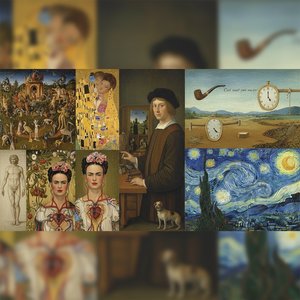 Symbolism i Kunsten: Topp 10 Verk som Forteller HistorierUtforsk symbolismens verden med topp 10 malerier fra Klimt, Munch & mer. Lær om kunsthistorien bak ikoniske verk og finn inspirasjon til in…
 Golden Splendor: The 25 Most Iconic Masterpieces by Gustav KlimtImmerse yourself in the golden splendor of Gustav Klimt. Explore 25 iconic Art Nouveau masterpieces, from The Kiss to his legendary portrai…