Northern Renaissance · 1598
Forest Landscape (Gillis Van Coninxloo, 1598)
Gillis Van Coninxloo (1544–1607) har laget Forest Landscape. Den er fra 1598. Det tilhører Northern Renaissance-bevegelsen. Den er laget i Oil On Panel. Verket er bevart ved Liechtenstein Museum i Wien, Østerrike. Mål: 42 × 61 cm
- 1598
- Oil On Panel
- 42 × 61 cm
- Liechtenstein Museum, Wien

 Forhåndsvisning

 Håndmalt oljemaleri
 Send
 Del
 Faktablad


 Last ned bilde
 Liknende objekter
 Røntgenundersøkelse
 Lysbildefremvisning
 Spørsmål og svar

 Statistikk
Forest Landscape, kort fortalt
- Tittel
- Forest Landscape
- Kunstner
- Gillis Van Coninxloo (1544–1607)
- Kunstner født i
- Antwerpen, Belgia
- Dato
- 1598
- Medium
- Oil On Panel
- Dimensjoner
- 42 × 61 cm
- Hvor det kan ses
- Liechtenstein Museum, Wien, Østerrike
- Bevegelse
- Northern Renaissance
- Periode
- Early Modern
- Motiv
- forest landscape, dark woods, path, village view, atmospheric, tranquility
Hva forestiller Forest Landscape?
Identification of the Forest Landscape Artwork
The artwork titled Forest Landscape is a painting by the Flemish artist Gillis Van Coninxloo. Executed in 1598, this work is an oil on panel. The physical dimensions of the piece are 42 x 61 cm. It is currently held within the Liechtenstein Museum in Vienna, Austria.
This specific composition depicts a dense woodland environment. The scene features a winding path that leads into a thicket of trees. The foliage consists of various shades of green, while the trunks and branches create a heavy canopy overhead. In the background, a small village is visible through the gaps in the trees, providing a sense of distance within the forest setting.
The subject matter focuses on the natural world, specifically the textures of bark, leaves, and moss. A single, small human figure is positioned beneath a tree within the landscape. The composition utilizes a dark palette of browns, greens, and ochres to define the wooded area. Light filters through the upper branches, creating a contrast between the shadowed recesses of the undergrowth and the illuminated patches of the clearing.
Composition and Visual Elements
The composition is largely symmetrical, organized around a winding path that leads the eye toward the center of the image. This path cuts through a dense woodland, where the trunks and branches of trees intertwine to form a thick canopy overhead. Only a few small patches of sky are visible through the gaps in the foliage. Within this enclosed space, a single tiny human figure reclines beneath a tree, positioned near the center of the scene. The scale of the trees and the surrounding undergrowth dwarfs the figure, emphasizing the vastness of the natural environment.
Color is concentrated in the various hues of green found in the leaves and the mossy textures of the forest floor. These greens contrast with the dark browns and ochres of the tree trunks and the earth. In the background, a small village is visible through the trees, providing a sense of distance and depth. The lighting creates a chiaroscuro effect, with strong contrasts between the deep shadows of the thickets and the light that filters through the canopy onto the path and the reclining figure.
Technique and Artistic Style
The artist utilized oil on panel to establish a sense of depth and a tangible texture across the surface. The application of paint likely involves multiple layers and glazing, a method used to achieve a specific luminosity within the darker sections of the composition. This technique allows light to appear as though it is filtering through the canopy, creating a chiaroscuro effect through the deliberate placement of light and shadow. The resulting atmosphere is defined by a palette of dark colors and a high degree of intricate detail.
The composition is built upon a dense arrangement of ancient oaks and thick undergrowth. There is a clear priority placed on the textural richness of the natural elements, specifically the bark of the trees, the individual leaves, and the presence of moss. These organic forms are rendered with meticulous care, contributing to the overall density of the woodland scene. The interplay of light and shadow defines the verticality of the trunks and the irregular shapes of the foliage, emphasizing the physical presence of the forest environment.
Artistic Influence and Legacy
Gillis Van Coninxloo occupied a central position in the evolution of Northern landscape art. His technical approach functioned as a bridge between the intricate traditions of Mannerism and the atmospheric depth characteristic of the early Baroque. Through his development of the forest landscape, he moved away from panoramic vistas toward intimate, enclosed woodland scenes. This shift prioritized the textural details of bark, leaves, and moss, often submerging small human figures within an expansive, detailed natural environment.
The influence of his method extended to several prominent painters of the period. Jan Brueghel the Elder and Pieter Schoubroeck were among those affected by his stylistic developments. His approach to dense, immersive woodland compositions also impacted the work of Roeland Savery and various other Flemish and Dutch landscape painters. This specific work, created about 1598, represents his technical skill and craftsmanship in rendering the natural world.
Hvilket museum har Forest Landscape?
Liechtenstein Museum
Wien, Østerrike
En juvel av wiensk barokkprakt Dypt inne i hjertet av Wiens historiske Ringstraße ligger Liechtenstein Museum i en ramme som er like mye et mesterverk som skattene det beskytter. Inne i det storslåtte Palais Liechtenstein tilbyr museet en oppslukende reise inn i den aristokratiske elegansen og den dype arven etter huset Liechtenstein. Når besøkende nærmer seg det palassaktige bygget, blir de møtt av den arkitektoniske storheten fra en svunnen tid, der hver forgylte gesims og hver svimlende trapp hvisker historier om imperial prestisje.


Høyoppløselige bilder av Forest Landscape

Fritlig eiendom: kunstneren døde i 1607.
Andre størrelser, beskjæringer og sitering →Gillis Van Coninxloo, Forest Landscape (1598), Liechtenstein Museum. Felleseie
Spørsmål om Forest Landscape, besvart
Hvor kan "Forest Landscape" av Gillis Van Coninxloo sees utstilt i dag?
"Forest Landscape" av Gillis Van Coninxloo er utstilt på Liechtenstein Museum, Wien, Østerrike. Museumsoppføringen refererer til originalverket, ikke til reproduksjoner.
Hva er dateringen til "Forest Landscape" av Gillis Van Coninxloo?
"Forest Landscape" av Gillis Van Coninxloo ble skapt i 1598.
Hvilken teknikk er brukt i "Forest Landscape" av Gillis Van Coninxloo?
Gillis Van Coninxloo brukte Oil On Panel-teknikken i "Forest Landscape". Teknikken definerer det materielle uttrykket til det originale verket.
Hva er de faktiske målene på "Forest Landscape" av Gillis Van Coninxloo?
"Forest Landscape" måler 42 x 61 cm i sin originale form. Originalmålene er en nyttig referanse når du skal velge størrelse på en reproduksjon.
Hva forestiller "Forest Landscape"?
Motivene i "Forest Landscape" er forest landscape, dark woods, path, village view, atmospheric, tranquility, nature scene, 16th century.
Er "Forest Landscape" fri for opphavsrett?
Når det gjelder opphavsrett, er "Forest Landscape" fritt tilgjengelig – opphavsretten har utløpt.
Hvem har skapt "Forest Landscape"?
"Forest Landscape" ble skapt av Gillis Van Coninxloo. Informasjonen på denne siden beskriver Gillis Van Coninxloo sitt originale verk.
Hvilken stilart tilhører "Forest Landscape"?
"Forest Landscape" er et verk innenfor Northern Renaissance. Retningen angir den kunstneriske tradisjonen verket er en del av.
Hvilken fase av Gillis Van Coninxloo sin kunstneriske utvikling representerer "Forest Landscape"?
I Gillis Van Coninxloo sin karriere tilhører "Forest Landscape" Late 16th Century. Denne perioden gjør det mulig å sammenligne verket med kunstnerens øvrige arbeider.
Om kunstneren, Gillis Van Coninxloo
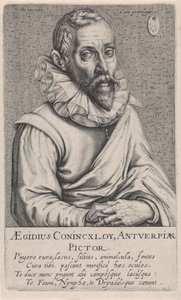
1544–1607, Belgia
Gillis Van Coninxloo
En mester av det grønne riket Gillis Van Coninxloo står som en sentral skikkelse i utviklingen av nordlig landskapskunst, og fungerer som en viktig bro mellom de intrikate manieristiske tradisjonene og den fremvoksende atmosfæriske dybden i den tidlige barokken. Han ble født i Antwerpen i Belgia, og hans liv var dypt sammenvevd med den rike kunstneriske arven i Nederlandene. Som sønn av en maler ble han oppslukt av en verden der håndverk og naturbasert observasjon var av største betydning. Hans tidlige opplæring under mestere som Pieter Coecke van Aelst den yngre og Lenaert Kroes ga ham et rigorøst fundament, men det var tiden i verkstedet til Gillis Mostaert som virkelig lot talentet hans blomstre, noe som gjorde det mulig for ham å bidra til profesjonelle verk samtidig som han foredlet sin unike visjon.
Om Gillis Van Coninxloo Fremtredende verk av Gillis Van Coninxloo
Også av Gillis Van Coninxloo
 Jonah Preaching to the Ninevites1583
 Woodland with Saint Jerome1583
 Landscape with the judgment of Midas1598
 Landscape with the Judgement of Paris1610
Essays om Forest Landscape
 French Barbizon paintersMasterpieces by Théodore Rousseau and Daubigny define the Barbizon School. Explore the full collection online at OriginalUniqueArt.com.
 Enchanted Woodlands: 10 Masterpieces That Capture the Magic of the ForestExplore iconic forest art by Shishkin, Klimt, and Van Gogh. Discover museum-quality masterpieces on OriginalUniqueArt.com.
 Mastering the Horizon: An Art Historian’s Guide to the World's Most Iconic Landscape PaintingsExplore the profound history of landscape painting with our expert guide. From Impressionist light to Chinese traditions, discover the tech…