

 Forhåndsvisning
 Send
Send Del med andre
 Vis detaljer

 Last ned bildet
 Liknende objekter
 Røntgenundersøkelse
 Lysbildefremvisning
 Statistikk
Self-Portrait as a Young Man


 Vis hele teksten
Giclée / Kunsttrykk
Giclée- eller lerretsprint av museumskvalitet med rask produksjon og fleksible valgmuligheter for etterbehandling. ( Kjøp håndlaget maleri Bytt til digitalt bilde)




P118B $10

P118H $10

P118W $10

P438Z $10

P508JH $12

P508YH $12

P805H $10

P805Z $10

P919BZ $10

P919G $10

P919XJ $10

P959ZH $10

P968JZ $12

W106C $8

W218G $10

W218JH $8

W218Y $10

W307PJ $10

W316G $10

W316PJ $8

W316Y $10

W398PJ $8

W4111J $10

W500HY $15

W500JH $15

W692G $12

W849H $8

W940BG $15

W953PJ $8




Velg mellom våre forhåndsdefinerte størrelser som bevarer kunstverkets opprinnelige proporsjoner.

Du kan oppgi egne mål for å tilpasse en spesifikk ramme eller et bestemt område. Dersom den valgte størrelsen ikke samsvarer med det originale bildets proporsjoner, vil vi enten beskjære kunstverket eller utvide bildet med en speilet eller ensfarget kant. En digital mockup vil bli sendt til din godkjenning før produksjonen starter.
Vennligst merk at forhåndsvisningen på skjermen ikke gjenspeiler den faktiske beskjæringen eller utvidelsen. Kun mockuppen vil vise den endelige komposisjonen nøyaktig.
Selv om tilpassede størrelser er tilgjengelige, anbefaler vi å velge et mål fra den forhåndsdefinerte listen for å bevare de originale proporsjonene.
Verdensomspennende levering () på 2 uker i stedet for standard 4/5 uker. (18 September)

Gratis ekspressfrakt over hele verden

Lerretsduk av høykvalitets lin

Full forsikring under transport

Garanti for refusjon av toll og importavgifter

Garantert korrekt fargegjengivelse

100 dagers returrett (kun ved mangler)

100% pengene tilbake-garanti

Rabatt ved flere kjøp
 Glassalternativet er kun tilgjengelig i størrelser under 110 cm

Self-Portrait as a Young Man
Giclée / Kunsttrykk
Størrelse på reproduksjon
-


Endelig pris
$ 80
A Glimpse of Youth and Genius: Exploring Bernini’s Self-Portrait
Gian Lorenzo Bernini's “Self-Portrait as a Young Man,” painted in 1623, isn’t merely a likeness; it’s a carefully constructed declaration of artistic ambition and nascent genius. Captured during a pivotal period of his career – just twenty-five years old when he undertook the commission – the painting offers an intimate window into the mind of a sculptor destined to reshape the very language of Baroque art. It's a study in controlled intensity, a subtle display of confidence that belies the turbulent creative journey ahead. The portrait isn’t overtly flamboyant; instead, it favors restraint and a profound understanding of light and shadow – hallmarks of Bernini’s developing style.

Baroque Drama and the Language of Gesture
Bernini’s mastery is immediately evident in his command of Baroque technique. The painting exemplifies the style's dramatic use of chiaroscuro – the stark contrast between light and dark – to sculpt volume and create a sense of three-dimensionality. Notice how the folds of his clothing seem to ripple with an inner life, and how the subtle blush on his cheeks hints at both vitality and introspection. The composition itself is carefully balanced; the young Bernini stands slightly off-center, drawing the viewer’s eye directly into his gaze. This directness, combined with the slight tilt of his head, conveys a sense of engagement and intellectual curiosity – qualities that would become central to his artistic vision.
- The Dark Background: Serves to heighten the luminosity of Bernini’s face and clothing, emphasizing his presence.
- The White Collar: A symbol of status and perhaps a subtle nod to his noble background, hinting at the patronage that fueled his career.
- Intense Gaze: Captures the artist's focused attention and intellectual curiosity – key elements of his creative process.
Symbolism and the Artist’s Identity
Beyond a simple portrait, “Self-Portrait as a Young Man” is a statement about Bernini’s artistic identity. The painting reflects his burgeoning confidence as a sculptor, foreshadowing his later monumental works like "David" and "Ecstasy of Saint Teresa." The young man's contemplative expression suggests an artist deeply engaged with the world around him, seeking to capture its beauty and emotion through his art. Some scholars believe the subtle suggestion of a dragon in the background – barely perceptible yet undeniably present – alludes to Bernini’s ambition to transform ordinary materials into extraordinary works of art, mirroring the mythical creature's ability to breathe life into inanimate objects.
A Legacy Forged in Rome
Created during a period of immense artistic and political upheaval in Rome, this self-portrait offers a glimpse into the heart of the Baroque era. Bernini’s work was deeply intertwined with the papacy, serving as both an artist and a courtier. His ability to seamlessly blend technical skill with emotional depth – qualities brilliantly displayed in this intimate portrait – cemented his place as one of the most influential artists of all time. Reproductions of “Self-Portrait as a Young Man” allow us to appreciate not only Bernini’s extraordinary talent but also the vibrant cultural landscape that shaped his genius. It remains a powerful testament to the enduring legacy of a true Renaissance man.
Om kunstneren
A Roman Genius: The Life and Legacy of Gian Lorenzo Bernini
Gian Lorenzo Bernini, a name synonymous with the Baroque era, was more than just a sculptor; he was an architect, painter, stage designer, and a true *uomo universale* – a Renaissance man who profoundly shaped the artistic landscape of 17th-century Rome. Born in Naples in 1598, his journey to becoming one of history’s most celebrated artists began within a family steeped in sculpting tradition, ultimately leading him to dominate the visual arts and redefine how art could engage the senses and evoke profound emotion. His father, Pietro Bernini, instilled in young Gian Lorenzo not only technical skills but also an early appreciation for the classical heritage that would become the bedrock of his artistic vision.Sculpting Emotion: The Birth of Baroque Drama
Bernini’s genius truly blossomed under the patronage of Cardinal Maffeo Barberini, who later ascended to the papacy as Urban VIII. This relationship proved pivotal, providing Bernini with unprecedented opportunities and shaping not only his career but also the very aesthetic sensibilities of Rome itself. He didn't simply carve stone; he breathed life into marble, capturing fleeting moments of intense psychological depth and dramatic narrative with an unparalleled skill that defined the Baroque style. Unlike the idealized forms of the Renaissance, Bernini embraced movement, theatricality, and raw human emotion. His sculptures weren’t static representations but dynamic scenes designed to elicit a visceral response from the viewer. Key elements of his distinctive style included a masterful ability to convey complex emotions through subtle shifts in facial expression and body language; an astonishing technical proficiency that allowed him to render textures – flowing hair, delicate fabrics, smooth skin – with breathtaking realism; and above all, a commitment to dramatic narrative, depicting moments of intense action or spiritual climax. The *Ecstasy of Saint Teresa*, housed within the Cornaro Chapel, stands as perhaps his most iconic achievement—a swirling composition of marble, bronze, and light that captures a mystical experience with an almost overwhelming emotional force. Works like *Apollo and Daphne* and *David* showcase this same dynamic energy, transforming stone into moments of transformation and poised tension.Beyond Sculpture: Architecture and Urban Visions
Bernini’s artistic vision extended far beyond the confines of sculpture; he was a remarkably versatile artist who made significant contributions to architecture and urban planning, fundamentally reshaping the cityscape of Rome. His architectural designs were never conceived in isolation; they were always integrated with his sculptural work, creating unified artistic experiences that blurred the boundaries between disciplines. The monumental *Baldacchino* above the high altar of St. Peter’s Basilica is a testament to this holistic approach—a soaring bronze canopy that dominates the space and draws the eye upwards in awe. He also played a pivotal role in redesigning several Roman piazzas, transforming them into vibrant public spaces. The *Fountain of the Four Rivers* in Piazza Navona, with its allegorical figures representing major rivers from different continents, is a prime example of his ability to create dynamic and engaging urban environments. His work on St. Peter’s Basilica, including the expansive colonnade that embraces visitors as they approach, dramatically altered the basilica's appearance and created a grand ceremonial space befitting the heart of Christendom.A Lasting Influence: Bernini’s Historical Significance
Gian Lorenzo Bernini profoundly impacted the course of Western art. His innovative approach to sculpture established the Baroque style as a dominant force in European art for over a century, influencing generations of artists with his dramatic compositions and technical virtuosity. He wasn't merely an imitator of classical forms; he synthesized them with a new sense of dynamism and emotional intensity, creating something entirely original. His integration of sculpture, architecture, and painting into unified artistic experiences set a new standard for artistic expression, demonstrating the power of art to engage all the senses and evoke profound emotions. As Howard Hibbard eloquently noted, Bernini’s impact was so significant that he stands as “the greatest sculptor of the 17th century.” His works continue to inspire awe and admiration, solidifying his place as one of history's most important artists—a true *uomo universale* whose legacy continues to resonate today.Family & Further Achievements
- Pietro Bernini: Gian Lorenzo’s father, a sculptor who provided early training and guidance.
- Cardinal Scipione Borghese: An early patron whose commissions allowed Bernini to develop his signature style.
- Pope Urban VIII: Bernini's most significant patron, providing extensive opportunities for architectural and sculptural projects in Rome.
- Architectural Projects: Beyond St. Peter’s Basilica, Bernini designed churches like Sant’Andrea al Quirinale and contributed to the design of Palazzo Barberini.
- Theatrical Designs: He was also a playwright and stage designer, creating elaborate sets and machinery for theatrical productions.

Gian Lorenzo Bernini
1598 - 1680 , Italia
Kort om kunstneren
- Artistic Movement Or Style: Barokk
- Artists Or Movements Influenced By This Artist:
- Barokk skulptur
- Europa kunst
- Artists Who Influenced This Artist:
- Pietro Bernini
- Michelangelo
- Date Of Birth: 7. desember 1598
- Date Of Death: 28. november 1680
- Full Name: Gian Lorenzo Bernini
- Nationality: Italiensk
- Notable Artworks:
- Ecstasy Teresa
- Apollo Daphne
- David
- Fountain Fiori
- Place Of Birth: Naples, Italia
Relaterte artikler

Barokkens drama: Å bringe prakt og følelser inn i moderne interiører
Oppdag barokkens praktfulle drama! Lær om stilens historie, kjennetegn og hvordan du kan integrere den i ditt hjem med s eksklusive kunstutvalg.

The Dramatic Flourish: Exploring the Baroque Movement's Enduring Legacy in Art History
Explore the dramatic world of Baroque art! Discover iconic artists like Caravaggio & Rubens, defining techniques, and its lasting impact on art history. Expert insights for collectors & enthusiasts at OriginalUniqueArt.

Barokkens Mesterverk: Topp 10 Kunstverk som Definerte en Epoke | OriginalUniqueArt.no
Opplev barokkens prakt! Utforsk Rembrandts, Caravaggios og Rubenses mest ikoniske verk. Lær om historien bak disse mesterverkene og finn inspirasjon til din interiørdekor på OriginalUniqueArt.com. Museums kvalitet kunsttrykk.
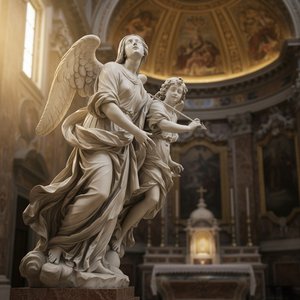
Gian Lorenzo Bernini: Sculpting Baroque Emotion & the Roman Imagination
Explore the life & revolutionary art of Gian Lorenzo Bernini, the master sculptor of the Baroque era. Discover his iconic works like David and Ecstasy of Saint Teresa – a journey into Roman artistic genius.

Theatricality & Triumph: Baroque Drama in Painting & Sculpture
Explore the dramatic world of Baroque art! Discover its history, defining characteristics, & lasting influence on painting & sculpture. Expert insights into Caravaggio, Zurbarán, and Bernini – plus high-quality reproductions at OriginalUniqueArt.
