Meny
Gratis kunstkonsultasjon
Bestill trykk Bestill trykkKjøp digitalt bilde Kjøp digitalt bilde SendSend
Vis detaljerVis detaljer Legg til i favoritter Legg til i favoritter Last ned bildetLast ned bildet Liknende objekterLiknende objekter RøntgenundersøkelseRøntgenundersøkelse LysbildefremvisningLysbildefremvisning

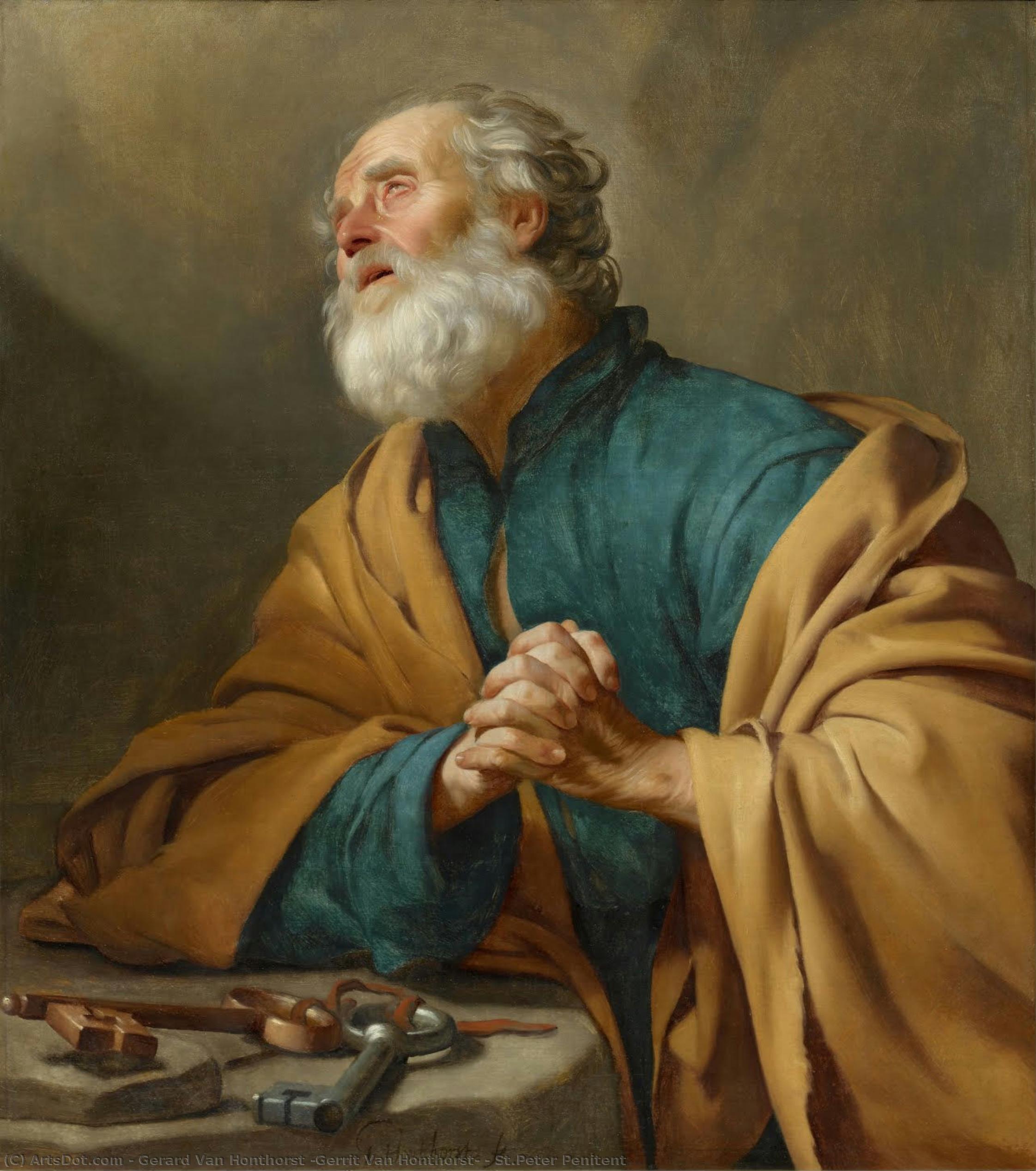
St.Peter Penitent

Experience Gerard van Honthorst's 'St. Peter Penitent,' a dramatic portrait of the remorseful saint, masterfully rendered with tenebrism and featuring intriguing tools. High-quality hand-painted reproduction available.

Gerard van Honthorst var en nederlandsk maler kjent for sin dramatiske bruk av lys og skygge (tenebrism) i portretter og bibelske scener fra den gullalderen. Oppdag hans mesterverk og inspirerende Caravaggisti-stil!

Håndlaget oljereproduksjon

Håndmalt olje på lerret i din valgte størrelse og ramme, laget på bestilling av våre kunstnere.

Standard
custom
CM
INCH

Velg mellom våre forhåndsdefinerte størrelser som bevarer kunstverkets opprinnelige proporsjoner.

bredde
høyde

Du kan angi egne mål for å tilpasse en spesifikk ramme eller plass. Dersom den valgte størrelsen ikke samsvarer med originalbildets proporsjoner, vil vi enten beskjære kunstverket eller utvide maleriet med ytterligere håndmalte elementer. En digital mockup vil bli sendt til din godkjenning før produksjonen starter.
Vennligst merk at forhåndsvisningen på skjermen ikke gjenspeiler den faktiske beskjæringen eller utvidelsen. Kun mockuppen vil vise den endelige komposisjonen nøyaktig.
Selv om tilpassede størrelser er tilgjengelige, anbefaler vi å velge et mål fra den forhåndsdefinerte listen for å bevare de originale proporsjonene.

Eksempler på hva som kan endres: Erstatt ansikt med bilde av kunden; Legg til kjæledyr (f.eks. bytt ut katt med hund); Inkluder en skjult melding i bakgrunnen; Endre bakgrunnslandskap eller elementer.
Etter bestilling vil OriginalUniqueArt.com-teamet sende e-post til kunden for instruksjoner og sende et utkast (mockup) som forhåndsvisning.

Verdensomspennende levering () på 3–4 uker i stedet for standard 5 uker. (22 July). Ingen kompromisser med kvaliteten.

why_choose_icon
Gratis ekspressfrakt over hele verden
why_choose_icon
Lerretsduk av høykvalitets lin
why_choose_icon
Full forsikring under transport
why_choose_icon
Garanti for refusjon av toll og importavgifter
why_choose_icon
Garantert korrekt fargegjengivelse
why_choose_icon
60 dagers returrett (kun ved feil)
why_choose_icon
100% pengene tilbake-garanti
why_choose_icon
Rabatt ved flere kjøp

Totalpris for bestilling

-

reproduction

St.Peter Penitent

Teknikk for reproduksjon

Størrelse på reproduksjon

-

Endelig pris

-

Kort om verket

  • Dimensions: 97 x 110 cm
  • Location: Unknown Collection
  • Artistic style: Caravaggisti
  • Movement: Dutch Golden Age
  • Subject or theme: Religious Portrait
  • Artist: Gerard van Honthorst
  • Influences: Caravaggio

Kunstighetsquiz

Det er kun ett riktig svar på hvert spørsmål.

Spørsmål 1:
What artistic movement is most strongly associated with Gerard van Honthorst’s style, as evidenced by the dramatic use of light and shadow in ‘St. Peter Penitent’?
Spørsmål 2:
The presence of wrenches and screwdrivers in the painting ‘St. Peter Penitent’ most likely represents:
Spørsmål 3:
Gerard van Honthorst is known for his depictions of artificially lit scenes. What technique did he employ to achieve this effect?
Spørsmål 4:
In what city was Gerard van Honthorst born?
Spørsmål 5:
The nickname ‘Gherardo delle Notti’ given to Gerard van Honthorst reflects his mastery of which artistic element?

Beskrivelse av kunstverket

A Study in Shadow and Faith: Gerard van Honthorst’s ‘St. Peter Penitent’

Gerard van Honthorst's “St. Peter Penitent” is more than just a portrait; it’s a profound meditation on faith, repentance, and the dramatic interplay of light and darkness – hallmarks of the artist’s distinctive style forged in the crucible of the Roman Baroque. Painted circa 1618-20, this work offers a rare glimpse into the artistic sensibilities of a master who skillfully blended Caravaggio's revolutionary tenebrism with his own nuanced approach to human emotion.

  • The Figure: The central subject is an elderly man, rendered with remarkable realism and sensitivity. His posture – head bowed, hands clasped in prayer – immediately conveys a sense of deep introspection and sorrow. The details of his weathered face, the furrowed brow, and the carefully observed folds of his blue robe speak to a life lived, perhaps one marked by both virtue and regret.
  • Caravaggio’s Legacy: Honthorst's debt to Caravaggio is undeniable. Just as Caravaggio used stark contrasts to heighten emotional impact, Honthorst employs dramatic lighting to isolate Peter within a sphere of illumination, drawing the viewer’s eye directly to his face and intensifying the sense of his inner turmoil.

  • Technical Mastery: The painting demonstrates a sophisticated understanding of oil paint techniques. Notice the subtle gradations in tone, achieved through meticulous layering and blending, creating a rich texture that adds depth and realism to the figure. The use of impasto – thick application of paint – particularly around the folds of the robe, further enhances the three-dimensional effect.

The Language of Light: Tenebrism and its Impact

Honthorst’s masterful manipulation of light is central to the painting's power. The tenebrist technique, popularized by Caravaggio, isn’t merely a stylistic choice; it’s a deliberate strategy for conveying psychological states. The deep shadows enveloping Peter suggest a hidden world of doubt and remorse, while the single source of illumination – likely from an unseen window – symbolizes divine grace or perhaps the flickering hope of redemption. This contrast creates a palpable tension within the composition, forcing the viewer to confront the complexities of faith and human fallibility.

“The darkness is not merely the absence of light,” Honthorst seems to suggest, “but an active element in the drama of the soul.”

Symbolism and Context

Beyond its immediate devotional subject matter, "St. Peter Penitent" resonates with broader symbolic meanings. The tools scattered around the figure – wrenches and screwdrivers – are a striking anomaly, introducing an element of earthly labor and repair into a scene traditionally associated with spiritual contemplation. This juxtaposition could represent the ongoing struggle between faith and worldly concerns, or perhaps the need for constant vigilance against temptation. Painted during a period of intense religious fervor and artistic innovation, the work reflects the broader cultural anxieties and aspirations of its time.

  • Historical Context: Honthorst was working in Utrecht during a period of significant artistic change, influenced by the influx of Italian artists and ideas.
  • Royal Patronage: The painting’s creation coincided with Honthorst's increasing prominence within European royal circles, including Queen Elizabeth of Bohemia, who commissioned numerous works from him.

A Timeless Masterpiece

"St. Peter Penitent" remains a compelling and emotionally resonant work of art. Its dramatic lighting, meticulous detail, and profound subject matter continue to captivate viewers centuries after its creation. It’s a testament to Gerard van Honthorst's artistic genius – a master of light, shadow, and the human condition.


Om kunstneren

A Master of Light and Shadow: The Life and Art of Gerard van Honthorst

Gerard van Honthorst emerged from Utrecht in 1592, a pivotal figure poised to illuminate the Dutch Golden Age with his dramatic artistry. Initially guided by his father, a decorative painter, young Gerard’s talent blossomed under the tutelage of Abraham Bloemaert, establishing a solid foundation in draftsmanship and composition. However, it was a transformative journey to Rome that irrevocably altered the course of his artistic development. There, amidst the fervent energy of the Italian Baroque, he encountered the groundbreaking work of Caravaggio – an encounter that would define his signature style and earn him the evocative nickname “Gherardo delle Notti,” or Gerard of the Nights. The dramatic use of *tenebrism*, a technique employing stark contrasts between light and dark, became Honthorst’s hallmark, imbuing his canvases with a palpable sense of drama and emotional intensity. He wasn't merely imitating Caravaggio; he was translating the Italian master’s innovations into a distinctly Dutch sensibility, focusing on intimate scenes illuminated by artificial light sources – candles, lamps, and fires – creating an atmosphere both realistic and deeply theatrical. This mastery over light wasn’t simply technical skill; it was a means of revealing character, of drawing the viewer into the emotional core of each scene.

Early Life and Artistic Training

Van Honthorst was born in Utrecht, the son of a decorative painter, and received his initial artistic training from his father. This early exposure to the world of visual decoration instilled in him an appreciation for detail and craftsmanship. However, it was Abraham Bloemaert, a prominent Utrecht painter himself, who provided him with a more formal education in drawing and composition. Bloemaert’s influence is evident in Honthorst's early works, characterized by their meticulous draftsmanship and balanced compositions. Around 1610, seeking further artistic development and exposure to new styles, Van Honthorst embarked on a journey to Rome – a pivotal moment that would profoundly shape his career. The Italian capital offered an unparalleled opportunity to study the masterpieces of the Renaissance and Baroque periods, particularly those of Michelangelo and Caravaggio. It was in Rome that he truly began to develop his distinctive style, absorbing the dramatic lighting and emotional intensity of Caravaggio’s paintings. This period marked a significant shift in his artistic approach, moving away from the more restrained styles prevalent in Northern Europe towards a bolder, more expressive manner.

The Roman Period: Influence of Caravaggio

Honthorst's time in Rome was marked by considerable success and patronage. He quickly gained recognition for his ability to capture the drama and intensity of Italian Baroque painting. He lodged at the *palazzo* of Vincenzo Giustiniani, a prominent art collector and patron who provided him with invaluable opportunities to study and experiment with new techniques. It was during this period that Honthorst’s style began to take shape, characterized by its dramatic use of light and shadow, its dynamic compositions, and its focus on human emotion. He produced numerous paintings depicting scenes from the Bible, mythology, and everyday life, all infused with a distinctly Caravaggian sensibility. Notably, he created *Christ Before the High Priest*, a work now residing in London’s National Gallery, which exemplifies his masterful command of light and shadow and his ability to convey profound psychological depth within his figures. This painting stands as a testament to his assimilation of Caravaggio's techniques while simultaneously injecting them with a uniquely Dutch perspective.

Return to the Netherlands and Courtly Commissions

Upon returning to Utrecht around 1620, Honthorst quickly established himself as a leading portrait painter in the Dutch Republic. His ability to capture not just physical likeness but also the character and social standing of his sitters made him highly sought after by wealthy merchants, nobles, and even royalty. He became president of the Guild of St. Luke in Utrecht in 1623, a testament to his growing influence within the artistic community. This period saw a flourishing of commissions, allowing Honthorst to refine his style and establish a distinctive voice within Dutch painting. He also undertook significant courtly commissions, including portraits for Cosimo II de' Medici, Grand Duke of Tuscany, further solidifying his reputation as one of the most accomplished artists of his time. These works demonstrate his versatility and his ability to adapt his style to suit the tastes of different patrons.

Legacy and Artistic Significance

Gerard van Honthorst’s influence resonated far beyond his lifetime. He was a key figure in the *Utrecht Caravaggisti* movement – a group of Dutch painters who embraced Caravaggio's dramatic realism and *tenebrism*. Alongside artists like Hendrick ter Brugghen and Dirck van Baburen, he helped to establish a distinctly Dutch interpretation of Italian Baroque style. His emphasis on genre scenes illuminated by artificial light, his masterful portraits, and his ability to convey emotional depth through skillful use of chiaroscuro left an indelible mark on the development of Dutch Golden Age painting. His paintings continue to captivate audiences today, demonstrating his enduring artistic skill and his profound understanding of human emotion. He cemented his place as a pivotal figure in art history, bridging the gap between Italian Baroque innovation and the flourishing artistic landscape of the Netherlands. Van Honthorst’s legacy lies not only in his individual masterpieces but also in his role as a catalyst for artistic change within the Dutch Republic.
Gerard van Honthorst

Gerard van Honthorst

1590 - 1656 , Nederland

Kort om kunstneren

  • Artistic Movement Or Style: Barok, Caravaggisme
  • Artists Or Movements Influenced By This Artist: ['Utrecht Caravaggisti']
  • Artists Who Influenced This Artist: ['Caravaggio']
  • Date Of Birth: 1590
  • Date Of Death: 1656
  • Full Name: Gerard van Honthorst
  • Nationality: Nederlands
  • Notable Artworks:
    • Kristus foran høvdingen
    • Messaselskapet
    • Diana og Apollo
  • Place Of Birth: Utrecht, Nederland
Utforsk kunstverk organisert etter temaer, stiler og kjennetegn.