Meny
Text size

() ·

A painting made for you, by hand

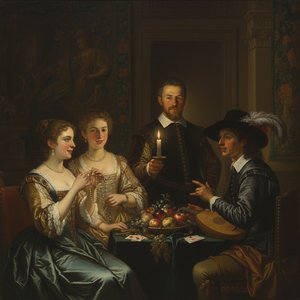
Meleager und Atalante

Håndlaget oljereproduksjon

Håndmalt olje på lerret i din valgte størrelse og ramme, laget på bestilling av våre kunstnere. ( Bytt til trykk Bytt til digitalt bilde)

Beskrivelse av objektet

Explore 'Meleager and Atalante' by Gerard van Honthorst! This Baroque masterpiece captures a thrilling mythological hunt with dramatic light & shadow, showcasing Dutch Golden Age artistry.

Om kunstneren

Gerard van Honthorst var en nederlandsk maler kjent for sin dramatiske bruk av lys og skygge (tenebrism) i portretter og bibelske scener fra den gullalderen. Oppdag hans mesterverk og inspirerende Caravaggisti-stil!

from ·

Chapter 1

How large should it be?

Slide to change the size; the picture on the left shows the frame at its real width. The proportions of the original are kept.

Standardformat
skreddersydd
CM
INCH

Velg mellom våre forhåndsdefinerte størrelser som bevarer kunstverkets opprinnelige proporsjoner.

bredde
høyde

Skriv inn ønsket bredde og høyde for å tilpasse bildet til din ramme eller vegg. Siden dette er håndmalt, kan kunstneren male litt mer rundt motivet eller beskjære det noe dersom du velger et annet format — valget er ditt. Vi sender deg en digital mockup til godkjenning før maleriet påbegynnes. Bildet som vises på denne siden representerer ikke det faktiske resultatet — kun mockuppen viser det endelige uttrykket.

Chapter 2

How should it arrive?

Choose the edges of the stretched canvas

Choose your frame

Corner sample of the WhiteWrap canvas edge finish, stretched on massivt tre bars
White Nkr1
Corner sample of the BlurSideWrap canvas edge finish, stretched on massivt tre bars
Blurside Nkr1
Corner sample of the ExtendedWrap canvas edge finish, stretched on massivt tre bars
Extended Nkr1
Corner sample of the P118B picture frame: støpt polystyren, 5 cm wide and 3 cm thick
P118B Nkr10
Corner sample of the P118H picture frame: støpt polystyren, 5 cm wide and 3 cm thick
P118H Nkr10
Corner sample of the P118W picture frame: støpt polystyren, 5 cm wide and 3 cm thick
P118W Nkr10
Corner sample of the P438Z picture frame: støpt polystyren, 5.5 cm wide and 3.5 cm thick
P438Z Nkr10
Corner sample of the P508JH picture frame: støpt polystyren, 7 cm wide and 3.5 cm thick
P508JH Nkr12
Corner sample of the P508YH picture frame: støpt polystyren, 7 cm wide and 3.5 cm thick
P508YH Nkr12
Corner sample of the P805H picture frame: støpt polystyren, 5 cm wide and 3.5 cm thick
P805H Nkr10
Corner sample of the P805Z picture frame: støpt polystyren, 5 cm wide and 3.5 cm thick
P805Z Nkr10
Corner sample of the P919BZ picture frame: støpt polystyren, 7 cm wide and 3.5 cm thick
P919BZ Nkr10
Corner sample of the P919G picture frame: støpt polystyren, 7 cm wide and 3.5 cm thick
P919G Nkr10
Corner sample of the P919XJ picture frame: støpt polystyren, 7 cm wide and 3.5 cm thick
P919XJ Nkr10
Corner sample of the P959ZH picture frame: støpt polystyren, 5 cm wide and 3 cm thick
P959ZH Nkr10
Corner sample of the P968JZ picture frame: støpt polystyren, 6 cm wide and 4 cm thick
P968JZ Nkr12
Corner sample of the W106C picture frame: massivt tre, 5 cm wide and 3 cm thick
W106C Nkr8
Corner sample of the W218G picture frame: massivt tre, 5 cm wide and 3 cm thick
W218G Nkr10
Corner sample of the W218JH picture frame: massivt tre, 5 cm wide and 3 cm thick
W218JH Nkr8
Corner sample of the W218Y picture frame: massivt tre, 5 cm wide and 3 cm thick
W218Y Nkr10
Corner sample of the W307PJ picture frame: massivt tre, 6 cm wide and 3 cm thick
W307PJ Nkr10
Corner sample of the W316G picture frame: massivt tre, 6 cm wide and 3 cm thick
W316G Nkr10
Corner sample of the W316PJ picture frame: massivt tre, 6 cm wide and 3 cm thick
W316PJ Nkr8
Corner sample of the W316Y picture frame: massivt tre, 6 cm wide and 3 cm thick
W316Y Nkr10
Corner sample of the W398PJ picture frame: massivt tre, 5 cm wide and 3 cm thick
W398PJ Nkr8
Corner sample of the W4111J picture frame: massivt tre, 6.5 cm wide and 3.5 cm thick
W4111J Nkr10
Corner sample of the W500HY picture frame: massivt tre, 7 cm wide and 5 cm thick
W500HY Nkr15
Corner sample of the W500JH picture frame: massivt tre, 7 cm wide and 5 cm thick
W500JH Nkr15
Corner sample of the W692G picture frame: massivt tre, 8 cm wide and 4 cm thick
W692G Nkr12
Corner sample of the W849H picture frame: massivt tre, 5 cm wide and 3 cm thick
W849H Nkr8
Corner sample of the W940BG picture frame: massivt tre, 7.5 cm wide and 4.5 cm thick
W940BG Nkr15
Corner sample of the W953PJ picture frame: massivt tre, 6 cm wide and 3.5 cm thick
W953PJ Nkr8
Corner sample of the H24-GOLD picture frame: utskåret tre med gesso, 10 cm wide and 6 cm thick
H24-GOLD Nkr30
Corner sample of the H24-SILVER picture frame: utskåret tre med gesso, 10 cm wide and 6 cm thick
H24-SILVER Nkr30
Corner sample of the H36-GOLD picture frame: utskåret tre med gesso, 15 cm wide and 6.5 cm thick
H36-GOLD Nkr45
Corner sample of the H36-SILVER picture frame: utskåret tre med gesso, 15 cm wide and 6.5 cm thick
H36-SILVER Nkr45

Moulding: . Overall size with the frame: .

Chapter 3

Who paints it, and should anything change?

Examples of what can be changed: Replace face with customer photo; Add pet (e.g., replace cat with dog); Include hidden message in background; Change background landscape or elements.
After order, OriginalUniqueArt.com team will email client for instructions and provide a mockup preview

Verdensomspennende levering () på 3–4 uker i stedet for standard 5 uker. (30 October). Ingen kompromisser med kvaliteten.

Chapter 4

The finishing touches

A nameplate, as in a museum?

Detaljer om gravert bronseplate

This elegant plaque features the artist's name and the title of the artwork, finely engraved for a timeless presentation.

It is made from bronze with a refined, elegant finish. The text is precisely laser-engraved for a sharp and permanent result. Measuring 9x2 cm, the plaque is compact yet easy to read. It's built to be durable and scratch-resistant, offering a professional, museum-quality look. Mounting is simple thanks to the included adhesive backing.

Detaljer om gjennomsiktig akrylplate

The plaque includes essential engraved details such as the artist's name, the title of the artwork, the date it was created, the type of media used-like oil on canvas or watercolor-a brief description of the piece, and a QR code that links to the complete artwork information.

It is crafted from clear acrylic, offering a sleek, modern appearance. The text is UV-engraved in black to ensure strong visual contrast. With a size of 10x15 cm, it ensures optimal readability. It comes equipped with two metal hooks for secure wall mounting. The plaque is designed to be weather-resistant, making it suitable for various environments, and it includes interactive features that work seamlessly with smartphone scanning.

Detaljer om plakett i svart akryl

This elegant plaque includes engraved information such as the artist's name, the title of the artwork, the date it was created, the type of media used (like oil on canvas or watercolor), a short description of the artwork, and a QR code for quick access to more information.

The plaque itself is made from refined black acrylic with a premium finish. The text is laser-engraved in white for high contrast and readability. Its size is 10x15 cm, designed to be easy to read. It comes with two metal hooks for professional mounting. The design is sleek and fits any interior style. It is also weather-resistant and durable, with built-in digital integration for mobile compatibility.

A protective varnish?

When do you need it?

Chapter 5

Your painting, as you ordered it

Meleager und Atalante

Trykkmetode

Størrelse på reproduksjon

-

Utvalgte mesterkunstnere

Mer detaljrikdom, finesse og ekstra produksjonstid

-

Innramming av reproduksjon

-

-

For kunstverk eller reproduksjoner som er større enn 105 cm (ca. 41 tommer) på noen side, vil rammen bli sendt som et sett som må monteres. Denne metoden sikrer trygg levering og forhindrer skader under transport.

Krever profesjonell montering – dette er ikke et DIY-produkt.
Settet må monteres og lerretet strammes av en erfaren profesjonell rammelegger, ved bruk av trelim (følger ikke med), en lerretstang og klemmer for å holde rammelisten vinkelrett mens limet tørker. Feilaktig montering eller ujevn stramming av lerretet kan påføre kunstverket permanente skader og er ikke dekket av vår garanti.

  • Alle massive trelister er inkludert, presist tilpasset i størrelse.

  • Monteres med de medfølgende skruene, samt trelim til hjørnene, som ikke er inkludert og må anskaffes av din rammehandler.

  • Profesjonelt verktøy er nødvendig og er ikke inkludert: en lerretstang (strammer) og klemmer for å holde rammene vinkelrette mens limet tørker.

Viktig:
Hjørnene krever trelim, listene må holdes på plass med tvinger til limet er helt tørt, og stramming av lerretet på den ferdige rammen krever en lerretstang. Ingen av disse produktene er inkludert i settet. Vennligst sørg for tilgang til en erfaren profesjonell rammehandler før du bestiller denne størrelsen.

Navneskilt

-

-

Beskyttende ferniss

Blank lakk (forsterker farger, beskytter mot lys og fuktighet)

-

Tilpass mitt kunstverk

Eksempler på hva som kan endres: Erstatt ansikt med bilde av kunden; Legg til kjæledyr (f.eks. bytt ut katt med hund); Inkluder en skjult melding i bakgrunnen; Endre bakgrunnslandskap eller elementer.

-

Ekspresslevering

Verdensomspennende levering () på 3–4 uker i stedet for standard 5 uker. (30 October). Ingen kompromisser med kvaliteten.

-

Ekspresslevering

Verdensomspennende levering til innen 5 uker. (6 November).

Inkludert frakt

Totalpris for valgte alternativer

Nkr 2883

Totalpris Nkr 2883

Glassalternativet er kun tilgjengelig i størrelser under 110 cm

Included with every order

  • Gratis ekspressfrakt over hele verden
  • Lerretsduk av lin av høy kvalitet
  • Full transportforsikring
  • Garanti for refusjon av toll og importavgifter
  • Garantert fargegjengivelse
  • 100 dagers returrett ved fabrikasjonsfeil
  • 100% pengene tilbake-garanti
  • Rabatt ved flere kjøp

Meleager and Atalante: A Baroque Dance of Myth and Light

Gerard van Honthorst’s “Meleager und Atalante,” painted in 1632, isn't merely a depiction of a classical myth; it’s a carefully orchestrated tableau vivant—a stage set for a dramatic narrative rendered with the masterful precision characteristic of the Dutch Golden Age. The painting captures a pivotal moment from Greek mythology: the hunt for the Calydonian boar, specifically the scene where Meleager, son of King Oeneus, and Atalante, renowned for her archery skills, engage in a spirited chase, their fates intertwined with the formidable beast. Yet, Honthorst elevates this ancient tale beyond simple illustration, transforming it into a vibrant exploration of youthful passion, heroic endeavor, and the interplay of light and shadow—elements that define his signature style.

The composition is remarkably dynamic, drawing the viewer directly into the heart of the action. A group of figures – hunters, attendants, and onlookers – are clustered within a richly detailed courtyard setting. The central focus rests on Meleager and Atalante, their movements frozen in a moment of intense pursuit. Notice how Honthorst doesn’t depict a single, decisive blow against the boar; instead, he captures the *process* of the hunt—the anticipation, the exertion, and the shared determination etched on their faces. The figures are not static portraits but active participants within a larger drama, contributing to the painting's overall sense of movement and immediacy.

The Language of Light: Honthorst’s Caravaggist Technique

Honthorst’s genius lies in his command of *tenebrism*, a technique borrowed directly from the Italian painter Caravaggio. This dramatic use of light and dark isn't simply an aesthetic choice; it serves to heighten the emotional intensity of the scene and guide the viewer’s eye. A single, brilliant lantern illuminates Meleager and Atalante, casting deep shadows that envelop the surrounding figures and create a sense of mystery and suspense. The stark contrast between light and shadow emphasizes their heroic stature, highlighting their youthful energy and determination against the backdrop of the shadowy courtyard.

Observe how Honthorst meticulously renders the textures – the rough fabric of the hunters’ tunics, the polished surfaces of the weapons, the glistening skin of Meleager's arm. This attention to detail is further enhanced by his skillful use of color—rich reds and browns dominate the palette, creating a warm, earthy atmosphere that contrasts sharply with the cool blues and greens used for the shadows. The light itself seems almost tangible, radiating from the lantern and bathing the scene in an ethereal glow.

Symbolism and Courtly Grace

Beyond the immediate narrative of the hunt, “Meleager und Atalante” is laden with symbolic meaning. The boar itself represents chaos and danger—a force that must be subdued to restore order and harmony. Meleager and Atalante, as the hunters, embody courage, skill, and youthful vitality. Their intertwined pursuit suggests a shared destiny, a bond forged in the crucible of heroic endeavor.

The setting – a courtyard with a dining table and chairs – hints at the aristocratic context of the scene. The painting was originally part of the collection of Frederik Hendrik van Oranje-Nassau, a prominent Dutch statesman and art collector. This royal provenance adds another layer of significance to the work, suggesting that it was intended as a decorative element for a grand interior—a testament to the wealth and power of the Dutch Republic during its Golden Age. The inclusion of the lute, a symbol of female sexuality and pleasure, subtly underscores the romantic tension between Meleager and Atalante.

A Timeless Masterpiece: Reproduction and Legacy

“Meleager und Atalante” remains a captivating work of art, admired for its dramatic composition, masterful technique, and evocative symbolism. Reproductions offer an accessible way to experience the beauty and power of this iconic painting, bringing its vibrant colors and dynamic energy into any space. Whether displayed in a formal gallery or a cozy living room, this Baroque masterpiece continues to inspire awe and wonder—a timeless reminder of the enduring appeal of classical mythology and the artistry of Gerard van Honthorst.

Spørsmål og svar

Hvordan passer "Meleager und Atalante" inn i Gerard van Honthorst sin tematikk og stil?

I Gerard van Honthorst sitt kunstnerskap befinner "Meleager und Atalante" seg innenfor Baroque Painting-stilen, sammen med temaene caravaggio’s dramatic light, dutch courtly life, grace, mythological narrative, drama, honthorst’s signature style, royal patronage, influence.

Hvordan laster jeg ned bildet av "Meleager und Atalante" av Gerard van Honthorst?

Nedlasting er tilgjengelig for "Meleager und Atalante": kunstverkets Last ned digitalt bilde-side tilbyr nedlasting av et digitalt bilde i høy oppløsning.

Hvilken underliggende nyanse preger "Meleager und Atalante" av Gerard van Honthorst?

En Ochre to Sepia nyanse preger "Meleager und Atalante" av Gerard van Honthorst.

More about this painting

Forhåndsvisning Se i AR Bytt til trykk Bytt til digitalt bilde Send
Vis detaljer Utskriftsvennlig guide Legg til i favoritter Last ned bilde Liknende objekter Røntgenundersøkelse Lysbildefremvisning Q&A Statistikk

In numbers

  • 1632the year it was painted
  • 29frames to choose from
  • standard sizes, in its own proportions
  • 5weeks to paint and deliver it
Gerard van Honthorst

Gerard van Honthorst

1590 - 1656, Nederland

Quick facts about Gerard van Honthorst

  • Artistic Movement Or Style: Barok, Caravaggisme
  • Artists Or Movements Influenced By This Artist: ['Utrecht Caravaggisti']
  • Artists Who Influenced This Artist: ['Caravaggio']
  • Date Of Birth: 1590
  • Date Of Death: 1656
  • Full Name: Gerard van Honthorst
  • Nationality: Nederlands
  • Notable Artworks:
    • Kristus foran høvdingen
    • Messaselskapet
    • Diana og Apollo
  • Place Of Birth: Utrecht, Nederland

Om kunstneren

A Master of Light and Shadow: The Life and Art of Gerard van Honthorst

Gerard van Honthorst emerged from Utrecht in 1592, a pivotal figure poised to illuminate the Dutch Golden Age with his dramatic artistry. Initially guided by his father, a decorative painter, young Gerard’s talent blossomed under the tutelage of Abraham Bloemaert, establishing a solid foundation in draftsmanship and composition. However, it was a transformative journey to Rome that irrevocably altered the course of his artistic development. There, amidst the fervent energy of the Italian Baroque, he encountered the groundbreaking work of Caravaggio – an encounter that would define his signature style and earn him the evocative nickname “Gherardo delle Notti,” or Gerard of the Nights. The dramatic use of *tenebrism*, a technique employing stark contrasts between light and dark, became Honthorst’s hallmark, imbuing his canvases with a palpable sense of drama and emotional intensity. He wasn't merely imitating Caravaggio; he was translating the Italian master’s innovations into a distinctly Dutch sensibility, focusing on intimate scenes illuminated by artificial light sources – candles, lamps, and fires – creating an atmosphere both realistic and deeply theatrical. This mastery over light wasn’t simply technical skill; it was a means of revealing character, of drawing the viewer into the emotional core of each scene.

Early Life and Artistic Training

Van Honthorst was born in Utrecht, the son of a decorative painter, and received his initial artistic training from his father. This early exposure to the world of visual decoration instilled in him an appreciation for detail and craftsmanship. However, it was Abraham Bloemaert, a prominent Utrecht painter himself, who provided him with a more formal education in drawing and composition. Bloemaert’s influence is evident in Honthorst's early works, characterized by their meticulous draftsmanship and balanced compositions. Around 1610, seeking further artistic development and exposure to new styles, Van Honthorst embarked on a journey to Rome – a pivotal moment that would profoundly shape his career. The Italian capital offered an unparalleled opportunity to study the masterpieces of the Renaissance and Baroque periods, particularly those of Michelangelo and Caravaggio. It was in Rome that he truly began to develop his distinctive style, absorbing the dramatic lighting and emotional intensity of Caravaggio’s paintings. This period marked a significant shift in his artistic approach, moving away from the more restrained styles prevalent in Northern Europe towards a bolder, more expressive manner.

The Roman Period: Influence of Caravaggio

Honthorst's time in Rome was marked by considerable success and patronage. He quickly gained recognition for his ability to capture the drama and intensity of Italian Baroque painting. He lodged at the *palazzo* of Vincenzo Giustiniani, a prominent art collector and patron who provided him with invaluable opportunities to study and experiment with new techniques. It was during this period that Honthorst’s style began to take shape, characterized by its dramatic use of light and shadow, its dynamic compositions, and its focus on human emotion. He produced numerous paintings depicting scenes from the Bible, mythology, and everyday life, all infused with a distinctly Caravaggian sensibility. Notably, he created *Christ Before the High Priest*, a work now residing in London’s National Gallery, which exemplifies his masterful command of light and shadow and his ability to convey profound psychological depth within his figures. This painting stands as a testament to his assimilation of Caravaggio's techniques while simultaneously injecting them with a uniquely Dutch perspective.

Return to the Netherlands and Courtly Commissions

Upon returning to Utrecht around 1620, Honthorst quickly established himself as a leading portrait painter in the Dutch Republic. His ability to capture not just physical likeness but also the character and social standing of his sitters made him highly sought after by wealthy merchants, nobles, and even royalty. He became president of the Guild of St. Luke in Utrecht in 1623, a testament to his growing influence within the artistic community. This period saw a flourishing of commissions, allowing Honthorst to refine his style and establish a distinctive voice within Dutch painting. He also undertook significant courtly commissions, including portraits for Cosimo II de' Medici, Grand Duke of Tuscany, further solidifying his reputation as one of the most accomplished artists of his time. These works demonstrate his versatility and his ability to adapt his style to suit the tastes of different patrons.

Legacy and Artistic Significance

Gerard van Honthorst’s influence resonated far beyond his lifetime. He was a key figure in the *Utrecht Caravaggisti* movement – a group of Dutch painters who embraced Caravaggio's dramatic realism and *tenebrism*. Alongside artists like Hendrick ter Brugghen and Dirck van Baburen, he helped to establish a distinctly Dutch interpretation of Italian Baroque style. His emphasis on genre scenes illuminated by artificial light, his masterful portraits, and his ability to convey emotional depth through skillful use of chiaroscuro left an indelible mark on the development of Dutch Golden Age painting. His paintings continue to captivate audiences today, demonstrating his enduring artistic skill and his profound understanding of human emotion. He cemented his place as a pivotal figure in art history, bridging the gap between Italian Baroque innovation and the flourishing artistic landscape of the Netherlands. Van Honthorst’s legacy lies not only in his individual masterpieces but also in his role as a catalyst for artistic change within the Dutch Republic.

Kort om verket

  • Notable elements: Tenebrism, Caravaggism
  • Artistic style: Dramatic lighting
  • Title: Meleager und Atalante
  • Subject or theme: Mythological scene
  • Medium: Oil on canvas
  • Artist: Gerard van Honthorst

Kunnequiz om kunst

Det er kun ett riktig svar på hvert spørsmål.

Spørsmål 1:
What mythological scene is depicted in Gerard van Honthorst’s ‘Meleager und Atalante’?
Spørsmål 2:
Which artistic technique is most prominently featured in ‘Meleager und Atalante’?
Spørsmål 3:
According to the description, where was ‘Meleager und Atalante’ originally displayed?
Spørsmål 4:
What historical period does the painting primarily reflect?
Spørsmål 5:
Gerard van Honthorst is known for his influence from which artist?
Utforsk kunstverk organisert etter temaer, stiler og kjennetegn.