Cubist
untitled (Georges Braque)
Georges Braque (1882–1963) har skapt untitled. Det tilhører Cubist-bevegelsen. Laget i Oil On Canvas.
- Oil On Canvas

 Forhåndsvisning

 Håndmalt oljemaleri
 Send
 Del
 Faktablad for elever


 Last ned bilde
 Liknende objekter
 Røntgenundersøkelse
 Lysbildefremvisning
 Spørsmål og svar

 Statistikk
untitled, kort fortalt
- Tittel
- untitled
- Kunstner
- Georges Braque (1882–1963)
- Kunstner født i
- Argenteuil, Frankrike
- Materiale
- Oil On Canvas
- Bevegelse
- Cubist
- Tidsperiode
- Modern
- Motiv
- geometric shapes, monochrome palette, fragmented composition, chair arrangement, analytical cubism, spatial illusion
Hva forestiller untitled?
The Architecture of Perception: Deconstructing Reality in Braque’s Vision
In the quiet revolution that redefined the boundaries of modern vision, Georges Braque’s “untitled (7718)” emerges as a profound meditation on the nature of sight itself. This seminal work of Analytic Cubism does not merely present a still life; it orchestrates a complex symphony of fragmented forms and muted tones that challenge the viewer to look beyond the surface. At first glance, one perceives the familiar—a chair, perhaps, adorned with the humble artifacts of daily existence: vases, books, bottles, and a bowl. Yet, as the eye lingers, the solidity of these objects begins to dissolve into a rhythmic dance of geometric planes. Braque invites us into a world where the boundaries between object and space are intentionally blurred, creating an immersive experience that transcends mere representation.
The mastery of this piece lies in its radical technique, a meticulous deconstruction of form that was revolutionary for the dawn of the 20th century. Eschewing the vibrant, emotive colors of Fauvism, Braque employs an austere and sophisticated palette dominated by grayscale, subtle browns, and soft beiges. This monochromatic approach serves a higher intellectual purpose: it strips away the distraction of color to focus the viewer's attention on the structural integrity of the composition. Through layered brushstrokes and a careful interplay of light and shadow, the artist creates a sense of depth through overlapping triangles, rectangles, and cubes. The result is a tactile, textured surface that feels both intellectually rigorous and deeply contemplative.
A Legacy of Innovation and Emotional Resonance
To understand this artwork is to understand the historical seismic shift occurring in Paris around 1908. Influenced by the structural lessons of Cézanne, Braque sought to capture the essence of an object from multiple viewpoints simultaneously. This was not a pursuit of visual accuracy, but an exploration of how we perceive reality through time and movement. The painting embodies the scientific and mathematical fascinations of its era, reflecting a desire to find the underlying geometric truth within the chaos of the physical world. There is a profound sense of order hidden within the apparent fragmentation, a structured logic that guides the gaze across the canvas along vertical axes and angular intersections.
For the discerning collector or interior designer, this reproduction offers more than just a decorative element; it provides a focal point of intellectual depth and quiet elegance. The somber, muted atmosphere of the piece lends itself beautifully to sophisticated spaces, where its complex textures can interact with natural light to create an aura of timelessness. Whether placed in a contemporary studio or a classic study, Braque’s work evokes a sense of introspection and stability. It is a piece that does not shout for attention but rather commands it through its subtle complexity, making it an enduring choice for those who appreciate art that stimulates the mind as much as it delights the eye.
Høyoppløselige bilder av untitled
Beskyttet av opphavsrett: disse filene er kun til personlig bruk og utgjør ikke en lisens for gjenopptrykk.
Georges Braque, untitled.
Spørsmål om untitled, besvart
Hvilken teknikk er brukt i "untitled" av Georges Braque?
"untitled" er utført i Oil On Canvas.
Hva forestiller "untitled" av Georges Braque?
Motivene i "untitled" er geometric shapes, monochrome palette, fragmented composition, chair arrangement, analytical cubism, spatial illusion, texture variation.
Er "untitled" fri for opphavsrett?
Opphavsrettslig status for "untitled" av Georges Braque: verket er fortsatt beskyttet av opphavsretten. Dette avgjør om det er tillatt å lage frie reproduksjoner av bildet.
Hvem har skapt "untitled"?
"untitled" tilskrives Georges Braque.
Hvilken kunstretning tilhører "untitled" av Georges Braque?
"untitled" av Georges Braque tilhører Cubist-retningen. Denne retningen gir det stilistiske kontekstet til verket.
Hvilken periode i Georges Braque sin karriere tilhører "untitled"?
"untitled" tilhører Mature Period i Georges Braque sin karriere. Denne klassifiseringen knytter verket til kunstnerens utvikling.
Hvorfor er den opphavsrettslige statusen til "untitled" slik den er?
"untitled" av Georges Braque er fortsatt beskyttet av opphavsretten. Opphavsretten beregnes fra kunstnerens dødsår, og Georges Braque døde i 1963.
Hva har "untitled" til felles med resten av Georges Braque sin produksjon?
I Georges Braque sitt kunstnerskap befinner "untitled" seg innenfor Cubist-stilen, sammen med temaene analytical cubism, formal experimentation, spatial distortion, geometric reduction, legacy braque’s contribution.
Hvor plasserer "untitled" seg blant Georges Braque sine gjentakende motiver?
"untitled" skildrer geometric shapes, monochrome palette, fragmented composition, chair arrangement, analytical cubism, spatial illusion, texture variation, mens de dokumenterte temaene til Georges Braque er analytical cubism, formal experimentation, spatial distortion, geometric reduction, legacy braque’s contribution. En sammenligning av disse viser hvordan verket relaterer seg til kunstnerens faste motiver.
Om kunstneren, Georges Braque
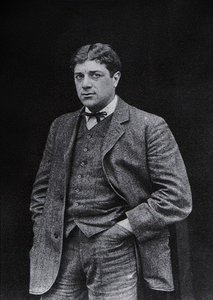
1882–1963, Frankrike
Georges Braque
Tidlig liv, familie og utdanning Georges Braque ble født i Argenteuil, Frankrike, i 1882. Hans tidlige år ble tilbrakt i Le Havre, Frankrike, i et hjem preget av dekorasjonens og fargenes praktiske realiteter. Ved å vokse opp i en familie av husmalere og dekoratører, ble han fra ung alder fordypet i håndverkets taktile virkelighet. Denne oppveksten la et fundament av teknisk mesterskap som senere skulle prege hans tilnærming til lerretet.
Andre verk av Georges Braque
 Mandola1910
 Mannen med gitaren1914
 Hus ved L'estaque
 Harbor i Normandie1909
Essays om untitled
 From Cézanne to Cubism: The Revolutionary Evolution of Modern Art's Structural VisionExplore the profound transition from Cézanne’s structural Post-Impressionism to the revolutionary fractured forms of Cubism. A sophisticate…
 Mastering Cubism: The Top 25 Georges Braque ArtworksJourney through the revolutionary world of Georges Braque. Explore 25 iconic Cubist masterpieces, from geometric abstractions to timeless s…
 Georges Braque: The Architect of Form and the Soul of Cubist RevolutionExplore the profound legacy of Georges Braque, a master of Cubism. Discover how his technical craftsmanship and collaboration with Picasso …