

 Se i rommet
 Del som digitalt kort
 Del
Del
 Detaljer
 Studentguide

 Last ned
 Liknende objekter
 Røntgen
 Lysbildefremvisning
 Besøksstatistikk
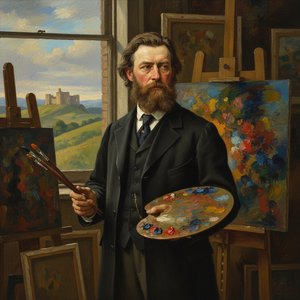
John Trayner, Lord Trayner
 Akryl på lerret
- Veggkunst
- Canadian Impressionism
 135.0 x 100.0 cm
 University of Dundee
 Les mer
Giclée / Kunsttrykk
Giclée- eller lerretsprint av museumskvalitet med rask produksjon og fleksible valgmuligheter for etterbehandling. ( Bestill håndmalt reproduksjon Gå til digitalt bilde)




P118B Nkr10

P118H Nkr10

P118W Nkr10

P438Z Nkr10

P508JH Nkr12

P508YH Nkr12

P805H Nkr10

P805Z Nkr10

P919BZ Nkr10

P919G Nkr10

P919XJ Nkr10

P959ZH Nkr10

P968JZ Nkr12

W106C Nkr8

W218G Nkr10

W218JH Nkr8

W218Y Nkr10

W307PJ Nkr10

W316G Nkr10

W316PJ Nkr8

W316Y Nkr10

W398PJ Nkr8

W4111J Nkr10

W500HY Nkr15

W500JH Nkr15

W692G Nkr12

W849H Nkr8

W940BG Nkr15

W953PJ Nkr8




Velg mellom våre forhåndsdefinerte størrelser som bevarer kunstverkets opprinnelige proporsjoner.

Skriv inn bredden og høyden du trenger, slik at den passer til din ramme eller vegg. Et trykk kan kun beskjæres, aldri gjøres større enn bildet, så et format med en annen form vil miste en del av motivet. Vi sender deg en digital mockup for godkjenning før vi trykker noe som helst. Bildet som vises på denne siden viser ikke den faktiske beskjæringen — det er kun mockuppen som gjør det.
Verdensomspennende levering () på 2 uker i stedet for standard 4/5 uker. (24 October)

Gratis ekspressfrakt over hele verden

Lerretsduk av høykvalitets lin

Full transportforsikring

Garanti for refusjon av toll og importavgifter

Garantert fargeekthet

100 dagers returrett ved fabrikasjonsfeil

100% pengene tilbake-garanti

Mengderabatt
 Glassalternativet er kun tilgjengelig i størrelser under 110 cm

John Trayner, Lord Trayner
Giclée / Kunsttrykk
Format på reproduksjon
-


Totalpris
Nkr 760
John Trayner, Lord Trayner – En Pionjärs Porträtt av Konst och Samhälle
George Reid är en skotskfödd australiensisk politiker, diplomat och jurist som tjänstgick som den fjärde premiärministern i Australien från 1904 till 1905. Han var ledare för Liberalpartiet och tidigare premiärminister för New South Wales från 1894 till 1899, och senare högkommissarie för Australien till Storbritannien från 1910 till 1916.
Reid föddes i Johnstone, Renfrewshire, Skottland år 1845 och var den femte av sju barn födda till Agnes (född Crybbace) och Hugh Trayner. Han studerade juridik först vid University of Glasgow och sedan vid University of Edinburgh.
År 1885 valdes han till Senator av College of Justice. År 1886 erhöll han en hederlig doktorsexamen (LLD) från University of Glasgow. Vid den tiden bodde han på 27 Moray Place i Edinburghs västra område.
Han dog i Dean House, Edinburgh år 1929 och är begravd i Dean Cemetery där han delar gravplatsen med sin svåger Edward Theodore Salvesen. Monumentet är designat av Robert Lorimer.
George Reid – En Konstnärs Vision
Reid var en betydande konstnär inom den skotska impressionismen och hans verk präglas av ett djupgående engagemang för både ljus och färg samt en önskan att fånga essensen av det brittiska samhället under slutet av 1800-talet. Hans konstverk är särskilt kända för sina detaljerade landskap och inspirerade av den nederländska målarskolan.
Han studerade juridik först vid University of Glasgow och sedan vid University of Edinburgh där han fick grundläggande kunskaper om klassisk litteratur och filosofi. Detta gav honom en stark känsla för estetiska principer och bidrog till hans utveckling som konstnär.
John Trayner – Ett Porträtt av Samhälle och Dignitet
”John Trayner, Lord Trayner” är ett mästerverk av George Reid RSA och fångar en ögonblick av eftertanke för mannen i bilden. Konstverket är målat i realistisk stil och använder ljus och skugga för att skapa en känsla av tre dimensioner.
Reid var också en offentlig intellektuell och publicerade flera arbeten som försvarade liberalismen och fri handel. Han var en stark förespråkare för federation och spelade en viktig roll i att utforma Australien konstitution.
Detaljer om Konstverket
- Titel: John Trayner, Lord Trayner
- Artist: George Reid RSA
- Stil: Realism
- Teknik: Olja på duk
- Storlek: 135 x 100 cm
- Årtal: Okänt
Det här är en trogen fotografisk reproduktion av ett tvådimensionellt verk av konst som är i offentligt ägande. Konstverket är dödsömt eftersom författaren dog år 1918, vilket innebär att det är fritt att kopiera eller använda.
Förvandla Ditt Hem till Ett Konstverk
En högkvalitativ reproduktion av ”John Trayner, Lord Trayner” av George Reid kan skapa en atmosfär av elegans och inspiration i ditt hem. Kontakta oss idag för att beställa din egen handmålade kopia!
Spørsmål og svar
Hvor mye lys ser fargene i "John Trayner, Lord Trayner" ut til å reflektere?
"John Trayner, Lord Trayner" av George Reid har en luminans på Mørkest. Luminans beskriver hvor mye lys fargene ser ut til å reflektere.
Hvor kan jeg finne kunstverk som ligner på "John Trayner, Lord Trayner" av George Reid?
Siden Lignende verk for "John Trayner, Lord Trayner" av George Reid viser relaterte kunstverk.
Hvilket rom anbefales "John Trayner, Lord Trayner" av George Reid for?
Det anbefalte rommet for "John Trayner, Lord Trayner" av George Reid er en Stue og oppholdsrom. Forslaget kan selvfølgelig tilpasses ditt interiør.
Kunstnerbiografi
Early Life and Artistic Foundations
George Agnew Reid’s journey began in the quiet beauty of Wingham, Ontario, a small farming community nestled within Huron County – a landscape that would profoundly shape his artistic vision for life. Born in 1860, he wasn't raised amidst formal art training but rather immersed in the rhythms and realities of farm life—a setting he’d later revisit with poignant detail and deep emotional resonance in his paintings. His father, Adam Reid, a man who had immigrated from Ireland to Canada, initially viewed his son’s artistic aspirations with skepticism, believing that “making pictures” was a pursuit reserved for women. However, recognizing George's genuine passion and talent, he ultimately supported his son’s decision to pursue art, allowing him to study at the Central Ontario School of Art in Toronto in 1879 under the guidance of Robert Harris. This early education instilled within Reid a respect for established artistic techniques and representational art, yet it simultaneously ignited a desire to explore beyond mere imitation—a yearning to capture not just what he saw, but also *how* he felt about what he saw. His exposure to illustrated books and magazines during his childhood sparked an initial interest in visual arts, further nurtured by his grandfather John Reid and a traveling bookseller named Jamie Young who provided him with watercolor supplies. This formative period laid the groundwork for his future artistic explorations, establishing a foundation of both technical skill and a deep connection to the Canadian landscape.A Meeting of Minds: Mary Hiester Reid and Artistic Partnership
A pivotal moment in Reid’s life occurred during his time at the Pennsylvania Academy of the Fine Arts from 1882 to 1885, where he encountered and fell deeply in love with Mary Hiester Reid—a talented American artist herself. Their meeting wasn't merely a romantic one; it was a profound artistic partnership that would shape their lives and careers for decades to come. Thomas Eakins, the renowned realist painter who served as Reid’s mentor at the Academy, recognized the potential in both artists and fostered an environment of mutual respect and creative exchange. Reid's studies under Eakins focused intensely on anatomical accuracy and realistic representation—principles that would remain central to his artistic practice throughout his career. The marriage of George and Mary in 1885 solidified this partnership, creating a dynamic creative force fueled by shared passions and complementary skills. They traveled extensively together, immersing themselves in the art scenes of Paris at the Académies Julian and Colarossi, and undertaking focused study at the Prado Museum in Madrid between 1888-1889—experiences that broadened their artistic horizons and enriched their stylistic vocabulary. This period marked a significant shift for Reid, exposing him to European masters and encouraging him to experiment with new techniques and approaches.From Portraits to Narrative: The Rise of Genre Painting
Upon returning to Canada, Reid’s artistic focus underwent a deliberate transformation. Initially known for his portraits—elegant and meticulously rendered depictions of wealthy Canadians—he consciously shifted towards genre painting—a style that allowed him to explore the narratives embedded within everyday life. This wasn't simply a change in subject matter; it represented a deepening of his artistic intent, a desire to capture not just appearances but also the emotions, struggles, and triumphs of ordinary people. Works like *The Foreclosure of the Mortgage* (1893) exemplify this shift—a powerfully moving depiction of rural hardship that resonated deeply with viewers and established Reid’s reputation as a storyteller through paint. He skillfully blended the academic precision he had absorbed in Europe with subtle Impressionistic touches, creating canvases imbued with both realism and emotional resonance. Reid's ability to observe and translate human emotion onto canvas was remarkable—he wasn’t merely recording scenes; he was interpreting them, imbuing them with a psychological depth that spoke to the experiences of his time. This focus on narrative allowed him to connect with audiences on a deeper level, fostering a sense of empathy and understanding for the lives of ordinary Canadians.A Champion of Art in Canada: Education and Public Service
Beyond his artistic achievements, George Agnew Reid played a pivotal role in shaping the Canadian art landscape through his dedication to education and public service. His election to the Royal Canadian Academy of Arts in 1889 recognized his contributions and influence within the burgeoning Canadian art community. However, perhaps his most significant legacy lies in his tenure as Principal of the Central Ontario School of Art and Design (later OCAD University) from 1912 to 1918—a period during which he spearheaded crucial reforms that transformed the institution into a leading center for artistic training in Canada. He passionately believed in the power of art education to nurture creativity, foster critical thinking, and promote a vibrant cultural landscape. Furthermore, Reid was instrumental in securing permanent funding and staffing for the National Gallery of Canada—a testament to his dedication to making good art accessible to all Canadians. His influence extended beyond the classroom; he actively promoted the importance of beauty and design in everyday life, advocating for public art projects that would enrich the lives of ordinary citizens. His commitment to accessibility and inclusivity set him apart as a true champion of Canadian culture.Legacy and Enduring Influence
George Agnew Reid’s legacy extends far beyond his individual paintings; he was a catalyst for change within the Canadian art world, fostering a distinctly national artistic identity while simultaneously embracing international influences. His mentor, Thomas Eakins, instilled in him a commitment to realism and anatomical accuracy, while his time in Paris exposed him to the innovative techniques of Impressionism—elements that he skillfully integrated into his own unique style. He played a crucial role in establishing a visual language that reflected the Canadian experience, depicting Ontario landscapes and rural life with both sensitivity and authenticity. As an educator and administrator, Reid nurtured generations of Canadian artists, shaping the future of art education within the country. His artworks continue to be held in esteemed public and private collections across Canada—a testament to their enduring artistic merit and historical significance. Reid’s ability to combine academic rigor with emotional depth created works that resonate with viewers on a profound level, reflecting the social realities of his time and offering enduring insights into the human condition. He died in 1947, leaving behind a body of work that continues to captivate and inspire—a lasting tribute to his vision and dedication.
George Reid
1860 - 1947 , Canada
Kort om kunstneren
- Artistic Movement Or Style: Genre, Realisme
- Artists Or Movements Influenced By This Artist: ['Kanadiske kunstnere']
- Artists Who Influenced This Artist: ['Thomas Eakins']
- Date Of Birth: 25. juli 1860
- Date Of Death: 23. august 1947
- Full Name: George Agnew Reid
- Nationality: Kanadisk
- Notable Artworks:
- Mortgjøring av husly
- Spynie Castle
- Place Of Birth: Wingham, Canada
Relaterte artikler
George Paul Chalmers: Rediscovering the Angus Rembrandt & Scottish Colourist Roots
Explore the captivating world of George Paul Chalmers (1833-1878), a pivotal Scottish painter. Discover his landscapes, portraits & connection to the Aesthetic Movement and Colourists. Learn about this 'Angus Rembrandt's' legacy with OriginalUniqueArt.

Georges Braques 25 Mesterverk: En Kunstnerisk Reise for Din Bolig
Utforsk Georges Braques 25 mest ikoniske verk! Fordyp deg i kubismens verden, fargepaletter og kunstnerisk nyskapning. Finn inspirasjon til din bolig med museumskvalitets reproduksjoner på OriginalUniqueArt.com.

John Constable: Topp 25 Maler – Engelsk Landskapskunst i Ditt Hjem
Opplev John Constables 25 mest ikoniske malerier! Fordyp deg i engelsk romantikk, landskapskunst og atmosfæriske scener. Finn museumskvalitets reproduksjoner & interiørinspirasjon på OriginalUniqueArt.com. Utforsk samlingen online!

Georges Seurat: Topp 25 Maler – Impresjonisme og Punktillismens Mesterverk | OriginalUniqueArt.no
Utforsk Georges Seurats 25 mest ikoniske malerier! Oppdag historien bak punktillismen, impresjonismen og mesterverk som 'Et søndagsettermiddag på La Grande Jatte'. Finn kunsttrykk av høy kvalitet for ditt hjem på OriginalUniqueArt.com.

John Singer Sargent's 25 Masterpieces: Portraits & Beyond | OriginalUniqueArt
Explore 25 iconic John Singer Sargent paintings – from dazzling portraits to Impressionist landscapes. Discover the stories behind Madame X, El Jaleo & more! Find museum-quality art reproductions and elevate your home decor with OriginalUniqueArt.com.


