

 Se i rommet
 Del som digitalt kort
 Del
Del
 Detaljer
 Studentguide

 Last ned
 Liknende objekter
 Røntgen
 Lysbildefremvisning
 Besøksstatistikk
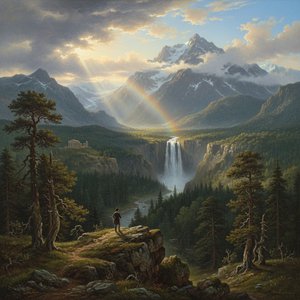
Swiss Landscape
 Romanticism
 1819
1819 29.0 x 45.0 cm
 New Walk Museum - Art Gallery
 Les mer
Giclée / Kunsttrykk
Giclée- eller lerretsprint av museumskvalitet med rask produksjon og fleksible valgmuligheter for etterbehandling. ( Bestill håndmalt reproduksjon Gå til digitalt bilde)




































Velg mellom våre forhåndsdefinerte størrelser som bevarer kunstverkets opprinnelige proporsjoner.

Du kan oppgi egne mål for å tilpasse en spesifikk ramme eller et bestemt område. Dersom den valgte størrelsen ikke samsvarer med det originale bildets proporsjoner, vil vi enten beskjære kunstverket eller utvide bildet med en speilet eller ensfarget kant. En digital mockup vil bli sendt til din godkjenning før produksjonen starter.
Vennligst merk at forhåndsvisningen på skjermen ikke gjenspeiler den faktiske beskjæringen eller utvidelsen. Kun mockuppen vil vise den endelige komposisjonen nøyaktig.
Selv om tilpassede størrelser er tilgjengelige, anbefaler vi å velge et mål fra den forhåndsdefinerte listen for å bevare de originale proporsjonene.
Verdensomspennende levering () på 2 uker i stedet for standard 4/5 uker. (27 September)

Gratis ekspressfrakt over hele verden

Lerretsduk av høykvalitets lin

Full transportforsikring

Garanti for refusjon av toll og importavgifter

Garantert fargeekthet

100 dagers returrett ved fabrikasjonsfeil

100% pengene tilbake-garanti

Mengderabatt
 Glassalternativet er kun tilgjengelig i størrelser under 110 cm

Swiss Landscape
Giclée / Kunsttrykk
Format på reproduksjon
-


Totalpris
$ 80
A Glimpse into the Painting's Details
The painting features a serene forest filled with trees, some of which have fallen over, creating a sense of movement and energy. In the background, snow-capped mountains rise majestically, adding depth and grandeur to the scene. A horse is visible near the center of the painting, possibly grazing on the lush green grass that covers the ground. The overall atmosphere of the painting conveys a sense of tranquility and appreciation for nature's beauty. Key Features of the Swiss Landscape painting include:- Oil on panel, measuring 29 x 45 cm
- Created in 1819 by George Howland Beaumont
- Housed at the New Walk Museum - Art Gallery in Leicester, United Kingdom
Exploring the Artist's Style
George Howland Beaumont was a British artist known for his landscape paintings. His style is characterized by attention to detail and a deep appreciation for nature. The Swiss Landscape painting is a prime example of his work, showcasing his ability to capture the beauty and serenity of the natural world. To learn more about George Howland Beaumont and his works, visit https://OriginalUniqueArt.com and explore their collection of handmade oil paintings reproductions. You can also find more information on Wikipedia about the New Walk Museum - Art Gallery and its extensive collection of art pieces.The Swiss Landscape painting is a must-see for anyone who appreciates landscape art and the beauty of nature. With its stunning depiction of the Swiss Alps, it is sure to captivate audiences and inspire a sense of wonder and awe.
Kunstnerbiografi
A Life Dedicated to Art: The World of George Howland Beaumont
Sir George Howland Beaumont, born in 1753 amidst the tranquil Essex countryside of Great Dunmow, was a figure whose life embodied the evolving tastes and passions of late 18th and early 19th-century Britain. Inheriting both a baronetcy and an estate at a young age, Beaumont’s path wasn't immediately destined for artistic pursuits. However, his education at Eton College included initial training in landscape painting under Alexander Cozens, sparking a lifelong fascination with the visual arts—a fascination that would define his entire existence. This early exposure served as a crucial catalyst, propelling him toward a transformative experience: the Grand Tour undertaken in 1782 alongside his wife, Margaret. Italy and its rich artistic heritage proved pivotal; Beaumont’s eyes were opened to the masterpieces of the Old Masters, igniting within him not only an appreciation but also a fervent desire to collect and understand these works—a passion that would consume him for decades to come. This journey laid the foundation for a life irrevocably shaped by art—both as a discerning connoisseur and a committed artist striving for excellence.Cultivating Taste: Collection, Patronage, and Artistic Development
Upon his return to England, Beaumont embarked on building an impressive collection of Old Master paintings, driven by genuine enthusiasm despite considerable financial constraints. Central to this endeavor was Claude Lorrain’s *A Landscape with Hagar and the Angel*, a painting that held profound significance for him—a visual embodiment of his aesthetic ideals. He wasn't merely acquiring objects; he was assembling a carefully curated visual library, reflecting his evolving comprehension of artistic perfection. Simultaneously, Beaumont began exhibiting his own work at the Royal Academy from 1794 to 1825, establishing himself as a respected amateur within London’s vibrant art circles—a testament to his unwavering dedication and social engagement. His life flourished alongside his artistic pursuits, centered around his residence at 34 Grosvenor Square and punctuated by service as Tory MP for Beer Alston (1790-1796), where he actively participated in shaping national policy. This period fostered connections with influential figures—the Lake Poets, notably William Wordsworth who became a lifelong friend, Uvedale Price, and others whose ideas profoundly impacted Beaumont’s artistic sensibilities. His stylistic influences included Richard Wilson and Thomas Hearne, aligning him squarely within the Romantic movement, as evidenced by his evocative landscapes like *View near Keswick* (1779), which captured the sublime beauty of the English countryside. Despite initial criticism regarding his early painting efforts—specifically ‘A Young Black Man’—Beaumont persevered, demonstrating resilience and a steadfast belief in artistic merit.The Beaumont Gift: Shaping British Art History
Beaumont's contribution to British art history transcends mere aesthetic appreciation; it resides fundamentally in his transformative role as a collector and benefactor. Recognizing the urgent need for public access to exceptional artworks—a conviction rooted in his lifelong engagement with artistic ideals—he spearheaded an initiative that would reshape the cultural landscape of Britain: the founding of the National Gallery. In 1823, Beaumont offered his remarkable collection of paintings to the nation on a condition that resonated deeply with his convictions—that the government procure John Julius Angerstein’s collection and establish a dedicated gallery space for its display. This audacious proposal galvanized Parliament into decisive action, resulting in the acquisition of Angerstein's holdings and culminating in the Gallery’s triumphant opening in May 1824. Beaumont’s generosity extended beyond this monumental achievement; he actively championed emerging artists—most notably John Constable—encouraging him to study his collection and fostering a relationship that yielded one of Britain’s most celebrated landscapes: *The Cenotaph to Sir Joshua Reynolds* at Coleorton Hall, Leicestershire—a poignant tribute to Reynolds' legacy and a symbol of Beaumont’s discerning artistic vision. Furthermore, he fostered connections with influential writers like Wordsworth, cementing his position as a pivotal figure in the intellectual milieu of his time.A Painter's Eye: Artistic Style and Notable Works
Beaumont’s own artistic style reflected his unwavering commitment to Romantic ideals—characterized by dramatic landscapes imbued with sublime beauty and informed by meticulous observation of nature. His oeuvre comprises several noteworthy paintings, including *Landscape*, which exemplifies his masterful technique and captures the grandeur of the English countryside. Perhaps most emblematic of Beaumont's aesthetic sensibilities is Claude Lorrain’s *A Landscape with Hagar and the Angel*, a painting that remained his cherished possession throughout his life—a testament to his profound appreciation for Old Master artistry and a symbol of his enduring artistic vision. He diligently documented his travels, producing sketches and watercolors that showcased his keen eye for detail and his ability to convey atmospheric conditions with remarkable accuracy. His paintings are housed in institutions such as the New Walk Museum and Art Gallery, Leicester—a legacy that continues to inspire admiration and scholarly study. ## Legacy and Recognition Sir George Howland Beaumont passed away peacefully in 1827 at Coleorton Hall, leaving behind a profound impact on British art history and culture. His unwavering dedication to collecting Old Masters—particularly Claude Lorrain’s *A Landscape with Hagar and the Angel*—established him as a champion of artistic excellence and profoundly influenced subsequent generations of collectors and artists. More importantly, Beaumont's contribution to the founding of the National Gallery cemented his place as a visionary leader who championed public access to art—a legacy that persists today in the Gallery’s celebrated collection and its enduring role as a cornerstone of British cultural heritage.
George Howland Beaumont
1753 - 1827 , Storbritannia
Kort om kunstneren
- Artistic Movement Or Style: Romanticism
- Artists Or Movements Influenced By This Artist: ['John Constable']
- Artists Who Influenced This Artist:
- Richard Wilson
- Alexander Cozens
- Date Of Birth: 1753
- Date Of Death: 1827
- Full Name: George Howland Beaumont
- Nationality: Britisk
- Notable Artworks:
- Landscape
- A Landscape with Hagar and the Angel
- Place Of Birth: Dunmow, United Kingdom
Relaterte artikler
Evoking Nature's Sublime: A Comprehensive Exploration of 19th-Century Landscape Painting
Explore the captivating world of 19th-century landscape painting! Discover renowned artists like Friedrich & Monet, key movements, and find the perfect artwork to bring nature's serenity into your home. Expert insights at OriginalUniqueArt.

Romantiske landskap: Topp 10 mesterverk for hjemmet – Kunst fra OriginalUniqueArt.com
Oppdag de 10 mest ikoniske romantiske landskapsmaleriene! Fra Caspar David Friedrich til Turner – utforsk kunsthistorien, stemningen og fargepalettene. Finn museumskvalitets reproduksjoner på OriginalUniqueArt.com.

Georges Seurat: Topp 25 Maler – Impresjonisme og Punktillismens Mesterverk | OriginalUniqueArt.no
Utforsk Georges Seurats 25 mest ikoniske malerier! Oppdag historien bak punktillismen, impresjonismen og mesterverk som 'Et søndagsettermiddag på La Grande Jatte'. Finn kunsttrykk av høy kvalitet for ditt hjem på OriginalUniqueArt.com.

Georges Braques 25 Mesterverk: En Kunstnerisk Reise for Din Bolig
Utforsk Georges Braques 25 mest ikoniske verk! Fordyp deg i kubismens verden, fargepaletter og kunstnerisk nyskapning. Finn inspirasjon til din bolig med museumskvalitets reproduksjoner på OriginalUniqueArt.com.

Evocations of Place: A Historical Journey Through Landscape Art
Explore the rich history of landscape art with OriginalUniqueArt. Discover renowned artists, movements like Impressionism & Romanticism, and expert guidance for collecting timeless pieces. Find your perfect serene escape today!