Tekststørrelse

() ·

Et maleri laget til deg, med håndverk

Landscape

Håndlaget oljereproduksjon

Håndmalt olje på lerret i din valgte størrelse og ramme, laget på bestilling av våre kunstnere. ( Bytt til trykk Bytt til digitalt bilde)

Beskrivelse av objektet

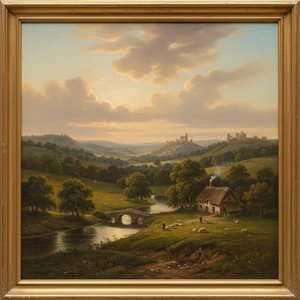
George Howland Beaumont's 'Landscape' (1825) captures a serene rural scene with vibrant colors and detailed brushwork, reflecting Romantic ideals. Explore this beautiful painting by a British art patron.

Om kunstneren

Sir George Howland Beaumont (1753-1827) var en britisk kunstsamler & amatørmaler som grunnla Nasjonalgalleriet. Utforsk hans landskap, samling av gamle mestere og arv!

fra ·

Kapittel 1

Hvor stor bør den være?

Skyv for å endre størrelsen; bildet til venstre viser rammen i sin faktiske bredde. Originalens proporsjoner er bevart.

Standardformat
skreddersydd
CM
INCH

Velg mellom våre forhåndsdefinerte størrelser som bevarer kunstverkets opprinnelige proporsjoner.

bredde
høyde

Skriv inn ønsket bredde og høyde for å tilpasse bildet til din ramme eller vegg. Siden dette er håndmalt, kan kunstneren male litt mer rundt motivet eller beskjære det noe dersom du velger et annet format — valget er ditt. Vi sender deg en digital mockup til godkjenning før maleriet påbegynnes. Bildet som vises på denne siden representerer ikke det faktiske resultatet — kun mockuppen viser det endelige uttrykket.

Kapittel 2

Hvordan skal det leveres?

Velg kantutførelse på lerretet

Velg din ramme

Corner sample of the WhiteWrap canvas edge finish, stretched on massivt tre bars
Hvit kant Nkr1
Corner sample of the BlurSideWrap canvas edge finish, stretched on massivt tre bars
Uskarp kantfinish Nkr1
Corner sample of the ExtendedWrap canvas edge finish, stretched on massivt tre bars
Fortsatt motiv Nkr1
Corner sample of the P118B picture frame: støpt polystyren, 5 cm wide and 3 cm thick
P118B Nkr10
Corner sample of the P118H picture frame: støpt polystyren, 5 cm wide and 3 cm thick
P118H Nkr10
Corner sample of the P118W picture frame: støpt polystyren, 5 cm wide and 3 cm thick
P118W Nkr10
Corner sample of the P438Z picture frame: støpt polystyren, 5.5 cm wide and 3.5 cm thick
P438Z Nkr10
Corner sample of the P508JH picture frame: støpt polystyren, 7 cm wide and 3.5 cm thick
P508JH Nkr12
Corner sample of the P508YH picture frame: støpt polystyren, 7 cm wide and 3.5 cm thick
P508YH Nkr12
Corner sample of the P805H picture frame: støpt polystyren, 5 cm wide and 3.5 cm thick
P805H Nkr10
Corner sample of the P805Z picture frame: støpt polystyren, 5 cm wide and 3.5 cm thick
P805Z Nkr10
Corner sample of the P919BZ picture frame: støpt polystyren, 7 cm wide and 3.5 cm thick
P919BZ Nkr10
Corner sample of the P919G picture frame: støpt polystyren, 7 cm wide and 3.5 cm thick
P919G Nkr10
Corner sample of the P919XJ picture frame: støpt polystyren, 7 cm wide and 3.5 cm thick
P919XJ Nkr10
Corner sample of the P959ZH picture frame: støpt polystyren, 5 cm wide and 3 cm thick
P959ZH Nkr10
Corner sample of the P968JZ picture frame: støpt polystyren, 6 cm wide and 4 cm thick
P968JZ Nkr12
Corner sample of the W106C picture frame: massivt tre, 5 cm wide and 3 cm thick
W106C Nkr8
Corner sample of the W218G picture frame: massivt tre, 5 cm wide and 3 cm thick
W218G Nkr10
Corner sample of the W218JH picture frame: massivt tre, 5 cm wide and 3 cm thick
W218JH Nkr8
Corner sample of the W218Y picture frame: massivt tre, 5 cm wide and 3 cm thick
W218Y Nkr10
Corner sample of the W307PJ picture frame: massivt tre, 6 cm wide and 3 cm thick
W307PJ Nkr10
Corner sample of the W316G picture frame: massivt tre, 6 cm wide and 3 cm thick
W316G Nkr10
Corner sample of the W316PJ picture frame: massivt tre, 6 cm wide and 3 cm thick
W316PJ Nkr8
Corner sample of the W316Y picture frame: massivt tre, 6 cm wide and 3 cm thick
W316Y Nkr10
Corner sample of the W398PJ picture frame: massivt tre, 5 cm wide and 3 cm thick
W398PJ Nkr8
Corner sample of the W4111J picture frame: massivt tre, 6.5 cm wide and 3.5 cm thick
W4111J Nkr10
Corner sample of the W500HY picture frame: massivt tre, 7 cm wide and 5 cm thick
W500HY Nkr15
Corner sample of the W500JH picture frame: massivt tre, 7 cm wide and 5 cm thick
W500JH Nkr15
Corner sample of the W692G picture frame: massivt tre, 8 cm wide and 4 cm thick
W692G Nkr12
Corner sample of the W849H picture frame: massivt tre, 5 cm wide and 3 cm thick
W849H Nkr8
Corner sample of the W940BG picture frame: massivt tre, 7.5 cm wide and 4.5 cm thick
W940BG Nkr15
Corner sample of the W953PJ picture frame: massivt tre, 6 cm wide and 3.5 cm thick
W953PJ Nkr8
Corner sample of the H24-GOLD picture frame: utskåret tre med gesso, 10 cm wide and 6 cm thick
H24-GOLD Nkr30
Corner sample of the H24-SILVER picture frame: utskåret tre med gesso, 10 cm wide and 6 cm thick
H24-SILVER Nkr30
Corner sample of the H36-GOLD picture frame: utskåret tre med gesso, 15 cm wide and 6.5 cm thick
H36-GOLD Nkr45
Corner sample of the H36-SILVER picture frame: utskåret tre med gesso, 15 cm wide and 6.5 cm thick
H36-SILVER Nkr45

Profil: . Total størrelse med ramme: .

Kapittel 3

Hvem maler det, og bør noe endres?

Eksempler på hva som kan endres: Erstatt ansikt med kundens eget bilde; Legg til kjæledyr (f.eks. bytt ut katt med hund); Inkluder en skjult melding i bakgrunnen; Endre landskap eller elementer i bakgrunnen.
Etter bestilling vil OriginalUniqueArt.com-teamet sende e-post til kunden for instruksjoner og sende et utkast som forhåndsvisning

Verdensomspennende levering () på 3–4 uker i stedet for standard 5 uker. (4 November). Ingen kompromisser med kvaliteten.

Kapittel 4

De siste detaljene

En navneplate, som på et museum?

Detaljer om gravert bronseplate

This elegant plaque features the artist's name and the title of the artwork, finely engraved for a timeless presentation.

It is made from bronze with a refined, elegant finish. The text is precisely laser-engraved for a sharp and permanent result. Measuring 9x2 cm, the plaque is compact yet easy to read. It's built to be durable and scratch-resistant, offering a professional, museum-quality look. Mounting is simple thanks to the included adhesive backing.

Detaljer om gjennomsiktig akrylplate

The plaque includes essential engraved details such as the artist's name, the title of the artwork, the date it was created, the type of media used-like oil on canvas or watercolor-a brief description of the piece, and a QR code that links to the complete artwork information.

It is crafted from clear acrylic, offering a sleek, modern appearance. The text is UV-engraved in black to ensure strong visual contrast. With a size of 10x15 cm, it ensures optimal readability. It comes equipped with two metal hooks for secure wall mounting. The plaque is designed to be weather-resistant, making it suitable for various environments, and it includes interactive features that work seamlessly with smartphone scanning.

Detaljer om plakett i svart akryl

This elegant plaque includes engraved information such as the artist's name, the title of the artwork, the date it was created, the type of media used (like oil on canvas or watercolor), a short description of the artwork, and a QR code for quick access to more information.

The plaque itself is made from refined black acrylic with a premium finish. The text is laser-engraved in white for high contrast and readability. Its size is 10x15 cm, designed to be easy to read. It comes with two metal hooks for professional mounting. The design is sleek and fits any interior style. It is also weather-resistant and durable, with built-in digital integration for mobile compatibility.

En beskyttende lakk?

Når trenger du det?

Kapittel 5

Ditt maleri, slik du bestilte det

Landscape

Trykkmetode

Størrelse på reproduksjon

-

Utvalgte mesterkunstnere

Mer detaljrikdom, finesse og ekstra produksjonstid

-

Innramming av reproduksjon

-

-

For kunstverk eller reproduksjoner som er større enn 105 cm (ca. 41 tommer) på noen side, vil rammen bli sendt som et sett som må monteres. Denne metoden sikrer trygg levering og forhindrer skader under transport.

Krever profesjonell montering – dette er ikke et DIY-produkt.
Settet må monteres og lerretet strammes av en erfaren profesjonell rammelegger, ved bruk av trelim (følger ikke med), en lerretstang og klemmer for å holde rammelisten vinkelrett mens limet tørker. Feilaktig montering eller ujevn stramming av lerretet kan påføre kunstverket permanente skader og er ikke dekket av vår garanti.

  • Alle massive trelister er inkludert, presist tilpasset i størrelse.

  • Monteres med de medfølgende skruene, samt trelim til hjørnene, som ikke er inkludert og må anskaffes av din rammehandler.

  • Profesjonelt verktøy er nødvendig og er ikke inkludert: en lerretstang (strammer) og klemmer for å holde rammene vinkelrette mens limet tørker.

Viktig:
Hjørnene krever trelim, listene må holdes på plass med tvinger til limet er helt tørt, og stramming av lerretet på den ferdige rammen krever en lerretstang. Ingen av disse produktene er inkludert i settet. Vennligst sørg for tilgang til en erfaren profesjonell rammehandler før du bestiller denne størrelsen.

Navneskilt

-

-

Beskyttende ferniss

Blank lakk (forsterker farger, beskytter mot lys og fuktighet)

-

Tilpass mitt kunstverk

Eksempler på hva som kan endres: Erstatt ansikt med bilde av kunden; Legg til kjæledyr (f.eks. bytt ut katt med hund); Inkluder en skjult melding i bakgrunnen; Endre bakgrunnslandskap eller elementer.

-

Ekspresslevering

Verdensomspennende levering () på 3–4 uker i stedet for standard 5 uker. (4 November). Ingen kompromisser med kvaliteten.

-

Ekspresslevering

Verdensomspennende levering til innen 5 uker. (11 November).

Inkludert frakt

Totalpris for valgte alternativer

Nkr 2868

Totalpris Nkr 2868

Glassalternativet er kun tilgjengelig i størrelser under 110 cm

Inkludert med hver bestilling

  • Gratis ekspressfrakt over hele verden
  • Lerretsduk av lin av høy kvalitet
  • Full transportforsikring
  • Garanti for refusjon av toll og importavgifter
  • Garantert fargegjengivelse
  • 100 dagers returrett ved fabrikasjonsfeil
  • 100% pengene tilbake-garanti
  • Rabatt ved flere kjøp

A Window on the Soul: George Howland Beaumont’s ‘Landscape’

George Howland Beaumont's “Landscape,” painted in 1825, isn’t merely a depiction of a rural scene; it’s an invitation into a world steeped in Romantic sensibility and a profound appreciation for the natural world. This oil on canvas transports us to a tranquil valley, bathed in the soft light of a late afternoon, where the subtle interplay of color and form speaks volumes about the artist's vision and his deep connection to the English countryside.

Beaumont, a prominent figure in British art during the early 19th century, was more than just an amateur painter; he was a dedicated collector and connoisseur. His journey through Italy ignited a passion for the Old Masters, particularly the landscapes of Claude Lorrain and other Baroque masters. This influence is strikingly evident in “Landscape,” where the composition echoes classical principles – a balanced arrangement of elements, a sense of depth achieved through atmospheric perspective, and an emphasis on harmonious color palettes. The painting’s roots lie firmly within the Romantic movement, but Beaumont tempered its more dramatic tendencies with a refined elegance and a meticulous attention to detail.

The Language of Light and Color

Beaumont masterfully employs light as his primary tool, creating a sense of luminous serenity. Notice how he captures the diffuse glow filtering through the trees, casting long shadows that dance across the foreground. The color palette is restrained yet rich – predominantly blues and greens dominate, punctuated by earthy browns and ochres in the distant hills. These colors aren’t applied with brute force; instead, they are layered delicately to build depth and atmosphere. The artist's use of glazing techniques—thin layers of translucent paint—allows light to penetrate through the surface, giving the scene an almost ethereal quality.

A key element is the subtle rendering of texture. The rough bark of the central tree, the undulating contours of the hills, and even the suggestion of grass beneath the figures are all conveyed with remarkable sensitivity. Beaumont’s brushstrokes aren't overtly expressive; they are controlled and deliberate, contributing to the painting’s overall sense of quiet contemplation.

Figures in a Pastoral Setting

Two figures, positioned near the base of the large tree, add a touch of human presence to this otherwise solitary landscape. Their postures suggest an activity—perhaps a simple task or a moment of shared observation—but their identities remain deliberately ambiguous. They aren’t presented as heroes or protagonists; rather, they are integrated seamlessly into the scene, serving as reminders of humanity's place within the vastness of nature. This subtle inclusion invites viewers to contemplate their own relationship with the natural world.

The placement of these figures also contributes to the painting’s sense of depth and perspective. They appear smaller in scale than the towering tree, reinforcing the impression of a distant horizon and emphasizing the grandeur of the landscape. The composition guides the eye through the scene, drawing us into the heart of the valley.

A Legacy of Romantic Vision

“Landscape” stands as a testament to George Howland Beaumont’s artistic skill and his profound appreciation for the beauty of the English countryside. It embodies the core tenets of the Romantic movement—a reverence for nature, an emphasis on emotion and imagination, and a fascination with the sublime. Beaumont's work continues to resonate today, offering viewers a moment of tranquility and a reminder of the enduring power of art to capture the essence of our world.

Reproductions of this piece offer a wonderful opportunity to bring this evocative landscape into your home or office, allowing you to experience its beauty and serenity firsthand. Consider framing it in a classic style to complement its timeless appeal.

Spørsmål og svar

Er "Landscape" av George Howland Beaumont i det frie domene?

Når det gjelder opphavsrett, er "Landscape" fritt tilgjengelig – opphavsretten har utløpt.

Hvilket rom passer best til fargene i "Landscape" av George Howland Beaumont?

De Earthy fargene i "Landscape" av George Howland Beaumont harmonerer med det anbefalte rommet: et Living Room.

Hvilken følelse skaper fargene i "Landscape" av George Howland Beaumont?

Den Earthy fargepaletten i "Landscape" av George Howland Beaumont harmonerer med verkets Melancholic stemning. Farge er en av måtene et kunstverk formidler følelser på.

Les mer om dette maleriet

Forhåndsvisning Se i AR Bytt til trykk Bytt til digitalt bilde Send
Vis detaljer Utskriftsvennlig guide Legg til i favoritter Last ned bilde Liknende objekter Røntgenundersøkelse Lysbildefremvisning Spørsmål og svar Statistikk

I tall

  • 1825året det ble malt
  • 29rammer å velge mellom
  • standardstørrelser, i sine egne proporsjoner
  • 5uker å male og levere
George Howland Beaumont

George Howland Beaumont

1753 - 1827, Storbritannia

Kort om George Howland Beaumont

  • Artistic Movement Or Style: Romanticism
  • Artists Or Movements Influenced By This Artist: ['John Constable']
  • Artists Who Influenced This Artist:
    • Richard Wilson
    • Alexander Cozens
  • Date Of Birth: 1753
  • Date Of Death: 1827
  • Full Name: George Howland Beaumont
  • Nationality: Britisk
  • Notable Artworks:
    • Landscape
    • A Landscape with Hagar and the Angel
  • Place Of Birth: Dunmow, United Kingdom

Om kunstneren

A Life Dedicated to Art: The World of George Howland Beaumont

Sir George Howland Beaumont, born in 1753 amidst the tranquil Essex countryside of Great Dunmow, was a figure whose life embodied the evolving tastes and passions of late 18th and early 19th-century Britain. Inheriting both a baronetcy and an estate at a young age, Beaumont’s path wasn't immediately destined for artistic pursuits. However, his education at Eton College included initial training in landscape painting under Alexander Cozens, sparking a lifelong fascination with the visual arts—a fascination that would define his entire existence. This early exposure served as a crucial catalyst, propelling him toward a transformative experience: the Grand Tour undertaken in 1782 alongside his wife, Margaret. Italy and its rich artistic heritage proved pivotal; Beaumont’s eyes were opened to the masterpieces of the Old Masters, igniting within him not only an appreciation but also a fervent desire to collect and understand these works—a passion that would consume him for decades to come. This journey laid the foundation for a life irrevocably shaped by art—both as a discerning connoisseur and a committed artist striving for excellence.

Cultivating Taste: Collection, Patronage, and Artistic Development

Upon his return to England, Beaumont embarked on building an impressive collection of Old Master paintings, driven by genuine enthusiasm despite considerable financial constraints. Central to this endeavor was Claude Lorrain’s *A Landscape with Hagar and the Angel*, a painting that held profound significance for him—a visual embodiment of his aesthetic ideals. He wasn't merely acquiring objects; he was assembling a carefully curated visual library, reflecting his evolving comprehension of artistic perfection. Simultaneously, Beaumont began exhibiting his own work at the Royal Academy from 1794 to 1825, establishing himself as a respected amateur within London’s vibrant art circles—a testament to his unwavering dedication and social engagement. His life flourished alongside his artistic pursuits, centered around his residence at 34 Grosvenor Square and punctuated by service as Tory MP for Beer Alston (1790-1796), where he actively participated in shaping national policy. This period fostered connections with influential figures—the Lake Poets, notably William Wordsworth who became a lifelong friend, Uvedale Price, and others whose ideas profoundly impacted Beaumont’s artistic sensibilities. His stylistic influences included Richard Wilson and Thomas Hearne, aligning him squarely within the Romantic movement, as evidenced by his evocative landscapes like *View near Keswick* (1779), which captured the sublime beauty of the English countryside. Despite initial criticism regarding his early painting efforts—specifically ‘A Young Black Man’—Beaumont persevered, demonstrating resilience and a steadfast belief in artistic merit.

The Beaumont Gift: Shaping British Art History

Beaumont's contribution to British art history transcends mere aesthetic appreciation; it resides fundamentally in his transformative role as a collector and benefactor. Recognizing the urgent need for public access to exceptional artworks—a conviction rooted in his lifelong engagement with artistic ideals—he spearheaded an initiative that would reshape the cultural landscape of Britain: the founding of the National Gallery. In 1823, Beaumont offered his remarkable collection of paintings to the nation on a condition that resonated deeply with his convictions—that the government procure John Julius Angerstein’s collection and establish a dedicated gallery space for its display. This audacious proposal galvanized Parliament into decisive action, resulting in the acquisition of Angerstein's holdings and culminating in the Gallery’s triumphant opening in May 1824. Beaumont’s generosity extended beyond this monumental achievement; he actively championed emerging artists—most notably John Constable—encouraging him to study his collection and fostering a relationship that yielded one of Britain’s most celebrated landscapes: *The Cenotaph to Sir Joshua Reynolds* at Coleorton Hall, Leicestershire—a poignant tribute to Reynolds' legacy and a symbol of Beaumont’s discerning artistic vision. Furthermore, he fostered connections with influential writers like Wordsworth, cementing his position as a pivotal figure in the intellectual milieu of his time.

A Painter's Eye: Artistic Style and Notable Works

Beaumont’s own artistic style reflected his unwavering commitment to Romantic ideals—characterized by dramatic landscapes imbued with sublime beauty and informed by meticulous observation of nature. His oeuvre comprises several noteworthy paintings, including *Landscape*, which exemplifies his masterful technique and captures the grandeur of the English countryside. Perhaps most emblematic of Beaumont's aesthetic sensibilities is Claude Lorrain’s *A Landscape with Hagar and the Angel*, a painting that remained his cherished possession throughout his life—a testament to his profound appreciation for Old Master artistry and a symbol of his enduring artistic vision. He diligently documented his travels, producing sketches and watercolors that showcased his keen eye for detail and his ability to convey atmospheric conditions with remarkable accuracy. His paintings are housed in institutions such as the New Walk Museum and Art Gallery, Leicester—a legacy that continues to inspire admiration and scholarly study. ## Legacy and Recognition Sir George Howland Beaumont passed away peacefully in 1827 at Coleorton Hall, leaving behind a profound impact on British art history and culture. His unwavering dedication to collecting Old Masters—particularly Claude Lorrain’s *A Landscape with Hagar and the Angel*—established him as a champion of artistic excellence and profoundly influenced subsequent generations of collectors and artists. More importantly, Beaumont's contribution to the founding of the National Gallery cemented his place as a visionary leader who championed public access to art—a legacy that persists today in the Gallery’s celebrated collection and its enduring role as a cornerstone of British cultural heritage.

Kort om verket

  • Subject or theme: Landscape scene
  • Dimensions: 45 x 38 cm
  • Influences:
    • Cozen's
    • Italian masters
  • Title: Landscape
  • Notable elements: Tree, figures, hills

Kunnequiz om kunst

Det er kun ett riktig svar på hvert spørsmål.

Spørsmål 1:
What is the primary subject matter of George Howland Beaumont’s ‘Landscape’?
Spørsmål 2:
In what year was George Howland Beaumont’s ‘Landscape’ painted?
Spørsmål 3:
George Howland Beaumont was known for his role as:
Spørsmål 4:
The painting ‘Landscape’ reflects which artistic movement?
Spørsmål 5:
What is the approximate size of George Howland Beaumont’s ‘Landscape’?