

 Se i rommet
 Del som digitalt kort
 Del
Del
 Detaljer
 Studentguide

 Last ned
 Liknende objekter
 Røntgen
 Lysbildefremvisning
 Besøksstatistikk
New Year's Shooter
 Oil On Canvas
- WallArt
- Ashcan School
 1917
1917- Modern
 77.0 x 65.0 cm
 Les mer
Håndlaget oljereproduksjon
Håndmalt olje på lerret i din valgte størrelse og ramme, laget på bestilling av våre kunstnere. ( Bytt til trykkversjon Gå til digitalt bilde)




P118B Nkr10

P118H Nkr10

P118W Nkr10

P438Z Nkr10

P508JH Nkr12

P508YH Nkr12

P805H Nkr10

P805Z Nkr10

P919BZ Nkr10

P919G Nkr10

P919XJ Nkr10

P959ZH Nkr10

P968JZ Nkr12

W106C Nkr8

W218G Nkr10

W218JH Nkr8

W218Y Nkr10

W307PJ Nkr10

W316G Nkr10

W316PJ Nkr8

W316Y Nkr10

W398PJ Nkr8

W4111J Nkr10

W500HY Nkr15

W500JH Nkr15

W692G Nkr12

W849H Nkr8

W940BG Nkr15

W953PJ Nkr8




Velg mellom våre forhåndsdefinerte størrelser som bevarer kunstverkets opprinnelige proporsjoner.

Skriv inn bredden og høyden du trenger, slik at den passer til din ramme eller vegg. Dette er håndmalt, så for en størrelse med en annen form kan kunstneren male litt mer rundt bildet, eller beskjære det noe — du velger selv. Vi sender deg en digital mockup for godkjenning før maleriet påbegynnes. Bildet som vises på denne siden viser ikke det faktiske resultatet — kun mockuppen gjør det.
Etter bestilling vil OriginalUniqueArt.com-teamet sende e-post til kunden for instruksjoner og sende et utkast (mockup) som forhåndsvisning.
Verdensomspennende levering () på 3–4 uker i stedet for standard 5 uker. (26 October). Ingen kompromisser med kvaliteten.

Gratis ekspressfrakt over hele verden

Lerretsduk av høykvalitets lin

Full transportforsikring

Garanti for refusjon av toll og importavgifter

Garantert fargeekthet

100 dagers returrett ved fabrikasjonsfeil

100% pengene tilbake-garanti

Mengderabatt
 Glassalternativet er kun tilgjengelig i størrelser under 110 cm

New Year's Shooter
Reproduksjonsmetode
Format på reproduksjon
-


Totalpris
Nkr 2854
A Moment Frozen in Urban Vitality
In the evocative oil painting New Year's Shooter, George Benjamin Luks invites us into a private, candid fragment of early twentieth-century life. The portrait captures an ordinary man, perhaps a laborer or a city dweller caught in a rare moment of respite, seated with a relaxed yet observant posture. As he gazes slightly off-canvas, a cigarette perched between his lips, there is an unmistakable sense of immediacy—as if the viewer has just stumbled upon him in a dimly lit tavern or a quiet corner of a bustling street. The subject’s attire, most notably a muted green hat adorned with a shimmering gold rim, hints at a celebratory spirit, suggesting the festive yet gritty atmosphere of a New Year's Eve celebration amidst the urban working class.
Luks, a prominent figure of the Ashcan School, masterfully employs a style rooted in gritty realism. Rather than seeking the polished perfection of academic portraiture, he embraces the raw energy of the moment. The composition is intentionally dynamic, with the figure positioned slightly off-center to create a sense of movement and life. Through the use of loose, expressive lines and visible, thick brushstrokes, Luks avoids rigid outlines, allowing the forms to emerge organically from the canvas. This technique, known as impasto, lends a tactile, three-dimensional quality to the work, where the texture of the paint itself becomes part of the storytelling, mirroring the ruggedness of the subject's environment.
Light, Shadow, and the Soul of the City
The emotional resonance of New Year's Shooter is deeply tied to its dramatic use of light and color. While the palette is grounded in earthy tones—deep browns, blacks, and muted greens—it is punctuated by brilliant highlights that breathe life into the scene. A soft light source emanating from the left illuminates the man’s face, casting deep, soulful shadows that create a sense of mystery and depth. The glint of gold on his hat and the subtle warmth on his skin provide a striking contrast to the darker, receding background, drawing the eye inward to the subject's quiet expression. This interplay of light and shadow does more than define shape; it evokes a mood of contemplative contentment mixed with a hint of urban cynicism.
For collectors and interior designers alike, this piece offers a profound sense of character and historical weight. It is not merely a depiction of a man, but a window into the American Realism movement, capturing the unvarnished truth of a bygone era. The painting’s ability to balance heavy, textured application with delicate emotional nuance makes it a versatile masterpiece for any curated collection. Whether placed in a modern gallery setting or as a focal point in a classic study, New Year's Shooter serves as a powerful reminder of the beauty found in the fleeting, everyday moments of human existence.
Spørsmål og svar
Bruker "New Year's Shooter" av George Luks sterke kontraster eller myke harmonier?
Fargekomposisjonen i "New Year's Shooter" av George Luks kombinerer en Serene kontrast med en Strong Color Unity harmoni.
Hvilke proporsjoner har "New Year's Shooter" av George Luks, og hva er målene?
Formatet på "New Year's Shooter" er Portrait, og originalen måler 77 x 65 cm. Begge deler er nyttige når man planlegger en reproduksjon.
Hvem er opphavspersonen til "New Year's Shooter", og hvilket år ble det laget?
"New Year's Shooter" ble skapt av George Luks i 1917.
Kunstnerbiografi
A Life Forged in the Crucible of American Realism
George Benjamin Luks, a name that echoes through the annals of early 20th-century American art, was far more than just a painter; he was a keen observer, a storyteller, and a vital voice for the realities of urban life. Born in Williamsport, Pennsylvania, in 1867 to a family steeped in both Polish medical heritage and German musical tradition, Luks’s upbringing instilled within him a profound empathy for the human experience – particularly the struggles and triumphs of ordinary people. This sensitivity would become the cornerstone of his artistic vision, shaping his bold brushstrokes and unflinching depictions of the world around him. His early years were marked by an unconventional path; before dedicating himself to canvas and paint, he and his brother captivated audiences as vaudeville performers, honing a remarkable ability to read human behavior and capture fleeting moments of emotion – skills that would prove invaluable in his later work. This theatrical background instilled within him a deep appreciation for performance and spectacle, elements subtly woven into the dynamic compositions of his paintings, creating an almost cinematic quality.From European Studies to the Ashcan School
Luks’s formal artistic education began at the Pennsylvania Academy of the Fine Arts, but it was his subsequent travels across Europe that truly ignited his creative spirit. He immersed himself in the works of the Old Masters – Velázquez and Hals, in particular, held a profound influence on him – absorbing their mastery of light, shadow, and the ability to capture the essence of human character with remarkable immediacy. However, Luks wasn’t simply replicating these styles; he was synthesizing them into something uniquely his own, forging a distinct artistic voice that would soon define his career. Upon returning to America, he found work as an illustrator for various newspapers and magazines, primarily in Philadelphia and later New York City. This experience proved transformative, exposing him to the vibrant chaos of urban life – its teeming streets, diverse populations, and often-overlooked realities – subjects that would become the central focus of his artistic output. Crucially, he connected with a group of like-minded artists—Robert Henri, John Sloan, William Glackens—who shared a rejection of the rigid conventions of the established art world and a desire to depict the world as they saw it: honestly, without pretense or idealized notions. This collective spirit gave rise to what became known as the Ashcan School, a movement that challenged the prevailing artistic norms and celebrated the beauty – and the grit – in the mundane.Capturing the Pulse of Urban Life
Luks’s paintings are immediately recognizable for their vigorous brushwork, bold compositions, and unflinching portrayal of urban life. He didn't shy away from depicting the poverty, hardship, and social inequalities that were prevalent in early 20th-century America. His subjects weren’t always glamorous; they were often drawn from the streets of New York City – cab drivers wrestling with their livelihoods, street performers seeking a few coins, laborers toiling tirelessly, and ordinary people simply going about their daily routines. Works like *The Cabby* are not merely depictions of individuals; they're powerful portraits of resilience and quiet dignity, etched onto the canvas with Luks’s distinctive style. Similarly, *Sulky Boy* captures a poignant moment of vulnerability and introspection, offering a glimpse into the lives of young people struggling to find their place in the world. His technique was as distinctive as his subject matter. He employed a thick impasto style – applying paint liberally to the canvas – creating a textured surface that seemed to vibrate with energy and emotion. His use of color was often muted, reflecting the grimy realities of urban life, but punctuated by flashes of brilliance—a vibrant red scarf, a glimmering streetlamp—that drew the viewer’s eye and heightened the drama of each scene.A Voice for the Underrepresented and Lasting Legacy
As a key member of “The Eight,” Luks played a crucial role in challenging the established art world and paving the way for American modernism. This group, comprised of Henri, Sloan, Glackens, and others, staged an independent exhibition in 1908 that sent shockwaves through the art establishment. The exhibition’s success forced galleries to reconsider their practices and opened doors for artists who had previously been marginalized. Luks wasn't simply interested in documenting reality; he sought to convey its emotional weight, its inherent drama. He wanted his paintings to be felt as much as seen – to evoke a sense of empathy and understanding in the viewer. Beyond his artistic achievements, Luks was also a passionate advocate for American art and artists. He taught at the Art Students League, inspiring generations of young painters to embrace their own unique voices and perspectives. His influence can be seen in the work of countless subsequent artists who sought to capture the spirit of the urban experience – a legacy that continues to resonate today. George Benjamin Luks died in 1933, leaving behind a remarkable body of work that serves as both a historical record and a powerful testament to the human condition. He remains a vital figure in American art history, a champion of realism, and a voice for those whose stories might otherwise have been lost to time.
George Luks
1867 - 1933 , USA
Kort om kunstneren
- Artistic Movement Or Style: Ashcan School, Realisme
- Artists Or Movements Influenced By This Artist: ['Amerikansk Modernism']
- Artists Who Influenced This Artist:
- Velázquez
- Hals
- Manet
- Date Of Birth: 1867
- Date Of Death: 1933
- Full Name: George Benjamin Luks
- Nationality: Amerikansk
- Notable Artworks:
- The Cabby
- Sulky Boy
- Place Of Birth: Williamsport, USA
Relaterte artikler

Georges Seurat: Topp 25 Maler – Impresjonisme og Punktillismens Mesterverk | OriginalUniqueArt.no
Utforsk Georges Seurats 25 mest ikoniske malerier! Oppdag historien bak punktillismen, impresjonismen og mesterverk som 'Et søndagsettermiddag på La Grande Jatte'. Finn kunsttrykk av høy kvalitet for ditt hjem på OriginalUniqueArt.com.

The Ashcan School: Capturing the Raw Spirit and Urban Realism of New York City Life
Explore the raw, evocative beauty of the Ashcan School. Discover how masters like Bellows and Glackens captured New York's urban soul through American Realism, and learn to bring this gritty, historical elegance into your modern art collection.
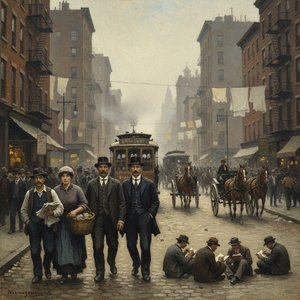
The Ashcan School: Realism, Urban Life & the Democratization of American Art
Explore the revolutionary Ashcan School! Discover how artists like Henri & Sloan challenged tradition with gritty realism, capturing urban life in early 20th-century America. Learn about their impact on American art history.

Georges Braques 25 Mesterverk: En Kunstnerisk Reise for Din Bolig
Utforsk Georges Braques 25 mest ikoniske verk! Fordyp deg i kubismens verden, fargepaletter og kunstnerisk nyskapning. Finn inspirasjon til din bolig med museumskvalitets reproduksjoner på OriginalUniqueArt.com.
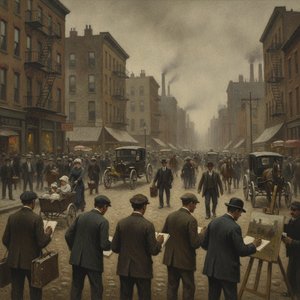
The Ashcan School: Capturing the Raw, Unfiltered Soul of Urban Life through American Realism
Discover the raw beauty of the Ashcan School. Explore how masters like Bellows and Henri captured the gritty, vibrant soul of early 20th-century New York through profound American Realism and evocative urban landscapes.
