

 Se i rommet
 Del som digitalt kort
 Del
Del
 Detaljer
 Studentguide

 Last ned
 Liknende objekter
 Røntgen
 Lysbildefremvisning
 Besøksstatistikk
Down on His Luck


 Les mer
Giclée / Kunsttrykk
Giclée- eller lerretsprint av museumskvalitet med rask produksjon og fleksible valgmuligheter for etterbehandling. ( Bestill håndmalt reproduksjon Gå til digitalt bilde)




P118B Nkr10

P118H Nkr10

P118W Nkr10

P438Z Nkr10

P508JH Nkr12

P508YH Nkr12

P805H Nkr10

P805Z Nkr10

P919BZ Nkr10

P919G Nkr10

P919XJ Nkr10

P959ZH Nkr10

P968JZ Nkr12

W106C Nkr8

W218G Nkr10

W218JH Nkr8

W218Y Nkr10

W307PJ Nkr10

W316G Nkr10

W316PJ Nkr8

W316Y Nkr10

W398PJ Nkr8

W4111J Nkr10

W500HY Nkr15

W500JH Nkr15

W692G Nkr12

W849H Nkr8

W940BG Nkr15

W953PJ Nkr8




Velg mellom våre forhåndsdefinerte størrelser som bevarer kunstverkets opprinnelige proporsjoner.

Skriv inn bredden og høyden du trenger, slik at den passer til din ramme eller vegg. Et trykk kan kun beskjæres, aldri gjøres større enn bildet, så et format med en annen form vil miste en del av motivet. Vi sender deg en digital mockup for godkjenning før vi trykker noe som helst. Bildet som vises på denne siden viser ikke den faktiske beskjæringen — det er kun mockuppen som gjør det.
Verdensomspennende levering () på 2 uker i stedet for standard 4/5 uker. (21 October)

Gratis ekspressfrakt over hele verden

Lerretsduk av høykvalitets lin

Full transportforsikring

Garanti for refusjon av toll og importavgifter

Garantert fargeekthet

100 dagers returrett ved fabrikasjonsfeil

100% pengene tilbake-garanti

Mengderabatt
 Glassalternativet er kun tilgjengelig i størrelser under 110 cm

Down on His Luck
Giclée / Kunsttrykk
Format på reproduksjon
-


Totalpris
Nkr 755
The Artist and His Work
Frederick McCubbin was a prominent figure in Australian Impressionism, known for his works depicting the Australian bush. Down on His Luck is one such painting that reflects his love for the outdoors. The dark, subdued landscape was likely painted at Box Hill, outside of Melbourne.The Painting's Significance
The painting depicts a swagman sitting by a campfire, lost in thought. A swagman was a traveling laborer who carried his belongings from farm to farm. The clothing and bedroll are typical of workers and swagmen in the bush. The eucalyptus plant in the foreground adds depth to the painting.Artistic Influences
McCubbin's work was influenced by his friend, artist Tom Roberts, who brought news of European art developments. The lively art world in Melbourne also played a role in shaping McCubbin's style.Cultural Context
Australian culture is primarily Western, with influences from British, Indigenous, and migrant components. The gold rushes of the 1850s led to significant population growth and racial tensions. The Heidelberg School artists, including McCubbin, contributed to the development of Australian identity.Relevance Today
Down on His Luck remains a powerful representation of the Australian bush and its people. It is a testament to McCubbin's skill in capturing the essence of his subjects. Discover the Art Gallery of Western Australia, home to over 17,000 works of art, including Down on His Luck. Visit Discover the Art Gallery of Western Australia to learn more.Spørsmål og svar
Er "Down on His Luck" av Frederick McCubbin i det frie domene?
Når det gjelder opphavsrett, er "Down on His Luck" i det frie domene – opphavsretten har utløpt.
Hva er anbefalt bruk av et trykk av "Down on His Luck"?
Anbefalt bruk av et trykk av "Down on His Luck" er Mood.
Finnes det verk som ligner på "Down on His Luck"?
Siden Lignende verk for "Down on His Luck" av Frederick McCubbin viser relaterte kunstverk.
Kunstnerbiografi
A Life Rooted in the Australian Landscape
Frederick McCubbin, born February 25th, 1855, in Melbourne, Australia, stands as a cornerstone of Australian art—a figure inextricably linked to the nation’s evolving identity and its distinctive visual language. His journey from humble beginnings—the son of bakers who instilled in him a profound work ethic—to becoming a pivotal member of the Heidelberg School is testament to his unwavering dedication and artistic vision. McCubbin's formative years were marked by diverse experiences, beginning with his early education at William Willmett’s West Melbourne Common School and St Paul’s School, Swanston Street, followed by employment as solicitor’s clerk and assisting in the family bakery—all shaping his understanding of everyday Australian life, a theme that would permeate throughout his oeuvre. He received foundational artistic training at the National Gallery of Victoria's School of Design, studying under esteemed artists like Eugene von Guerard and George Folingsby, honing his skills in landscape painting while absorbing the prevailing artistic currents of the time—particularly the Romantic movement’s emphasis on emotion and sublime beauty.The Heidelberg School and Defining a National Aesthetic
A crucial turning point arrived with his enduring friendship with Tom Roberts, a bond that would profoundly influence Australian art history. Together, they established Box Hill Artists' Camp in 1885—a landmark event propelling the Heidelberg School movement forward. This plein air collective—soon bolstered by Arthur Streeton and Charles Conder—embraced the raw splendor and challenging realities of the Australian environment, rejecting the conventions of European academic painting. They sought to capture the essence of Australian life with unprecedented immediacy and authenticity, prioritizing observation and capturing fleeting moments of light and color. McCubbin’s contributions during this period were instrumental in shaping a distinctly Australian aesthetic—one that prioritized emotional resonance over formal precision. His paintings from Box Hill Camp, such as *Down on His Luck* (1889) and *On the Wallaby Track* (1896), exemplify this approach, depicting scenes of rural life with remarkable detail and capturing the melancholic beauty of the bushland—a visual language that would become synonymous with Australian identity. The Heidelberg School artists deliberately eschewed academic traditions, favoring instead a style characterized by loose brushstrokes and vibrant hues—reflecting the influence of Impressionism and Barbizon painters like Jules Bastien-Lepage and Millet.Early Artistic Training and Influences
McCubbin’s artistic development was nurtured at the National Gallery of Victoria Art School under Eugène von Guerard and George Folingsby, who instilled in him a disciplined approach to painting while exposing him to classical ideals. Von Guerard's influence is evident in McCubbin’s early landscapes—characterized by meticulous detail and a serene contemplation of nature—reflecting the Romantic tradition’s fascination with sublime beauty and emotional expression. Folingsby’s emphasis on academic technique provided McCubbin with a grounding in traditional methods, shaping his understanding of composition and perspective. However, McCubbin's artistic vision extended beyond these influences; he was deeply moved by the Impressionist movement—particularly Turner—whose exploration of atmospheric effects and subjective perception inspired him to experiment with looser brushwork and brighter colors. This transformative encounter fueled a shift toward capturing fleeting moments of light and color—a hallmark of his later paintings.Major Achievements and Iconic Landscapes
McCubbin’s artistic career culminated in monumental history paintings that solidified his reputation as Australia's foremost painter of national narratives. *On the Wallaby Track* (1896), depicting the hardships endured by Australian pastoralists during a period of economic depression, stands as an emblem of this genre—a testament to McCubbin’s ability to convey emotion and social commentary through masterful technique. The painting's dramatic lighting and evocative depiction of the bushland capture the spirit of resilience and perseverance—themes that resonated deeply with audiences at the time and continue to inspire admiration today. Similarly, *The Pioneer* (1904) portrays a scene of Australian settlement—a celebration of courage and determination against formidable odds—demonstrating McCubbin’s unwavering commitment to exploring themes of national identity. His landscapes from Mt Macedon—particularly *Landscape* (c. 1914)—are considered among his finest achievements—characterized by luminous colors and a profound appreciation for the beauty of the Australian bush. These paintings exemplify McCubbin's artistic prowess—his ability to capture atmospheric effects and convey emotion with remarkable subtlety.Legacy and Enduring Influence
Frederick McCubbin’s legacy extends far beyond his individual artworks; he served as a mentor to countless aspiring artists, fostering a generation of painters who embraced the Heidelberg School aesthetic. He championed Australian art—its exploration of national identity and its engagement with the natural world—leaving an indelible mark on the artistic landscape of Australia. Barry Pearce eloquently summarized McCubbin’s contribution: “When he died,” Pearce wrote, “McCubbin was one of the very few Australian painters who found an exalted resolution of vision that progressed with age, so that some of his greatest paintings were made in the last ten years of his life.” His enduring influence continues to inspire artists today—affirming McCubbin’s place as a true visionary and one of Australia's most beloved painters.
Frederick McCubbin
1855 - 1917 , Australia
Kort om kunstneren
- Artistic Movement Or Style: Heidelberg School
- Artists Or Movements Influenced By This Artist:
- J.M.W. Turner
- French Impressionists
- Artists Who Influenced This Artist:
- Eugene von Guerard
- George Folingsby
- Date Of Birth: Feb 25, 1855
- Date Of Death: Dec 20, 1917
- Full Name: Frederick McCubbin
- Nationality: Australian
- Notable Artworks:
- On the Wallaby Track
- Down on His Luck
- The Pioneer
- Place Of Birth: Melbourne, Australia
Relaterte artikler
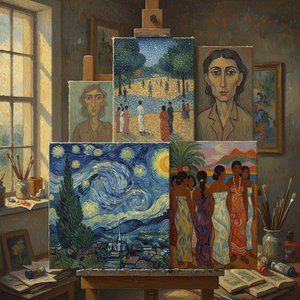
Beyond Impressionism: Exploring the Emotional Depth of Post-Impressionist Painting
Explore the profound emotional depth & innovative techniques of Post-Impressionism with OriginalUniqueArt. Discover Cézanne, Van Gogh, Gauguin & more – and their lasting impact on modern art.

Impresjonisme vs. Postimpresjonisme: En Eksklusiv Reise Gjennom Lysets og Følelsenes Revolusjon
Utforsk den fascinerende reisen fra impresjonismens lys til postimpresjonismens dype følelser. Oppdag mesterverk av Van Gogh og Monet gjennom vår eksklusive samling av håndmalte olje-reproduksjoner i museumskvalitet, skapt for det sofistikerte hjemmet.

Impressionismens Mesterverk: Topp 10 Kunstverk for Ditt Hjem
Oppdag impressionismens magi! Utforsk 10 ikoniske kunstverk av Monet, Renoir & Degas. Lær om historien bak maleriene og finn inspirasjon til din egen veggkunst på OriginalUniqueArt.com – museumskvalitet for hjemmet ditt.

Utover Lys og Farge: Impresjonisme vs. Postimpresjonisme for den kresne samleren
Dykk ned i impresjonismens og postimpresjonismens verden med vår ekspertguide. Lær å identifisere, vurdere og investere i mesterverk fra Monet, Van Gogh og Cézanne. For den kresne kunstsamleren.

Paul Cézannes 25 Mesterverk: En Kunstnerisk Reise for Ditt Hjem
Utforsk Paul Cézannes 25 mest ikoniske malerier! Oppdag historien bak impresjonismens mesterverk, fra stilleben til landskap. Finn kunsttrykk av høy kvalitet og interiørinspirasjon på OriginalUniqueArt.com.
