

 Forhåndsvisning
 Send
Send Del
Del
 Vis detaljer
 Utskriftsvennlig guide

 Last ned bilde
 Liknende objekter
 Røntgenundersøkelse
 Lysbildefremvisning
 Q&A
Q&A Statistikk
Les avions
 Olje på lerret
- Veggkunst
- German Romanticism
 1939
1939 38.0 x 45.0 cm
 Royal Academy of Music
 Vis hele teksten
Kunstverket som vises på denne siden er beskyttet av opphavsretten, noe som betyr at vi ikke har juridisk tillatelse til å lage eller selge identiske reproduksjoner. Denne beskyttelsen håndheves i henhold til internasjonale avtaler som for eksempel Bernerkonvensjonen og av nasjonale lover, inkludert de som er fastsatt i Amerikansk lov om opphavsrett – Tittel 17.
Denne metoden er i fullt samsvar med opphavsrettslige regler, da den ikke innebærer kopiering eller duplisering av det beskyttede kunstverket. I stedet er det snakk om en kreativ nytolkning – et nytt maleri som er inspirert av originalen, men ikke identisk med den.
Giclée / Kunsttrykk
Giclée- eller lerretsprint av museumskvalitet med rask produksjon og fleksible valgmuligheter for etterbehandling. ( Kjøp håndmalt maleri Bytt til digitalt bilde)




P118B Nkr10

P118H Nkr10

P118W Nkr10

P438Z Nkr10

P508JH Nkr12

P508YH Nkr12

P805H Nkr10

P805Z Nkr10

P919BZ Nkr10

P919G Nkr10

P919XJ Nkr10

P959ZH Nkr10

P968JZ Nkr12

W106C Nkr8

W218G Nkr10

W218JH Nkr8

W218Y Nkr10

W307PJ Nkr10

W316G Nkr10

W316PJ Nkr8

W316Y Nkr10

W398PJ Nkr8

W4111J Nkr10

W500HY Nkr15

W500JH Nkr15

W692G Nkr12

W849H Nkr8

W940BG Nkr15

W953PJ Nkr8




Velg mellom våre forhåndsdefinerte størrelser som bevarer kunstverkets opprinnelige proporsjoner.

Skriv inn ønsket bredde og høyde for å tilpasse trykket til din ramme eller vegg. Et trykk kan kun beskjæres, aldri skaleres opp utover motivets opprinnelige størrelse, noe som betyr at et format med andre proporsjoner vil føre til tap av deler av bildet. Vi sender deg en digital mockup for godkjenning før vi starter trykkeprosessen. Bildet som vises på denne siden viser ikke den faktiske beskjæringen — det er kun mockuppen som viser dette.
Verdensomspennende levering () på 2 uker i stedet for standard 4/5 uker. (29 October)

Gratis ekspressfrakt over hele verden

Lerretsduk av lin av høy kvalitet

Full transportforsikring

Garanti for refusjon av toll og importavgifter

Garantert fargegjengivelse

100 dagers returrett ved fabrikasjonsfeil

100% pengene tilbake-garanti

Rabatt ved flere kjøp
 Glassalternativet er kun tilgjengelig i størrelser under 110 cm

Les avions
Giclée / Kunsttrykk
Størrelse på reproduksjon
-


Totalpris for valgte alternativer
Nkr 768
Les avions - Fred Uhlman: A Nocturne of Displacement
Fred Uhlman’s “Les Avions” transcends mere depiction; it embodies the profound emotional resonance of exile and memory—themes central to Uhlman's artistic vision. Created in 1939, amidst the escalating anxieties of pre-war Europe, this oil on canvas painting measures precisely 38 x 45 cm and resides within the esteemed Royal Academy of Music in London, United Kingdom. Its placement underscores not only its aesthetic merit but also its connection to a broader cultural landscape grappling with uncertainty and transformation. ### Artistic Context: The Urban Landscape Under Siege The artwork’s genesis lies in Uhlman's experience as a refugee fleeing Nazi Germany—a journey marked by displacement and loss. This biographical element informs the painting’s atmosphere, mirroring the pervasive sense of unease felt during those turbulent years. “Les Avions” captures a city street at night, illuminated by gas lamps casting flickering shadows upon cobblestones. Dominating the composition is a statue of a woman holding aloft a torch—a potent symbol representing resilience and hope amidst darkness. Surrounding her are buildings adorned with numerous windows, creating an impression of urban density and vulnerability. The artist skillfully employs oil on canvas to achieve remarkable textural depth, conveying both the solidity of architectural structures and the ethereal quality of nocturnal illumination. ### Technique & Style: Naive Realism Infused with Emotion Uhlman’s distinctive style—characterized by naive realism—is immediately recognizable. Unlike polished academic painting, “Les Avions” eschews meticulous detail in favor of expressive brushstrokes that prioritize conveying emotion over photographic accuracy. Bold strokes delineate the contours of buildings and figures alike, capturing movement and dynamism within a static frame. The artist's palette leans towards muted tones—primarily blues and browns—reflecting the subdued mood of the scene and subtly hinting at the anxieties of the era. This deliberate stylistic choice aligns with Uhlman’s broader artistic preoccupation with conveying inner experience rather than simply representing external reality. ### Similar Artworks: Echoes of Loss & Remembrance “Les Avions” shares affinities with other artworks exploring themes of displacement and melancholic contemplation. Roman Halter's “Chodecz and Dorset, Friday,” a watercolor painting brimming with emotional depth, similarly captures the fragility of human connection amidst challenging circumstances. Sir George Clausen’s “Youth Mourning,” an oil painting powerfully conveying grief during World War I, exemplifies Uhlman’s sensitivity to capturing profound psychological states—a characteristic evident throughout his oeuvre. ### Further Exploration: Reproductions & Legacy For those seeking to immerse themselves in the artistic legacy of Fred Uhlman and experience the evocative beauty of “Les Avions,” reproductions are available at OriginalUniqueArt.com. Visiting this website allows for a deeper understanding of Uhlman’s artistic context and significance—a testament to his enduring ability to communicate universal human emotions through masterful visual expression. Explore the extensive collection of handmade oil painting reproductions and discover how Uhlman's vision continues to inspire collectors and art enthusiasts alike.Spørsmål og svar
Er fargene i "Les avions" sterke eller dempede?
Fargene i "Les avions" av Fred Uhlman har en Subtile farger metning med en Balansert intensitet.
Når ble "Les avions" skapt, og hvilken kunstretning tilhører den?
"Les avions" ble skapt i 1939 som et verk innenfor German Romanticism-retningen. Datoen og kunstretningen forankrer verket i kunsthistorien.
Finnes det verk som ligner på "Les avions"?
Siden Lignende verk for "Les avions" av Fred Uhlman viser relaterte kunstverk.
Om kunstneren
Fred Uhlman: A Painter Shaped by Exile and Memory
Fred Uhlman (1901-1985) was a German-English painter, writer & lawyer of Jewish origin whose distinctive style—characterized by naive realism and imbued with profound emotion—captured the essence of displacement and the enduring power of personal experience. Born Manfred Uhlman in Stuttgart, Germany, he descended from a prosperous middle-class family steeped in intellectual tradition. His early education encompassed Freiburg, Munich and Tübingen universities where he earned degrees in law followed by a doctorate in canon and civil law, establishing him as a respected legal scholar. However, his artistic journey began independently of academic pursuits.- Early Artistic Exploration: Uhlman’s fascination with painting emerged during his formative years, fueled by an innate sensitivity to visual beauty and a desire for self-expression. Initially experimenting with watercolors and gouache, he honed his skills through meticulous observation of the natural world—particularly landscapes—drawing inspiration from German Romanticism.
- Parisian Exile & Artistic Resilience: The rise of Nazism in Germany irrevocably altered Uhlman’s trajectory. Forced to relocate to Paris in 1933 amidst escalating antisemitic pressures, he faced considerable obstacles as a foreigner without legal employment authorization. Despite these hardships, Uhlman persevered, sustaining himself through painting and selling his artwork privately—even supplementing his income by trading tropical fish! This period of exile profoundly impacted his artistic vision, imbuing it with themes of loneliness, resilience, and the yearning for connection.
- The Influence of Diana Croft & The Theft: A serendipitous encounter in Paris with Diana Croft—a fellow expatriate and London friend—proved pivotal. Their shared predicament underscored the vulnerability of individuals displaced by political upheaval. Tragically, Uhlman’s wallet containing his passport and substantial funds was stolen during a café visit, plunging him into despair and effectively stripping him of his legal status. Nevertheless, Croft's unwavering support bolstered his spirits, encouraging him to continue his artistic endeavors.
- Return to England & Recognition: Following Croft’s encouragement, Uhlman emigrated to England in 1936 with minimal resources—a testament to his determination and artistic conviction. The subsequent outbreak of the Spanish Civil War necessitated a brief return to Marseille before finally reaching London. It was here that Uhlman's reputation as an artist began to gain traction, culminating in exhibitions at prestigious institutions like County Hall and Fitzwilliam Museum.
Style & Technique: Naive Art Rooted in Observation
Uhlman’s artistic style—often categorized as naive art—stood apart from prevailing modernist trends. Rejecting academic conventions, he embraced a directness of execution and an uncompromising commitment to portraying the world as he perceived it. His canvases are characterized by bold color palettes, simplified forms, and meticulous attention to detail—particularly in capturing atmospheric conditions like sunsets and misty landscapes. He employed a technique reminiscent of folk art traditions, prioritizing emotional resonance over technical precision. This approach allowed him to convey profound feelings about human experience and the natural environment with remarkable sincerity.Notable Works & Literary Achievement
Among Uhlman’s most celebrated paintings are “Les avions” (The Planes), a striking depiction of aircraft soaring across a dramatic sky; “Café, Sunset,” which captures the tranquil beauty of an evening café scene; and “Tightrope Dancer,” a whimsical landscape featuring a solitary figure balancing on a rope amidst swirling clouds. These works exemplify Uhlman’s ability to distill complex emotions into visually arresting compositions. Furthermore, he achieved literary acclaim with his novel ‘Reunion,’ exploring themes of memory, loss, and the enduring bonds between individuals separated by circumstance—a poignant reflection of his own personal journey.Legacy & Historical Significance
Fred Uhlman’s artistic legacy resides in his unwavering dedication to portraying human experience with honesty and compassion. His work serves as a powerful reminder that beauty can emerge from adversity, and that art possesses the capacity to transcend political divisions. Represented in institutions like V&A and Fitzwilliam Museum, Uhlman's oeuvre continues to inspire artists and scholars alike—a testament to his enduring contribution to European art history.
Fred Uhlman
1901 - 1985
Kort om kunstneren
- Full Name: Fred Uhlman
- Nationality: German-English
- Date Of Birth: 1901
- Date Of Death: 1985
- Place Of Birth: Stuttgart, Germany
- Notable Artworks:
- Les avions
- Café, Sunset
- Tightrope Dancer
- Artistic Movement Or Style: Naive Art
Relaterte artikler

Oil on Canvas: A Historical & Technical Exploration of a Timeless Artistic Medium
Explore the rich history & enduring techniques of oil painting on canvas. Discover the science behind its longevity, conservation practices, and contemporary relevance. Expert insights for art enthusiasts.

The Soul of Impressionism: Why Oil on Canvas Captures Eternal Light and Timeless Emotion
Discover the enchanting alchemy of Impressionism. Explore how the mastery of oil on canvas, through glazing and impasto, captures eternal light and emotion. Perfect for lovers of Monet and Van Gogh seeking the profound depth of hand-painted fine art.

The Enduring Legacy of Oil on Canvas: Technique, History & Aesthetic Impact
Explore the rich history & techniques of oil painting – from Renaissance masters to Impressionism. Discover pigments, layering methods, and why this timeless medium endures. Expert insights for artists & art enthusiasts.
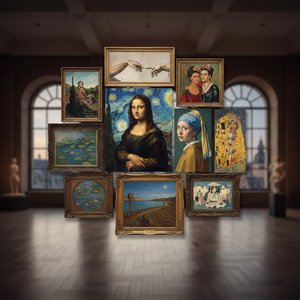
De 10 mest ikoniske oljemalerier som forandret kunsthistorien – OriginalUniqueArt.com
Oppdag de 10 mest innflytelsesrike oljemaleriene gjennom tidene! Fra Mona Lisa til Van Goghs mesterverk – lær historien bak ikoniske kunstverk og finn inspirasjon for ditt hjem. Museumskvalitet reproduksjoner på OriginalUniqueArt.com.

Oljemaleriets varige arv: Teknikk, historie og samtidspraksis
Utforsk oljemaleriets fascinerende historie og teknikker! Lær om mestere, materialer og samtidspraksis. Få ekspertråd og inspirasjon for ditt neste kunstprosjekt.
