

 Se i rommet
 Del som digitalt kort
 Del
Del
 Detaljer
 Studentguide

 Last ned
 Liknende objekter
 Røntgen
 Lysbildefremvisning
 Besøksstatistikk
Landscape by Tachlov


 Les mer
Giclée / Kunsttrykk
Giclée- eller lerretsprint av museumskvalitet med rask produksjon og fleksible valgmuligheter for etterbehandling. ( Bestill håndmalt reproduksjon Gå til digitalt bilde)




P118B Nkr10

P118H Nkr10

P118W Nkr10

P438Z Nkr10

P508JH Nkr12

P508YH Nkr12

P805H Nkr10

P805Z Nkr10

P919BZ Nkr10

P919G Nkr10

P919XJ Nkr10

P959ZH Nkr10

P968JZ Nkr12

W106C Nkr8

W218G Nkr10

W218JH Nkr8

W218Y Nkr10

W307PJ Nkr10

W316G Nkr10

W316PJ Nkr8

W316Y Nkr10

W398PJ Nkr8

W4111J Nkr10

W500HY Nkr15

W500JH Nkr15

W692G Nkr12

W849H Nkr8

W940BG Nkr15

W953PJ Nkr8




Velg mellom våre forhåndsdefinerte størrelser som bevarer kunstverkets opprinnelige proporsjoner.

Skriv inn bredden og høyden du trenger, slik at den passer til din ramme eller vegg. Et trykk kan kun beskjæres, aldri gjøres større enn bildet, så et format med en annen form vil miste en del av motivet. Vi sender deg en digital mockup for godkjenning før vi trykker noe som helst. Bildet som vises på denne siden viser ikke den faktiske beskjæringen — det er kun mockuppen som gjør det.
Verdensomspennende levering () på 2 uker i stedet for standard 4/5 uker. (24 October)

Gratis ekspressfrakt over hele verden

Lerretsduk av høykvalitets lin

Full transportforsikring

Garanti for refusjon av toll og importavgifter

Garantert fargeekthet

100 dagers returrett ved fabrikasjonsfeil

100% pengene tilbake-garanti

Mengderabatt
 Glassalternativet er kun tilgjengelig i størrelser under 110 cm

Landscape by Tachlov
Giclée / Kunsttrykk
Format på reproduksjon
-


Totalpris
Nkr 760
Kunstnerbiografi
The Quiet Mastery of Franz Rumpler
In the heart of the Tachauerland region, amidst the rolling landscapes of the Austrian Empire, Franz Rumpler was born into a world where art and craftsmanship were woven into the very fabric of daily life. Born on December 4, 1848, to a family of skilled artisans, Rumpler’s journey began not in a grand academy, but within the intimate confines of his father’s studio. As the son of Johann Baptist Rumpler, a dedicated wood carver, and brother to the sculptor Johann Rumpler the Younger, the young artist was immersed in an environment that celebrated meticulous detail and tactile beauty. His earliest triumphs were remarkably precocious; by the age of fourteen, he had already captured the tender essence of his mother at her spinning wheel, a miniature portrait that hinted at the profound sensitivity and technical command that would define his entire career.
The trajectory of Rumpler’s life shifted dramatically when his extraordinary talent earned him a place in the prestigious Academy of Fine Arts in Vienna. At just fifteen, he moved from the provincial charm of his birthplace to the imperial grandeur of the capital, where he studied under the esteemed Eduard von Engerth. This formal training provided him with more than just technical proficiency; it introduced him to the rigorous traditions of history painting and the subtle complexities of tonalism. His ascent within the academic circles was swift, marked by the receipt of the prestigious Rosenbaum Prize for an outstanding historical work during his third year of study. This period of intense academic rigor was further enriched by his travels, as he ventured through Italy between 1871 and 1875, absorbing the light and classical compositions of the Mediterranean, and later journeyed to France in 1879, where the burgeoning whispers of Impressionism began to color his artistic consciousness.
A Legacy of Light and Landscape
While many of his contemporaries sought the dramatic spectacle of grand historical narratives or the radical fragmentation of modernism, Rumpler found his true calling in the quiet, evocative beauty of the natural world and the intimate moments of genre painting. His work is characterized by a remarkable ability to capture the serene atmosphere of the Bavarian and Austrian countryside, utilizing a muted palette that prioritizes tonal harmony over flamboyant color. He was a master of atmospheric perspective, employing subtle gradations of light and shadow to create an illusion of profound depth and luminosity. In masterpieces such as Landscape by Tachlov, one can almost feel the soft warmth of sunlight filtering through the hills, a testament to his ability to translate the ephemeral qualities of nature onto canvas with breathtaking realism.
Beyond the vastness of landscapes, Rumpler possessed a singular gift for portraiture and genre scenes that resonated with deep human emotion. His Head of a Girl serves as a poignant example of this intimacy, where the subject is rendered with a tenderness and sensitivity that transcends mere likeness. This ability to imbue his subjects with a quiet soul was likely influenced by the tonalist movement and the works of masters like Wilhelm Leibl. As his career progressed, Rumpler transitioned from student to mentor, serving as a Professor of history painting at the Academy during the 1890s. In this capacity, he shaped the next generation of Austrian artists, including notable figures such as Koloman Moser, ensuring that his dedication to precision and emotional depth would endure through his pupils.
Though history often remembers the more turbulent movements of the late 19th century, the significance of Franz Rumpler lies in his role as a guardian of classical beauty and atmospheric truth. His oeuvre remains a vital window into a pivotal era of European art, offering a sanctuary of tranquility amidst the rapid changes of the modern age. Through his controlled brushstrokes and deliberate compositions, he achieved something rare: the ability to make the fleeting moments of rural life feel eternal.

Franz Rumpler
1848 - 1922 , Austria
Kort om kunstneren
- Full Name: Franz Rumpler
- Nationality: Austrian
- Date Of Birth: 1848
- Date Of Death: 1922
- Place Of Birth: Tachauerland, Austria
- Notable Artworks: ['Landscape by Tachlov']
- Artistic Movement Or Style: Genre & Landscape Painting
- Artists Or Movements Influenced By This Artist: ['Franz Marc Museum']
Relaterte artikler

Oljemaleriets varige arv: Teknikk, historie og samtidspraksis
Utforsk oljemaleriets fascinerende historie og teknikker! Lær om mestere, materialer og samtidspraksis. Få ekspertråd og inspirasjon for ditt neste kunstprosjekt.

The Soul of Impressionism: Why Oil on Canvas Captures Eternal Light and Timeless Emotion
Discover the enchanting alchemy of Impressionism. Explore how the mastery of oil on canvas, through glazing and impasto, captures eternal light and emotion. Perfect for lovers of Monet and Van Gogh seeking the profound depth of hand-painted fine art.

The Enduring Legacy of Oil on Canvas: Technique, History & Aesthetic Impact
Explore the rich history & techniques of oil painting – from Renaissance masters to Impressionism. Discover pigments, layering methods, and why this timeless medium endures. Expert insights for artists & art enthusiasts.

Oil on Canvas: A Historical & Technical Exploration of a Timeless Artistic Medium
Explore the rich history & enduring techniques of oil painting on canvas. Discover the science behind its longevity, conservation practices, and contemporary relevance. Expert insights for art enthusiasts.
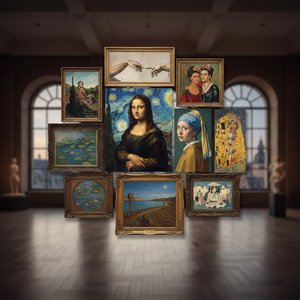
De 10 mest ikoniske oljemalerier som forandret kunsthistorien – OriginalUniqueArt.com
Oppdag de 10 mest innflytelsesrike oljemaleriene gjennom tidene! Fra Mona Lisa til Van Goghs mesterverk – lær historien bak ikoniske kunstverk og finn inspirasjon for ditt hjem. Museumskvalitet reproduksjoner på OriginalUniqueArt.com.