
 Forhåndsvisning
 Send
Send Del
Del
 Vis detaljer
 Utskriftsvennlig guide

 Last ned bilde
 Liknende objekter
 Røntgenundersøkelse
 Lysbildefremvisning
 Spørsmål og svar
 Statistikk
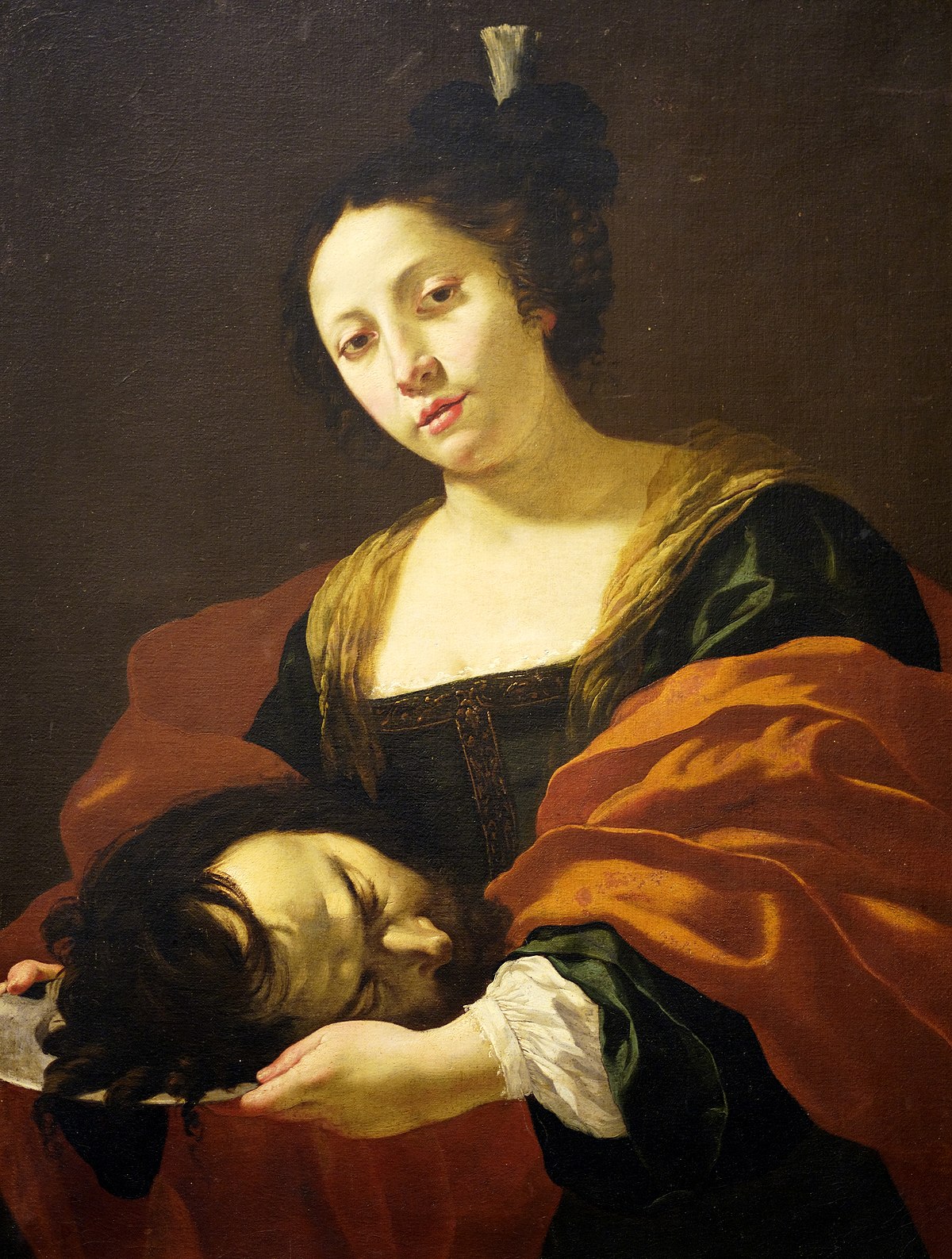
Salome

- 92.0 x 114.0 cm


 Vis hele teksten
Få en utskriftsklar fil som går langt utover forhåndsvisningen på nett. Hvert digitale bilde vi selger er hentet fra en høyoppløselig master i vår database – vanligvis mellom 5 000 og 15 000 piksler bred – slik at du kan trykke stort, beskjære tett eller gjenskape fine detaljer med full trygghet.
Ingen filer forlater studioet vårt uten å bli bearbeidet. En digital ekspert kontrollerer fargene mot det originale maleriet og korrigerer dem ved behov, for deretter å forbedre klarhet og detaljrikdom med profesjonelle retusjeringsverktøy — alltid tro mot kunstnerens penselstrøk og stil. Resultatet er et bilde som fremstår som selve maleriet, ikke som en skann med filter.
Du godkjenner før ferdigstilling: vår ekspert sender bildet på e-post til din vurdering innen 72 timer. Ikke fornøyd? Be om forbedringer eller korrigeringer, eller be om refusjon dersom kvaliteten ikke svarer til forventningene.
Dette er kvaliteten forlag, designstudioer, gallerier og trykkerier stoler på.
Digitalt bilde
Last ned en høyoppløselig fil til personlig bruk, utskrift og kreative prosjekter. ( Bytt til trykk Kjøp håndmalt maleri)
Inkludert i alle bestillinger av digitale bilder
Ekspert på digital levering, garantert
Når du velger OriginalUniqueArt.com, får du ikke bare et bilde – du mottar et profesjonelt etterbehandlet digitalt kunstverk, skapt med presisjon og med en garantert tilfredshetsgaranti. Her er alt som automatisk følger med din bestilling:

Rask levering på e-post
Din høyoppløselige digitale bildefil sendes til din e-post innen 72 timer etter bestilling – klar til umiddelbar bruk.

KI-forbedret digital fil
Ditt kunstverk blir profesjonelt optimalisert ved hjelp av avanserte AI-verktøy og manuell redigering, noe som sikrer maksimal detaljrikdom, klarhet og fargegjengivelse.

Gratis livslang nyutlevering
Har du ved et uhell slettet eller mistet filen din? Ingen bekymring – vi sender den på nytt når som helst, helt gratis.

Ingen importavgifter – noen gang
Nyt ditt kunstverk umiddelbart uten toll, avgifter eller leveringskostnader – digitale nedlastinger er alltid avgiftsfrie.

Garantert fargenøyaktighet
Vi sikrer at det digitale bildet gjenspeiler de originale fargene så nøyaktig som mulig ved hjelp av profesjonelle verktøy og fargehåndtering.

100 dagers fornøydhetsgaranti
Hvis du ikke er fornøyd med ditt digitale bilde, vil vi revidere det eller refundere 100% innen 100 dager – uten spørsmål.

100% Penggaranti
Ikke fornøyd? Få full refusjon innen 100 dager etter at du har mottatt din digitale fil – uten spørsmål.

Rabatt ved storkjøp
Kjøp 3 bilder, spar 10% - Kjøp 5, spar 15% - Kjøp 10+, spar 20%. Ideelt for kreative prosjekter, gallerier og byråer.
The Enigmatic Dance: Unveiling Franz Ritter von Stuck’s “Salome”
Franz Ritter von Stuck's 1906 painting, "Salome," is not merely a depiction of a biblical episode; it’s a profoundly unsettling and intensely symbolic exploration of desire, power, and the dark undercurrents of human nature. Emerging from the fertile ground of German Symbolism, Stuck masterfully blends classical precision with the dreamlike logic of the subconscious, creating an image that continues to captivate and disturb over a century later. The painting’s immediate impact lies in its dramatic composition – a carefully orchestrated tableau of figures poised on the precipice of violence and obsession. The scene unfolds within a shadowy, almost claustrophobic space, dominated by a towering, ornate architecture suggesting both opulence and impending doom. This isn't a straightforward narrative; it’s an atmosphere saturated with tension, inviting viewers to contemplate the motivations and fates of those involved.
A Symphony of Contrasts: Style, Technique, and Materiality
Stuck’s artistic style is immediately recognizable as a potent blend of Symbolism and Art Nouveau influences. The painting showcases his signature use of rich, jewel-toned colors – deep reds, emerald greens, and shimmering golds – applied with meticulous detail to create an opulent yet unsettling effect. His brushwork is deliberately expressive, employing visible strokes that contribute to the overall sense of drama and movement. Notice particularly the way he renders the textures: the velvet drapery, the polished surfaces of the architecture, and even the glistening skin of Salome herself – all are rendered with a tactile quality that draws the viewer into the scene. The painting was executed in oil on canvas, a medium that allowed Stuck to achieve both luminous color saturation and remarkable textural detail. The use of chiaroscuro—the dramatic contrast between light and shadow—further intensifies the emotional impact, highlighting key figures and obscuring others in an atmosphere of mystery and foreboding.
The Narrative Unfolds: Biblical Context and Symbolism
At its core, “Salome” depicts a pivotal moment from the New Testament – the fulfillment of Herodias’s vengeful plot against John the Baptist. However, Stuck doesn't offer a simple retelling of the story; instead, he delves into the psychological complexities of the characters and imbues the scene with layers of symbolic meaning. Salome herself is not portrayed as a seductive temptress but rather as a figure caught in a web of manipulation and driven by a primal desire for power. The presence of the dark servant, clutching John’s severed head on a platter, introduces an element of grotesque horror – a stark reminder of the brutal consequences of unchecked ambition. The architecture—a blend of Romanesque and Byzantine styles—suggests both grandeur and decay, mirroring the moral corruption at the heart of the narrative. The star-studded night sky serves as a backdrop to this drama, hinting at a realm beyond earthly concerns and perhaps suggesting a connection between life and death.
A “Prince of Art”: Stuck’s Legacy and Artistic Significance
Franz Ritter von Stuck was more than just an artist; he was a cultural phenomenon. Nicknamed the "Prince of Art" during his lifetime, he bridged the gap between academic tradition and the burgeoning currents of modernism. His work explored themes of sin, beauty, and the subconscious with a boldness and emotional intensity that resonated deeply with audiences at the turn of the 20th century. Villa Stuck, his own architectural masterpiece in Munich, stands as a testament to his artistic vision—a lavishly decorated space filled with sculptures, paintings, and intricate details reflecting his fascination with mythology, symbolism, and the darker aspects of human experience. “Salome” is arguably one of his most enduring works, demonstrating his mastery of dramatic composition, evocative color palettes, and profound psychological insight. It remains a powerful and unsettling image that continues to provoke discussion and inspire interpretation.
Spørsmål og svar
Hvordan forenes kunstretning og epoke i "Salome" av Franz von Stuck?
"Salome" tilhører German Symbolism-retningen, og kunstneren virket i tallet-epoken.
Er "Salome" et av Franz von Stuck sine mest populære verk?
Popularitetsnivået som er registrert for "Salome" av Franz von Stuck, er Recognized.
Hvordan er fargekomposisjonen i "Salome" av Franz von Stuck bygget opp?
Fargeanalysen av "Salome" av Franz von Stuck viser en Gentle kontrast og en Softly Mixed Palette harmoni.
Om kunstneren
A Life Steeped in Myth and Symbol
Franz Ritter von Stuck, a name inextricably linked to the evocative power of German Symbolism, emerged from the verdant landscapes of Bavaria in 1863, destined for an artistic journey that would ultimately define his place as one of the most influential artists of his generation. Born in Tettenweis, a small village nestled amidst rolling hills, young Franz was initially guided towards a life mirroring his father’s role as a forester – a path seemingly predetermined by circumstance. However, beneath this rural façade lay an undeniable artistic inclination, a burning passion that would irrevocably alter the course of his existence. This early, nascent talent led him to Munich, first to the School of Applied Arts in 1878 and then to the prestigious Academy of Fine Arts from 1882-1884, where he became utterly captivated by Arnold Böcklin’s hauntingly beautiful mythological scenes – a formative influence that would profoundly shape his artistic vision. Stuck wasn't merely an artist; he was a cultural phenomenon, a “Prince of Art” as he became known during his lifetime, skillfully bridging the gap between 19th-century academic tradition and the burgeoning currents of modernism.The Rise of a Symbolist Master
Stuck’s ascent to prominence unfolded with remarkable speed and dramatic flair. His breakthrough arrived in 1889 with The Guardian of Paradise, an arresting painting exhibited at the Munich Glass Palace, instantly captivating critics and securing him a gold medal – a testament to his burgeoning talent. This wasn't simply a display of technical prowess; it was a bold declaration of a new artistic voice—one that masterfully blended classical precision with mythological subject matter and an undercurrent of Symbolist mystery. He swiftly established himself as a central figure in challenging the conservative norms of the art world, co-founding the Munich Secession in 1892 alongside like-minded artists determined to break free from restrictive conventions and champion innovative artistic expression. This act of artistic rebellion coincided with his exploration into sculpture, debuting with Athlete (1892), a striking bronze figure that demonstrated an impressive versatility and technical skill. However, it was The Sin (1893) – a dramatic portrayal of temptation and moral ambiguity – that truly cemented his reputation as a master of Symbolist painting, captivating audiences with its intense emotionality and profound psychological depth. This period marked the full flowering of Stuck’s unique style—a potent synthesis of sensuality, classical form, and symbolic resonance, creating works that lingered in the viewer's mind long after they had been seen.Themes and Influences: A World of Desire and Myth
The artistic universe of Franz von Stuck is richly layered with recurring motifs that reveal his profound engagement with timeless themes. Mythology served as a constant source of inspiration, drawing from Greek, Roman, and biblical narratives which he reimagined with a distinctly personal flair—transforming ancient stories into powerful expressions of the human condition. These weren’t mere retellings; they were explorations of our deepest desires, fears, and moral dilemmas filtered through the lens of these enduring myths. Equally prominent was his fascination with sensuality and the femme fatale – powerfully embodied in his numerous depictions of Salome—a figure representing desire, danger, and moral ambiguity. These paintings weren’t simply about physical beauty; they delved into the psychological complexities of female power and its potential for both allure and destruction. Underlying all this was a deep reverence for classical art, evident in his meticulous technique, anatomical accuracy, and compositional rigor – a legacy inherited from his studies under Böcklin. Beyond Böcklin, Stuck acknowledged influences from the Pre-Raphaelites and Gustave Moreau, but he wasn’t merely an imitator; he synthesized these influences into something uniquely his own, profoundly impacting subsequent generations of artists.Major Works and Enduring Significance
Throughout his career, Franz von Stuck produced a remarkable body of work that continues to fascinate and inspire. Some of his most celebrated pieces include:- The Spring (1886): A vibrant depiction showcasing his early mastery of color and composition, capturing the essence of renewal and vitality.
- Dissonance (1893): An unsettling portrayal embodying emotional turmoil through a woman playing the violin—a poignant exploration of inner conflict and artistic expression.
- Salome (various versions): Perhaps his most iconic work, depicting the biblical story with striking sensuality and psychological depth – a testament to his ability to infuse myth with human drama.
- Athlete (1892): A powerful sculpture demonstrating his skill in three-dimensional form—a dynamic representation of strength and athleticism.
Legacy and Influence: A Knight of Art
Franz Ritter von Stuck’s legacy extends far beyond the confines of the art world. He played a pivotal role in shaping the Symbolist movement in Germany, bridging the gap between academic tradition and modern artistic experimentation. His work continues to captivate audiences with its dramatic intensity, mythological richness, and psychological depth. He remains a vital figure for understanding the transition from 19th-century historicism to the innovative spirit of the 20th century, an artist whose influence can still be felt in contemporary art today. He was not just a painter; he was a cultural commentator, a teacher, and a symbol of artistic innovation—a “Prince of Art” who left an indelible mark on the landscape of German culture.
Franz von Stuck
1863 - 1928 , Tyskland
Kort om kunstneren
- Artistic Movement Or Style: Symbolisme, Jugendstil
- Artists Or Movements Influenced By This Artist:
- Paul Klee
- Wassily Kandinsky
- Artists Who Influenced This Artist:
- Arnold Böcklin
- Pre-Raphaelitter
- Date Of Birth: 23. februar 1863
- Date Of Death: 30. august 1928
- Full Name: Franz Ritter von Stuck
- Nationality: Tysk
- Notable Artworks:
- Paradisets Voktere
- Synden
- Atleter
- Place Of Birth: Tettenweis, Tyskland