Bytt til trykk
 Vis hele teksten







































 For kunstverk eller reproduksjoner som er større enn 105 cm (ca. 41 tommer) på noen side, vil rammen bli sendt som et sett som må monteres. Denne metoden sikrer trygg levering og forhindrer skader under transport.


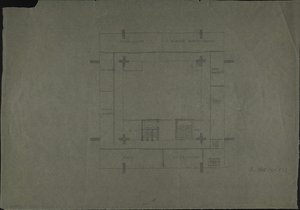
A Blueprint for Utopia: Examining Franz Ehrlich’s “3rd FLOOR”
The architectural drawing titled “3rd FLOOR,” created by Franz Ehrlich in 1956, transcends mere technical documentation; it embodies the aspirations of a nation grappling with its identity after decades under Nazi oppression and subsequent Soviet influence. This meticulously crafted plan for a foreign representation of the German Democratic Republic—specifically designed for the Leipzig Trade Fair—offers a fascinating glimpse into the ethos of socialist architecture during the GDR era. Ehrlich, a Bauhaus graduate who endured imprisonment during the Nazi regime, channeled his artistic sensibilities into this project, resulting in an image that speaks volumes about control, precision, and the pursuit of idealized urban landscapes.- Style & Technique: The drawing exemplifies architectural drafting—a style prioritizing accuracy and detail above stylistic flourishes. Ehrlich employed pencil or pen on paper, utilizing precise lines to delineate walls, doorways, and room boundaries. Hatching was skillfully applied to simulate shading and depth, creating subtle tonal variations that convey a sense of materiality without resorting to illusionistic perspective.
- Historical Context: Produced in 1956, “3rd FLOOR” reflects the GDR’s commitment to showcasing its achievements on the international stage. The drawing served as part of a larger exhibit at the Leipzig Trade Fair, aiming to portray the GDR as a beacon of progress and social harmony—a deliberate counterpoint to the perceived failures of capitalism.
- Composition & Spatial Arrangement: Symmetry dominates the composition, mirroring the GDR’s ideological framework. Rooms are arranged around a central large space, reflecting the importance of communal life and centralized planning within socialist society. The careful consideration of spatial relationships underscores the desire for orderliness and efficiency.
- Materials Used: Pencil or ink on paper – reflecting a commitment to honest craftsmanship and avoiding artificial enhancements.
Size & Dimensions
The artwork measures 32 x 45 cm.Artist Biography
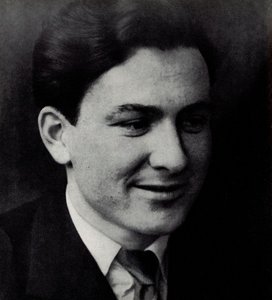
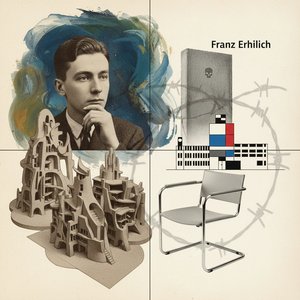
Franz Ehrlich (1907-1984), born in Reuth, Germany, was a Bauhaus graduate who experienced imprisonment during the Nazi regime. He continued to contribute to the world of art after his release, leaving behind a legacy that is both inspiring and thought-provoking.Further Exploration
{ "useful_links": [], "useful_content": [] }Spørsmål og svar
Kan jeg undersøke "3. ETASJE (Design for en fremmed representasjon av DDR. Etasjelplan)" mer detaljert?
"3. ETASJE (Design for en fremmed representasjon av DDR. Etasjelplan)" kan undersøkes lag for lag på verkets Røntgenstråling-side, en interaktiv visning inspirert av en konservators lysbord med elleve optiske lag av bildet.
Hvorfor er den opphavsrettslige statusen til "3. ETASJE (Design for en fremmed representasjon av DDR. Etasjelplan)" slik den er?
Opphavsrettslig status for "3. ETASJE (Design for en fremmed representasjon av DDR. Etasjelplan)" – fortsatt beskyttet av opphavsretten – følger av kunstnerens dødsår, 1984.
Hvilken stemning formidler Bauhaus Architectural Drafting-verket "3. ETASJE (Design for en fremmed representasjon av DDR. Etasjelplan)"?
"3. ETASJE (Design for en fremmed representasjon av DDR. Etasjelplan)" har en Reflekterende emosjonell tone innenfor Bauhaus Architectural Drafting-retningen.
 Forhåndsvisning
 Send
Send Del
Del
 Vis detaljer
 Utskriftsvennlig guide

 Last ned bilde
 Liknende objekter
 Røntgenundersøkelse
 Lysbildefremvisning
 Spørsmål og svar
 Statistikk