Tekststørrelse

() ·

Et maleri laget til deg, med håndverk

Paulus Verschuur

Håndlaget oljereproduksjon

Håndmalt olje på lerret i din valgte størrelse og ramme, laget på bestilling av våre kunstnere. ( Bytt til trykk Bytt til digitalt bilde)

Beskrivelse av objektet

Admire Frans Hals I’s 1643 portrait of a dignified man in Baroque realism. Dramatic chiaroscuro & rich detail capture status & wealth. #DutchArt #Portraiture

Om kunstneren

Frans Hals I var en nederlandsk maler kjent for sine levende portretter og genrebilder fra gullalderen – spesielt «Lerens Ridder» og «Laughing Cavalier». Hans innovative bruk av løse penselstrøk gjorde ham til en pioner innen psykologisk kunst! #FransHals #NederlandsKunst

fra ·

Kapittel 1

Hvor stor bør den være?

Skyv for å endre størrelsen; bildet til venstre viser rammen i sin faktiske bredde. Originalens proporsjoner er bevart.

Standardformat
skreddersydd
CM
INCH

Velg mellom våre forhåndsdefinerte størrelser som bevarer kunstverkets opprinnelige proporsjoner.

bredde
høyde

Skriv inn ønsket bredde og høyde for å tilpasse bildet til din ramme eller vegg. Siden dette er håndmalt, kan kunstneren male litt mer rundt motivet eller beskjære det noe dersom du velger et annet format — valget er ditt. Vi sender deg en digital mockup til godkjenning før maleriet påbegynnes. Bildet som vises på denne siden representerer ikke det faktiske resultatet — kun mockuppen viser det endelige uttrykket.

Kapittel 2

Hvordan skal det leveres?

Velg kantutførelse på lerretet

Velg din ramme

Corner sample of the WhiteWrap canvas edge finish, stretched on massivt tre bars
Hvit kant Nkr1
Corner sample of the BlurSideWrap canvas edge finish, stretched on massivt tre bars
Uskarp kantfinish Nkr1
Corner sample of the ExtendedWrap canvas edge finish, stretched on massivt tre bars
Fortsatt motiv Nkr1
Corner sample of the P118B picture frame: støpt polystyren, 5 cm wide and 3 cm thick
P118B Nkr10
Corner sample of the P118H picture frame: støpt polystyren, 5 cm wide and 3 cm thick
P118H Nkr10
Corner sample of the P118W picture frame: støpt polystyren, 5 cm wide and 3 cm thick
P118W Nkr10
Corner sample of the P438Z picture frame: støpt polystyren, 5.5 cm wide and 3.5 cm thick
P438Z Nkr10
Corner sample of the P508JH picture frame: støpt polystyren, 7 cm wide and 3.5 cm thick
P508JH Nkr12
Corner sample of the P508YH picture frame: støpt polystyren, 7 cm wide and 3.5 cm thick
P508YH Nkr12
Corner sample of the P805H picture frame: støpt polystyren, 5 cm wide and 3.5 cm thick
P805H Nkr10
Corner sample of the P805Z picture frame: støpt polystyren, 5 cm wide and 3.5 cm thick
P805Z Nkr10
Corner sample of the P919BZ picture frame: støpt polystyren, 7 cm wide and 3.5 cm thick
P919BZ Nkr10
Corner sample of the P919G picture frame: støpt polystyren, 7 cm wide and 3.5 cm thick
P919G Nkr10
Corner sample of the P919XJ picture frame: støpt polystyren, 7 cm wide and 3.5 cm thick
P919XJ Nkr10
Corner sample of the P959ZH picture frame: støpt polystyren, 5 cm wide and 3 cm thick
P959ZH Nkr10
Corner sample of the P968JZ picture frame: støpt polystyren, 6 cm wide and 4 cm thick
P968JZ Nkr12
Corner sample of the W106C picture frame: massivt tre, 5 cm wide and 3 cm thick
W106C Nkr8
Corner sample of the W218G picture frame: massivt tre, 5 cm wide and 3 cm thick
W218G Nkr10
Corner sample of the W218JH picture frame: massivt tre, 5 cm wide and 3 cm thick
W218JH Nkr8
Corner sample of the W218Y picture frame: massivt tre, 5 cm wide and 3 cm thick
W218Y Nkr10
Corner sample of the W307PJ picture frame: massivt tre, 6 cm wide and 3 cm thick
W307PJ Nkr10
Corner sample of the W316G picture frame: massivt tre, 6 cm wide and 3 cm thick
W316G Nkr10
Corner sample of the W316PJ picture frame: massivt tre, 6 cm wide and 3 cm thick
W316PJ Nkr8
Corner sample of the W316Y picture frame: massivt tre, 6 cm wide and 3 cm thick
W316Y Nkr10
Corner sample of the W398PJ picture frame: massivt tre, 5 cm wide and 3 cm thick
W398PJ Nkr8
Corner sample of the W4111J picture frame: massivt tre, 6.5 cm wide and 3.5 cm thick
W4111J Nkr10
Corner sample of the W500HY picture frame: massivt tre, 7 cm wide and 5 cm thick
W500HY Nkr15
Corner sample of the W500JH picture frame: massivt tre, 7 cm wide and 5 cm thick
W500JH Nkr15
Corner sample of the W692G picture frame: massivt tre, 8 cm wide and 4 cm thick
W692G Nkr12
Corner sample of the W849H picture frame: massivt tre, 5 cm wide and 3 cm thick
W849H Nkr8
Corner sample of the W940BG picture frame: massivt tre, 7.5 cm wide and 4.5 cm thick
W940BG Nkr15
Corner sample of the W953PJ picture frame: massivt tre, 6 cm wide and 3.5 cm thick
W953PJ Nkr8
Corner sample of the H24-GOLD picture frame: utskåret tre med gesso, 10 cm wide and 6 cm thick
H24-GOLD Nkr30
Corner sample of the H24-SILVER picture frame: utskåret tre med gesso, 10 cm wide and 6 cm thick
H24-SILVER Nkr30
Corner sample of the H36-GOLD picture frame: utskåret tre med gesso, 15 cm wide and 6.5 cm thick
H36-GOLD Nkr45
Corner sample of the H36-SILVER picture frame: utskåret tre med gesso, 15 cm wide and 6.5 cm thick
H36-SILVER Nkr45

Profil: . Total størrelse med ramme: .

Kapittel 3

Hvem maler det, og bør noe endres?

Eksempler på hva som kan endres: Erstatt ansikt med kundens eget bilde; Legg til kjæledyr (f.eks. bytt ut katt med hund); Inkluder en skjult melding i bakgrunnen; Endre landskap eller elementer i bakgrunnen.
Etter bestilling vil OriginalUniqueArt.com-teamet sende e-post til kunden for instruksjoner og sende et utkast som forhåndsvisning

Verdensomspennende levering () på 3–4 uker i stedet for standard 5 uker. (3 November). Ingen kompromisser med kvaliteten.

Kapittel 4

De siste detaljene

En navneplate, som på et museum?

Detaljer om gravert bronseplate

This elegant plaque features the artist's name and the title of the artwork, finely engraved for a timeless presentation.

It is made from bronze with a refined, elegant finish. The text is precisely laser-engraved for a sharp and permanent result. Measuring 9x2 cm, the plaque is compact yet easy to read. It's built to be durable and scratch-resistant, offering a professional, museum-quality look. Mounting is simple thanks to the included adhesive backing.

Detaljer om gjennomsiktig akrylplate

The plaque includes essential engraved details such as the artist's name, the title of the artwork, the date it was created, the type of media used-like oil on canvas or watercolor-a brief description of the piece, and a QR code that links to the complete artwork information.

It is crafted from clear acrylic, offering a sleek, modern appearance. The text is UV-engraved in black to ensure strong visual contrast. With a size of 10x15 cm, it ensures optimal readability. It comes equipped with two metal hooks for secure wall mounting. The plaque is designed to be weather-resistant, making it suitable for various environments, and it includes interactive features that work seamlessly with smartphone scanning.

Detaljer om plakett i svart akryl

This elegant plaque includes engraved information such as the artist's name, the title of the artwork, the date it was created, the type of media used (like oil on canvas or watercolor), a short description of the artwork, and a QR code for quick access to more information.

The plaque itself is made from refined black acrylic with a premium finish. The text is laser-engraved in white for high contrast and readability. Its size is 10x15 cm, designed to be easy to read. It comes with two metal hooks for professional mounting. The design is sleek and fits any interior style. It is also weather-resistant and durable, with built-in digital integration for mobile compatibility.

En beskyttende lakk?

Når trenger du det?

Kapittel 5

Ditt maleri, slik du bestilte det

Paulus Verschuur

Trykkmetode

Størrelse på reproduksjon

-

Utvalgte mesterkunstnere

Mer detaljrikdom, finesse og ekstra produksjonstid

-

Innramming av reproduksjon

-

-

For kunstverk eller reproduksjoner som er større enn 105 cm (ca. 41 tommer) på noen side, vil rammen bli sendt som et sett som må monteres. Denne metoden sikrer trygg levering og forhindrer skader under transport.

Krever profesjonell montering – dette er ikke et DIY-produkt.
Settet må monteres og lerretet strammes av en erfaren profesjonell rammelegger, ved bruk av trelim (følger ikke med), en lerretstang og klemmer for å holde rammelisten vinkelrett mens limet tørker. Feilaktig montering eller ujevn stramming av lerretet kan påføre kunstverket permanente skader og er ikke dekket av vår garanti.

  • Alle massive trelister er inkludert, presist tilpasset i størrelse.

  • Monteres med de medfølgende skruene, samt trelim til hjørnene, som ikke er inkludert og må anskaffes av din rammehandler.

  • Profesjonelt verktøy er nødvendig og er ikke inkludert: en lerretstang (strammer) og klemmer for å holde rammene vinkelrette mens limet tørker.

Viktig:
Hjørnene krever trelim, listene må holdes på plass med tvinger til limet er helt tørt, og stramming av lerretet på den ferdige rammen krever en lerretstang. Ingen av disse produktene er inkludert i settet. Vennligst sørg for tilgang til en erfaren profesjonell rammehandler før du bestiller denne størrelsen.

Navneskilt

-

-

Beskyttende ferniss

Blank lakk (forsterker farger, beskytter mot lys og fuktighet)

-

Tilpass mitt kunstverk

Eksempler på hva som kan endres: Erstatt ansikt med bilde av kunden; Legg til kjæledyr (f.eks. bytt ut katt med hund); Inkluder en skjult melding i bakgrunnen; Endre bakgrunnslandskap eller elementer.

-

Ekspresslevering

Verdensomspennende levering () på 3–4 uker i stedet for standard 5 uker. (3 November). Ingen kompromisser med kvaliteten.

-

Ekspresslevering

Verdensomspennende levering til innen 5 uker. (10 November).

Inkludert frakt

Totalpris for valgte alternativer

Nkr 2878

Totalpris Nkr 2878

Glassalternativet er kun tilgjengelig i størrelser under 110 cm

Inkludert med hver bestilling

  • Gratis ekspressfrakt over hele verden
  • Lerretsduk av lin av høy kvalitet
  • Full transportforsikring
  • Garanti for refusjon av toll og importavgifter
  • Garantert fargegjengivelse
  • 100 dagers returrett ved fabrikasjonsfeil
  • 100% pengene tilbake-garanti
  • Rabatt ved flere kjøp

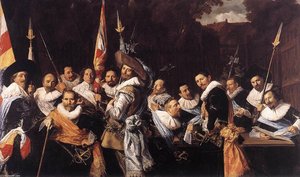
A Portrait of Dignified Authority: Paulus Verschuur by Frans Hals

Frans Hals’s “Paulus Verschuur,” painted in 1643, is more than simply a portrait; it's a meticulously crafted study in Dutch Golden Age formality and understated power. The painting captures the likeness of Paulus Verschuur, a prominent Rotterdam mayor and director of the Dutch East India Company, offering a glimpse into the social standing and civic responsibility of a man at the heart of his city’s bustling commercial world. Hals masterfully employs his signature loose brushwork to create an image that is both strikingly realistic and imbued with a palpable sense of character – a testament to his revolutionary approach to portraiture.

The composition centers on Verschuur's face, rendered with remarkable detail despite the artist’s characteristic disregard for rigid precision. His gaze, direct and unwavering, engages the viewer immediately, conveying an air of quiet confidence and authority. The lighting, a dramatic chiaroscuro technique, sculpts his features, highlighting the strong lines of his face and emphasizing the subtle textures of his clothing. Hals skillfully uses light to draw attention to key elements – the meticulously rendered lace collar, a clear indicator of wealth and social status in 17th-century Holland, and the gesture of his hand resting lightly on his hip, suggesting both control and a certain relaxed dignity.

The Language of Form: Technique and Style

Hals’s distinctive style is immediately recognizable. He eschews the smooth, polished surfaces favored by many of his contemporaries, opting instead for a vibrant, almost impasto-like application of paint. The brushstrokes are visible, energetic, and full of life – a deliberate choice that imbues the portrait with a sense of immediacy and movement. This technique, combined with Hals’s masterful use of color, creates an illusion of depth and texture, particularly evident in the folds of his dark coat and cloak. The layering of thin glazes of oil paint builds up rich colors and subtle gradations, contributing to the painting's luminous quality.

Furthermore, Hals utilizes a carefully considered perspective – a single-point perspective that draws the viewer’s eye directly to Verschuur’s face. Geometric shapes—rectangles defining his clothing, circles for his eyes and nose, ovals for his head—are employed with precision, yet they never feel rigid or artificial. The background, rendered in muted grey-brown tones, serves as a neutral backdrop, allowing the subject to command attention without distraction. The overall effect is one of controlled elegance and understated sophistication – hallmarks of Hals’s artistic vision.

Symbolism and Context: A Window into 17th-Century Rotterdam

Beyond its technical brilliance, “Paulus Verschuur” offers a fascinating window into the social and cultural context of 17th-century Rotterdam. The portrait reflects the city's prominence as a major center for trade and commerce during the Dutch Golden Age. The hat worn by Verschuur is not merely an accessory; it’s a clear symbol of his elevated social standing, signifying membership in the merchant elite. The lace collar, another prominent detail, further reinforces this status, demonstrating wealth and refinement – attributes highly valued within the city's hierarchical society.

The fact that Verschuur was a director of the Dutch East India Company adds another layer of significance to the portrait. This powerful trading organization played a crucial role in shaping Rotterdam’s prosperity and influence during this period, highlighting the subject’s involvement in one of the most dynamic economic ventures of its time. The painting, therefore, serves as both a personal commemoration and a reflection of the city's thriving commercial landscape.

A Timeless Masterpiece: Reproduction and Legacy

“Paulus Verschuur” remains a captivating example of Dutch Golden Age portraiture, admired for its technical skill, psychological depth, and evocative atmosphere. Today, high-quality reproductions offer art lovers the opportunity to experience Hals’s masterpiece firsthand, bringing this remarkable image into homes and galleries worldwide. Whether displayed as a statement piece or incorporated into interior design schemes, a reproduction of “Paulus Verschuur” serves as a powerful reminder of the enduring legacy of Frans Hals and his profound contribution to the history of art.

Useful Links:

Additional Research:

Spørsmål og svar

Finnes det et faktablad om "Paulus Verschuur" av Frans Hals for studenter?

En Faktablad for studenter-side er tilgjengelig for "Paulus Verschuur" av Frans Hals: et utskrivbart faktablad om kunstverket, designet for studenter og bruk i klasserommet.

Hvilken fargetone dominerer i "Paulus Verschuur"?

Den dominerende fargen i "Paulus Verschuur" av Frans Hals er Amber to Saffron. Denne fargen utgjør den underliggende tonen i paletten.

Hvilken lysstyrke har "Paulus Verschuur" av Frans Hals?

"Paulus Verschuur" av Frans Hals har en luminans på Dark. Luminans beskriver hvor mye lys fargene ser ut til å reflektere.

Les mer om dette maleriet

Forhåndsvisning Se i AR Bytt til trykk Bytt til digitalt bilde Send
Vis detaljer Utskriftsvennlig guide Legg til i favoritter Last ned bilde Liknende objekter Røntgenundersøkelse Lysbildefremvisning Spørsmål og svar Statistikk

I tall

  • 1643året det ble malt
  • 29rammer å velge mellom
  • standardstørrelser, i sine egne proporsjoner
  • 5uker å male og levere
Frans Hals

Frans Hals

1580 - 1585, Belgia

Kort om Frans Hals

  • Artistic Movement Or Style: Dutch Golden Age
  • Artists Or Movements Influenced By This Artist:
    • Adriaen Brouwer
    • Johannes Vermeer
  • Artists Who Influenced This Artist: ['Pieter Bruegel den Äldre']
  • Date Of Birth: 1580
  • Full Name: Frans Hals I
  • Nationality: Nederlandsk
  • Notable Artworks:
    • Lerens Ridder
    • Malle Babbe
    • Portraits av Regents
  • Place Of Birth: Antwerp, Belgium

Om kunstneren

Frans Hals I: A Life in Paint

Frans Hals I was a Dutch painter born in Antwerp, Belgium, around 1580. Though his early life remains somewhat shrouded in mystery, he rose to become one of the most important figures of the Dutch Golden Age, celebrated for his innovative portraiture and genre scenes. He moved away from rigid formality towards a more naturalistic and expressive style, leaving an enduring legacy on the art world.

Early Life and Training

Details surrounding Hals’s formative years are scarce. It is believed he received initial artistic training in Antwerp, a prominent center for painting at the time. However, due to religious and political turmoil, his family relocated to Haarlem in the Netherlands. He became a member of the Haarlem Guild of St. Luke in 1610, marking the formal beginning of his professional career. Hals’s brother, Dirck Hals (1591–1656), followed in his brother Frans’ footsteps and became a painter; a third brother, Joost (died before October 16, 1626), apparently worked as an artist as well, but no works by him have been identified. According to the anonymous biographer of Karel van Mander (1548–1606), Hals trained under him, but Van Mander himself makes no mention of this in his *Schilderboek*of 1604.

Artistic Style and Development

Hals distinguished himself through a remarkably fresh and spontaneous style. Unlike many of his contemporaries who favored meticulous detail, Hals employed a loose and expressive brushstroke. This technique imbued his paintings with a sense of immediacy and vitality, capturing the personality and character of his subjects in a way that was revolutionary for its time. His portraits weren’t simply likenesses; they were psychological studies. He excelled at depicting fleeting moments – laughter, conversation, or contemplation. Hals's use of light and shadow added depth and drama to his compositions. He influenced artists such as Adriaen Brouwer and Johannes Vermeer. His emphasis on capturing personality paved the way for more intimate and psychological portraits. Later artists, including the Impressionists, admired his loose brushwork and focus on light.

Notable Works

While Hals produced a wide range of works, he is best known for his portraits. Some of his most celebrated paintings include:
  • The Laughing Cavalier (1624) – A quintessential example of his ability to capture character and movement.
  • Malle Babbe (c. 1633-1635) – A striking portrayal of an elderly woman, showcasing Hals’s skill in depicting age and personality.
  • Portraits of the Regents of the Old Men's Home in Haarlem (1664) - Demonstrating his mastery of group portraiture.

He also created compelling genre scenes – depictions of everyday life – that offered glimpses into Dutch society.

Influences and Legacy

Determining Hals’s direct influences is challenging, as he developed a highly individual style. However, it's likely he was aware of the work of earlier Flemish painters like Pieter Bruegel the Elder. His innovative approach to portraiture profoundly impacted subsequent generations of artists. He influenced artists such as Adriaen Brouwer and Johannes Vermeer. His emphasis on capturing personality paved the way for more intimate and psychological portraits. Later artists, including the Impressionists, admired his loose brushwork and focus on light. Today, his paintings are highly sought after and can be found in major museums worldwide, including the Frans Hals Museum in Haarlem, which houses the largest collection of his work. His contributions continue to inspire artists and captivate audiences centuries later.

Kort om verket

  • Year: 1643
  • Location: Haarlem Museum
  • Influences: Baroque
  • Artist: Frans Hals I
  • Title: Paulus Verschuur
  • Notable elements: Dramatic lighting, lace collar

Kunnequiz om kunst

Det er kun ett riktig svar på hvert spørsmål.

Spørsmål 1:
What is the primary artistic style of Paulus Verschuur by Frans Hals?
Spørsmål 2:
The portrait prominently features a lace collar. What does this detail likely symbolize?
Spørsmål 3:
According to the description, in what year was this portrait painted?
Spørsmål 4:
What technique is most evident in the rendering of the fabric and skin in the portrait?
Spørsmål 5:
What is the significance of the diagonal composition in the portrait?