
 Se i rommet
 Del som digitalt kort
 Del
Del
 Detaljer
 Studentguide

 Last ned
 Liknende objekter
 Røntgen
 Lysbildefremvisning
 Besøksstatistikk
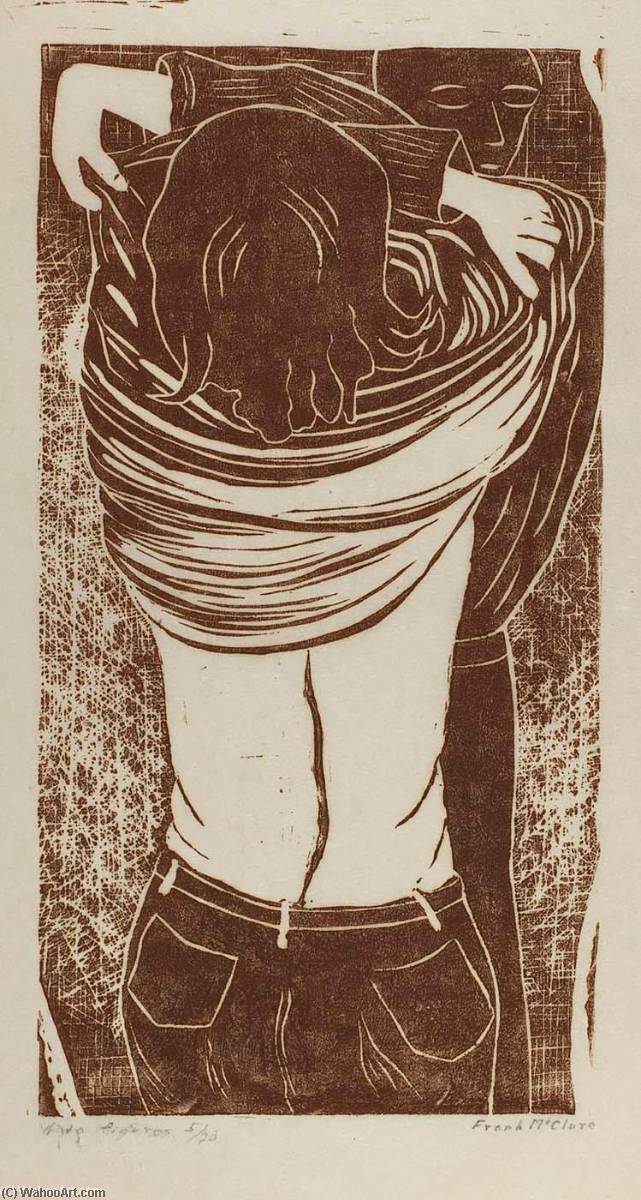
Two Figures

 Les mer
Kunstverket som vises på denne siden er beskyttet av opphavsretten, noe som betyr at vi ikke har juridisk tillatelse til å lage eller selge identiske reproduksjoner. Denne beskyttelsen håndheves i henhold til internasjonale avtaler som for eksempel Bernerkonvensjonen og av nasjonale lover, inkludert de som er fastsatt i Amerikansk opphavsrettslov – Tittel 17.
Denne metoden er i fullt samsvar med opphavsrettslige regler, da den ikke innebærer kopiering eller duplisering av det beskyttede kunstverket. I stedet er det snakk om en kreativ nytolkning – et nytt maleri som er inspirert av originalen, men ikke identisk med den.
Giclée / Kunsttrykk
Giclée- eller lerretsprint av museumskvalitet med rask produksjon og fleksible valgmuligheter for etterbehandling. ( Bestill håndmalt reproduksjon Gå til digitalt bilde)




































Velg mellom våre forhåndsdefinerte størrelser som bevarer kunstverkets opprinnelige proporsjoner.

Skriv inn bredden og høyden du trenger, slik at den passer til din ramme eller vegg. Et trykk kan kun beskjæres, aldri gjøres større enn bildet, så et format med en annen form vil miste en del av motivet. Vi sender deg en digital mockup for godkjenning før vi trykker noe som helst. Bildet som vises på denne siden viser ikke den faktiske beskjæringen — det er kun mockuppen som gjør det.
Verdensomspennende levering () på 2 uker i stedet for standard 4/5 uker. (27 October)

Gratis ekspressfrakt over hele verden

Lerretsduk av høykvalitets lin

Full transportforsikring

Garanti for refusjon av toll og importavgifter

Garantert fargeekthet

100 dagers returrett ved fabrikasjonsfeil

100% pengene tilbake-garanti

Mengderabatt
 Glassalternativet er kun tilgjengelig i størrelser under 110 cm

Two Figures
Giclée / Kunsttrykk
Format på reproduksjon
-


Totalpris
Nkr 761
A Study in Intimacy: Exploring Frank McClure's "Two Figures"
Frank McClure’s “Two Figures” is a striking woodcut print that captivates with its stark beauty and profound emotional resonance. Created by the American artist (1896-1979), this piece exemplifies Expressionist sensibilities through its simplified forms, bold lines, and focus on conveying raw emotion rather than photographic realism. The monochromatic palette of deep browns amplifies the sense of quiet drama, drawing the viewer into an intimate moment between two individuals.
Style & Technique: The Power of Woodcut
The artwork’s power lies significantly in its chosen medium – woodcut printing. This technique, dating back centuries, involves carving a design into a block of wood and then inking and pressing it onto paper. McClure masterfully utilizes the inherent qualities of woodcut to create a visually arresting image. The thick lines characteristic of the process define the figures with decisive strokes, while the raised areas on the surface impart a tactile quality that invites closer inspection. The deliberate flatness of the composition, lacking distinct shadows or realistic perspective, contributes to its graphic strength and emphasizes the emotional core of the scene.
Subject & Symbolism: Vulnerability and Connection
“Two Figures” depicts an intimate embrace between two individuals, seemingly in a moment of vulnerability. The act of pulling apart clothing is particularly intriguing; it could symbolize a struggle, a tender exploration, or perhaps even a fleeting sense of exposure. The vertical orientation of the print reinforces the closeness and potential confinement within their relationship. While McClure doesn't offer explicit narrative details, the composition evokes feelings of tenderness, longing, and quiet intensity. The absence of background detail further concentrates attention on the figures themselves, amplifying their emotional connection.
Historical Context & Artistic Influences
While specific information about this particular work’s creation is limited, McClure's broader artistic context provides valuable insight. He was associated with American Naturalism, a movement that sought to depict life realistically and often focused on social issues. While "Two Figures" doesn't directly address social commentary, it shares the Naturalist interest in portraying human experience with honesty and directness. The Expressionistic style also reflects early 20th-century artistic trends that prioritized emotional expression over objective representation. Interestingly, research reveals connections to artists like Frank Helmuth Auerbach, known for his expressive portraits, suggesting a shared exploration of human emotion through simplified forms.
Emotional Impact & Collector Appeal
“Two Figures” is more than just an image; it’s an experience. The artwork's quiet drama and emotional resonance linger long after viewing. Its monochromatic palette and graphic style lend themselves to a variety of interior design settings, from modern minimalist spaces to more traditional homes seeking a touch of understated sophistication. For art collectors, this piece represents a compelling opportunity to own a work by an artist known for his insightful portrayals of human experience, rendered with striking technical skill in the expressive medium of woodcut.
Spørsmål og svar
Er en høyoppløselig nedlasting av "Two Figures" tilgjengelig?
"Two Figures" er tilgjengelig som nedlasting av et digitalt bilde i høy oppløsning, kjøpt direkte på siden for Digitalt bilde.
Kan jeg se "Two Figures" av Frank Mcclure under ulike lysforhold?
Røntgen-siden til "Two Figures" av Frank Mcclure er en interaktiv visning som lar deg bla gjennom elleve optiske lag av kunstverkets bilde, inkludert en visning i røntgenstil.
Hvilken tone lener "Two Figures" seg mot?
"Two Figures" har en tendens til en Golden Yellow Range tone.
Kunstnerbiografi
The Soul of the American Landscape: The Life and Vision of Frank McClure
Frank McClure (1896-1979) remains a singular, evocative figure in the tapestry of American art, a creator whose work bridged the visceral realities of American Naturalism with the burgeoning emotional depths of Abstract Expressionism. Born in Lafayette, Indiana, McClure’s early years were steeped in the dualities of the American heartland—a landscape where the serene beauty of nature often collided with the grit and upheaval of a rapidly industrializing nation. This profound sensitivity to the tension between the pastoral and the industrial became the heartbeat of his creative journey, allowing him to capture not just the surface of the world, but its underlying psychological tremors.
His artistic development was never a linear path but rather an evolving dialogue with medium and emotion. While he achieved significant renown through his literary endeavors—notably his masterful studies of human psychology in prose—his true visual legacy lies in his ability to translate complex social and internal landscapes into tangible forms. McClure’s work emerged from the intellectual ferment of the early 20th century, absorbing the shadows of Surrealism and the psychological weight of Jungian theory, yet he always maintained a grounded, tactile connection to the physical world.
Mastery of the Woodcut and the Language of Form
Perhaps nowhere is McClure’s genius more evident than in his groundbreaking exploration of woodcut printmaking. In this demanding, subtractive medium, he found a way to mirror the ruggedness of the human condition. Unlike the fluid spontaneity of a brushstroke, the woodcut requires a deliberate, forceful carving that echoes the very themes of struggle and resilience present in his subject matter. He developed a distinctive style characterized by:
- Bold Geometric Forms: Utilizing simplified shapes to strip away unnecessary ornamentation and focus on the structural essence of his subjects.
- Emotional Linearity: Employing thick, decisive lines that convey raw emotion and a sense of quiet drama, particularly evident in works like "Two Figures."
- Monochromatic Depth: Using limited palettes to amplify the starkness of his compositions, creating an atmosphere of intimacy or profound isolation.
This mastery extended into his paintings and watercolors, where he could pivot from the heavy, graphic strength of printmaking to the ethereal, atmospheric qualities seen in works such as "Lavender Piano" or the tranquil, snowy vistas of "Full Moon." In doing so, he proved himself a versatile chronicler of both the monumental and the minute.
A Legacy of Emotional Resonance and Social Truth
The historical significance of Frank McClure lies in his refusal to retreat into mere sentimentality. Whether he was exploring the corrosive effects of societal pressure through his literary lens or capturing the haunting beauty of a riverside town in "Curved Street," his work always sought a deeper truth. He stood at a pivotal crossroads in art history, acting as a bridge between the gritty realism of the Naturalist movement and the abstract, emotive explorations of the post-war New York School.
Though he may not always occupy the same immediate spotlight as the canonical giants of Abstract Expressionism like Pollock or Rothko, McClure’s contribution is indispensable. He provided a vital link, demonstrating how the heavy, physical labor of printmaking and the observational rigor of Naturalism could feed into the profound, non-representational emotional landscapes of the modern era. His life's work remains a testament to the power of art to confront the harshness of reality while simultaneously seeking the sublime beauty hidden within it.

Frank Mcclure
1896 - 1979
Kort om kunstneren
- Artistic Movement Or Style: American Naturalism
- Artists Or Movements Influenced By This Artist: ['Abstract Expressionism']
- Artists Who Influenced This Artist: ['Norris, Frank']
- Date Of Birth: 1896
- Date Of Death: 1979
- Full Name: Frank McClure
- Nationality: American
- Notable Artworks: ['Two Figures']
- Place Of Birth: Lafayette, IN
Relaterte artikler

The Soul of the Grain: Discovering the Timeless Beauty and Artistic Legacy of Woodcut Art
Explore the profound beauty of woodcut art. From ancient traditions to modern mastery, discover the tactile soul of relief printing and its enduring legacy in fine art collections.

Giclée Prints: Archival Quality & Aesthetic Nuances for the Discerning Collector
Explore the world of giclée prints with OriginalUniqueArt. Learn about archival quality, aesthetic nuances & investment potential. Expert guidance for discerning art collectors seeking museum-quality reproductions and lasting value.

The Enduring Legacy of Fine Art Prints: Technique, History & Aesthetic Impact
Explore the rich history & techniques of fine art prints. Discover investment potential, assess authenticity, and learn how to preserve your collection with expert guidance. Trusted insights for discerning collectors.
Mastering the Woodcut: A Definitive Guide to the Art of Relief Printing and its Historical Legacy
Explore the profound history and technical mastery of woodcut relief printing. From ancient origins to German Expressionism, discover how artists use the subtractive process to create iconic works. A definitive guide for art students, collectors, and historians.
Frank McClure: A Study in Abstract Expressionism's Emotional Landscape & Material Innovation
Discover the profound emotional depth & innovative techniques of Frank McClure, a key figure in Abstract Expressionism. Explore his woodcuts, influences, and lasting legacy – essential reading for serious art collectors.