Text size

() ·

A painting made for you, by hand

Isabelle (Isabeau) d

Håndlaget oljereproduksjon

Håndmalt olje på lerret i din valgte størrelse og ramme, laget på bestilling av våre kunstnere. ( Bytt til trykk Bytt til digitalt bilde)

Beskrivelse av objektet

Admire François Clouet's exquisite portrait of Isabelle d’Hauteville, Countess of Beauvais (1547). A masterpiece showcasing Renaissance artistry and detail.

Om kunstneren

Pablo Picassos «Portrett av Françoise» er et kraftfullt studie i linje og følelser fra 1946, som fanger Gilots sårbarhet og kunstneriske sjarm.

from ·

Chapter 1

How large should it be?

Slide to change the size; the picture on the left shows the frame at its real width. The proportions of the original are kept.

Standardformat
skreddersydd
CM
INCH

Velg mellom våre forhåndsdefinerte størrelser som bevarer kunstverkets opprinnelige proporsjoner.

bredde
høyde

Skriv inn ønsket bredde og høyde for å tilpasse bildet til din ramme eller vegg. Siden dette er håndmalt, kan kunstneren male litt mer rundt motivet eller beskjære det noe dersom du velger et annet format — valget er ditt. Vi sender deg en digital mockup til godkjenning før maleriet påbegynnes. Bildet som vises på denne siden representerer ikke det faktiske resultatet — kun mockuppen viser det endelige uttrykket.

Chapter 2

How should it arrive?

Choose the edges of the stretched canvas

Choose your frame

Corner sample of the WhiteWrap canvas edge finish, stretched on massivt tre bars
White Nkr1
Corner sample of the BlurSideWrap canvas edge finish, stretched on massivt tre bars
Blurside Nkr1
Corner sample of the ExtendedWrap canvas edge finish, stretched on massivt tre bars
Extended Nkr1
Corner sample of the P118B picture frame: støpt polystyren, 5 cm wide and 3 cm thick
P118B Nkr10
Corner sample of the P118H picture frame: støpt polystyren, 5 cm wide and 3 cm thick
P118H Nkr10
Corner sample of the P118W picture frame: støpt polystyren, 5 cm wide and 3 cm thick
P118W Nkr10
Corner sample of the P438Z picture frame: støpt polystyren, 5.5 cm wide and 3.5 cm thick
P438Z Nkr10
Corner sample of the P508JH picture frame: støpt polystyren, 7 cm wide and 3.5 cm thick
P508JH Nkr12
Corner sample of the P508YH picture frame: støpt polystyren, 7 cm wide and 3.5 cm thick
P508YH Nkr12
Corner sample of the P805H picture frame: støpt polystyren, 5 cm wide and 3.5 cm thick
P805H Nkr10
Corner sample of the P805Z picture frame: støpt polystyren, 5 cm wide and 3.5 cm thick
P805Z Nkr10
Corner sample of the P919BZ picture frame: støpt polystyren, 7 cm wide and 3.5 cm thick
P919BZ Nkr10
Corner sample of the P919G picture frame: støpt polystyren, 7 cm wide and 3.5 cm thick
P919G Nkr10
Corner sample of the P919XJ picture frame: støpt polystyren, 7 cm wide and 3.5 cm thick
P919XJ Nkr10
Corner sample of the P959ZH picture frame: støpt polystyren, 5 cm wide and 3 cm thick
P959ZH Nkr10
Corner sample of the P968JZ picture frame: støpt polystyren, 6 cm wide and 4 cm thick
P968JZ Nkr12
Corner sample of the W106C picture frame: massivt tre, 5 cm wide and 3 cm thick
W106C Nkr8
Corner sample of the W218G picture frame: massivt tre, 5 cm wide and 3 cm thick
W218G Nkr10
Corner sample of the W218JH picture frame: massivt tre, 5 cm wide and 3 cm thick
W218JH Nkr8
Corner sample of the W218Y picture frame: massivt tre, 5 cm wide and 3 cm thick
W218Y Nkr10
Corner sample of the W307PJ picture frame: massivt tre, 6 cm wide and 3 cm thick
W307PJ Nkr10
Corner sample of the W316G picture frame: massivt tre, 6 cm wide and 3 cm thick
W316G Nkr10
Corner sample of the W316PJ picture frame: massivt tre, 6 cm wide and 3 cm thick
W316PJ Nkr8
Corner sample of the W316Y picture frame: massivt tre, 6 cm wide and 3 cm thick
W316Y Nkr10
Corner sample of the W398PJ picture frame: massivt tre, 5 cm wide and 3 cm thick
W398PJ Nkr8
Corner sample of the W4111J picture frame: massivt tre, 6.5 cm wide and 3.5 cm thick
W4111J Nkr10
Corner sample of the W500HY picture frame: massivt tre, 7 cm wide and 5 cm thick
W500HY Nkr15
Corner sample of the W500JH picture frame: massivt tre, 7 cm wide and 5 cm thick
W500JH Nkr15
Corner sample of the W692G picture frame: massivt tre, 8 cm wide and 4 cm thick
W692G Nkr12
Corner sample of the W849H picture frame: massivt tre, 5 cm wide and 3 cm thick
W849H Nkr8
Corner sample of the W940BG picture frame: massivt tre, 7.5 cm wide and 4.5 cm thick
W940BG Nkr15
Corner sample of the W953PJ picture frame: massivt tre, 6 cm wide and 3.5 cm thick
W953PJ Nkr8
Corner sample of the H24-GOLD picture frame: utskåret tre med gesso, 10 cm wide and 6 cm thick
H24-GOLD Nkr30
Corner sample of the H24-SILVER picture frame: utskåret tre med gesso, 10 cm wide and 6 cm thick
H24-SILVER Nkr30
Corner sample of the H36-GOLD picture frame: utskåret tre med gesso, 15 cm wide and 6.5 cm thick
H36-GOLD Nkr45
Corner sample of the H36-SILVER picture frame: utskåret tre med gesso, 15 cm wide and 6.5 cm thick
H36-SILVER Nkr45

Moulding: . Overall size with the frame: .

Chapter 3

Who paints it, and should anything change?

Examples of what can be changed: Replace face with customer photo; Add pet (e.g., replace cat with dog); Include hidden message in background; Change background landscape or elements.
After order, OriginalUniqueArt.com team will email client for instructions and provide a mockup preview

Verdensomspennende levering () på 3–4 uker i stedet for standard 5 uker. (1 November). Ingen kompromisser med kvaliteten.

Chapter 4

The finishing touches

A nameplate, as in a museum?

Detaljer om gravert bronseplate

This elegant plaque features the artist's name and the title of the artwork, finely engraved for a timeless presentation.

It is made from bronze with a refined, elegant finish. The text is precisely laser-engraved for a sharp and permanent result. Measuring 9x2 cm, the plaque is compact yet easy to read. It's built to be durable and scratch-resistant, offering a professional, museum-quality look. Mounting is simple thanks to the included adhesive backing.

Detaljer om gjennomsiktig akrylplate

The plaque includes essential engraved details such as the artist's name, the title of the artwork, the date it was created, the type of media used-like oil on canvas or watercolor-a brief description of the piece, and a QR code that links to the complete artwork information.

It is crafted from clear acrylic, offering a sleek, modern appearance. The text is UV-engraved in black to ensure strong visual contrast. With a size of 10x15 cm, it ensures optimal readability. It comes equipped with two metal hooks for secure wall mounting. The plaque is designed to be weather-resistant, making it suitable for various environments, and it includes interactive features that work seamlessly with smartphone scanning.

Detaljer om plakett i svart akryl

This elegant plaque includes engraved information such as the artist's name, the title of the artwork, the date it was created, the type of media used (like oil on canvas or watercolor), a short description of the artwork, and a QR code for quick access to more information.

The plaque itself is made from refined black acrylic with a premium finish. The text is laser-engraved in white for high contrast and readability. Its size is 10x15 cm, designed to be easy to read. It comes with two metal hooks for professional mounting. The design is sleek and fits any interior style. It is also weather-resistant and durable, with built-in digital integration for mobile compatibility.

A protective varnish?

When do you need it?

Chapter 5

Your painting, as you ordered it

Isabelle (Isabeau) d

Trykkmetode

Størrelse på reproduksjon

-

Utvalgte mesterkunstnere

Mer detaljrikdom, finesse og ekstra produksjonstid

-

Innramming av reproduksjon

-

-

For kunstverk eller reproduksjoner som er større enn 105 cm (ca. 41 tommer) på noen side, vil rammen bli sendt som et sett som må monteres. Denne metoden sikrer trygg levering og forhindrer skader under transport.

Krever profesjonell montering – dette er ikke et DIY-produkt.
Settet må monteres og lerretet strammes av en erfaren profesjonell rammelegger, ved bruk av trelim (følger ikke med), en lerretstang og klemmer for å holde rammelisten vinkelrett mens limet tørker. Feilaktig montering eller ujevn stramming av lerretet kan påføre kunstverket permanente skader og er ikke dekket av vår garanti.

  • Alle massive trelister er inkludert, presist tilpasset i størrelse.

  • Monteres med de medfølgende skruene, samt trelim til hjørnene, som ikke er inkludert og må anskaffes av din rammehandler.

  • Profesjonelt verktøy er nødvendig og er ikke inkludert: en lerretstang (strammer) og klemmer for å holde rammene vinkelrette mens limet tørker.

Viktig:
Hjørnene krever trelim, listene må holdes på plass med tvinger til limet er helt tørt, og stramming av lerretet på den ferdige rammen krever en lerretstang. Ingen av disse produktene er inkludert i settet. Vennligst sørg for tilgang til en erfaren profesjonell rammehandler før du bestiller denne størrelsen.

Navneskilt

-

-

Beskyttende ferniss

Blank lakk (forsterker farger, beskytter mot lys og fuktighet)

-

Tilpass mitt kunstverk

Eksempler på hva som kan endres: Erstatt ansikt med bilde av kunden; Legg til kjæledyr (f.eks. bytt ut katt med hund); Inkluder en skjult melding i bakgrunnen; Endre bakgrunnslandskap eller elementer.

-

Ekspresslevering

Verdensomspennende levering () på 3–4 uker i stedet for standard 5 uker. (1 November). Ingen kompromisser med kvaliteten.

-

Ekspresslevering

Verdensomspennende levering til innen 5 uker. (8 November).

Inkludert frakt

Totalpris for valgte alternativer

Nkr 2887

Totalpris Nkr 2887

Glassalternativet er kun tilgjengelig i størrelser under 110 cm

Included with every order

  • Gratis ekspressfrakt over hele verden
  • Lerretsduk av lin av høy kvalitet
  • Full transportforsikring
  • Garanti for refusjon av toll og importavgifter
  • Garantert fargegjengivelse
  • 100 dagers returrett ved fabrikasjonsfeil
  • 100% pengene tilbake-garanti
  • Rabatt ved flere kjøp

The Enigmatic Beauty: Isabelle (Isabeau) d’Hauteville

François Clouet’s “Isabelle (Isabeau) d’Hauteville” is not merely a portrait; it's a carefully constructed window into the world of 16th-century French courtly life. Painted in 1547, this exquisite depiction captures the essence of Isabelle, Countess of Beauvais, a woman whose life was intertwined with intrigue, power, and ultimately, tragedy. The painting immediately draws the eye to her serene countenance – a subtle blend of intelligence, melancholy, and quiet dignity. Her long, flowing hair, rendered in delicate shades of brown and gold, frames a face marked by both youthful beauty and an underlying sense of experience. The pearl necklace, a symbol of wealth and status, rests gracefully around her neck, while the simple white dress speaks to her noble birth and the restrained elegance expected of women within the French aristocracy.

Isabelle (Isabeau) d’Hauteville by François Clouet

The Master's Hand: Technique and Style

Clouet was a master of observation, renowned for his ability to capture the subtle nuances of human expression. This portrait exemplifies his meticulous approach – every detail, from the delicate folds of the fabric to the precise rendering of her eyes, is executed with remarkable precision. The artist employs a technique known as ‘pointillé,’ utilizing tiny, closely spaced dots of black chalk and red chalk to build up tones and textures. This method creates an astonishing level of detail and luminosity, particularly evident in the shimmering effect of the pearls and the soft sheen of her hair. Clouet’s style is rooted in the Flemish tradition – a preference for naturalism and realistic representation—but he infuses it with a distinctly Italianate grace, reflecting the influence of Renaissance art that was flourishing at the time. The composition itself is carefully balanced, drawing the viewer's eye to Isabelle’s face while subtly suggesting her position within the broader context of French courtly society.

  • Medium: Black chalk and red chalk on paper
  • Size: 34 x 23.8 cm (approximately)
  • Style: Renaissance portraiture, blending Flemish naturalism with Italianate grace

A Royal Life in Miniature

Isabelle d’Hauteville's life was a complex tapestry woven with threads of political maneuvering and personal drama. Born into the powerful House of Bavaria, she became Queen of France through her marriage to Charles VI, a union that significantly strengthened the French monarchy. However, Charles’s descent into mental illness created a power vacuum and plunged the court into turmoil. Isabelle skillfully navigated this turbulent period, acting as regent during his periods of incapacity and aligning herself with various factions—a strategy that ultimately led to her exile from Paris and a dramatic end. The portrait itself offers a poignant glimpse into this era, capturing not only Isabelle’s beauty but also hinting at the burdens she carried and the challenges she faced.

Further research reveals that the painting is based on drawings by Clouet, which were then copied in the 18th century. The original drawings are now found in the Musée Conde, Chantilly, and the British Museum. The portrait was acquired by Pierpont Morgan in 1909 and later donated to the Morgan Library & Museum.

Symbolism and Emotional Resonance

Beyond its technical brilliance, “Isabelle (Isabeau) d’Hauteville)” is rich in symbolic meaning. The pearl necklace represents her status and wealth, while her gaze—direct yet contemplative—suggests a quiet strength and resilience. The subdued colors and the carefully controlled composition evoke a sense of melancholy and introspection, reflecting the tragic circumstances of her life. This portrait isn't simply a likeness; it’s an invitation to contemplate the complexities of power, love, and loss within the gilded confines of 16th-century France. It remains a testament to François Clouet’s artistic skill and his ability to capture the essence of human experience.

Spørsmål og svar

Hvilken fargepalett og hvilken stemning forener "Isabelle (Isabeau) d"?

I "Isabelle (Isabeau) d" ledsages en Melancholic følelse av Neutrals farger.

Hvor lys er "Isabelle (Isabeau) d" totalt sett?

Alt i alt er "Isabelle (Isabeau) d" registrert som brilliant. Oppfattet lysstyrke beskriver hvor lyst eller mørkt verket fremstår.

Hvor kan jeg se en forhåndsvisning av "Isabelle (Isabeau) d"?

På Se kunstverket i et rom-siden for "Isabelle (Isabeau) d" kan du forhåndsvise kunstverket før du bestiller.

More about this painting

Forhåndsvisning Se i AR Bytt til trykk Bytt til digitalt bilde Send
Vis detaljer Utskriftsvennlig guide Legg til i favoritter Last ned bilde Liknende objekter Røntgenundersøkelse Lysbildefremvisning Q&A Statistikk

In numbers

  • 1547the year it was painted
  • 29frames to choose from
  • standard sizes, in its own proportions
  • 5weeks to paint and deliver it
François Clouet

François Clouet

1510 - 1572, Frankrike

Quick facts about François Clouet

  • Artistic Movement Or Style: Renaissance portraiture
  • Artists Or Movements Influenced By This Artist: ['Franske portrettister']
  • Artists Who Influenced This Artist:
    • Jean Clouet
    • Leonardo da Vinci
  • Date Of Birth: c. 1510
  • Date Of Death: 1572
  • Full Name: François Clouet
  • Nationality: Fransk
  • Notable Artworks:
    • Elisabeth av Østerrike
    • Marguerite av Frankrike
    • Charles IX
  • Place Of Birth: Tours, France

Om kunstneren

A Legacy of Likeness: The World of François Clouet

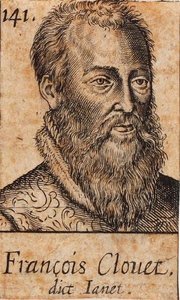
François Clouet, a name synonymous with the refined portraiture of the French Renaissance, emerged from a lineage steeped in artistic skill and courtly favor. Born around 1510 in Tours, France, his life unfolded against a backdrop of evolving artistic sensibilities and the opulent world of the Valois monarchy. He wasn’t merely a painter; he was a chronicler of an era, capturing the essence of kings, queens, and courtiers with a meticulousness that continues to captivate viewers today. The shadow of his father, Jean Clouet, loomed large – both artists shared not only a profession but also the familiar nickname ‘Janet,’ leading to occasional confusion in attributing their works across generations. Yet, François carved his own distinct path, blending Flemish naturalism with an emerging Italianate grace, and establishing himself as one of France’s most celebrated portraitists.

Inheriting a Tradition: Early Life and Artistic Formation

The early years of François Clouet remain somewhat veiled in historical obscurity, but his artistic trajectory was undeniably shaped by the legacy of his father. Jean Clouet, originating from the Southern Netherlands, brought with him to the French court the meticulous detail and realistic approach characteristic of Flemish painting. This foundation formed the bedrock of François’s training. A pivotal moment arrived in 1541 when François inherited his father's estate, formally stepping into his artistic inheritance and assuming the responsibilities that came with it. This wasn’t simply a transfer of property; it was an assumption of a role within the very fabric of the French court. The Clouet family also enjoyed a unique connection to the Italian Renaissance through Jean’s time in Amboise, exposing François to the burgeoning ideals and innovative techniques emanating from Italy – a subtle but significant influence that would later manifest in his work. He absorbed not just technique, but an understanding of how art could serve as both documentation and celebration of power and status. He diligently studied the works of Leonardo da Vinci and Michelangelo, absorbing their mastery of perspective and anatomical accuracy—skills he would skillfully integrate into his own artistic practice.

The Art of Revelation: Style and Major Works

François Clouet’s oeuvre is defined by a remarkable precision and elegance. His portraits weren't merely likenesses; they were insightful studies of character, capturing not only physical features but also the personality and social standing of his subjects. He possessed an extraordinary ability to convey royal authority and sophistication, as evidenced in several notable depictions of Francis I, examples of which reside in prestigious collections like the Uffizi Gallery and the Louvre Museum. Beyond Francis I, Clouet’s brush immortalized other key figures of the era. He likely painted portraits of Catherine de' Medici at Versailles, contributing to a visual record of her influential reign. Perhaps one of his most celebrated achievements is the chalk drawing of Mary, Queen of Scots, held in the Bibliothèque nationale – a work that showcases his mastery of capturing delicate features and conveying emotional depth with astonishing subtlety. Other notable works include portraits of Elizabeth of Austria (Louvre), Marguerite of France (Chantilly), and Charles IX (Château de Chantilly). His meticulous style and attention to detail profoundly influenced subsequent generations of French portraitists.

A Defining Aesthetic: Characteristics of Clouet’s Art

Several hallmarks define François Clouet's distinctive style.
  • Elaborate Detail: A meticulous attention to detail permeates his work, evident in the intricate rendering of clothing, jewelry, and facial features – every element contributing to a sense of realism and opulence.
  • Accurate Drawing: Clouet’s portraits are grounded in precise anatomical rendering and skillful use of line, demonstrating a mastery of draftsmanship that underpinned his artistic vision.
  • Exquisite Completeness: His compositions convey a sense of wholeness and personality, going beyond mere physical representation to capture the inner life of his subjects. He didn’t just paint faces; he painted individuals.
His paintings often possess a quiet dignity, a restrained elegance that reflects the refined sensibilities of the French court. The use of light and shadow – *chiaroscuro* – is subtle yet effective, adding depth and dimension to his portraits without resorting to dramatic contrasts.

A Lasting Impression: Historical Significance and Legacy

François Clouet’s contributions to French Renaissance art are profound. He played a crucial role in establishing portraiture as a prominent genre in France, elevating the status of the artist and providing invaluable visual records of the royal court. He bridged the gap between medieval artistic traditions and the emerging Renaissance ideals, incorporating naturalism and humanistic principles into his work. As a court painter for multiple French monarchs – Francis I, Henry II, Francis II, and Charles IX – he documented the lives and appearances of key figures in French history, creating a visual archive that continues to inform our understanding of this period. His meticulous style and attention to detail profoundly influenced subsequent generations of French portraitists. He died on December 22, 1572, shortly after the tumultuous St. Bartholomew’s Day Massacre – a poignant end for an artist who had dedicated his life to immortalizing the world around him. His will offers glimpses into his personal life and financial standing, further cementing his legacy as both an artistic master and a significant figure in French society.

Kort om verket

  • Subject or theme: Noblewoman portrait
  • Artistic style: Renaissance portraiture
  • Medium: Black chalk, sanguine
  • Artist: François Clouet
  • Location: RMN-Grand Palais, Chantilly

Kunnequiz om kunst

Det er kun ett riktig svar på hvert spørsmål.

Spørsmål 1:
What is the primary subject of the painting ‘Isabelle (Isabeau) d’Hauteville, Countess of Beauvais’?
Spørsmål 2:
According to the provided information, in what year was Isabelle (Isabeau) d’Hauteville married?
Spørsmål 3:
Who is credited as the artist of ‘Isabelle (Isabeau) d’Hauteville, Countess of Beauvais’?
Spørsmål 4:
What historical event is associated with the painting's creation, as suggested by its style and subject matter?
Spørsmål 5:
What medium was primarily used to create the painting ‘Isabelle (Isabeau) d’Hauteville, Countess of Beauvais’?