
 Forhåndsvisning
 Send
Send Del
Del
 Vis detaljer
 Utskriftsvennlig guide

 Last ned bilde
 Liknende objekter
 Røntgenundersøkelse
 Lysbildefremvisning
 Spørsmål og svar
 Statistikk
A Lady in Her Bath

- 117.0 x 107.0 cm


 Vis hele teksten
Giclée / Kunsttrykk
Giclée- eller lerretsprint av museumskvalitet med rask produksjon og fleksible valgmuligheter for etterbehandling. ( Kjøp håndmalt maleri Bytt til digitalt bilde)




P118B Nkr10

P118H Nkr10

P118W Nkr10

P438Z Nkr10

P508JH Nkr12

P508YH Nkr12

P805H Nkr10

P805Z Nkr10

P919BZ Nkr10

P919G Nkr10

P919XJ Nkr10

P959ZH Nkr10

P968JZ Nkr12

W106C Nkr8

W218G Nkr10

W218JH Nkr8

W218Y Nkr10

W307PJ Nkr10

W316G Nkr10

W316PJ Nkr8

W316Y Nkr10

W398PJ Nkr8

W4111J Nkr10

W500HY Nkr15

W500JH Nkr15

W692G Nkr12

W849H Nkr8

W940BG Nkr15

W953PJ Nkr8




Velg mellom våre forhåndsdefinerte størrelser som bevarer kunstverkets opprinnelige proporsjoner.

Skriv inn ønsket bredde og høyde for å tilpasse trykket til din ramme eller vegg. Et trykk kan kun beskjæres, aldri skaleres opp utover motivets opprinnelige størrelse, noe som betyr at et format med andre proporsjoner vil føre til tap av deler av bildet. Vi sender deg en digital mockup for godkjenning før vi starter trykkeprosessen. Bildet som vises på denne siden viser ikke den faktiske beskjæringen — det er kun mockuppen som viser dette.
Verdensomspennende levering () på 2 uker i stedet for standard 4/5 uker. (4 November)

Gratis ekspressfrakt over hele verden

Lerretsduk av lin av høy kvalitet

Full transportforsikring

Garanti for refusjon av toll og importavgifter

Garantert fargegjengivelse

100 dagers returrett ved fabrikasjonsfeil

100% pengene tilbake-garanti

Rabatt ved flere kjøp
 Glassalternativet er kun tilgjengelig i størrelser under 110 cm

A Lady in Her Bath
Giclée / Kunsttrykk
Størrelse på reproduksjon
-


Totalpris for valgte alternativer
Nkr 777
An Intimate Encounter with the French Renaissance
In the quiet, luminous atmosphere of François Clouet’s A Lady in Her Bath, the viewer is not merely an observer but a silent guest invited into a moment of profound domestic intimacy. Painted around 1571, this masterpiece serves as a breathtaking window into the private lives of the French aristocracy during the late Renaissance. The composition unfolds with a theatrical grace, where heavy red satin drapes are pulled back like a stage curtain to reveal a scene of serene vulnerability. At the heart of this narrative sits a woman of ethereal beauty, her pale skin glowing against the crisp white linens of her tub. She is captured in a state of poised repose, her gaze drifting toward the distance as if lost in a private reverie, while the delicate details of her attire—pearl earrings, gold bracelets, and a jeweled cap—hint at a status of immense refinement and courtly elegance.
The painting transcends a simple portrait through its rich, layered storytelling. Surrounding the central figure is a tender tableau of life and continuity; a woman nursing a swaddled infant and a curious child reaching for fruit create a sense of maternal warmth that softens the formal grandeur of the setting. Clouet masterfully weaves together elements of luxury and nature, from the carnation held delicately in the lady's hand—a traditional symbol of love and engagement—to the lush landscape visible through open windows. Every corner of the room is imbued with meaning, whether it be the symbolic presence of a unicorn in a distant painting or the bountiful fruit scattered across the tub, suggesting themes of fertility, abundance, and the fleeting sweetness of life.
Mastery of Light and Flemish Naturalism
Technically, A Lady in Her Bath stands as a testament to Clouet’s unparalleled ability to blend the meticulous precision of Flemish naturalism with the burgeoning grace of the Italianate style. The artist employs a sophisticated command of light to sculpt the forms of the figures, creating a tactile quality that makes the smoothness of the skin and the heavy texture of the satin feel almost touchable. His brushwork is invisible yet incredibly expressive, focusing the viewer's attention on the subtle transitions of shadow across the lady's face and the intricate reflections in her jewelry. This level of detail is what makes a high-quality reproduction of this work so captivating for collectors; it allows the play of light and the delicate textures to breathe within a contemporary interior.
For the discerning interior designer or art enthusiast, this piece offers more than just visual beauty; it provides an emotional anchor. The painting’s palette—a sophisticated harmony of deep crimsons, brilliant whites, and warm golds—possesses a timeless versatility that can elevate a room from a mere living space to a curated gallery. Whether placed in a sunlit study or a grand dining hall, the artwork radiates a sense of historical depth and quiet sophistication. It is a work that invites contemplation, encouraging anyone who gazes upon it to pause and appreciate the enduring elegance of a bygone era, making it an incomparable centerpiece for any collection dedicated to the splendor of the French Renaissance.
Spørsmål og svar
Hvordan laster jeg ned bildet av "A Lady in Her Bath" av François Clouet?
Nedlasting er tilgjengelig for "A Lady in Her Bath": kunstverkets Last ned digitalt bilde-side tilbyr nedlasting av et digitalt bilde i høy oppløsning.
Hvem skapte "A Lady in Her Bath" og i hvilket år?
François Clouet skapte "A Lady in Her Bath" i 1571.
Er "A Lady in Her Bath" typisk for det François Clouet vanligvis skapte?
François Clouet sine tilbakevendende temaer inkluderer flemish naturalism influence, italianate grace, french renaissance court life, valois monarchy era, refined portraiture style, mastery of detailed likeness; "A Lady in Her Bath" fokuserer på portrait, nude, renaissance, bath, family, still life, french art.
Om kunstneren
A Legacy of Likeness: The World of François Clouet
François Clouet, a name synonymous with the refined portraiture of the French Renaissance, emerged from a lineage steeped in artistic skill and courtly favor. Born around 1510 in Tours, France, his life unfolded against a backdrop of evolving artistic sensibilities and the opulent world of the Valois monarchy. He wasn’t merely a painter; he was a chronicler of an era, capturing the essence of kings, queens, and courtiers with a meticulousness that continues to captivate viewers today. The shadow of his father, Jean Clouet, loomed large – both artists shared not only a profession but also the familiar nickname ‘Janet,’ leading to occasional confusion in attributing their works across generations. Yet, François carved his own distinct path, blending Flemish naturalism with an emerging Italianate grace, and establishing himself as one of France’s most celebrated portraitists.Inheriting a Tradition: Early Life and Artistic Formation
The early years of François Clouet remain somewhat veiled in historical obscurity, but his artistic trajectory was undeniably shaped by the legacy of his father. Jean Clouet, originating from the Southern Netherlands, brought with him to the French court the meticulous detail and realistic approach characteristic of Flemish painting. This foundation formed the bedrock of François’s training. A pivotal moment arrived in 1541 when François inherited his father's estate, formally stepping into his artistic inheritance and assuming the responsibilities that came with it. This wasn’t simply a transfer of property; it was an assumption of a role within the very fabric of the French court. The Clouet family also enjoyed a unique connection to the Italian Renaissance through Jean’s time in Amboise, exposing François to the burgeoning ideals and innovative techniques emanating from Italy – a subtle but significant influence that would later manifest in his work. He absorbed not just technique, but an understanding of how art could serve as both documentation and celebration of power and status. He diligently studied the works of Leonardo da Vinci and Michelangelo, absorbing their mastery of perspective and anatomical accuracy—skills he would skillfully integrate into his own artistic practice.The Art of Revelation: Style and Major Works
François Clouet’s oeuvre is defined by a remarkable precision and elegance. His portraits weren't merely likenesses; they were insightful studies of character, capturing not only physical features but also the personality and social standing of his subjects. He possessed an extraordinary ability to convey royal authority and sophistication, as evidenced in several notable depictions of Francis I, examples of which reside in prestigious collections like the Uffizi Gallery and the Louvre Museum. Beyond Francis I, Clouet’s brush immortalized other key figures of the era. He likely painted portraits of Catherine de' Medici at Versailles, contributing to a visual record of her influential reign. Perhaps one of his most celebrated achievements is the chalk drawing of Mary, Queen of Scots, held in the Bibliothèque nationale – a work that showcases his mastery of capturing delicate features and conveying emotional depth with astonishing subtlety. Other notable works include portraits of Elizabeth of Austria (Louvre), Marguerite of France (Chantilly), and Charles IX (Château de Chantilly). His meticulous style and attention to detail profoundly influenced subsequent generations of French portraitists.A Defining Aesthetic: Characteristics of Clouet’s Art
Several hallmarks define François Clouet's distinctive style.- Elaborate Detail: A meticulous attention to detail permeates his work, evident in the intricate rendering of clothing, jewelry, and facial features – every element contributing to a sense of realism and opulence.
- Accurate Drawing: Clouet’s portraits are grounded in precise anatomical rendering and skillful use of line, demonstrating a mastery of draftsmanship that underpinned his artistic vision.
- Exquisite Completeness: His compositions convey a sense of wholeness and personality, going beyond mere physical representation to capture the inner life of his subjects. He didn’t just paint faces; he painted individuals.
A Lasting Impression: Historical Significance and Legacy
François Clouet’s contributions to French Renaissance art are profound. He played a crucial role in establishing portraiture as a prominent genre in France, elevating the status of the artist and providing invaluable visual records of the royal court. He bridged the gap between medieval artistic traditions and the emerging Renaissance ideals, incorporating naturalism and humanistic principles into his work. As a court painter for multiple French monarchs – Francis I, Henry II, Francis II, and Charles IX – he documented the lives and appearances of key figures in French history, creating a visual archive that continues to inform our understanding of this period. His meticulous style and attention to detail profoundly influenced subsequent generations of French portraitists. He died on December 22, 1572, shortly after the tumultuous St. Bartholomew’s Day Massacre – a poignant end for an artist who had dedicated his life to immortalizing the world around him. His will offers glimpses into his personal life and financial standing, further cementing his legacy as both an artistic master and a significant figure in French society.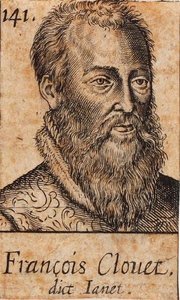
François Clouet
1510 - 1572 , Frankrike
Kort om kunstneren
- Artistic Movement Or Style: Renaissance portraiture
- Artists Or Movements Influenced By This Artist: ['Franske portrettister']
- Artists Who Influenced This Artist:
- Jean Clouet
- Leonardo da Vinci
- Date Of Birth: c. 1510
- Date Of Death: 1572
- Full Name: François Clouet
- Nationality: Fransk
- Notable Artworks:
- Elisabeth av Østerrike
- Marguerite av Frankrike
- Charles IX
- Place Of Birth: Tours, France
Relaterte artikler
François Boucher: Rococo Master of Myth, Sensuality, and the French Court
Explore the captivating world of François Boucher, master of Rococo painting! Discover his iconic works, aristocratic patronage, and lasting influence on French art history. Learn more at OriginalUniqueArt.

The Eloquent Form: A Historical & Aesthetic Exploration of the Nude in Art
Explore the captivating history of the nude in art! From ancient Greece to modern masters, discover its evolving symbolism, techniques & enduring beauty. Expert insights for collectors and enthusiasts.

The Enduring Allure of the Nude: A Historical & Artistic Exploration of the Human Form
Explore the captivating history of nude art! Discover iconic paintings & artists from classical to modern eras. Uncover symbolism, techniques & find museum-quality reproductions at OriginalUniqueArt.
Charles Le Brun: Master of French Baroque Classicism & His Enduring Legacy
Explore the life & art of Charles Le Brun, master of French Baroque Classicism. Discover his royal commissions, influence on Versailles, and enduring legacy through detailed analysis & stunning artworks.

François Flameng: Bridging Academic Tradition & Impressionistic Sensibility
Explore the captivating works of François Flameng, a celebrated French painter bridging academic tradition & Impressionistic sensibilities. Discover his portraits, landscapes, and poignant WWI art with insights from OriginalUniqueArt.

