

 Se i rommet
 Del som digitalt kort
 Del
Del
 Detaljer
 Studentguide

 Last ned
 Liknende objekter
 Røntgen
 Lysbildefremvisning
 Besøksstatistikk
Annonciation
 Les mer
Giclée / Kunsttrykk
Giclée- eller lerretsprint av museumskvalitet med rask produksjon og fleksible valgmuligheter for etterbehandling. ( Bestill håndmalt reproduksjon Gå til digitalt bilde)




































Velg mellom våre forhåndsdefinerte størrelser som bevarer kunstverkets opprinnelige proporsjoner.

Du kan oppgi egne mål for å tilpasse en spesifikk ramme eller et bestemt område. Dersom den valgte størrelsen ikke samsvarer med det originale bildets proporsjoner, vil vi enten beskjære kunstverket eller utvide bildet med en speilet eller ensfarget kant. En digital mockup vil bli sendt til din godkjenning før produksjonen starter.
Vennligst merk at forhåndsvisningen på skjermen ikke gjenspeiler den faktiske beskjæringen eller utvidelsen. Kun mockuppen vil vise den endelige komposisjonen nøyaktig.
Selv om tilpassede størrelser er tilgjengelige, anbefaler vi å velge et mål fra den forhåndsdefinerte listen for å bevare de originale proporsjonene.
Verdensomspennende levering () på 2 uker i stedet for standard 4/5 uker. (13 October)

Gratis ekspressfrakt over hele verden

Lerretsduk av høykvalitets lin

Full transportforsikring

Garanti for refusjon av toll og importavgifter

Garantert fargeekthet

100 dagers returrett ved fabrikasjonsfeil

100% pengene tilbake-garanti

Mengderabatt
 Glassalternativet er kun tilgjengelig i størrelser under 110 cm

Annonciation
Giclée / Kunsttrykk
Format på reproduksjon
-


Totalpris
Nkr 746
Kunstnerbiografi
The Grace of the Barochetto
Francesco Trevisani stands as a luminous figure in the transition between the dramatic intensity of the late Baroque and the emerging elegance of the early Rococo, a period often referred to as barochetto. Born in Capodistria, Istria, his artistic journey was shaped by the rich traditions of both Venice and Rome. As the son of an architect, he first learned the fundamental principles of design through the guidance of his father, Antonio Trevisani. This early foundation in structure and composition would later allow him to master the complex, theatrical arrangements that define his most celebrated works.
His training was deeply rooted in the masters of his era, studying under figures such as Antonio Zanchi and Joseph Heintz the Younger. These influences provided him with a technical vocabulary that blended vigorous movement with a refined sensibility. As he moved through the artistic hubs of Venice and Rome, Trevisani developed a style that could capture both the profound sorrow of religious martyrdom and the tender, celestial grace of divine encounters. His ability to navigate these emotional extremes made him a sought-after painter for significant ecclesiastical and private commissions.
Mastery of Emotion and Light
The works of Trevisani are characterized by an unflinching commitment to emotional depth and a breathtaking use of light. In his religious compositions, the boundaries between the earthly and the divine often seem to dissolve. One can observe this in his depictions of sacred scenes, where the heavy, sacred silence of a moment is palpable. Whether portraying the lifeless body of Christ being borne by angels or the poignant devotion of saints, Trevis andani utilized a palette and brushwork that emphasized the spiritual fervor of the age.
His technical prowess is particularly evident in his ability to render texture and atmosphere. In works such as The Martyrdom of the Seven Sons of Saint Felicity, he weaves together complex narratives involving Roman emperors, pagan statues, and celestial messengers. Through meticulous detail, he directs the viewer's eye across the canvas, using light to highlight the agony of the martyrs and the hope offered by heavenly crowns. This mastery of narrative painting allowed him to create works that were not merely decorative but served as profound instruments of devotion.
Legacy and Artistic Significance
Throughout his long career, Trevisani’s influence was felt deeply within the Roman art scene, particularly through his connection to influential patrons like Cardinal Ottoboni. His masterpiece, the frescoes in San Silvestro in Capite, serves as a testament to his ability to transform architectural spaces with grand, sweeping narratives. His style, heavily influenced by Carlo Maratta, helped define the aesthetic of the late Baroque, bridging the gap between the heavy shadows of the previous century and the lighter, more airy compositions of the coming Rococo era.
The historical significance of Francesco Trevisani lies in his role as a bridge between eras. He maintained the grandeur and dramatic tension required by the Counter-Reformation while introducing a sweetness and grace that anticipated the next movement in European art. His ability to balance the monumental with the intimate ensures that his paintings remain powerful windows into the spiritual and artistic soul of the early eighteenth century.
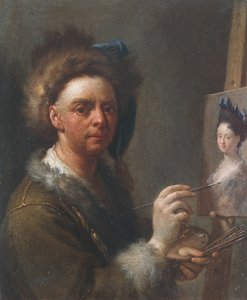
Francesco Trevisani
1656 - 1746 , Italy
Kort om kunstneren
- Artistic Movement Or Style: Late Baroque or early Rococo
- Artists Who Influenced This Artist:
- Antonio Zanchi
- Joseph Heintz the Younger
- Carlo Maratta
- Full Name: Francesco Trevisani
- Nationality: Italian
- Notable Artworks:
- The Martyrdom of the Seven Sons of St Felicity
- Christ mort porté par des anges
- The Virgin presenting the Child to St. Anthony
- L'ENFANT JESUS DESIGNANT A LA VIERGE
- Place Of Birth: Pordenone, Italy
- Date Of Birth: 1656
- Date Of Death: 1746
