

 Send
Send Del med andre
 Vis detaljer
 Guide
Guide

 Last ned bildet
 Liknende objekter
 Lysbildefremvisning
 Statistikk
Assumption (detail) (8)


 Vis hele teksten
Giclée / Kunsttrykk
Giclée- eller lerretsprint av museumskvalitet med rask produksjon og fleksible valgmuligheter for etterbehandling. ( Kjøp håndlaget maleri Bytt til digitalt bilde)




































Velg mellom våre forhåndsdefinerte størrelser som bevarer kunstverkets opprinnelige proporsjoner.

Du kan oppgi egne mål for å tilpasse en spesifikk ramme eller et bestemt område. Dersom den valgte størrelsen ikke samsvarer med det originale bildets proporsjoner, vil vi enten beskjære kunstverket eller utvide bildet med en speilet eller ensfarget kant. En digital mockup vil bli sendt til din godkjenning før produksjonen starter.
Vennligst merk at forhåndsvisningen på skjermen ikke gjenspeiler den faktiske beskjæringen eller utvidelsen. Kun mockuppen vil vise den endelige komposisjonen nøyaktig.
Selv om tilpassede størrelser er tilgjengelige, anbefaler vi å velge et mål fra den forhåndsdefinerte listen for å bevare de originale proporsjonene.
Verdensomspennende levering () på 2 uker i stedet for standard 4/5 uker. (20 September)

Gratis ekspressfrakt over hele verden

Lerretsduk av høykvalitets lin

Full forsikring under transport

Garanti for refusjon av toll og importavgifter

Garantert korrekt fargegjengivelse

100 dagers returrett (kun ved mangler)

100% pengene tilbake-garanti

Rabatt ved flere kjøp
 Glassalternativet er kun tilgjengelig i størrelser under 110 cm

Assumption (detail) (8)
Giclée / Kunsttrykk
Størrelse på reproduksjon
-


Endelig pris
$ 80
Filippino Lippi’s “Assumption (detail)”: A Renaissance Vision of Divine Grace
The fresco fragment known as “Assumption (detail)”, painted by Filippino Lippi in 1489, offers a breathtaking glimpse into the heart of early High Renaissance artistry. More than simply a depiction of a pivotal biblical event – the Virgin Mary’s ascent to heaven – it's a complex tapestry woven with theological symbolism, masterful technique, and an intensely human understanding of emotion. This particular section, part of a larger mural cycle intended for the Carafa Chapel in Rome, showcases Lippi’s signature dynamism and his profound engagement with both classical ideals and the burgeoning spirit of the Renaissance.
Lippi's artistic journey is crucial to appreciating this work. Born into an illegitimate lineage, he received his initial training under his father, Fra Filippo Lippi, a renowned painter in Florence. This early influence instilled within him a deep appreciation for narrative clarity and a vibrant use of color, qualities that would later be refined through collaborations with masters like Botticelli and Perugino. However, Filippino quickly developed his own distinctive style – one characterized by an almost theatrical quality, a heightened sense of movement, and a willingness to push the boundaries of perspective and spatial representation.
A Symphony of Line and Color: Technique and Composition
The fresco’s power lies not just in its subject matter but also in Lippi's extraordinary command of technique. He employs a layered approach to painting, building up surfaces with thin glazes of pigment – a hallmark of the *tempera* method favored by Florentine artists at the time. This creates a remarkable sense of texture and luminosity, particularly evident in the drapery of Mary’s robes, which appears both voluminous and incredibly delicate. The use of linear perspective is subtly employed to draw the viewer's eye into the background landscape, suggesting an immense depth and creating a powerful illusion of space.
Notice the deliberate fragmentation presented here – it’s not a complete fresco but a carefully selected section. This allows us to appreciate Lippi’s compositional choices with greater clarity. The figures are arranged in a pyramidal structure, drawing the eye upwards towards Mary at the apex. The architectural elements—columns and pilasters—are rendered with meticulous detail, grounding the scene in a believable, albeit idealized, setting. The dramatic lighting, originating from an unseen source above, casts strong shadows that emphasize volume and form, contributing to the overall sense of drama and reverence.
Symbolism and Spiritual Depth
Beyond its visual beauty, “Assumption (detail)” is rich in symbolic meaning. The setting sun in the background, a recurring motif in Lippi’s work, represents both the passage of time and the sacrifice of Christ. The cross, subtly incorporated into the composition, serves as a poignant reminder of the event's significance. Mary herself embodies humility and grace, her serene expression conveying a profound sense of acceptance and devotion. The angels surrounding her are not merely attendants but active participants in the divine drama, their gestures suggesting both celebration and reverence.
Furthermore, Lippi’s choice to depict this moment – the *Assumptio*, or taking up of Mary into heaven – was deeply rooted in contemporary theological debates. It reflected a growing belief that Mary's ascension represented not just her personal salvation but also the redemption of humanity. The fresco thus becomes a visual meditation on faith, sacrifice, and the promise of eternal life.
A Legacy of Innovation: Filippino Lippi’s Place in Art History
Filippino Lippi stands as a pivotal figure in the transition from Early to High Renaissance art. His work demonstrates a willingness to experiment with perspective, color, and composition, pushing the boundaries of artistic convention while retaining a deep respect for classical ideals. “Assumption (detail)” is a testament to his genius – a vibrant, emotionally resonant masterpiece that continues to captivate viewers centuries after its creation. Reproductions offer an accessible way to experience this extraordinary work, bringing its beauty and spiritual depth into any space.
Om kunstneren
Tidlig Liv og Opplæring
- Født: April 1457, Prato, Italia
- Død: April 1504
- Foreldre: Fra Filippo Lippi (maler) og Lucrezia Buti
- Filippino var den uekte sønnen til en anerkjent maler.
- Tidlig opplæring under sin far la grunnlaget for hans kunstneriske karriere.
Kunstnerisk Karriere og Utvikling
- Tidlig Periode (1475-1480): Tidlige verk, som Madonner, viste en mindre raffinert stil. Disse ble opprinnelig tilskrevet en anonym kunstner kjent som "amico di Sandro."
- Utvikling (1480-1485): Utviklingen av en mer personlig og effektiv tilnærming i verk som *Tobias' reiser*.
- Modenhet (1485-1504): Mestring av Høyrenessanse-stilen, eksemplifisert ved *Kristi fremtoning for Jomfru Maria*.
Store Verk og Samarbeider
- Samarbeid med Perugino, Ghirlandaio og Botticelli på fresker i Lorenzo de' Medici's villa.
- Fullføring av Masaccios uferdige dekorasjon i Brancacci-kapellet sammen med Masolino.
- Bemerkelsesverdige verk inkluderer: *Kroningen av Jomfru Maria*, *Tobias og engelen*, *St. Jeromos* og *Scene fra livet til St Thomas Aquinas*.
Påvirkninger og Kunstnerisk Stil
- Tidlige Påvirkninger: Sandro Botticelli, Fra Filippo Lippi.
- Stilkarakteristikker: Animert form og linje, varm kolorisme, detaljerte landskap, uttrykksfulle figurer, og en blanding av perspektivgeometri med intime interiører.
- Romerske Antikviteter: Studier etter romerske antikviteter under oppholdet i Roma påvirket arbeidet hans, ved å inkorporere et antikt vokabular i kunsten hans.
Historisk Betydning og Arv
- En ledende florentinsk utøver av tradisjonen med store freskosykluser.
- Hans innflytelse på Høyrenessansen er ubestridelig.
- Verk finnes i museer over hele verden, inkludert Uffizi Galleria i Firenze.
- Kjent for å bygge bro mellom tidligere renessansestiler og den fremvoksende Høyrenessanse-estetikken.
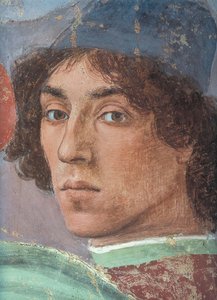
Filippino Lippi
1457 - 1504 , Italia
Kort om kunstneren
- Artistic Movement Or Style: Høykrensens
- Artists Or Movements Influenced By This Artist: ['Raffaellino del Garbo']
- Artists Who Influenced This Artist:
- Fra Filippo Lippi
- Sandro Botticelli
- Date Of Birth: April 1457
- Date Of Death: April 1504
- Full Name: Filippino Lippi
- Nationality: Italiensk
- Notable Artworks:
- Kroningen av Jomfru Maria
- Tobias og engelen
- Scene fra livet til St Thomas Aquinas
- St. Jeronim
- Place Of Birth: Prato, Italia
Relaterte artikler
The Enduring Legacy of Fresco Painting: Techniques, History & Contemporary Relevance
Explore the rich history & enduring artistry of fresco painting – from Giotto to Michelangelo! Discover techniques, conservation efforts, & modern applications. Learn how OriginalUniqueArt brings this timeless art form to your home.

The Enduring Legacy of Fresco: Technique, History & Artistic Expression Across Cultures
Explore the rich history & enduring legacy of fresco painting! Discover ancient techniques, Giotto's masterpieces, and modern applications. Expert insights for art lovers & professionals.
Fresko som Familiens Arv: Bevar Historien i Veggene
Lær om freskomaleriets historie og teknikk! Oppdag ikoniske verk og få tips til bevaring. Finn din perfekte freskoreproduksjon hos – kvalitet og ekspertise garantert.
Kunsten som lever med deg: Den emosjonelle kraften i et skreddersydd interiørfresko
Utforsk den emosjonelle kraften i skreddersydde interiørfresker. Ekspertise, håndverk og tidløs skjønnhet for ditt hjem. Få et unikt kunstverk – kontakt oss!

Filippino Lippi: Renaissance Innovation Bridging Faith & Humanism
Explore the captivating world of Filippino Lippi, a Renaissance master bridging faith & humanism through innovative art. Discover his key works, influences, and lasting legacy with OriginalUniqueArt.
