

 Se i rommet
 Del som digitalt kort
 Del
Del
 Detaljer
 Studentguide

 Last ned
 Liknende objekter
 Røntgen
 Lysbildefremvisning
 Besøksstatistikk
Annunciation


 Les mer
Giclée / Kunsttrykk
Giclée- eller lerretsprint av museumskvalitet med rask produksjon og fleksible valgmuligheter for etterbehandling. ( Bestill håndmalt reproduksjon Gå til digitalt bilde)




P118B Nkr10

P118H Nkr10

P118W Nkr10

P438Z Nkr10

P508JH Nkr12

P508YH Nkr12

P805H Nkr10

P805Z Nkr10

P919BZ Nkr10

P919G Nkr10

P919XJ Nkr10

P959ZH Nkr10

P968JZ Nkr12

W106C Nkr8

W218G Nkr10

W218JH Nkr8

W218Y Nkr10

W307PJ Nkr10

W316G Nkr10

W316PJ Nkr8

W316Y Nkr10

W398PJ Nkr8

W4111J Nkr10

W500HY Nkr15

W500JH Nkr15

W692G Nkr12

W849H Nkr8

W940BG Nkr15

W953PJ Nkr8




Velg mellom våre forhåndsdefinerte størrelser som bevarer kunstverkets opprinnelige proporsjoner.

Skriv inn bredden og høyden du trenger, slik at den passer til din ramme eller vegg. Et trykk kan kun beskjæres, aldri gjøres større enn bildet, så et format med en annen form vil miste en del av motivet. Vi sender deg en digital mockup for godkjenning før vi trykker noe som helst. Bildet som vises på denne siden viser ikke den faktiske beskjæringen — det er kun mockuppen som gjør det.
Verdensomspennende levering () på 2 uker i stedet for standard 4/5 uker. (24 October)

Gratis ekspressfrakt over hele verden

Lerretsduk av høykvalitets lin

Full transportforsikring

Garanti for refusjon av toll og importavgifter

Garantert fargeekthet

100 dagers returrett ved fabrikasjonsfeil

100% pengene tilbake-garanti

Mengderabatt
 Glassalternativet er kun tilgjengelig i størrelser under 110 cm

Annunciation
Giclée / Kunsttrykk
Format på reproduksjon
-


Totalpris
Nkr 760
The Annunciation: A Renaissance Dialogue of Light and Grace
Filippino Lippi’s “Annunciation,” painted in 1489 for the Medici family’s villa near Florence, is more than just a depiction of a pivotal biblical moment; it's a masterful orchestration of light, color, and human emotion. This fresco, now residing within the serene walls of Santa Maria sopra Minerva, offers a glimpse into the burgeoning artistic spirit of the High Renaissance – a period defined by its renewed interest in classical ideals and a profound exploration of human experience.
The scene itself is instantly recognizable: the angel Gabriel, rendered with an almost startlingly youthful energy, delivers the momentous news to Mary. Lippi’s genius lies not merely in his accurate portrayal of the figures but in his manipulation of space and atmosphere. The interior setting, though somewhat simplified, feels remarkably real – a modest chamber furnished with a chair, books, and a table, suggesting a domestic tranquility disrupted by this divine visitation. Note the careful attention to detail: the folds of Mary’s garments, the delicate rendering of Gabriel's wings, and the subtle play of light on the objects within the room all contribute to an immersive experience for the viewer.
A Symphony of Color and Technique
Lippi was a master of tempera paint, a medium known for its luminous quality and ability to achieve rich, vibrant colors. He employed a technique called *sfumato*, blurring lines and softening edges to create an ethereal effect – particularly evident in the hazy light that bathes the scene. The palette is dominated by warm hues: reds, golds, and ochres—reflecting the importance of Mary’s role as the Mother of God. The use of perspective, though not entirely rigorous by Renaissance standards, creates a sense of depth and spatial awareness, drawing the viewer into the heart of the narrative.
Furthermore, Lippi's brushwork is remarkably expressive. Observe how he captures the movement of Gabriel’s hand as he presents the message to Mary, or the gentle curve of her neck in response. These subtle gestures convey a profound sense of emotion and vulnerability – a testament to Lippi’s ability to imbue his figures with life.
Symbolism and Spiritual Resonance
The “Annunciation” is rich in symbolic meaning. Gabriel, often depicted as youthful and radiant, represents divine grace and the messenger of God's will. Mary, presented as a modest and contemplative figure, embodies humility and acceptance. The dove hovering above them symbolizes the Holy Spirit – the source of life and inspiration. The open book on the table is a subtle reference to scripture and the importance of faith.
Beyond these immediate symbols, the painting speaks to broader themes of communication, revelation, and the transformative power of divine grace. It’s a moment of profound significance—the beginning of a new era in Christian theology and art. The composition itself can be interpreted as a dialogue between heaven and earth, between the spiritual realm and the human world.
A Timeless Masterpiece for Reflection
“Annunciation” by Filippino Lippi remains a powerful and moving work of art. Its beauty lies not only in its technical brilliance but also in its ability to evoke a sense of wonder and contemplation. Whether viewed as a historical document, a religious icon, or simply a stunning example of Renaissance artistry, this fresco continues to captivate audiences centuries after its creation. Reproductions offer an accessible way to experience the depth and nuance of Lippi’s vision, bringing this timeless dialogue of light and grace into any space.
Useful Links:
- Annunciation (Filippo Lippi, London) - Wikipedia
- Annunciation 1489-91 Reproduction For Sale | 1st Art Gallery
- The National Gallery, London
Additional Research:
Spørsmål og svar
Hvilke pseudonymer eller andre navn er Filippino Lippi kjent under?
Filippino Lippi opptrer under de alternative navnene Fra Filippo Lippi (Fullt Navn).
Hvor i Filippino Lippi sin karriere befinner "Annunciation" seg?
I Filippino Lippi sin karriere tilhører "Annunciation" Mature Renaissance. Denne perioden gjør det mulig å sammenligne verket med kunstnerens øvrige arbeider.
Hvor mettet er fargepaletten i "Annunciation"?
Fargepaletten i "Annunciation" har Balanced Soft i metning.
Kunstnerbiografi
Tidlig Liv og Opplæring
- Født: April 1457, Prato, Italia
- Død: April 1504
- Foreldre: Fra Filippo Lippi (maler) og Lucrezia Buti
- Filippino var den uekte sønnen til en anerkjent maler.
- Tidlig opplæring under sin far la grunnlaget for hans kunstneriske karriere.
Kunstnerisk Karriere og Utvikling
- Tidlig Periode (1475-1480): Tidlige verk, som Madonner, viste en mindre raffinert stil. Disse ble opprinnelig tilskrevet en anonym kunstner kjent som "amico di Sandro."
- Utvikling (1480-1485): Utviklingen av en mer personlig og effektiv tilnærming i verk som *Tobias' reiser*.
- Modenhet (1485-1504): Mestring av Høyrenessanse-stilen, eksemplifisert ved *Kristi fremtoning for Jomfru Maria*.
Store Verk og Samarbeider
- Samarbeid med Perugino, Ghirlandaio og Botticelli på fresker i Lorenzo de' Medici's villa.
- Fullføring av Masaccios uferdige dekorasjon i Brancacci-kapellet sammen med Masolino.
- Bemerkelsesverdige verk inkluderer: *Kroningen av Jomfru Maria*, *Tobias og engelen*, *St. Jeromos* og *Scene fra livet til St Thomas Aquinas*.
Påvirkninger og Kunstnerisk Stil
- Tidlige Påvirkninger: Sandro Botticelli, Fra Filippo Lippi.
- Stilkarakteristikker: Animert form og linje, varm kolorisme, detaljerte landskap, uttrykksfulle figurer, og en blanding av perspektivgeometri med intime interiører.
- Romerske Antikviteter: Studier etter romerske antikviteter under oppholdet i Roma påvirket arbeidet hans, ved å inkorporere et antikt vokabular i kunsten hans.
Historisk Betydning og Arv
- En ledende florentinsk utøver av tradisjonen med store freskosykluser.
- Hans innflytelse på Høyrenessansen er ubestridelig.
- Verk finnes i museer over hele verden, inkludert Uffizi Galleria i Firenze.
- Kjent for å bygge bro mellom tidligere renessansestiler og den fremvoksende Høyrenessanse-estetikken.
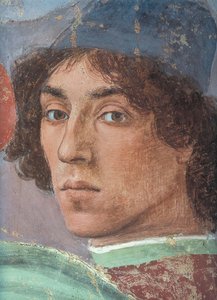
Filippino Lippi
1457 - 1504 , Italia
Kort om kunstneren
- Artistic Movement Or Style: Høykrensens
- Artists Or Movements Influenced By This Artist: ['Raffaellino del Garbo']
- Artists Who Influenced This Artist:
- Fra Filippo Lippi
- Sandro Botticelli
- Date Of Birth: April 1457
- Date Of Death: April 1504
- Full Name: Filippino Lippi
- Nationality: Italiensk
- Notable Artworks:
- Kroningen av Jomfru Maria
- Tobias og engelen
- Scene fra livet til St Thomas Aquinas
- St. Jeronim
- Place Of Birth: Prato, Italia
Relaterte artikler

Dante Gabriel Rossettis 25 Mesterverk: Kunst, Symbolikk og Skjønnhet for Ditt Hjem
Utforsk de 25 mest ikoniske maleriene av Dante Gabriel Rossetti! Oppdag symbolisme, romantikk og viktoriansk skjønnhet i Pre-Raphaelittenes mesterverk. Finn kunsttrykk & reproduksjoner for ditt hjem på OriginalUniqueArt.com.

Celestial Messengers: A Comprehensive Exploration of Angelic Representation in Art History
Explore the captivating history of angels in art! Discover symbolism, iconic Renaissance masterpieces & renowned artists. Expert insights for art lovers & collectors at OriginalUniqueArt.
Fresko som Familiens Arv: Bevar Historien i Veggene
Lær om freskomaleriets historie og teknikk! Oppdag ikoniske verk og få tips til bevaring. Finn din perfekte freskoreproduksjon hos – kvalitet og ekspertise garantert.

Celestial Messengers: Angels in Painting – A Historical & Artistic Exploration
Explore the captivating history of angels in painting! Discover symbolism, iconic Renaissance & Byzantine masterpieces, and renowned artists. Expert insights for art lovers & collectors at OriginalUniqueArt.
The Enduring Legacy of Fresco Painting: Techniques, History & Contemporary Relevance
Explore the rich history & enduring artistry of fresco painting – from Giotto to Michelangelo! Discover techniques, conservation efforts, & modern applications. Learn how OriginalUniqueArt brings this timeless art form to your home.
