

 Se i rommet
 Del som digitalt kort
 Del
Del
 Detaljer
 Studentguide

 Last ned
 Liknende objekter
 Røntgen
 Lysbildefremvisning
 Besøksstatistikk
Duino-Nueve (Orrantia/92)


 Les mer
Kunstverket som vises på denne siden er beskyttet av opphavsretten, noe som betyr at vi ikke har juridisk tillatelse til å lage eller selge identiske reproduksjoner. Denne beskyttelsen håndheves i henhold til internasjonale avtaler som for eksempel Bernerkonvensjonen og av nasjonale lover, inkludert de som er fastsatt i Amerikansk opphavsrettslov – Tittel 17.
Som et respektfullt og lovlig alternativ tilbyr vi skreddersydde, håndmalte kunstverk inspirert av originalen. Våre dyktige og profesjonelle kunstnere studerer nøye originalens stil, stemning og kunstneriske essens for å skape et nytt og unikt verk som vekker den samme følelsen – samtidig som det forblir en original skapelse i seg selv.
Denne metoden er i fullt samsvar med opphavsrettslige regler, da den ikke innebærer kopiering eller duplisering av det beskyttede kunstverket. I stedet er det snakk om en kreativ nytolkning – et nytt maleri som er inspirert av originalen, men ikke identisk med den.
Håndlaget oljereproduksjon
Håndmalt olje på lerret i din valgte størrelse og ramme, laget på bestilling av våre kunstnere. ( Bytt til trykkversjon Gå til digitalt bilde)




P118B Nkr10

P118H Nkr10

P118W Nkr10

P438Z Nkr10

P508JH Nkr12

P508YH Nkr12

P805H Nkr10

P805Z Nkr10

P919BZ Nkr10

P919G Nkr10

P919XJ Nkr10

P959ZH Nkr10

P968JZ Nkr12

W106C Nkr8

W218G Nkr10

W218JH Nkr8

W218Y Nkr10

W307PJ Nkr10

W316G Nkr10

W316PJ Nkr8

W316Y Nkr10

W398PJ Nkr8

W4111J Nkr10

W500HY Nkr15

W500JH Nkr15

W692G Nkr12

W849H Nkr8

W940BG Nkr15

W953PJ Nkr8




Velg mellom våre forhåndsdefinerte størrelser som bevarer kunstverkets opprinnelige proporsjoner.

Skriv inn bredden og høyden du trenger, slik at den passer til din ramme eller vegg. Dette er håndmalt, så for en størrelse med en annen form kan kunstneren male litt mer rundt bildet, eller beskjære det noe — du velger selv. Vi sender deg en digital mockup for godkjenning før maleriet påbegynnes. Bildet som vises på denne siden viser ikke det faktiske resultatet — kun mockuppen gjør det.
Etter bestilling vil OriginalUniqueArt.com-teamet sende e-post til kunden for instruksjoner og sende et utkast (mockup) som forhåndsvisning.
Verdensomspennende levering () på 3–4 uker i stedet for standard 5 uker. (28 October). Ingen kompromisser med kvaliteten.

Gratis ekspressfrakt over hele verden

Lerretsduk av høykvalitets lin

Full transportforsikring

Garanti for refusjon av toll og importavgifter

Garantert fargeekthet

100 dagers returrett ved fabrikasjonsfeil

100% pengene tilbake-garanti

Mengderabatt
 Glassalternativet er kun tilgjengelig i størrelser under 110 cm

Duino-Nueve (Orrantia/92)
Reproduksjonsmetode
Format på reproduksjon
-


Totalpris
Nkr 2858
Fernando de Szyszlo: Bridging Ancient Echoes and Modern Expression
Fernando de Szyszlo (1925-2017) stands as a monumental figure in Peruvian art history, recognized for his pioneering role in establishing abstract expressionism within Latin America while simultaneously honoring the profound legacy of Andean culture. Born in Lima to a Peruvian mother of Spanish-Indian descent and a Polish father, Szyszlo’s formative years instilled in him an appreciation for both European intellectual traditions and indigenous heritage—a duality that would profoundly shape his artistic vision. This confluence of influences is palpable throughout his oeuvre, resulting in canvases that resonate with a unique blend of formal innovation and symbolic depth. Szyszlo's journey into art began at the National University of Engineering but was swiftly redirected by an irresistible passion for architecture before he decisively embraced the School of Plastic Arts of Pontifical Catholic University of Peru. Graduating in 1948, he embarked on a transformative voyage across Europe, immersing himself in the groundbreaking works of masters like Rembrandt and Titian—artists who championed dramatic chiaroscuro and psychological realism. These encounters ignited Szyszlo’s imagination and fueled his determination to forge a path distinct from established artistic conventions. His stylistic evolution culminated in the embrace of abstract expressionism during the mid-1950s, marking a pivotal moment in Peruvian art. Rejecting representational accuracy, Szyszlo sought to convey emotion and experience directly onto the canvas through spontaneous gestures and bold color palettes—a technique championed by artists like Jackson Pollock and Willem de Kooning. However, unlike his contemporaries who often prioritized purely formal experimentation, Szyszlo consistently incorporated elements of Andean iconography and symbolism into his paintings. Recurring motifs such as llamas, condors, and geometric patterns hark back to the rich artistic traditions of Peru’s pre-Columbian past, grounding his abstract explorations in a tangible connection to Peruvian cultural heritage. The painting "Duino-Nueve (Orrantia/92)" exemplifies Szyszlo's distinctive approach. The image depicts a solitary figure wielding a knife—a potent symbol representing both vulnerability and decisive action—against a dark backdrop punctuated by flashes of intense color. The artist’s meticulous attention to detail, particularly in capturing the texture and contours of the hand holding the blade, underscores his commitment to conveying palpable physicality alongside conceptual ideas. Furthermore, Szyszlo's masterful use of pigment creates an atmosphere of dramatic tension, mirroring the psychological complexities inherent in the subject matter. Szyszlo’s artistic legacy extends beyond stylistic innovation; he served as a crucial catalyst for fostering dialogue between Peruvian art and Andean culture—a contribution that continues to inspire artists and scholars alike. His unwavering dedication to exploring the expressive potential of abstraction combined with his reverence for indigenous traditions solidified his position as one of Peru's most influential visual artists, ensuring that his work remains relevant and captivating for generations to come.- Artist: Fernando de Szyszlo
- Born Year: 1925
- Death Year: 2017
- Birth City: Lima
- Birth Country: Peru
Historical Context
Szyszlo’s artistic endeavors unfolded during the formative years of Peruvian art history—a period marked by burgeoning interest in European modernism alongside an increasing awareness of Andean cultural identity. The influence of Surrealist artists like René Magritte and Salvador Dalí can be discerned in Szyszlo's exploration of dreamlike imagery and subconscious symbolism, reflecting a broader artistic preoccupation with psychological depth and imaginative vision.Style & Technique
Szyszlo’s signature style—abstract expressionism infused with Andean motifs—characterized by spontaneous brushstrokes, bold color combinations, and textural layering—represents a radical departure from traditional Peruvian painting practices. He skillfully manipulated pigment to create luminous surfaces that capture the essence of emotion and experience, mirroring the expressive dynamism found in the works of European masters like Willem de Kooning and Franz Kline.Symbolism
Recurring motifs such as llamas, condors, and geometric patterns—elements drawn from Andean iconography—serve as powerful symbols representing resilience, spiritual aspiration, and connection to ancestral traditions. Szyszlo’s deliberate incorporation of these visual cues underscores his commitment to honoring Peruvian cultural heritage while simultaneously elevating abstract expressionism beyond purely formal considerations.Emotional Impact
“Duino-Nueve (Orrantia/92)” evokes a profound sense of contemplation and unease—a reflection of Szyszlo’s masterful ability to convey psychological complexity through visual language. The painting's dramatic chiaroscuro contrasts heighten the tension between vulnerability and determination, prompting viewers to confront existential questions about human experience and artistic expression.Spørsmål og svar
Hvor plasserer "Duino-Nueve (Orrantia/92)" seg blant Fernando de Szyszlo sine gjentakende motiver?
"Duino-Nueve (Orrantia/92)" skildrer landscape, knife, figure, wall, darkness, power, symbolism, peru, mens de dokumenterte temaene til Fernando de Szyszlo er european modernism, andean heritage, symbolic imagery, exploring identity, central role. En sammenligning av disse viser hvordan verket relaterer seg til kunstnerens vanlige motiver.
Hvilket rom foreslås det at "Duino-Nueve (Orrantia/92)" plasseres i, med tanke på fargepaletten?
Med sine Monochrome farger, anbefales "Duino-Nueve (Orrantia/92)" for et Living Room.
Hvor mye lys ser fargene i "Duino-Nueve (Orrantia/92)" ut til å reflektere?
Fargene i "Duino-Nueve (Orrantia/92)" har en Dark luminans.
Kunstnerbiografi
The Alchemist of Andean Abstraction
Fernando de Szyszlo (1925-2017) stands as a monumental figure in Peruvian art history, recognized for his pioneering role in establishing abstract expressionism within Latin America while simultaneously honoring the profound legacy of Andean culture. Born in Lima to a Peruvian mother of Spanish-Indian descent and a Polish father, Szyszlo’s formative years instilled in him an appreciation for both European intellectual traditions and indigenous heritage—a duality that would profoundly shape his artistic vision. His early education at the National University of Engineering was briefly interrupted by a passion for architecture before he decisively embraced the School of Plastic Arts of Pontifical Catholic University of Peru, where he honed his skills and embarked on a journey toward profound artistic exploration.
The trajectory of Szyszlo’s career was irrevocably altered by his travels throughout Europe in the late 1940s. Immersing himself in the works of Old Masters like Rembrandt, Titian, and Tintoretto, he absorbed a mastery of dramatic lighting and emotional intensity that would later inform his unique approach to shadow and depth. His time in Paris and Florence between 1948 and 1955 placed him at the heart of the vibrant Latin American avant-garde scene centered around Café Flore. Engaging in spirited dialogues with luminaries such as the Surrealist poet Octavio Paz and André Breton, Szyszlo grappled with a central, defining tension: how to reconcile international modernist ideals with the preservation of a distinct Latin American cultural identity.
A Synthesis of Modernity and Myth
Upon returning to Peru, Szyszlo became a catalyst for artistic renewal, pushing boundaries by expressing Peruvian subjects in non-representational forms. This was a bold departure from the prevailing stylistic conventions of indigenism that dominated the era. His work sought to reinvent Surrealist themes within a Latin American context, focusing less on mere artistic conceit and more on the deep-seated feelings connected to indigenous mysticism. By weaving pre-Columbian imagery and Incan motifs into the fabric of abstraction, he created a visual language that felt both ancient and avant-garde.
His technique was characterized by a masterful manipulation of texture and light. Through the use of thick impasto, layered colors, and a frequently muted palette, Szyszlo evoked the weathered surfaces of archaeological relics and the atmospheric weight of Andean landscapes. His paintings often feature:
- Lyrical color palettes that balance earthy tones with sudden, striking hues.
- Geometric forms that suggest the structural permanence of ancient architecture.
- Textural richness created through heavy layering to evoke a sense of geological time.
- Ambiguous shapes that invite the viewer into a state of contemplative, surrealist wonder.
Legacy and Historical Significance
The historical significance of Fernando de Szyszlo cannot be overstated; he was the bridge between the ancestral past and the modern future. His ability to articulate modernity through pre-Columbian symbolism generated a profound rupture with tradition while simultaneously entering into a deep, respectful dialogue with it. He did not merely paint abstractly; he sought to find the "soul" of Peru within the language of international abstraction, ensuring that the indigenous spirit was not lost in the transition to modernism.
Beyond his canvas, Szyszlo was a humanist and an educator, serving as a professor of art at Cornell University and contributing significantly to the intellectual life of his country. Today, his legacy is preserved in some of the world's most prestigious institutions, including The Museum of Modern Art (MoMA) in New York, the Museum of Fine Arts in Houston, and the Museo de Arte Contemporaneo Arequipa. As we approach the centenary of his birth, Szyszlo remains a vital subject of study, reminding us that true innovation often lies in the courageous act of remembering.

Fernando de Szyszlo
1925 - 2017 , Peru
Kort om kunstneren
- Full Name: Fernando de Szyszlo Valdelomar
- Nationality: Peruvian
- Date Of Birth: 1925
- Date Of Death: 2017
- Place Of Birth: Lima, Peru
- Notable Artworks:
- Trashumantes
- Untitled, SZY #1
- Camino a Mendieta V
- Artistic Movement Or Style: Abstract Expressionism
- Artists Who Influenced This Artist:
- Rembrandt
- Titian
- Tintoretto
- Artists Or Movements Influenced By This Artist:
- Cubism
- Surrealism
- Informalism
Relaterte artikler

Goyas 25 Mesterverk: En Reise Gjennom Spansk Kunsthistorie | OriginalUniqueArt.no
Utforsk Francisco Goyas 25 mest ikoniske malerier! Oppdag historiene bak mesterverkene, fra portretter til de mørke etsninge. Finn kunsttrykk av høy kvalitet og inspirasjon for din innredning på OriginalUniqueArt.no – ditt hjem fortjener tidløs spansk kunst.
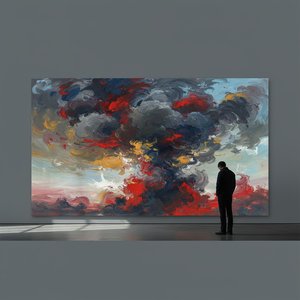
Beyond Representation: Exploring the Emotional Landscape of Abstract Expressionism
Explore the profound emotional world of Abstract Expressionism with OriginalUniqueArt. Discover key artists like Pollock & Rothko, learn about collecting, and find museum-quality reproductions to inspire your space.

Topp 10 mesterverk fra abstrakt ekspresjonisme – Kunst for ditt hjem | OriginalUniqueArt.no
Oppdag de 10 mest ikoniske verkene fra abstrakt ekspresjonisme! Lær historien bak Jackson Pollock, Mark Rothko og andre mestere. Finn kunsttrykk av høy kvalitet for ditt hjem på OriginalUniqueArt.com – museumskvalitet & inspirasjon.

Willem de Kooning: Abstraction, Gesture & the Evolution of Post-War American Painting
Explore the evolution of Willem de Kooning's iconic Abstract Expressionist paintings. Discover his signature style, key themes & investment potential with expert insights for discerning art collectors.

Kandinskys 25 Mesterverk: En Reise i Abstrakt Kunst og Fargeharmoni | OriginalUniqueArt.no
Utforsk Wassily Kandinskys 25 mest ikoniske malerier! Oppdag historien bak abstrakt kunst, ekspresjonisme og fargeharmoni. Finn inspirasjon til interiøret – museumskvalitet reproduksjoner på OriginalUniqueArt.com.