Symbolism · 1911
Unity (Ferdinand Hodler, 1911)
Ferdinand Hodler (1853–1918) har laget Unity. Den er fra 1911. Det tilhører Symbolism-bevegelsen. Den er laget i Painting. Mål: 1 × 475 cm
- 1911
- Painting
- 1 × 475 cm

 Forhåndsvisning

 Håndmalt oljemaleri
 Send
 Del
 Faktablad


 Last ned bilde
 Liknende objekter
 Røntgenundersøkelse
 Lysbildefremvisning
 Spørsmål og svar

 Statistikk
Unity, kort fortalt
- Tittel
- Unity
- Kunstner
- Ferdinand Hodler (1853–1918)
- Kunstner født i
- Bern, Sveits
- Dato
- 1911
- Medium
- Painting
- Dimensjoner
- 1 × 475 cm
- Bevegelse
- Symbolism
- Periode
- Modern
- Motiv
- symbolism, mural, unity, people, group portrait, swiss art
Hva forestiller Unity?
A Symphony of Human Connection
In the monumental mural Unity, created in 1911, Ferdinand Hodler presents a profound meditation on the collective human spirit. This expansive work, stretching across an impressive scale, transcends mere portraiture to become a rhythmic tapestry of existence. The composition is masterfully arranged in rows of figures that seem to pulse with a shared vitality; some individuals press toward the foreground with palpable presence, while others recede into the background, creating a sense of depth that draws the viewer into their communal orbit. Each figure, meticulously rendered with distinct features and emotive expressions, contributes to a larger, singular heartbeat. As eyes wander across the canvas, one notices the subtle details—the gentle grip on a bowl, the quiet posture of a cup held in hand—elements that ground this grand symbolic vision in the intimate realities of daily life.
The technique employed by Hodler is a testament to his pioneering concept of parallelism, a stylistic hallmark where repetitive forms and rhythmic arrangements create a sense of structural harmony. In Unity, this is achieved through the deliberate placement of bodies and limbs that echo one another, weaving a visual cadence that guides the viewer's gaze through the crowd. The artist’s brushwork, though detailed enough to capture the unique character of each face, serves a higher purpose: to unify the disparate individuals into a cohesive whole. This balance between individual identity and collective rhythm is what makes the mural so captivating for the modern observer, offering a visual language that speaks of both the singular soul and the strength found in togetherness.
Symbolism and the Weight of History
To understand Unity, one must look into the soul of Ferdinand Hodler himself. Born in Bern, Switzerland, his early life was marked by the profound tragedy of losing his father and two brothers, a series of losses that deeply embedded themes of mortality and the interconnectedness of life within his psyche. In this mural, the concept of unity is not merely a social ideal but a spiritual necessity. The figures do not stand in isolation; they are bound by an invisible thread of shared destiny. The painting serves as a powerful symbol of how individual lives, despite their unique struggles and varied roles, contribute to the enduring fabric of humanity. For collectors and enthusiasts, this piece offers more than aesthetic beauty; it provides a philosophical anchor, reflecting the eternal search for harmony in an often fragmented world.
For interior designers and curators of fine art, a high-quality reproduction of Unity serves as a commanding focal point that breathes life into any space. Its large-scale presence and rich, symbolic narrative make it an ideal choice for grand halls, libraries, or sophisticated living environments where conversation and contemplation are encouraged. The mural’s ability to evoke a sense of peace and structural order makes it a versatile masterpiece, capable of anchoring a room with its historical weight while providing a window into the profound beauty of human solidarity.
Høyoppløselige bilder av Unity

Fritlig eiendom: kunstneren døde i 1918.
Andre størrelser, beskjæringer og sitering →Ferdinand Hodler, Unity (1911). Felleseie
Spørsmål om Unity, besvart
I hvilket år ble "Unity" av Ferdinand Hodler skapt?
"Unity" av Ferdinand Hodler ble skapt i 1911.
Hvilken teknikk er brukt i "Unity" av Ferdinand Hodler?
"Unity" er utført i Painting.
Hva er målene på det originale verket "Unity" av Ferdinand Hodler?
Det originale verket "Unity" av Ferdinand Hodler måler 475 x 1 cm.
Hva forestiller "Unity"?
"Unity" av Ferdinand Hodler avbilder: symbolism, mural, unity, people, group portrait, swiss art.
Er "Unity" av Ferdinand Hodler i det frie domene?
"Unity" av Ferdinand Hodler er fritt tilgjengelig – opphavsretten har utløpt. Denne statusen avgjør hvordan bildet av verket kan reproduseres.
Hvem har skapt "Unity"?
"Unity" tilskrives Ferdinand Hodler.
Hvilken kunstretning tilhører "Unity" av Ferdinand Hodler?
"Unity" av Ferdinand Hodler tilhører Symbolism-retningen. Denne retningen gir det stilistiske kontekstet til verket.
Hvilken periode i Ferdinand Hodler sin karriere tilhører "Unity"?
I Ferdinand Hodler sin karriere tilhører "Unity" Mature Period. Denne perioden gjør det mulig å sammenligne verket med kunstnerens øvrige arbeider.
Hvor gammel var Ferdinand Hodler da "Unity" ble skapt i 1911?
Da "Unity" ble skapt i 1911, var Ferdinand Hodler – født i 1853 – 58 år gammel.
Om kunstneren, Ferdinand Hodler
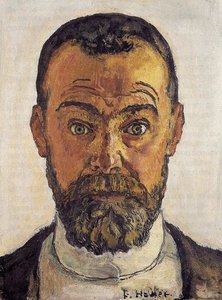
1853–1918, Sveits
Ferdinand Hodler
Dødelighetens arkitektur Født i Bern, Sveits, i 1853, ble Ferdinand Hodlers tidlige år preget av en stille, vedvarende sorg. Før han nådde ungdomsårene, etterlot tuberkulosen som krevde hans far og to yngre brødre, et tomrom i hjemmet. Dette tidlige møtet med tap ble et tilbakevendende motiv i hans arbeid, en skygge som skulle følge ham fra de beskjedne begynnelsene i læretiden til høydepunktene i hans profesjonelle karriere. Han startet sin utdannelse som dekorasjonsmaler og assisterte sin stedfar med kommersielt skiltarbeid, en praktisk utdannelse som ga ham en presis kontroll over linje og form.
Også av Ferdinand Hodler
 Eiger, Monch and Jungfrau in Moonlight1908
 Woman in Ecstasy1911
 Sunset on Lake Geneva1915
 Study of two figures1897

Essays om Unity
 Beyond the Void: Powerful Artworks That Capture the Raw Emotion of GriefExplore the profound power of art in capturing grief. From Expressionist masterpieces to custom hand-painted memorials, discover how iconic…
 Mastering Realism: The Top 25 Iconic Artworks by Hans Holbein the YoungerStep into the Northern Renaissance with our curated guide to the top 25 Hans Holbein the Younger masterpieces. Explore breathtaking realism…
 Mastering Parallelism: The 25 Most Iconic Artworks by Ferdinand HodlerImmerse yourself in the rhythmic beauty of Ferdinand Hodler. Explore 25 iconic masterpieces of Swiss Symbolism and Parallelism. From evocat…