
 Forhåndsvisning
 Send
Send Del
Del
 Vis detaljer
 Utskriftsvennlig guide

 Last ned bilde
 Liknende objekter
 Røntgenundersøkelse
 Lysbildefremvisning
 Spørsmål og svar
 Statistikk
Pont sur la Creuse, Crozant

 Vis hele teksten
Giclée / Kunsttrykk
Giclée- eller lerretsprint av museumskvalitet med rask produksjon og fleksible valgmuligheter for etterbehandling. ( Kjøp håndmalt maleri Bytt til digitalt bilde)




P118B Nkr10

P118H Nkr10

P118W Nkr10

P438Z Nkr10

P508JH Nkr12

P508YH Nkr12

P805H Nkr10

P805Z Nkr10

P919BZ Nkr10

P919G Nkr10

P919XJ Nkr10

P959ZH Nkr10

P968JZ Nkr12

W106C Nkr8

W218G Nkr10

W218JH Nkr8

W218Y Nkr10

W307PJ Nkr10

W316G Nkr10

W316PJ Nkr8

W316Y Nkr10

W398PJ Nkr8

W4111J Nkr10

W500HY Nkr15

W500JH Nkr15

W692G Nkr12

W849H Nkr8

W940BG Nkr15

W953PJ Nkr8




Velg mellom våre forhåndsdefinerte størrelser som bevarer kunstverkets opprinnelige proporsjoner.

Skriv inn ønsket bredde og høyde for å tilpasse trykket til din ramme eller vegg. Et trykk kan kun beskjæres, aldri skaleres opp utover motivets opprinnelige størrelse, noe som betyr at et format med andre proporsjoner vil føre til tap av deler av bildet. Vi sender deg en digital mockup for godkjenning før vi starter trykkeprosessen. Bildet som vises på denne siden viser ikke den faktiske beskjæringen — det er kun mockuppen som viser dette.
Verdensomspennende levering () på 2 uker i stedet for standard 4/5 uker. (3 November)

Gratis ekspressfrakt over hele verden

Lerretsduk av lin av høy kvalitet

Full transportforsikring

Garanti for refusjon av toll og importavgifter

Garantert fargegjengivelse

100 dagers returrett ved fabrikasjonsfeil

100% pengene tilbake-garanti

Rabatt ved flere kjøp
 Glassalternativet er kun tilgjengelig i størrelser under 110 cm

Pont sur la Creuse, Crozant
Giclée / Kunsttrykk
Størrelse på reproduksjon
-


Totalpris for valgte alternativer
Nkr 777
A Glimpse of Autumnal Tranquility: Jean-Baptiste Armand Guillaumin’s Crozant Landscape
This captivating pastel drawing, *Pont sur la Creuse, Crozant*, offers a serene escape into the French countryside through the eyes of Impressionist master Jean-Baptiste Armand Guillaumin (1841-1927). The artwork beautifully exemplifies his signature style – a vibrant and expressive approach to landscape painting that earned him the moniker “furious colorist.” Guillaumin, a contemporary and close friend of Cézanne and Pissarro, was a dedicated participant in six of the eight Impressionist exhibitions, solidifying his place within this revolutionary art movement. This particular work transports us to Crozant, a region in central France renowned for its dramatic landscapes and medieval architecture, which frequently served as inspiration for Guillaumin’s oeuvre.Impressionistic Technique & Composition
Executed primarily in dry pastel on paper, the artwork showcases Guillaumin's masterful handling of this delicate medium. Layers of pastel strokes build up color and texture, creating a slightly grainy surface that enhances the atmospheric quality of the scene. The composition is thoughtfully layered; our eye is drawn from the textured foreground – rocks and water rendered with loose, flowing lines – into the receding background featuring a distant castle-like structure nestled amongst rolling hills. The perspective isn’t rigidly defined, prioritizing instead an overall *impression* of depth achieved through atmospheric perspective: colors become paler and details soften as they recede. This technique is characteristic of Impressionism's focus on capturing fleeting moments of light and color rather than precise representation. The organic lines and loosely defined shapes contribute to a sense of movement and vitality within the landscape, mirroring the natural flow of the Creuse river itself.Symbolism & Emotional Resonance
Beyond its aesthetic appeal, *Pont sur la Creuse, Crozant* evokes a subtle yet powerful emotional response. The prominent autumnal tree serves as a poignant symbol of transition and the enduring beauty found within change. Its rich hues suggest the culmination of the growing season, hinting at both loss and renewal. The river itself symbolizes life’s continuous flow, its gentle currents mirroring the passage of time. The overall mood is one of tranquility and contemplation – a peaceful moment captured in time, inviting viewers to pause and connect with the natural world. Guillaumin's ability to imbue his landscapes with such emotional depth is what sets him apart as a truly compelling Impressionist artist.A Legacy of Color & Light
Guillaumin’s dedication to capturing the nuances of light and color, combined with his bold brushwork, places *Pont sur la Creuse, Crozant* within a significant historical context. As an active member of the Impressionist circle, he challenged traditional academic painting conventions, paving the way for modern art movements that followed. This pastel is not merely a depiction of a place; it’s a testament to Guillaumin's artistic vision and his enduring contribution to the world of Impressionism. A reproduction of this work would bring a touch of French countryside charm and sophisticated artistry to any interior, serving as a constant reminder of nature’s beauty and the power of expressive color.Spørsmål og svar
Er en høyoppløselig nedlasting av "Pont sur la Creuse, Crozant" tilgjengelig?
Et digitalt bilde av "Pont sur la Creuse, Crozant" av Armand Guillaumin kan kjøpes på siden for Digitalt kunstverk: nedlasting av et digitalt bilde i høy oppløsning.
Hvilken periode i Armand Guillaumin sin karriere tilhører "Pont sur la Creuse, Crozant"?
I Armand Guillaumin sin karriere tilhører "Pont sur la Creuse, Crozant" Mature Period. Denne perioden gjør det mulig å sammenligne verket med kunstnerens øvrige arbeider.
Hvilke andre navn er Armand Guillaumin kjent under?
Armand Guillaumin er også kjent under navnene Jean-Baptiste Armand Guillaumin.
Om kunstneren
Early Life and Artistic Beginnings
Jean-Baptiste Armand Guillaumin, a name synonymous with the dreamy landscapes and vibrant hues of French Impressionism, was born in Paris on February 16th, 1841. His early life, steeped in the bustling energy of the city, provided a fertile ground for his burgeoning artistic sensibilities. Unlike many artists of his time who hailed from established families, Guillaumin’s background was rooted in the working class; his grandfather, Jean Joseph Guillaumin, was a notary, and Armand spent his formative years assisting with his uncle's lingerie shop. This practical experience, however, didn’t stifle his passion for art. He found solace and inspiration in the surrounding world, particularly the captivating beauty of central France – the region where his family had strong ties. The rolling hills, the dramatic light, and the quiet charm of Moulins, where he spent a significant portion of his childhood, became recurring motifs in his paintings, imbued with a nostalgic longing for simpler times. He began his formal artistic training at the Académie Suisse, immersing himself in the study of drawing from live models – a crucial foundation for mastering observation and capturing fleeting moments.The Rise of Impressionism and Early Collaborations
As the mid-19th century progressed, Impressionism was steadily gaining momentum within the Parisian art scene. Guillaumin, drawn to this revolutionary movement’s emphasis on capturing the ephemeral qualities of light and color, eagerly embraced its principles. He became an active participant in the first Salon des Refusés in 1863 and subsequently joined the group's inaugural Impressionist Exhibitions in 1874, held at Nadar’s studio on Boulevard des Capucines. These exhibitions marked a pivotal moment in his career, providing him with a platform to showcase his unique style – characterized by dreamy, soft landscapes and an evocative use of color. His work resonated deeply with the spirit of Impressionism, capturing the transient beauty of nature with remarkable sensitivity. He forged close relationships with fellow artists like Camille Pissarro, Claude Monet, and Francisco Oller, exchanging ideas and influencing each other’s artistic development. The circle around Émile Zola further enriched his life, offering a connection to literary circles that mirrored the artistic explorations of the time.Symbolic Influences and Distinctive Style
While firmly rooted in Impressionism, Guillaumin's work also reveals subtle influences from Symbolism – a movement that sought to explore the realm of dreams, emotions, and the subconscious. This is particularly evident in his use of bold colors, often imbued with emotional intensity, and his depiction of evocative subjects. His paintings aren’t merely representations of landscapes; they are windows into a world of feeling and memory. Guillaumin's distinctive style can be described as a harmonious blend of observation and imagination. He meticulously studied the effects of light and color, yet he wasn’t afraid to infuse his work with a sense of mystery and personal interpretation. This combination resulted in paintings that possess both a remarkable realism and an undeniable emotional depth.Notable Works and Legacy
Guillaumin's artistic output is remarkably prolific, encompassing a diverse range of subjects – from idyllic rural scenes to intimate portraits. Some of his most celebrated works include "Garden in Janville in June" (1886), which captures the serene beauty of a summer afternoon; “River Scene” and “View of Puy de Dôme,” both showcasing his masterful command of light and color. His paintings are held in prestigious collections worldwide, including the Musée d’Orsay in Paris and the Tiroler Landesmuseum Ferdinandeum in Innsbruck. The Mount Holyoke College Art Museum in Massachusetts also houses a significant collection of his works, ensuring that his legacy continues to inspire and captivate audiences today. Guillaumin's contribution to Impressionism is undeniable, and he remains an important figure in the history of French art – a painter who skillfully captured the fleeting beauty of the world around him with both precision and passion.Concluding Thoughts
Ferdinand Guillaumin passed away on June 26th, 1927, leaving behind a rich body of work that continues to resonate with viewers today. His paintings offer a glimpse into a bygone era – a time when art was driven by observation, emotion, and a deep appreciation for the beauty of the natural world. His legacy is one of innovation, sensitivity, and an unwavering commitment to capturing the essence of Impressionism.
Armand Guillaumin
1841 - 1927 , Frankrike
Kort om kunstneren
- Artistic Movement Or Style: Impressionisme
- Artists Or Movements Influenced By This Artist: ['Symbolisme']
- Artists Who Influenced This Artist:
- Monet
- Cézanne
- Pissarro
- Date Of Birth: 16 feb 1841
- Date Of Death: 26 jun 1927
- Full Name: Jean Baptiste Armand Guillaumin
- Nationality: Fransk
- Notable Artworks:
- Garden i Janville
- Elvscene
- Utsikt over Puy de Dôme
- Place Of Birth: Paris, Frankrike
Relaterte artikler

Renoirs Mesterverk: Topp 25 Kunstverk for Din Vegg – OriginalUniqueArt.no
Oppdag Renoirs 25 mest ikoniske malerier! Fordyp deg i impresjonismens verden, fargerike dansebilder og vakre portretter. Finn museumskvalitets reproduksjoner & interiørinspirasjon på OriginalUniqueArt.com.

John Constable: Topp 25 Maler – Engelsk Landskapskunst i Ditt Hjem
Opplev John Constables 25 mest ikoniske malerier! Fordyp deg i engelsk romantikk, landskapskunst og atmosfæriske scener. Finn museumskvalitets reproduksjoner & interiørinspirasjon på OriginalUniqueArt.com. Utforsk samlingen online!
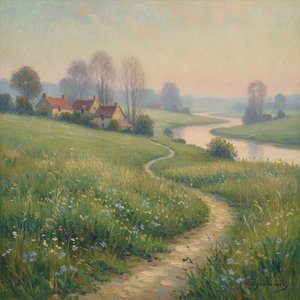
Whispers of the Meadow: Capturing the Serenity of the Quiet Countryside in Impressionist Masterpieces
Embark on a visual journey through Impressionist masterpieces. Discover how masters like Monet and Renoir captured the serene beauty of the countryside through light, color, and emotion. Explore timeless landscapes designed to bring tranquility and cultural elegance to your home sanctuary.

Impresjonistiske landskap: 10 mesterverk som definerte en kunstbevegelse | OriginalUniqueArt.no
Opplev impresjonismens magi! Utforsk 10 ikoniske landskapsmalerier av Monet, Renoir og Degas. Lær historien bak mesterverkene & finn din perfekte kunsttrykk på OriginalUniqueArt.com.

Impressionismens landskapskunst: Topp 10 mesterverk som definerte en epoke | OriginalUniqueArt.no
Opplev impressionismens magi! Utforsk 10 ikoniske landskapsmalerier av Monet, Renoir og Van Gogh. Lær om kunsthistorien bak mesterverkene & finn din perfekte veggkunst på OriginalUniqueArt.com – museumskvalitet for ditt hjem.