

 Se i rommet
 Del som digitalt kort
 Del
Del
 Detaljer
 Studentguide

 Last ned
 Liknende objekter
 Røntgen
 Lysbildefremvisning
 Besøksstatistikk
Min mor
 Akryl på lerret
- Veggkunst
- Surrealist Expressionism
 1926
1926 50.0 x 55.0 cm
 Kulturgeschichtliche Museum Osnabrück
 Les mer
Giclée / Kunsttrykk
Giclée- eller lerretsprint av museumskvalitet med rask produksjon og fleksible valgmuligheter for etterbehandling. ( Bestill håndmalt reproduksjon Gå til digitalt bilde)




P118B Nkr10

P118H Nkr10

P118W Nkr10

P438Z Nkr10

P508JH Nkr12

P508YH Nkr12

P805H Nkr10

P805Z Nkr10

P919BZ Nkr10

P919G Nkr10

P919XJ Nkr10

P959ZH Nkr10

P968JZ Nkr12

W106C Nkr8

W218G Nkr10

W218JH Nkr8

W218Y Nkr10

W307PJ Nkr10

W316G Nkr10

W316PJ Nkr8

W316Y Nkr10

W398PJ Nkr8

W4111J Nkr10

W500HY Nkr15

W500JH Nkr15

W692G Nkr12

W849H Nkr8

W940BG Nkr15

W953PJ Nkr8




Velg mellom våre forhåndsdefinerte størrelser som bevarer kunstverkets opprinnelige proporsjoner.

Skriv inn bredden og høyden du trenger, slik at den passer til din ramme eller vegg. Et trykk kan kun beskjæres, aldri gjøres større enn bildet, så et format med en annen form vil miste en del av motivet. Vi sender deg en digital mockup for godkjenning før vi trykker noe som helst. Bildet som vises på denne siden viser ikke den faktiske beskjæringen — det er kun mockuppen som gjør det.
Verdensomspennende levering () på 2 uker i stedet for standard 4/5 uker. (27 October)

Gratis ekspressfrakt over hele verden

Lerretsduk av høykvalitets lin

Full transportforsikring

Garanti for refusjon av toll og importavgifter

Garantert fargeekthet

100 dagers returrett ved fabrikasjonsfeil

100% pengene tilbake-garanti

Mengderabatt
 Glassalternativet er kun tilgjengelig i størrelser under 110 cm

Min mor
Giclée / Kunsttrykk
Format på reproduksjon
-


Totalpris
Nkr 761
Felix Nussbaum’s “My Mother” – A Silent Testament to Displacement
“My Mother,” painted in 1926 by Felix Nussbaum, stands as an arresting example of Expressionist art—a movement characterized by its fervent embrace of emotion and subjective experience. More than just a portrait, it's a profound meditation on familial bonds amidst the burgeoning anxieties of the era, capturing a moment frozen in time with remarkable sensitivity.
- Subject Matter: The painting depicts a woman’s profile view, bathed in soft light—a deliberate choice that emphasizes her stillness and contemplative gaze. Nussbaum meticulously rendered her face, conveying an aura of quiet dignity and sorrow.
- Style & Technique: Nussbaum adhered to the tenets of Neue Sachlichkeit (New Objectivity), rejecting Impressionistic flourishes for a stark realism infused with psychological depth. Thick brushstrokes create textured surfaces that capture the nuances of light and shadow, lending the image palpable physicality. The artist skillfully employed color palettes—primarily muted browns and ochres—to evoke a mood of melancholy and introspection.
- Historical Context: Created before Nussbaum’s harrowing experiences during World War II and the Holocaust, “My Mother” foreshadows themes of loss and resilience that would dominate his later oeuvre. The painting reflects the broader anxieties surrounding societal change and the disintegration of traditional values prevalent in Weimar Germany—a period marked by political instability and artistic experimentation.
- Symbolism: The inclusion of a bouquet of flowers serves as a poignant symbol of remembrance and beauty amidst hardship. Their varied hues – reds, yellows, whites – represent hope, joy, and purity—contrasting powerfully with the subdued tones of the portrait itself. This juxtaposition underscores Nussbaum’s exploration of duality—the simultaneous presence of sorrow and serenity.
- Emotional Impact: Viewing “My Mother” evokes a visceral response rooted in empathy for the subject's inner life. Nussbaum’s masterful depiction captures not merely an image but a feeling—a palpable sense of vulnerability and profound connection to familial love. It invites contemplation on themes of identity, memory, and the enduring power of human emotion.
The painting’s understated elegance belies its weighty thematic concerns, cementing Nussbaum's legacy as one of art’s most poignant voices during a turbulent period in European history.
Spørsmål og svar
Er "Min mor" overordnet sett mest lys eller mørk?
"Min mor" av Felix Nussbaum er registrert med balansert, og har en luminans på Mild luminans.
Hvilken fase av Felix Nussbaum sin karriere tilhører "Min mor" (1926)?
Med sin datering fra 1926, tilhører "Min mor" Felix Nussbaum sin Mature Period.
Hvordan relaterer stilen til "Min mor" seg til skaperens epoke?
I "Min mor" av Felix Nussbaum møtes Surrealist Expressionism-retningen og Moderne tid-epoken.
Kunstnerbiografi
Felix Nussbaum (1904-1944): A Life Etched in Exile
Felix Nussbaum’s story is a stark and profoundly moving testament to the power of art born from unimaginable suffering. Born in Osnabrück, Germany, in 1904, his life unfolded against the backdrop of rising nationalism and escalating persecution, culminating in the horrors of the Holocaust. He wasn't simply a victim *of* history; he was an artist who meticulously documented its impact on his soul, creating a body of work that stands as both a personal lament and a universal warning. Nussbaum’s paintings offer a rare, unflinching glimpse into the psychological landscape of displacement, fear, and ultimately, annihilation – a perspective often absent from broader historical narratives. His father, Philipp Nussbaum, a World War I veteran with an early passion for painting himself, recognized and nurtured his son's talent, providing encouragement that would prove vital in the darkening years to come. This initial support fostered a lifelong dedication to art, even as political realities increasingly constricted his path.Early Life and Artistic Influences
Nussbaum’s artistic journey began with formal studies in Hamburg and Berlin in 1920, continuing for as long as circumstances allowed. His early work reveals a clear debt to the Post-Impressionist masters, particularly Vincent van Gogh and Henri Rousseau. The vibrant colors and expressive brushwork of these artists provided a foundation upon which Nussbaum would later build his unique style. However, he wasn’t content with mere imitation. He actively sought out new influences, drawn to the unsettling dreamscapes of Giorgio de Chirico and Carlo Carrà, pioneers of the *pittura metafisica* movement. The careful attention to color demonstrated by Carl Hofer's expressionist paintings also left a lasting impression on Nussbaum’s approach. These diverse inspirations coalesced into what would become known as his “New Objectivity” style – a blend of realism and surrealism, characterized by precise detail, unsettling compositions, and a pervasive sense of alienation. This period was marked by experimentation and growth, but the looming shadow of Nazi ideology soon threatened to extinguish his artistic promise.Formative Years: The Seeds of Surrealism
Nussbaum’s formative years were shaped by a deep engagement with European intellectual currents. He absorbed the ideas of Sigmund Freud and Karl Marx, recognizing their significance in understanding the anxieties of modern life. His fascination with psychoanalysis fueled his exploration of subconscious imagery and emotional intensity—elements that would become central to his artistic vision. Simultaneously, he was captivated by the burgeoning Surrealist movement, spearheaded by André Breton and Pablo Picasso. Nussbaum embraced Surrealism’s rejection of rational thought and its embrace of dreamlike logic, incorporating fantastical elements into his paintings and drawings. The influence of Henri Rousseau's naive landscapes—characterized by luminous colors and simplified forms—particularly resonated with Nussbaum's aesthetic sensibilities. He admired Rousseau's ability to convey profound emotion through deceptively simple imagery, a technique he would adopt throughout his career.The Rise of Nazism and Artistic Exile
The political climate in Germany shifted dramatically in 1933 when Adolf Hitler seized power. Nussbaum’s artistic trajectory was irrevocably altered by this event. Studying on a scholarship at Villa Massimo in Rome—a pivotal moment for him—he witnessed firsthand the chilling pronouncements of Hitler's propaganda minister, outlining the tenets of Nazi art – glorification of heroism and the Aryan race. Recognizing that as a Jew, he could not remain within the confines of this doctrine, Nussbaum abandoned his studies and fled Rome shortly thereafter. He moved to Paris in January 1935, where he continued to paint and exhibit his work—a defiant assertion of artistic freedom amidst growing repression. However, the Nazi invasion of Belgium in 1940 forced him into a perilous situation. Arrested as a “hostile alien,” Nussbaum endured confinement at Saint-Cyprien camp for nine months before escaping under cover of darkness. He sought refuge in Brussels with Felka Platek and their friends—a precarious existence marked by constant fear and uncertainty. Despite the challenges posed by Nazi persecution, Nussbaum persevered in his artistic endeavors, producing some of his most poignant and evocative paintings during this period.The Final Years: Auschwitz and Legacy
Felix Nussbaum’s final years were tragically curtailed by the horrors of World War II. His parents perished at Auschwitz—a devastating loss that profoundly impacted his artistic output. Shortly thereafter, he and Felka Platek were deported to Mechelen transit camp before being transferred to Auschwitz itself, where Nussbaum was murdered upon arrival in August 1944. His brother and sister-in-law followed soon after, completing the annihilation of his family within a single year—a heartbreaking testament to the indiscriminate cruelty of Nazi barbarity. Yet, despite this unimaginable tragedy, Nussbaum’s art endures as a powerful symbol of resilience and defiance—a haunting reminder of the human cost of intolerance and oppression. His paintings—particularly *Self Portrait with Jewish Identity Card* and *Triumph of Death*, continue to inspire contemplation and provoke dialogue about themes of displacement, loss, and the enduring power of artistic expression. Nussbaum’s legacy rests on his unwavering commitment to truthfulness and compassion—qualities embodied in every brushstroke of his extraordinary oeuvre.
Felix Nussbaum
1904 - 1945 , Tyskland
Kort om kunstneren
- Artistic Movement Or Style: Surrealism, Ny Objektivitet
- Artists Who Influenced This Artist:
- Vincent van Gogh
- Henri Rousseau
- Giorgio de Chirico
- Date Of Birth: 1904
- Date Of Death: 1945
- Full Name: Felix Nussbaum
- Nationality: Tysk-jødisk
- Notable Artworks:
- Selvporträtt med judisk identitetskort
- Segerns triumf
- Felka Platek målning
- Place Of Birth: Osnabrück, Tyskland
Relaterte artikler

Unmasking Emotion: A Journey Through the Raw Power and Visceral Beauty of German Expressionism
Explore the raw emotional power of German Expressionism. From Kirchner to Die Brücke, discover how artists used distortion and vibrant color to unmask the human psyche. A deep dive into art history for the discerning collector and enthusiast.

Tysk Ekspresjonisme: 10 Mesterverk som Definerte en Kunstbevegelse | OriginalUniqueArt.no
Utforsk 10 ikoniske mesterverk fra tysk ekspresjonisme! Oppdag Munch, Kirchner og Kandinsky – historiene bak fargene, teknikkene & følelsene. Finn museumskvalitets kunsttrykk for ditt hjem på OriginalUniqueArt.com.
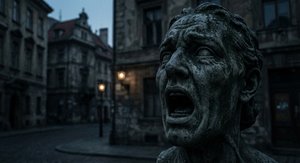
The Visceral Cry of a Nation: Exploring Emotion & Distortion in German Expressionism
Explore the powerful world of German Expressionism with OriginalUniqueArt. Discover Kirchner, Nolde & Die Brücke's emotive masterpieces. Learn about this pivotal art movement and its lasting impact on modern art.
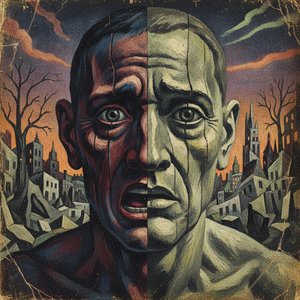
Unmasking Emotion: A Definitive Guide to the Raw Power and Visceral Beauty of German Expressionism
Explore the visceral power of German Expressionism. From Ernst Ludwig Kirchner to Die Brücke, discover how bold colors and distorted forms unmask raw human emotion in this expert art history guide for collectors and enthusiasts.
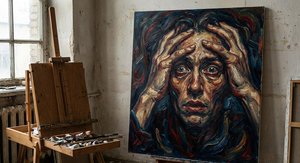
Figurative Expressionism: Emotional Intensity & Subjective Reality in 20th-Century Art
Explore the powerful world of Figurative Expressionism with OriginalUniqueArt. Discover key artists like Kirchner & Beckmann, understand its emotional depth, and learn how to collect this influential 20th-century art movement.
