

 Se i rommet
 Del som digitalt kort
 Del
Del
 Detaljer
 Studentguide

 Last ned
 Liknende objekter
 Røntgen
 Lysbildefremvisning
 Besøksstatistikk
A distant view of Mt Athos
 Watercolor
- WallArt
- Romantic Landscape
 1856
1856- 19th Century
 22.0 x 14.0 cm
 Art Gallery of South Australia
 Les mer
Håndlaget oljereproduksjon
Håndmalt olje på lerret i din valgte størrelse og ramme, laget på bestilling av våre kunstnere. ( Bytt til trykkversjon Gå til digitalt bilde)




P118B Nkr10

P118H Nkr10

P118W Nkr10

P438Z Nkr10

P508JH Nkr12

P508YH Nkr12

P805H Nkr10

P805Z Nkr10

P919BZ Nkr10

P919G Nkr10

P919XJ Nkr10

P959ZH Nkr10

P968JZ Nkr12

W106C Nkr8

W218G Nkr10

W218JH Nkr8

W218Y Nkr10

W307PJ Nkr10

W316G Nkr10

W316PJ Nkr8

W316Y Nkr10

W398PJ Nkr8

W4111J Nkr10

W500HY Nkr15

W500JH Nkr15

W692G Nkr12

W849H Nkr8

W940BG Nkr15

W953PJ Nkr8




Velg mellom våre forhåndsdefinerte størrelser som bevarer kunstverkets opprinnelige proporsjoner.

Skriv inn bredden og høyden du trenger, slik at den passer til din ramme eller vegg. Dette er håndmalt, så for en størrelse med en annen form kan kunstneren male litt mer rundt bildet, eller beskjære det noe — du velger selv. Vi sender deg en digital mockup for godkjenning før maleriet påbegynnes. Bildet som vises på denne siden viser ikke det faktiske resultatet — kun mockuppen gjør det.
Etter bestilling vil OriginalUniqueArt.com-teamet sende e-post til kunden for instruksjoner og sende et utkast (mockup) som forhåndsvisning.
Verdensomspennende levering () på 3–4 uker i stedet for standard 5 uker. (24 October). Ingen kompromisser med kvaliteten.

Gratis ekspressfrakt over hele verden

Lerretsduk av høykvalitets lin

Full transportforsikring

Garanti for refusjon av toll og importavgifter

Garantert fargeekthet

100 dagers returrett ved fabrikasjonsfeil

100% pengene tilbake-garanti

Mengderabatt
 Glassalternativet er kun tilgjengelig i størrelser under 110 cm

A distant view of Mt Athos
Reproduksjonsmetode
Format på reproduksjon
-


Totalpris
Nkr 2852
A Distant View of Mt Athos: A Watercolor Masterpiece by Edward Lear
Edward Lear’s “A Distant View of Mt Athos,” painted in 1856, is more than just a depiction of a rugged landscape; it's an intimate glimpse into the mind of a truly singular artist. Executed in delicate watercolor, this piece reveals Lear’s extraordinary ability to capture atmosphere and evoke a profound sense of tranquility. The painting transports us to a remote corner of Greece, dominated by the imposing presence of Mt Athos, rendered with meticulous detail yet imbued with an ethereal quality that speaks to Lear's unique artistic vision. Measuring 22 x 14 cm, this intimate scale allows for a deeply personal connection with the scene – one can almost feel the cool mountain air and hear the rustle of leaves in the breeze. The artist’s skillful use of color creates a harmonious balance between light and shadow, enhancing the depth and realism of the landscape while simultaneously suggesting an otherworldly beauty.The Artistry of Edward Lear: Technique and Style
Lear was a master of watercolor technique, employing layers of translucent washes to build up form and create subtle variations in tone. Notice how he utilizes broken color – small, distinct areas of pigment – to suggest texture and depth within the mountains and trees. This approach is particularly evident in the depiction of the foliage, where individual leaves are rendered with remarkable precision, contributing to the overall sense of realism. His style can be characterized as Romantic, influenced by the burgeoning interest in landscape painting during the Victorian era, but tempered by a distinctly personal sensibility. Lear’s work wasn't simply about replicating what he saw; it was about translating his emotional response to the natural world onto the canvas. The slight blurring and atmospheric perspective demonstrate a sophisticated understanding of how light interacts with distant objects, adding to the illusion of depth and creating a truly immersive experience for the viewer.Historical Context: Victorian England and the Rise of Landscape Painting
“A Distant View of Mt Athos” was created during a period of significant change in Britain. The Industrial Revolution was transforming society, yet there remained a deep appreciation for the beauty of the natural world. Landscape painting gained prominence as an art form, offering a respite from the urban landscape and providing opportunities for contemplation and escape. Artists like Lear were part of a movement that sought to capture the sublime – the awe-inspiring power and grandeur of nature – in their work. The subject matter itself, Mt Athos, held religious significance, adding another layer of meaning to the painting’s composition. This remote mountain range, a center of Orthodox monasticism, represented spiritual isolation and contemplation, themes that resonated with Victorian sensibilities.Symbolic Resonance: Nature as Sanctuary
Beyond its technical brilliance, “A Distant View of Mt Athos” possesses a subtle symbolic resonance. The isolated mountains evoke a sense of solitude and introspection, mirroring Lear’s own inclination towards quiet contemplation. The vastness of the landscape suggests the insignificance of human concerns in comparison to the enduring power of nature. The painting can be interpreted as an invitation to find solace and renewal in the natural world – a timeless theme that continues to resonate with viewers today. This piece offers a moment of serene beauty, inviting us to pause and appreciate the simple grandeur of the landscape. NoneSpørsmål og svar
Hvor kan jeg kjøpe en håndmalt reproduksjon av "A distant view of Mt Athos" av Edward Lear?
Du kan bestille en håndmalt reproduksjon av "A distant view of Mt Athos" av Edward Lear direkte på dens Håndmalt reproduksjon-side: en håndmalt oljereproduksjon på linlerret, laget etter bestilling.
Når ble "A distant view of Mt Athos" laget?
"A distant view of Mt Athos" av Edward Lear ble skapt i 1856.
Hvilken teknikk og stil karakteriserer "A distant view of Mt Athos" av Edward Lear?
"A distant view of Mt Athos" er utført i Watercolor, i Romantic Landscape-stil.
Kunstnerbiografi
A Life Painted in Nonsense and Light
Edward Lear, a name inextricably linked with whimsical verse and delightfully peculiar illustrations, was far more than simply the purveyor of limericks and fantastical creatures that often define his legacy. Born in 1812 in Holloway, North London, into a family teeming with twenty-one children – a veritable whirlwind of siblings – Lear’s early life was profoundly shaped by both financial instability and an undeniable artistic talent. His father, Jeremiah Lear, faced considerable hardship following the Napoleonic Wars, forcing young Edward to begin earning a living through his drawings at the tender age of fifteen. This necessity, however, ignited a lifelong passion that would propel him across continents, capturing the world in vibrant hues and playful lines. The shadow of familial difficulty – compounded by early health challenges including epilepsy and bouts of melancholia he himself termed “the Morbids” – instilled within Lear a gentle solitude and an inclination towards imaginative escape; qualities that are profoundly reflected in his art and writing.From Ornithological Precision to Landscape’s Embrace
Lear's artistic journey began with a remarkable level of precision. Initially employed by the Zoological Society, he honed his skills illustrating birds and animals, demonstrating a truly exceptional eye for detail and anatomical accuracy. This early work brought him to the attention of Edward Stanley, the 13th Earl of Derby, who commissioned Lear to meticulously document the exotic creatures residing within his private menagerie at Knowsley Hall. These years spent amongst lions, tigers, and parrots were not merely a job; they fostered a deep and enduring connection with the natural world – a connection that would become a cornerstone of his later landscape paintings. The demanding nature of this work, however, coupled with increasingly debilitating eyesight and respiratory issues, eventually led him away from the exacting demands of ornithological illustration. He turned instead to landscape painting, embarking on extensive travels throughout Europe and beyond, seeking respite for his health and inspiration for his art. Italy became a particular haven – not only offering a restorative environment but also providing an abundance of breathtaking vistas that would inform his artistic vision. His landscapes are characterized by a unique blend of topographical accuracy and atmospheric sensitivity; he masterfully captured the subtle nuances of light and shadow, creating images that possess both realism and a dreamlike quality.The Poet of Nonsense: A World Unbound
While celebrated as a painter, it is perhaps for his literary contributions that Edward Lear is most widely remembered. His “nonsense” poetry – particularly his limericks – revolutionized children’s literature and captivated audiences of all ages. *A Book of Nonsense*, published in 1846 under the pseudonym "Derry down Derry," introduced a world populated by owls and pussycats sailing in pea-green boats, dongs with luminous noses, and other delightfully absurd creations. These verses weren’t merely frivolous; they were imbued with a subtle melancholy and a playful subversion of conventional logic. Lear didn't simply invent nonsense words; he crafted entire worlds governed by their own internal rules, inviting readers to suspend disbelief and embrace the joy of imagination. His limericks, in particular, are renowned for their rhythmic precision and unexpected twists. *The Owl and the Pussy-Cat*, arguably his most famous poem, remains a beloved classic, its enduring appeal stemming from its lyrical rhythm and evocative imagery. The poem’s gentle humor and whimsical characters continue to delight readers of all ages.Influences and Artistic Development
- Early Influences: Lear’s initial artistic training focused on scientific illustration, demanding precision and observation. This foundation shaped his meticulous approach to detail, even as he later embraced more expressive styles.
- Travel & Landscape Painting: His extensive travels through Italy, Greece, Egypt, and beyond profoundly influenced his landscape work. He absorbed the light, colors, and textures of these diverse regions, developing a distinctive style characterized by atmospheric perspective and delicate brushwork.
- Literary Inspiration: While he popularized the limerick, Lear was also inspired by earlier nonsense verse traditions. His unique contribution lay in his ability to imbue this form with emotional depth and lyrical beauty.
- Personal Experiences: Lear’s lifelong struggles with health issues and melancholy deeply informed his artistic vision. The sense of isolation and longing that permeates much of his work reflects his own personal experiences.
A Legacy of Innovation and Enduring Charm
Edward Lear's influence extends far beyond the realm of children's literature. He pioneered a new form of poetic expression, liberating verse from rigid structures and embracing playful experimentation. His landscapes, though often overshadowed by his poetry, demonstrate a keen artistic sensibility and a mastery of watercolor technique. He was a true polymath – artist, illustrator, musician (he composed musical settings for Tennyson’s poems), author, and poet – whose diverse talents converged to create a unique and enduring legacy. He challenged conventional boundaries, blurring the lines between art, literature, and music. His work continues to inspire artists, writers, and dreamers alike, reminding us of the power of imagination and the beauty of embracing the absurd. His paintings can be found in esteemed collections like The Ashmolean Museum, Oxford, a testament to his skill as a landscape artist. Lear’s life, marked by both personal struggles and creative triumphs, serves as a poignant reminder that even amidst darkness, there is always room for light, laughter, and the boundless possibilities of the human spirit.
Edward Lear
1812 - 1888 , Storbritannia
Kort om kunstneren
- Artistic Movement Or Style: Nonsense, Victorian
- Date Of Birth: 12 mai 1812
- Date Of Death: 29 jan 1888
- Full Name: Edward Lear
- Nationality: Britisk
- Notable Artworks:
- Owl og Pussycatt
- Dong med lysende nese
- Place Of Birth: London, Storbritannia
Relaterte artikler

Ephemeral Visions: Exploring the Artistic Legacy & Contemporary Practice of Watercolor Painting
Explore the captivating world of watercolor painting! Discover its rich history, essential techniques, influential artists & collecting tips. A comprehensive guide for art enthusiasts from OriginalUniqueArt.
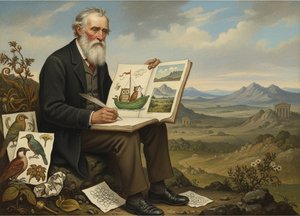
Edward Lear: A Life Beyond Nonsense – Landscape, Illustration & the Poetics of Isolation
Explore the life of Edward Lear beyond his nonsense poems. Discover his stunning landscape paintings, travel illustrations & the poignant themes of isolation in this expert art history analysis.

De 10 mest ikoniske akvarellmesterverkene som revolusjonerte kunsten | OriginalUniqueArt.no
Oppdag de 10 mest legendariske akvarellmesterverkene av kunstnere som Turner, Monet & Goya. Lær om historien bak ikoniske malerier og finn inspirasjon til interiørdesign. Museumskvalitet reproduksjoner på OriginalUniqueArt.no – utforsk samlingen online!

Ephemeral Visions: Exploring the History & Emotional Resonance of Watercolor Painting
Explore the captivating history of watercolor painting, from ancient techniques to modern masters like Kandinsky & Blake. Discover essential artists, collecting tips & the emotional power of this luminous medium. Expert insights for art enthusiasts.
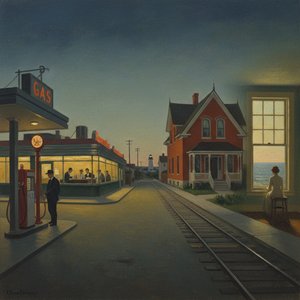
Edward Hoppers 25 Mesterverk: En Reise i Amerikansk Realisme og Stemning | OriginalUniqueArt.no
Oppdag Edward Hoppers 25 mest ikoniske malerier! Fordyp deg i amerikansk realisme, lysets spill og stemningen av isolasjon. Finn kunsttrykk & inspirasjon til hjemmet ditt på OriginalUniqueArt.no – museumskvalitet for enhver smak.
