

 Se i rommet
 Del som digitalt kort
 Del
Del
 Detaljer
 Studentguide

 Last ned
 Liknende objekter
 Røntgen
 Lysbildefremvisning
 Besøksstatistikk
Tempietto


 Les mer
Giclée / Kunsttrykk
Giclée- eller lerretsprint av museumskvalitet med rask produksjon og fleksible valgmuligheter for etterbehandling. ( Bestill håndmalt reproduksjon Gå til digitalt bilde)




P118B Nkr10

P118H Nkr10

P118W Nkr10

P438Z Nkr10

P508JH Nkr12

P508YH Nkr12

P805H Nkr10

P805Z Nkr10

P919BZ Nkr10

P919G Nkr10

P919XJ Nkr10

P959ZH Nkr10

P968JZ Nkr12

W106C Nkr8

W218G Nkr10

W218JH Nkr8

W218Y Nkr10

W307PJ Nkr10

W316G Nkr10

W316PJ Nkr8

W316Y Nkr10

W398PJ Nkr8

W4111J Nkr10

W500HY Nkr15

W500JH Nkr15

W692G Nkr12

W849H Nkr8

W940BG Nkr15

W953PJ Nkr8




Velg mellom våre forhåndsdefinerte størrelser som bevarer kunstverkets opprinnelige proporsjoner.

Du kan oppgi egne mål for å tilpasse en spesifikk ramme eller et bestemt område. Dersom den valgte størrelsen ikke samsvarer med det originale bildets proporsjoner, vil vi enten beskjære kunstverket eller utvide bildet med en speilet eller ensfarget kant. En digital mockup vil bli sendt til din godkjenning før produksjonen starter.
Vennligst merk at forhåndsvisningen på skjermen ikke gjenspeiler den faktiske beskjæringen eller utvidelsen. Kun mockuppen vil vise den endelige komposisjonen nøyaktig.
Selv om tilpassede størrelser er tilgjengelige, anbefaler vi å velge et mål fra den forhåndsdefinerte listen for å bevare de originale proporsjonene.
Verdensomspennende levering () på 2 uker i stedet for standard 4/5 uker. (7 October)

Gratis ekspressfrakt over hele verden

Lerretsduk av høykvalitets lin

Full transportforsikring

Garanti for refusjon av toll og importavgifter

Garantert fargeekthet

100 dagers returrett ved fabrikasjonsfeil

100% pengene tilbake-garanti

Mengderabatt
 Glassalternativet er kun tilgjengelig i størrelser under 110 cm

Tempietto
Giclée / Kunsttrykk
Format på reproduksjon
-


Totalpris
Nkr 740
Tempietto: A Testament to Renaissance Harmony
The Tempietto di San Pietro in Montorio stands as an enduring emblem of High Renaissance architectural idealism—a deceptively simple structure that encapsulates profound artistic and spiritual contemplation. Designed by Donato Bramante, arguably the foremost architect of his era, it’s more than just a building; it's a carefully orchestrated dialogue between Classical tradition and nascent Christian symbolism, reflecting the intellectual fervor sweeping across Rome during the reign of Julius II. Completed in 1502 for Cardinal Giuliano della Rovere—a commission intended to honor Saint Peter’s crucifixion site—the Tempietto represents Bramante’s masterful distillation of humanist principles into a breathtaking architectural form.A Synthesis of Classical Forms
Bramante drew heavily upon the grandeur of Greek temples, particularly the Doric order, adapting its proportions and structural ethos to create this circular edifice. The monumental platform upon which it rests elevates the temple visually and symbolically, emphasizing its sanctity and grounding it in earthly stability—a deliberate contrast to the ethereal aspirations of Byzantine churches prevalent at the time. Each column supports a delicate umbrella vault, demonstrating Bramante’s innovative use of engineering alongside artistic vision. This technique, perfected by Brunelleschi for the Duomo di Firenze, was revolutionary for its day and exemplifies the burgeoning mastery of mathematical precision within Renaissance art. The careful arrangement of columns ensures symmetry and balance, mirroring the harmonious order that underpinned humanist thought and reflecting a desire to recapture the perceived perfection of antiquity.Symbolism Rooted in Faith
Beyond its architectural prowess, the Tempietto is laden with symbolic significance. Its circular form represents eternity—a concept central to Christian theology—while the dome symbolizes heaven’s majesty and divine illumination. The small windows strategically positioned above each column allow diffused light to penetrate into the interior space, creating an atmosphere of serenity and fostering contemplation. Furthermore, the emblem or coat of arms displayed prominently above the entrance serves as a reminder of papal authority and commemorates the sacred site. Bramante's intention was not merely to construct a beautiful building but to express profound spiritual truths—a testament to the humanist conviction that art could elevate the human soul.Technique and Material Considerations
The Tempietto’s construction utilized travertine stone, chosen for its durability and aesthetic qualities. Bramante employed meticulous craftsmanship, ensuring that every detail adhered to exacting standards of precision. The dome was constructed using herringbone brickwork—a technique borrowed from Roman precedents—further reinforcing the temple's connection to Classical architectural heritage. Frescoes adorning the interior walls depict scenes from the Gospels, enhancing the spiritual dimension of the space and conveying a narrative of faith and redemption. These paintings utilize muted colors—primarily ochre, umber, and terra cotta—creating an understated yet emotionally resonant visual experience.An Enduring Legacy
Today, the Tempietto remains a beacon of Renaissance artistry and architectural innovation. Its serene beauty continues to inspire awe and contemplation, reminding viewers of the transformative power of art to communicate profound spiritual ideas. Reproductions offer a remarkable opportunity to appreciate Bramante’s genius and bring this iconic monument into homes and spaces worldwide—a tangible connection to one of history's most influential artistic achievements.Spørsmål og svar
Er "Tempietto" fri for opphavsrett?
Når det gjelder opphavsrett, er "Tempietto" i det frie domene – opphavsretten har utløpt.
Er "Tempietto" av Donato Bramante blant de ettertraktede verkene innen High Renaissance?
"Tempietto" er registrert som Ikonisk blant High Renaissance-verkene i katalogen.
Hvilken størrelse anbefales for "Tempietto" i et Stue og oppholdsrom?
Anbefalt kombinasjon for "Tempietto" av Donato Bramante: et trykk i størrelsen Stor til et Stue og oppholdsrom.
Fremstår fargene i "Tempietto" som sterke eller duse?
Fargeintensiteten til "Tempietto" er Balansert. Intensitet beskriver hvor sterke fargene fremstår.
Hvem er kunstneren bak "Tempietto"?
"Tempietto" ble skapt av Donato Bramante. Informasjonen på denne siden beskriver Donato Bramante sitt originale verk.
Hva er produksjonsåret til "Tempietto" av Donato Bramante?
"Tempietto" dateres til 1502. Datoen plasserer verket innenfor Donato Bramante sin karriere og sin epoke.
Hvor gammel var Donato Bramante da "Tempietto" ble skapt i 1502?
Da "Tempietto" ble skapt i 1502, var Donato Bramante – født i 1444 – 58 år gammel.
Relaterte artikler

Neo-klassismens 10 Mesterverk: Kunst, Historie og Inspirasjon til Ditt Hjem
Oppdag neoklassismens 10 mest ikoniske mesterverk! Lær om kunstnere som David, Ingres og Canova, deres teknikker og historien bak tidløse malerier & skulpturer. Finn inspirasjon til ditt hjem – utforsk eksklusive reproduksjoner på OriginalUniqueArt.com
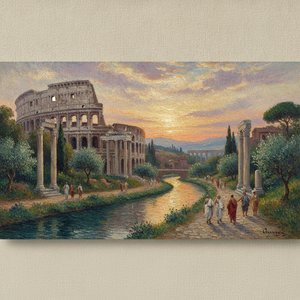
Capturing Eternal Glory: Impressionist Visions of the Roman Empire's Timeless Grandeur
Explore the breathtaking intersection of Roman grandeur and Impressionist light. Discover how masters like Monet reimagined classical ruins through vibrant, emotive brushstrokes. A cultural journey for true art lovers seeking to bring eternal glory into their homes.
Timeless Resonance: Exploring Classic Vibe in Art – A Historical & Aesthetic Analysis
Explore the rich history & enduring aesthetic of Classicism art! Discover key movements, iconic artists like Raphael & David, and its lasting influence on Western art. Deepen your appreciation today.
The Enduring Legacy of Classicism: Principles, Evolution & Influence in Western Art
Explore the enduring legacy of Classicism in Western art! Discover its historical context, key principles, iconic masterpieces & lasting influence. Learn about Renaissance and Neoclassical movements with OriginalUniqueArt.
The Enduring Legacy of Classical Style: Form, Narrative & Influence in Art
Explore the enduring legacy of classical art – from ancient Greece & Rome to Neoclassicism. Discover key artists, philosophical roots & build a timeless collection with OriginalUniqueArt's expert guidance.


