Text size

() ·

A painting made for you, by hand

Christ before Pilate and Caiaphas

Håndlaget oljereproduksjon

Håndmalt olje på lerret i din valgte størrelse og ramme, laget på bestilling av våre kunstnere. ( Bytt til trykk Bytt til digitalt bilde)

Beskrivelse av objektet

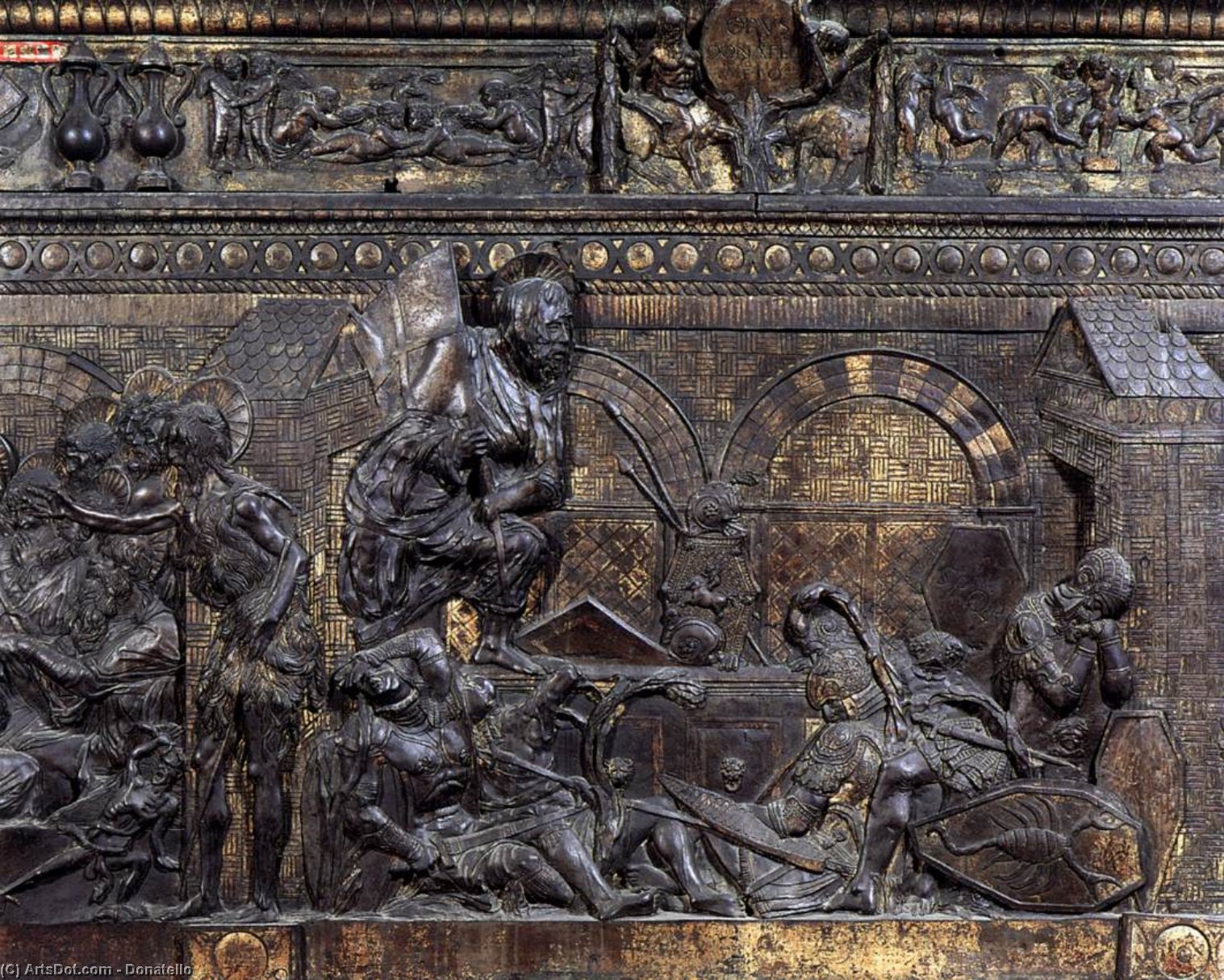
Explore Donatello's masterpiece, 'Christ before Pilate and Caiaphas,' a monumental bronze sculpture depicting Jesus’s trial before Roman authorities and Jewish leaders—a pivotal moment in Christian history.

Om kunstneren

Donatello (1386–1466): En florentinsk skulptør fra den tidlige renessansen. Kjent for sin innovative bruk av naken skulptur, klassisk inspirasjon og dristige teknikker. Utforsk hans mesterverk og arv!

from ·

Chapter 1

How large should it be?

Slide to change the size; the picture on the left shows the frame at its real width. The proportions of the original are kept.

Standardformat
skreddersydd
CM
INCH

Velg mellom våre forhåndsdefinerte størrelser som bevarer kunstverkets opprinnelige proporsjoner.

bredde
høyde

Skriv inn ønsket bredde og høyde for å tilpasse bildet til din ramme eller vegg. Siden dette er håndmalt, kan kunstneren male litt mer rundt motivet eller beskjære det noe dersom du velger et annet format — valget er ditt. Vi sender deg en digital mockup til godkjenning før maleriet påbegynnes. Bildet som vises på denne siden representerer ikke det faktiske resultatet — kun mockuppen viser det endelige uttrykket.

Chapter 2

How should it arrive?

Choose the edges of the stretched canvas

Choose your frame

Corner sample of the WhiteWrap canvas edge finish, stretched on massivt tre bars
White Nkr1
Corner sample of the BlurSideWrap canvas edge finish, stretched on massivt tre bars
Blurside Nkr1
Corner sample of the ExtendedWrap canvas edge finish, stretched on massivt tre bars
Extended Nkr1
Corner sample of the P118B picture frame: støpt polystyren, 5 cm wide and 3 cm thick
P118B Nkr10
Corner sample of the P118H picture frame: støpt polystyren, 5 cm wide and 3 cm thick
P118H Nkr10
Corner sample of the P118W picture frame: støpt polystyren, 5 cm wide and 3 cm thick
P118W Nkr10
Corner sample of the P438Z picture frame: støpt polystyren, 5.5 cm wide and 3.5 cm thick
P438Z Nkr10
Corner sample of the P508JH picture frame: støpt polystyren, 7 cm wide and 3.5 cm thick
P508JH Nkr12
Corner sample of the P508YH picture frame: støpt polystyren, 7 cm wide and 3.5 cm thick
P508YH Nkr12
Corner sample of the P805H picture frame: støpt polystyren, 5 cm wide and 3.5 cm thick
P805H Nkr10
Corner sample of the P805Z picture frame: støpt polystyren, 5 cm wide and 3.5 cm thick
P805Z Nkr10
Corner sample of the P919BZ picture frame: støpt polystyren, 7 cm wide and 3.5 cm thick
P919BZ Nkr10
Corner sample of the P919G picture frame: støpt polystyren, 7 cm wide and 3.5 cm thick
P919G Nkr10
Corner sample of the P919XJ picture frame: støpt polystyren, 7 cm wide and 3.5 cm thick
P919XJ Nkr10
Corner sample of the P959ZH picture frame: støpt polystyren, 5 cm wide and 3 cm thick
P959ZH Nkr10
Corner sample of the P968JZ picture frame: støpt polystyren, 6 cm wide and 4 cm thick
P968JZ Nkr12
Corner sample of the W106C picture frame: massivt tre, 5 cm wide and 3 cm thick
W106C Nkr8
Corner sample of the W218G picture frame: massivt tre, 5 cm wide and 3 cm thick
W218G Nkr10
Corner sample of the W218JH picture frame: massivt tre, 5 cm wide and 3 cm thick
W218JH Nkr8
Corner sample of the W218Y picture frame: massivt tre, 5 cm wide and 3 cm thick
W218Y Nkr10
Corner sample of the W307PJ picture frame: massivt tre, 6 cm wide and 3 cm thick
W307PJ Nkr10
Corner sample of the W316G picture frame: massivt tre, 6 cm wide and 3 cm thick
W316G Nkr10
Corner sample of the W316PJ picture frame: massivt tre, 6 cm wide and 3 cm thick
W316PJ Nkr8
Corner sample of the W316Y picture frame: massivt tre, 6 cm wide and 3 cm thick
W316Y Nkr10
Corner sample of the W398PJ picture frame: massivt tre, 5 cm wide and 3 cm thick
W398PJ Nkr8
Corner sample of the W4111J picture frame: massivt tre, 6.5 cm wide and 3.5 cm thick
W4111J Nkr10
Corner sample of the W500HY picture frame: massivt tre, 7 cm wide and 5 cm thick
W500HY Nkr15
Corner sample of the W500JH picture frame: massivt tre, 7 cm wide and 5 cm thick
W500JH Nkr15
Corner sample of the W692G picture frame: massivt tre, 8 cm wide and 4 cm thick
W692G Nkr12
Corner sample of the W849H picture frame: massivt tre, 5 cm wide and 3 cm thick
W849H Nkr8
Corner sample of the W940BG picture frame: massivt tre, 7.5 cm wide and 4.5 cm thick
W940BG Nkr15
Corner sample of the W953PJ picture frame: massivt tre, 6 cm wide and 3.5 cm thick
W953PJ Nkr8
Corner sample of the H24-GOLD picture frame: utskåret tre med gesso, 10 cm wide and 6 cm thick
H24-GOLD Nkr30
Corner sample of the H24-SILVER picture frame: utskåret tre med gesso, 10 cm wide and 6 cm thick
H24-SILVER Nkr30
Corner sample of the H36-GOLD picture frame: utskåret tre med gesso, 15 cm wide and 6.5 cm thick
H36-GOLD Nkr45
Corner sample of the H36-SILVER picture frame: utskåret tre med gesso, 15 cm wide and 6.5 cm thick
H36-SILVER Nkr45

Moulding: . Overall size with the frame: .

Chapter 3

Who paints it, and should anything change?

Examples of what can be changed: Replace face with customer photo; Add pet (e.g., replace cat with dog); Include hidden message in background; Change background landscape or elements.
After order, OriginalUniqueArt.com team will email client for instructions and provide a mockup preview

Verdensomspennende levering () på 3–4 uker i stedet for standard 5 uker. (1 November). Ingen kompromisser med kvaliteten.

Chapter 4

The finishing touches

A nameplate, as in a museum?

Detaljer om gravert bronseplate

This elegant plaque features the artist's name and the title of the artwork, finely engraved for a timeless presentation.

It is made from bronze with a refined, elegant finish. The text is precisely laser-engraved for a sharp and permanent result. Measuring 9x2 cm, the plaque is compact yet easy to read. It's built to be durable and scratch-resistant, offering a professional, museum-quality look. Mounting is simple thanks to the included adhesive backing.

Detaljer om gjennomsiktig akrylplate

The plaque includes essential engraved details such as the artist's name, the title of the artwork, the date it was created, the type of media used-like oil on canvas or watercolor-a brief description of the piece, and a QR code that links to the complete artwork information.

It is crafted from clear acrylic, offering a sleek, modern appearance. The text is UV-engraved in black to ensure strong visual contrast. With a size of 10x15 cm, it ensures optimal readability. It comes equipped with two metal hooks for secure wall mounting. The plaque is designed to be weather-resistant, making it suitable for various environments, and it includes interactive features that work seamlessly with smartphone scanning.

Detaljer om plakett i svart akryl

This elegant plaque includes engraved information such as the artist's name, the title of the artwork, the date it was created, the type of media used (like oil on canvas or watercolor), a short description of the artwork, and a QR code for quick access to more information.

The plaque itself is made from refined black acrylic with a premium finish. The text is laser-engraved in white for high contrast and readability. Its size is 10x15 cm, designed to be easy to read. It comes with two metal hooks for professional mounting. The design is sleek and fits any interior style. It is also weather-resistant and durable, with built-in digital integration for mobile compatibility.

A protective varnish?

When do you need it?

Chapter 5

Your painting, as you ordered it

Christ before Pilate and Caiaphas

Trykkmetode

Størrelse på reproduksjon

-

Utvalgte mesterkunstnere

Mer detaljrikdom, finesse og ekstra produksjonstid

-

Innramming av reproduksjon

-

-

For kunstverk eller reproduksjoner som er større enn 105 cm (ca. 41 tommer) på noen side, vil rammen bli sendt som et sett som må monteres. Denne metoden sikrer trygg levering og forhindrer skader under transport.

Krever profesjonell montering – dette er ikke et DIY-produkt.
Settet må monteres og lerretet strammes av en erfaren profesjonell rammelegger, ved bruk av trelim (følger ikke med), en lerretstang og klemmer for å holde rammelisten vinkelrett mens limet tørker. Feilaktig montering eller ujevn stramming av lerretet kan påføre kunstverket permanente skader og er ikke dekket av vår garanti.

  • Alle massive trelister er inkludert, presist tilpasset i størrelse.

  • Monteres med de medfølgende skruene, samt trelim til hjørnene, som ikke er inkludert og må anskaffes av din rammehandler.

  • Profesjonelt verktøy er nødvendig og er ikke inkludert: en lerretstang (strammer) og klemmer for å holde rammene vinkelrette mens limet tørker.

Viktig:
Hjørnene krever trelim, listene må holdes på plass med tvinger til limet er helt tørt, og stramming av lerretet på den ferdige rammen krever en lerretstang. Ingen av disse produktene er inkludert i settet. Vennligst sørg for tilgang til en erfaren profesjonell rammehandler før du bestiller denne størrelsen.

Navneskilt

-

-

Beskyttende ferniss

Blank lakk (forsterker farger, beskytter mot lys og fuktighet)

-

Tilpass mitt kunstverk

Eksempler på hva som kan endres: Erstatt ansikt med bilde av kunden; Legg til kjæledyr (f.eks. bytt ut katt med hund); Inkluder en skjult melding i bakgrunnen; Endre bakgrunnslandskap eller elementer.

-

Ekspresslevering

Verdensomspennende levering () på 3–4 uker i stedet for standard 5 uker. (1 November). Ingen kompromisser med kvaliteten.

-

Ekspresslevering

Verdensomspennende levering til innen 5 uker. (8 November).

Inkludert frakt

Totalpris for valgte alternativer

Nkr 5773

Totalpris Nkr 5773

Glassalternativet er kun tilgjengelig i størrelser under 110 cm

Included with every order

  • Gratis ekspressfrakt over hele verden
  • Lerretsduk av lin av høy kvalitet
  • Full transportforsikring
  • Garanti for refusjon av toll og importavgifter
  • Garantert fargegjengivelse
  • 100 dagers returrett ved fabrikasjonsfeil
  • 100% pengene tilbake-garanti
  • Rabatt ved flere kjøp

Donatello’s ‘Christ Before Pilate and Caiaphas’: A Crucible of Renaissance Emotion

Donatello's 1460 bronze sculpture, “Christ Before Pilate and Caiaphas,” stands as a monumental achievement within the burgeoning artistic landscape of the Italian Renaissance. Housed in the San Lorenzo museum in Florence, this work transcends mere biblical representation; it’s a visceral exploration of human drama, political intrigue, and spiritual torment – a testament to Donatello's revolutionary approach to sculpture that profoundly shaped the course of Western art. The sheer density of figures, meticulously rendered in warm bronze tones, immediately draws the viewer into the heart of the scene: Christ, positioned at the apex of the composition, confronts the Roman governor and the Jewish high priest, their faces etched with a potent blend of authority, doubt, and perhaps even veiled judgment.

  • A Masterclass in Renaissance Realism: Donatello’s genius lies not just in his technical skill but in his ability to imbue stone – or in this case, bronze – with palpable emotion. The figures are not idealized abstractions; they possess a raw humanity, evident in the strained expressions and subtly shifting postures that convey the weight of the moment.
  • The Power of Bronze Casting: The sculpture’s creation involved the complex process of bronze casting, a technique perfected by Donatello himself. This method, utilizing molds and molten metal, allowed for incredible detail – from the folds of Christ's garment to the stern features of Pilate – while simultaneously lending the piece an inherent sense of age and gravitas.

Historical Context and Symbolism

Created during a period of intense religious and political upheaval, “Christ Before Pilate and Caiaphas” reflects the anxieties and tensions of its time. The Renaissance was witnessing a renewed interest in classical antiquity, yet simultaneously grappling with the profound questions posed by Christianity. Donatello’s depiction of Christ is deliberately ambiguous, refusing to offer easy answers or simplistic moral judgments. The scene isn't merely a historical record; it’s an allegory for human fallibility and the struggle between good and evil. The inclusion of Roman soldiers and Jewish leaders underscores the political context of Christ’s trial – a microcosm of power struggles and accusations.

  • Pilate’s Hesitation: Pilate's posture, often interpreted as one of reluctant compromise, is particularly compelling. His hands are clasped in a gesture of uncertainty, suggesting the moral dilemma he faced.
  • Caiaphas’s Sternness: Conversely, Caiaphas embodies unwavering authority and religious zeal, his gaze fixed upon Christ with an expression of resolute condemnation.

Technique and Materiality

Donatello's mastery is immediately apparent in the sculpture’s surface treatment. The bronze has been skillfully patinated to achieve a rich, aged appearance, enhancing the sense of history and lending a tactile quality to the work. The artist employed strong lines to define the figures and their drapery, while finer details – such as the expressions on Christ's face and the folds in Pilate’s toga – are rendered with remarkable precision. The use of light and shadow further emphasizes the three-dimensionality of the sculpture, creating a dramatic effect that draws the viewer into the scene. The choice of bronze itself was significant; it was a material associated with strength, durability, and divine authority, perfectly suited to represent this pivotal moment in Christian history.

A Legacy of Innovation

"Christ Before Pilate and Caiaphas" is more than just a beautiful sculpture; it’s a cornerstone of Renaissance art. Donatello's innovative approach – his emphasis on realism, emotional expression, and the exploration of complex human themes – paved the way for generations of artists to come. Its influence can be seen in countless subsequent works, solidifying its place as one of the most important sculptures of the era. A hand-painted reproduction offers a remarkable opportunity to experience this masterpiece firsthand, bringing its power and beauty into your own space.

Spørsmål og svar

Hvordan harmonerer fargene i "Christ before Pilate and Caiaphas" med hverandre?

Fargeharmonien i "Christ before Pilate and Caiaphas" er beskrevet som Discordant Palette.

Hvordan finner jeg kunstverk som ligner på "Christ before Pilate and Caiaphas" av Donatello?

Finn lignende kunstverk til "Christ before Pilate and Caiaphas" av Donatello på verkets Lignende verk-side.

Hvilken størrelse bør jeg velge for trykk av "Christ before Pilate and Caiaphas" til rommet mitt?

For et Living Room anbefales det å trykke "Christ before Pilate and Caiaphas" i størrelsen Large.

More about this painting

Bytt til trykk Bytt til digitalt bilde Send
Vis detaljer Utskriftsvennlig guide Legg til i favoritter Last ned bilde Liknende objekter Lysbildefremvisning Q&A Statistikk

In numbers

  • 1460the year it was painted
  • 29frames to choose from
  • standard sizes, in its own proportions
  • 5weeks to paint and deliver it
Donatello

Donatello

1386 - 1466, Italia

Quick facts about Donatello

  • Artistic Movement Or Style: Renaissance tidlig
  • Artists Or Movements Influenced By This Artist: ['Italiensk Renaissance']
  • Artists Who Influenced This Artist: ['Skulpturklassikere']
  • Date Of Birth: c. 1386
  • Date Of Death: 1466
  • Full Name: Donatello di Niccolò
  • Nationality: Italiensk
  • Notable Artworks:
    • David
    • St. Louis
    • Sacrificio di Isacco
  • Place Of Birth: Firenze, Italia

Om kunstneren

Early Life and Artistic Beginnings

Donato di Niccolò di Betto Bardi, universally known as Donatello, was born in Florence around 1386 – a time of burgeoning artistic innovation within the city. His early life remains somewhat shrouded in mystery, but we know he received his initial training not in a formal academy, but through apprenticeships with skilled artisans. He began his career under Maestro Lorenzo Ghiberti, a master goldsmith and sculptor whose workshop was at the heart of Florentine art production during this period. This experience exposed Donatello to the techniques of bronze casting and relief carving, laying the foundation for his future achievements. Crucially, he also studied the classical sculptures that were beginning to be rediscovered and admired in Florence – a rediscovery that profoundly shaped his artistic vision. The influence of these ancient forms, combined with the evolving spirit of the Renaissance, would propel Donatello to become one of the most significant sculptors of his time.

Key Works and Revolutionary Techniques

Donatello’s legacy rests upon a remarkable body of work, each piece demonstrating a unique evolution in his style and technique. Perhaps his most celebrated achievement is undoubtedly *David*, created around 1440 for the Medici family. This sculpture was groundbreaking not only for its monumental scale but also for its unprecedented realism – it was the first freestanding nude male statue to be produced since antiquity. Unlike earlier depictions of David, which often emphasized his heroic status and divine favor, Donatello presented a young, vulnerable figure, imbued with a palpable sense of human emotion. The contrapposto stance—a subtle shift in weight that creates an asymmetrical balance—added to the sculpture’s dynamism and lifelike quality. Other notable works include *St. Louis of Toulouse*, a magnificent bronze depicting Saint Louis, and his powerful relief carving *The Sacrifice of Isaac*. Donatello's innovative use of perspective and his ability to capture human expression were revolutionary for his time, setting new standards for sculptural realism.

Artistic Style and Influences

Donatello’s artistic style underwent several distinct phases throughout his career. Initially, he drew heavily from the conventions of Gothic sculpture, characterized by stylized forms and a focus on symbolic representation. However, as he matured, he increasingly embraced classical ideals, incorporating elements of ancient Greek and Roman art into his work. This shift is particularly evident in *David*, which demonstrates a sophisticated understanding of anatomy and proportion—a hallmark of classical sculpture. Furthermore, Donatello’s style was deeply influenced by the humanist philosophy that dominated Renaissance thought. He sought to represent the human form with accuracy and emotional depth, reflecting the belief that humans were capable of great beauty and virtue. His work served as a powerful affirmation of human potential, aligning perfectly with the core tenets of the Renaissance spirit.

Personal Life and Working Methods

Donatello was known for his passionate temperament and sometimes abrasive personality – traits that often complicated his professional life. While he enjoyed considerable acclaim during his lifetime, he struggled with the business aspects of being an artist, frequently accepting more commissions than he could realistically fulfill. This led to delays in completing projects and occasionally resulted in him handing them over to other sculptors for finishing. Despite these challenges, Donatello remained a prolific and influential figure, constantly pushing the boundaries of artistic expression. He was deeply committed to his craft, spending countless hours meticulously shaping stone and bronze, striving to capture the essence of human form and emotion. His dedication to his art is evident in every detail of his sculptures—a testament to his genius and unwavering passion.

Legacy and Historical Significance

Donatello’s impact on the course of Western art is immeasurable. He revitalized interest in classical sculpture, demonstrating its enduring relevance and inspiring generations of artists to emulate his techniques. His innovations in realism, anatomy, and perspective profoundly influenced subsequent sculptors, including Michelangelo Buonarroti. Donatello's work served as a bridge between the medieval and Renaissance worlds, embodying the spirit of humanism and artistic innovation that defined this transformative era. He remains one of the most celebrated figures in art history—a true pioneer who forever changed the way we perceive and appreciate sculpture.

Kort om verket

  • Year: 1460
  • Title: Christ before Pilate and Caiaphas
  • Movement: Early Renaissance
  • Influences: Classical Sculpture
  • Medium: Bronze

Kunnequiz om kunst

Det er kun ett riktig svar på hvert spørsmål.

Spørsmål 1:
What artistic movement is Donatello’s Christ before Pilate and Caiaphas primarily associated with?
Spørsmål 2:
In which museum is the sculpture ‘Christ before Pilate and Caiaphas’ housed?
Spørsmål 3:
Donatello employed what sculptural technique to create this masterpiece?
Spørsmål 4:
The sculpture depicts a biblical scene featuring Christ before whom two figures are prominent: Pilate and Caiaphas. What is the significance of this confrontation?
Spørsmål 5:
What stylistic characteristic distinguishes Donatello’s sculpture from earlier Gothic art?
Utforsk kunstverk organisert etter temaer, stiler og kjennetegn.