

 Forhåndsvisning
 Send
Send Del med andre
 Vis detaljer

 Last ned bildet
 Liknende objekter
 Røntgenundersøkelse
 Lysbildefremvisning
St Pancras, Cleaning Yard
 Abstract Expressionism
 1945
1945 46.0 x 72.0 cm
 Vis hele teksten
Giclée / Kunsttrykk
Giclée- eller lerretsprint av museumskvalitet med rask produksjon og fleksible valgmuligheter for etterbehandling. ( Kjøp håndlaget maleri Kjøp bilde)




































Velg mellom våre forhåndsdefinerte størrelser som bevarer kunstverkets opprinnelige proporsjoner.

Du kan oppgi egne mål for å tilpasse en spesifikk ramme eller et bestemt område. Dersom den valgte størrelsen ikke samsvarer med det originale bildets proporsjoner, vil vi enten beskjære kunstverket eller utvide bildet med en speilet eller ensfarget kant. En digital mockup vil bli sendt til din godkjenning før produksjonen starter.
Vennligst merk at forhåndsvisningen på skjermen ikke gjenspeiler den faktiske beskjæringen eller utvidelsen. Kun mockuppen vil vise den endelige komposisjonen nøyaktig.
Selv om tilpassede størrelser er tilgjengelige, anbefaler vi å velge et mål fra den forhåndsdefinerte listen for å bevare de originale proporsjonene.
Verdensomspennende levering () på 2 uker i stedet for standard 4/5 uker. (17 August)

Gratis ekspressfrakt over hele verden

Lerretsduk av høykvalitets lin

Full forsikring under transport

Garanti for refusjon av toll og importavgifter

Garantert korrekt fargegjengivelse

60 dagers returrett (kun ved feil)

100% pengene tilbake-garanti

Rabatt ved flere kjøp
 Glassalternativet er kun tilgjengelig i størrelser under 110 cm

St Pancras, Cleaning Yard
Giclée / Kunsttrykk
Størrelse på reproduksjon
-


Endelig pris
$ 80
Om kunstneren
The Visionary of the Working Class: The Life and Legacy of Cliff Rowe
Born in the heart of Wimbledon, South London, to working-class parents, Clifford Rowe’s life was a profound tapestry woven from threads of social conviction and artistic mastery. His early years were defined by a dual education: the formal training at the Wimbledon School of Art and the Royal College of Art, which sharpened his technical draughtsmanship, and the raw, lived experience of London’s streets, which forged his political soul. This unique intersection of modernist experimentation and Marxist ideology would become the hallmark of his career, allowing him to bridge the gap between avant-garde aesthetics and the urgent realities of the common man.
The 1920s served as a crucible for Rowe’s developing worldview. As he navigated the turbulent economic landscapes marked by hunger marches and the global tremors of the Wall Street Crash, his art began to find its political voice. A pivotal moment occurred in 1930 when he traveled to the Soviet Union. Staying for eighteen months, Rowe immersed himself in a society that viewed art as a vital instrument of the state and the people. While he eventually returned to England, driven by the realization that the class struggle was equally potent on home soil, his time abroad left an indelible mark on his technique, introducing him to a sense of scale and purpose that would define his later compositions.
A Canvas of Social Transformation
Rowe’s artistic output was never merely decorative; it was deeply communicative. As a founding member of the Artists International Association (AIA) in 1933, he championed the idea that art should be accessible to the masses rather than sequestered in elite galleries. His work often blended the sharp, angular influences of Cubism with a gritty, grounded realism—a style some have described as a meeting point between Socialist Realism and New Realism. Whether through his evocative oil paintings or his prolific work as an illustrator, Rowe sought to capture the dignity of labor without falling into the trap of sentimentalism.
His versatility allowed him to move seamlessly between different mediums and commissions:
- Illustrative Mastery: He produced striking dust jacket designs for books and worked extensively on political publications, using imagery to disseminate progressive ideals.
- Public Commemorations: His talent was recognized on a national stage through his promotional commissions for the Attlee Labour government and his contributions to the iconic 1951 Festival of Britain.
- Graphic Activism: Through the AIA, he designed posters, banners, and placards that became the visual language of contemporary social demonstrations and trade union movements.
Symbolism and the Human Condition
In his more introspective works, Rowe explored the psychological weight of modernity. Paintings such as Man and Microscope utilize Cubist-influenced forms to examine the detachment between humanity and advancing technology, using muted tones to evoke a sense of clinical isolation. Similarly, Operating Theatre Nurse presents an unsettling, geometric depiction of clinical detachment, showcasing his ability to use abstraction to convey profound emotional states. Even in his more representational scenes of London life—from the bustling atmosphere of fish shops to the industrial grit of factories—there is an underlying tension, a careful balance between the physical reality of the subject and the symbolic weight of their social position.
The historical significance of Cliff Rowe lies in his refusal to separate the artist from the citizen. His legacy is preserved not only in the prestigious collections of the Tate and The People’s History Museum but also in the very fabric of British social history. He remains a vital figure for those studying the intersection of art and politics, reminding us that the brush can be as powerful a tool for change as any political manifesto. Through his eyes, we see a London that is both a place of struggle and a landscape of immense, quiet beauty.

cliff rowe
1904 - 1988
Kort om kunstneren
- Artistic Movement Or Style: Socialist Realism; New Realism
- Artists Or Movements Influenced By This Artist: ['Popular Front']
- Artists Who Influenced This Artist: ['John Reed']
- Date Of Birth: 1904
- Date Of Death: 1988
- Full Name: Clifford Rowe
- Nationality: British
- Notable Artworks:
- Cleaning Gas Retorts, St Pancras
- St Pancras, Cleaning Yard
- Place Of Birth: Wimbledon, South London
Relaterte artikler

Topp 10 mesterverk fra abstrakt ekspresjonisme – Kunst for ditt hjem | OriginalUniqueArt.no
Oppdag de 10 mest ikoniske verkene fra abstrakt ekspresjonisme! Lær historien bak Jackson Pollock, Mark Rothko og andre mestere. Finn kunsttrykk av høy kvalitet for ditt hjem på OriginalUniqueArt.com – museumskvalitet & inspirasjon.

Kandinskys 25 Mesterverk: En Reise i Abstrakt Kunst og Fargeharmoni | OriginalUniqueArt.no
Utforsk Wassily Kandinskys 25 mest ikoniske malerier! Oppdag historien bak abstrakt kunst, ekspresjonisme og fargeharmoni. Finn inspirasjon til interiøret – museumskvalitet reproduksjoner på OriginalUniqueArt.com.

Geometrisk Abstraksjon: Topp 10 Mesterverk for Kunstelskere – OriginalUniqueArt.com
Utforsk de 10 mest innflytelsesrike verkene innen geometrisk abstraksjon! Oppdag historiene bak Mondrian, Kandinsky og Malevich. Finn inspirasjon til interiøret med OriginalUniqueArt.coms eksklusive reproduksjoner – museumskvalitet for ditt hjem. Utforsk samlingen online!
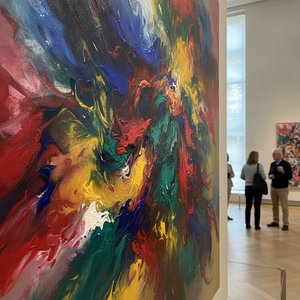
Lyrical Abstraction: The Emotional Power of Color and Form in Modern Art History
Explore the profound emotional depth of Lyrical Abstraction. Discover how masters like Raymond Parker used color and form to bridge Impressionism and Abstract Expressionism. Learn about this pivotal movement through our expert-led art history guide.
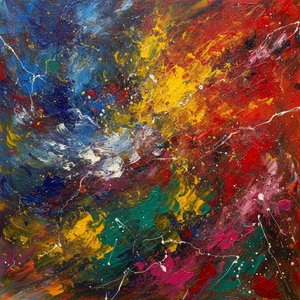
Pure Chaos & Color: The High-Voltage World of Abstract Expressionism
Dive into the high-voltage world of Abstract Expressionism. Explore the raw energy of Action Painting and the legendary masters of the New York School through a visual journey of pure chaos and color. Discover how to bring bold, high-impact abstract art into your modern space.

