

 Se i rommet
 Del som digitalt kort
 Del
Del
 Detaljer
 Studentguide

 Last ned
 Liknende objekter
 Røntgen
 Lysbildefremvisning
 Besøksstatistikk
Untitled


 Les mer
Kunstverket som vises på denne siden er beskyttet av opphavsretten, noe som betyr at vi ikke har juridisk tillatelse til å lage eller selge identiske reproduksjoner. Denne beskyttelsen håndheves i henhold til internasjonale avtaler som for eksempel Bernerkonvensjonen og av nasjonale lover, inkludert de som er fastsatt i Amerikansk opphavsrettslov – Tittel 17.
Som et respektfullt og lovlig alternativ tilbyr vi skreddersydde, håndmalte kunstverk inspirert av originalen. Våre dyktige og profesjonelle kunstnere studerer nøye originalens stil, stemning og kunstneriske essens for å skape et nytt og unikt verk som vekker den samme følelsen – samtidig som det forblir en original skapelse i seg selv.
Denne metoden er i fullt samsvar med opphavsrettslige regler, da den ikke innebærer kopiering eller duplisering av det beskyttede kunstverket. I stedet er det snakk om en kreativ nytolkning – et nytt maleri som er inspirert av originalen, men ikke identisk med den.
Håndlaget oljereproduksjon
Håndmalt olje på lerret i din valgte størrelse og ramme, laget på bestilling av våre kunstnere. ( Bytt til trykkversjon Gå til digitalt bilde)




P118B Nkr10

P118H Nkr10

P118W Nkr10

P438Z Nkr10

P508JH Nkr12

P508YH Nkr12

P805H Nkr10

P805Z Nkr10

P919BZ Nkr10

P919G Nkr10

P919XJ Nkr10

P959ZH Nkr10

P968JZ Nkr12

W106C Nkr8

W218G Nkr10

W218JH Nkr8

W218Y Nkr10

W307PJ Nkr10

W316G Nkr10

W316PJ Nkr8

W316Y Nkr10

W398PJ Nkr8

W4111J Nkr10

W500HY Nkr15

W500JH Nkr15

W692G Nkr12

W849H Nkr8

W940BG Nkr15

W953PJ Nkr8




Velg mellom våre forhåndsdefinerte størrelser som bevarer kunstverkets opprinnelige proporsjoner.

Skriv inn bredden og høyden du trenger, slik at den passer til din ramme eller vegg. Dette er håndmalt, så for en størrelse med en annen form kan kunstneren male litt mer rundt bildet, eller beskjære det noe — du velger selv. Vi sender deg en digital mockup for godkjenning før maleriet påbegynnes. Bildet som vises på denne siden viser ikke det faktiske resultatet — kun mockuppen gjør det.
Etter bestilling vil OriginalUniqueArt.com-teamet sende e-post til kunden for instruksjoner og sende et utkast (mockup) som forhåndsvisning.
Verdensomspennende levering () på 3–4 uker i stedet for standard 5 uker. (25 October). Ingen kompromisser med kvaliteten.

Gratis ekspressfrakt over hele verden

Lerretsduk av høykvalitets lin

Full transportforsikring

Garanti for refusjon av toll og importavgifter

Garantert fargeekthet

100 dagers returrett ved fabrikasjonsfeil

100% pengene tilbake-garanti

Mengderabatt
 Glassalternativet er kun tilgjengelig i størrelser under 110 cm

Untitled
Reproduksjonsmetode
Format på reproduksjon
-


Totalpris
Nkr 2852
A Symphony in Light and Shadow: Claudio Bravo’s “Untitled (915)”
Claudio Bravo’s “Untitled (915),” completed in 1997, stands as a testament to the enduring power of hyperrealism—a style championed by Bravo himself that meticulously captures reality with astonishing accuracy. More than just a depiction of a sheep lying on its side, this painting delves into profound themes of vulnerability and contemplation, inviting viewers to ponder the complexities of existence.
Bravo’s masterful technique employs oil paints layered upon canvas with painstaking precision. He achieves remarkable textural depth by applying thin glazes that build up gradually, creating a surface that mimics the wool’s natural irregularities—a deliberate choice reflecting Bravo's fascination with capturing subtle nuances of form and color. The artist’s meticulous attention to detail extends beyond mere representation; it seeks to evoke an emotional response.
Historically situated within the broader context of Latin American art, “Untitled (915)” aligns itself with a tradition rooted in classical realism but infused with Surrealist sensibilities. Bravo draws inspiration from Renaissance masters like Leonardo da Vinci and Michelangelo, prioritizing anatomical correctness and idealized beauty while simultaneously exploring subconscious imagery—a duality that characterizes much of his oeuvre.
Symbolically, the sheep’s posture embodies stillness and acceptance. Its closed eyes suggest a state of peaceful repose, mirroring the artist's own desire to convey serenity and introspection. The muted palette—dominated by browns and whites—further reinforces this mood, creating an atmosphere of quiet contemplation. Bravo skillfully utilizes light and shadow to sculpt the form of the sheep, emphasizing its contours and highlighting the interplay between illumination and darkness.
“Untitled (915)” transcends mere visual representation; it’s a meditation on beauty, vulnerability, and the human condition. Bravo's unwavering commitment to hyperrealism ensures that every brushstroke contributes to an immersive experience—a captivating glimpse into the artist’s vision of the world.
Exploring Claudio Bravo’s Artistic Legacy
Born in Valparaíso, Chile, in 1936, Claudio Bravo embarked on a remarkable artistic journey marked by unwavering dedication and intellectual curiosity. Initially discouraged by his father's pragmatic outlook—who viewed art as impractical—Bravo persevered thanks to the guidance of Miguel Venegas Cifuentes, who instilled in him a foundational realist style that would define his distinctive aesthetic.
Early commissions solidified Bravo’s reputation as a portraitist within Chile, showcasing his exceptional skill in capturing likeness and conveying emotion. However, Bravo's artistic ambitions extended far beyond traditional portraiture; he relentlessly pursued new avenues of expression—exploring sculpture, printmaking, and experimental film—demonstrating an unparalleled versatility.
His formative training under Venegas Cifuentes provided him with a bedrock of technical proficiency, shaping his approach to painting and establishing the hallmark of his oeuvre: meticulous detail and masterful tonal control. Bravo’s stylistic evolution reflects a profound engagement with artistic movements such as Surrealism and Cubism—influences that enriched his visual vocabulary and propelled him toward groundbreaking innovations.
Notable Works Beyond “Untitled (915)”
Bravo's artistic output encompasses a diverse range of projects, each imbued with his signature stylistic hallmarks. Among his most celebrated paintings are “Untitled (574),” a portrait rendered in realistic style that captures the enigmatic gaze of its subject—a testament to Bravo’s ability to convey psychological depth through visual representation.
Furthermore, Bravo's exploration of sculpture solidified his reputation as a multifaceted artist. His monumental sculptures—often inspired by mythological narratives and imbued with symbolic resonance—demonstrate his mastery of form and material—a remarkable achievement considering the challenges posed by working in three dimensions.
Recognition and Influence
Claudio Bravo’s artistic achievements garnered international acclaim, establishing him as one of Chile's most influential artists. His work has been exhibited extensively throughout Europe and North America, cementing his place within the canon of 20th-century art history.
Bravo’s unwavering commitment to hyperrealism—characterized by its uncompromising pursuit of photographic accuracy—inspired generations of painters and solidified his legacy as a pioneer of stylistic innovation. His enduring influence continues to resonate in contemporary artistic discourse, underscoring the significance of Bravo's contribution to Latin American art.
Spørsmål og svar
Hvilken periode i Claudio Bravo sin karriere tilhører "Untitled"?
"Untitled" tilhører Mature Period i Claudio Bravo sin karriere. Denne klassifiseringen knytter verket til kunstnerens utvikling.
Kan jeg se "Untitled" som et lysbildefremvisning i fullskjerm?
Diaporamaet av "Untitled" kan ses på verkets Lysbildefremvisning-side.
Hvordan kan jeg få tak i en digital fil av "Untitled" av Claudio Bravo?
For å få en digital fil av "Untitled" av Claudio Bravo, bestill nedlasting av et digitalt bilde i høy oppløsning på siden Digitalt bilde.
Kunstnerbiografi
A Chilean Visionary: The Life and Art of Claudio Bravo
Claudio Bravo, a name synonymous with hyperrealism, emerged from the vibrant cultural landscape of Valparaíso, Chile, in 1936. His journey was one of remarkable dedication to his craft, evolving from early portrait commissions undertaken to excel in school to becoming an internationally celebrated artist whose works bridge European traditions and Latin American sensibilities. Born into a family where artistic inclination wasn’t immediately encouraged – his father, a businessman, initially viewed art as impractical – Bravo nonetheless found support that nurtured his burgeoning talent. This came through the guidance of Miguel Venegas Cifuentes, who provided Bravo's sole formal training for nearly a decade, instilling in him a foundational realist style that would become the hallmark of his oeuvre. Even as a young man, Bravo’s skill was evident; he quickly gained recognition as a portraitist within Chile, but an insatiable desire to explore the wider art world beckoned him towards Europe.From Madrid Society to the Allure of Packages
The late 1950s saw Bravo embark on a transformative period in Madrid, Spain. Establishing himself as a sought-after portraitist among high society, he honed his technical skills and developed an acute understanding of light and form – influences deeply rooted in the works of Renaissance and Baroque masters like Velázquez, Zurbarán, and Cotán. These artists weren’t merely admired; they were studied intensely, informing Bravo's meticulous approach to composition, lighting, and subject matter. He painted prominent figures—from Franco’s daughter to Ferdinand and Imelda Marcos—but a shift was brewing within his artistic vision. Around 1963, inspired by the simple beauty of wrapped packages brought home by his sisters and the abstract color fields of artists like Mark Rothko, Bravo began incorporating these everyday objects into his paintings. This marked the beginning of his iconic “package” period, an exploration of concealment, mystery, and the inherent aesthetic qualities found in the mundane. His first major exhibition at Galería Fortuny showcased this new direction, captivating audiences with its unexpected subject matter and breathtaking realism. The packages weren’t simply depicted; they were imbued with a sense of history, longing, and hidden narratives—a testament to Bravo's ability to transform the ordinary into the extraordinary.Tangier’s Embrace: A Synthesis of Influences
In 1972, Bravo sought a change of scenery, relocating to Tangier, Morocco, where he would reside for much of the remainder of his life. This move proved pivotal, allowing him to synthesize the diverse influences that had shaped his artistic journey. While continuing to accept portrait commissions and create meticulously detailed still lifes, he expanded his creative repertoire to include drawings, lithographs, engravings, and even figural bronze sculptures. Tangier’s unique light, vibrant culture, and proximity to both Europe and Africa infused his work with a new energy and spiritual depth. The influence of Surrealism became increasingly apparent in his compositions, characterized by dreamlike juxtapositions and ethereal backgrounds. Bravo wasn't simply replicating reality; he was interpreting it through a lens informed by Renaissance technique, Baroque drama, and the evocative power of the subconscious. He began to incorporate elements of Moroccan culture into his work, reflecting the rich tapestry of life surrounding him—from the intricate patterns of Berber textiles to the vibrant colors of the souks.A Legacy of Hyperrealism and Enduring Impact
Claudio Bravo’s death in 2011 marked the end of an era, but his artistic legacy continues to resonate with collectors and art enthusiasts worldwide. He is rightfully recognized as a leading figure in hyperrealism, celebrated for his unparalleled technical mastery, meticulous attention to detail, and ability to imbue even the most ordinary subjects with profound emotional resonance. His paintings are held in prestigious collections such as The Metropolitan Museum of Art, the Museo Nacional de Bellas Artes in Santiago, and the Museum Ludwig in Cologne, a testament to his enduring significance within art history. Bravo’s work transcends mere imitation; it is an exploration of perception, symbolism, and the beauty inherent in both the tangible and the intangible. He demonstrated that hyperrealism wasn't simply about replicating reality but about revealing its hidden depths and evoking a powerful emotional response in the viewer. Bravo’s ability to elevate everyday objects into works of art challenges conventional notions of beauty and artistic merit. His influence can be seen in contemporary artists who strive for similar levels of technical precision and evocative storytelling. Bravo's work remains a source of inspiration for those seeking to master the fundamentals of painting while pushing the boundaries of realism.- His paintings often feature intricate details, capturing the texture and imperfections of surfaces with astonishing accuracy.
- Bravo’s use of light and shadow creates a sense of depth and atmosphere, drawing the viewer into his meticulously rendered scenes.
- He frequently employs symbolism and allegory in his work, inviting viewers to interpret the hidden meanings behind his compositions.
Early Life and Artistic Foundations
Claudio Nelson Bravo Camus was born on November 8, 1936, in Valparaíso, Chile, and grew up on his family’s farm in Melipilla, where his father was a rancher and businessman. While attending a Jesuit school in Valparaiso, he took lessons with Miguel Venegas Cifuentes, an academic artist, but he was largely self-taught. Bravo's father, Tomás, initially viewed art as impractical, but the family’s matriarch, Laura Camus Gómez, encouraged his artistic pursuits. Bravo’s early years were marked by a strong connection to the land and a fascination with the natural world—influences that would later find expression in his paintings of landscapes and still lifes. He was expected to follow in his father's footsteps as the main carer of his family’s land and the cattle raised on it. However, the young man was completely disinterested in this path and chose to pursue art instead. He once said, “I always thought I had a great responsibility being the oldest male child. I wanted to get rid of it and become a painter. I refused to have anything to do with my family’s business affairs.” Bravo's early artistic development was shaped by his exposure to classical sculpture—particularly plaster casts of ancient Greek statues—which instilled in him a deep appreciation for form, proportion, and the human figure.
Claudio Bravo
1936 - 2011 , Chile
Kort om kunstneren
- Artistic Movement Or Style: Hyperrealisme
- Artists Or Movements Influenced By This Artist:
- Renaissance
- Barokk
- Artists Who Influenced This Artist:
- Velázquez
- Zurbarán
- Dalí
- Date Of Birth: 1936
- Date Of Death: 2011
- Full Name: Claudio Bravo
- Nationality: Chileansk
- Notable Artworks:
- Untitled (509)
- Untitled (401)
- Untitled (426)
- Place Of Birth: Valparaíso, Chile
Relaterte artikler
Surrealismens 10 Mesterverk: Kunst som utfordrer virkeligheten – OriginalUniqueArt.no
Utforsk surrealismens 10 mest ikoniske malerier! Oppdag Salvador Dalí, René Magritte og andre mestere. Lær om drømmekunst, teknikker & historien bak disse tidløse verkene. Finn museumskvalitets kunsttrykk for ditt hjem på OriginalUniqueArt.com.
Surrealist Dreamscapes: A Curated Journey Through the Subconscious Majesty of Surrealism
Embark on a sophisticated journey through Surrealist dreamscapes. Explore the profound symbolism of masters like Dalí and discover how to curate breathtaking, museum-quality surrealist art for your private collection with expert guidance.
Surrealismens 10 Mesterverk: Kunst som utfordrer virkeligheten – OriginalUniqueArt.no
Utforsk surrealismens 10 mest ikoniske malerier – Dalí, Magritte & mer! Oppdag historiene bak mesterverkene og finn kunsttrykk til ditt hjem. Eksklusive reproduksjoner på OriginalUniqueArt.no.
Sacred Narratives Embodied: A Comprehensive Exploration of Religious Iconography in Art History
Explore the rich history of religious iconography in art! Discover symbolism, movements & masterpieces from Byzantine to Renaissance periods. Expert insights for collectors and enthusiasts at OriginalUniqueArt.
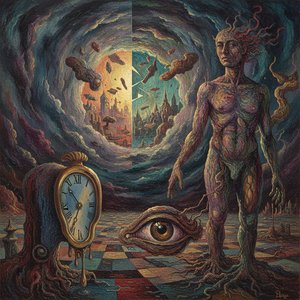
Beyond Reality: The Dreamlike Power of Surrealist Expressionism and the Subconscious Mind
Explore the profound depths of Surrealist Expressionism. Discover how masters like Dalí used dream logic and subconscious imagery to redefine reality through emotionally resonant, museum-quality art.