

 Se i rommet
 Del som digitalt kort
 Del
Del
 Detaljer
 Studentguide

 Last ned
 Liknende objekter
 Røntgen
 Lysbildefremvisning
 Besøksstatistikk
Potro Rojo


 Les mer
Kjøp et høyoppløselig, forbedret digitalt bilde med langt høyere kvalitet enn forhåndsvisningen på nettet.
Hver fil er omhyggelig klargjort av våre egne spesialister ved hjelp av avanserte verktøy og profesjonell manuell retusjering. Vi sørger for at hvert bilde har eksepsjonell klarhet, presis fargegjengivelse og fine detaljer.
Den endelige filen leveres via e-post innen 72 timer, optimalisert for umiddelbar bruk i profesjonelle, redaksjonelle og trykte miljøer. Dette er den samme kvaliteten som benyttes av ledende designstudioer, utgivere og gallerier.
Digitalt bilde
Last ned en høyoppløselig fil til personlig bruk, utskrift og kreative prosjekter. ( Bytt til trykkversjon Bestill håndmalt reproduksjon)
Inkludert i alle bestillinger av digitale bilder
Profesjonell digital levering, garantert
Når du velger OriginalUniqueArt.com, får du ikke bare et bilde – du mottar et profesjonelt etterbehandlet digitalt kunstverk, skapt med presisjon og med en garantert tilfredshetsgaranti. Her er alt som automatisk følger med din bestilling:

Rask levering på e-post
Din høyoppløselige digitale bildefil sendes til din e-post innen 72 timer etter bestilling – klar til umiddelbar bruk.

KI-forbedret digital fil
Ditt kunstverk blir profesjonelt optimalisert ved hjelp av avanserte AI-verktøy og manuell redigering, noe som sikrer maksimal detaljrikdom, klarhet og fargegjengivelse.

Gratis livslang nybestilling
Har du ved et uhell slettet eller mistet filen din? Ingen bekymring – vi sender den på nytt når som helst, helt gratis.

Ingen importavgifter – noen gang
Nyt ditt kunstverk umiddelbart uten toll, avgifter eller leveringskostnader – digitale nedlastinger er alltid avgiftsfrie.

Garantert fargenøyaktighet
Vi sikrer at det digitale bildet gjenspeiler de originale fargene så nøyaktig som mulig ved hjelp av profesjonelle verktøy og fargehåndtering.

100 dagers tilfredshetsgaranti
Hvis du ikke er fornøyd med ditt digitale bilde, vil vi revidere det eller refundere 100% innen 100 dager – uten spørsmål.

100% Penggaranti
Ikke fornøyd? Få full refusjon innen 100 dager etter at du har mottatt din digitale fil – uten spørsmål.

Rabatt ved storkjøp
Kjøp 3 bilder, spar 10% - Kjøp 5, spar 15% - Kjøp 10+, spar 20%. Ideelt for kreative prosjekter, gallerier og byråer.
The Quiet Majesty of Claudio Bravo’s Potro Rojo
In the realm of hyperrealism, few artists possess the ability to capture the profound stillness of a single moment as masterfully as the Chilean visionary Claudio Bravo. His work Potro Rojo serves as a breathtaking testament to this skill, presenting a scene that transcends mere representation to reach a state of poetic meditation. The painting depicts a solitary brown horse, its powerful form anchored firmly within a landscape of soft, grassy terrain. As the creature bows its head toward the earth, there is an intimate sense of vulnerability and peace, as if the viewer has stumbled upon a private ritual of nature. Though the title suggests a vibrant warmth, the execution invites us into a monochromatic or desaturated world where light and shadow perform a delicate dance, stripping away the distractions of color to reveal the raw, structural elegance of the subject.
The technique employed in Potro Rojo is nothing short of miraculous, showcasing Bravo’s legendary command over texture and luminosity. Every strand of the horse's mane and every subtle contour of its muscular anatomy is rendered with a meticulous precision that blurs the line between painting and photography. This hyperrealist approach does not merely aim for accuracy; it seeks to heighten our sensory perception. One can almost feel the coarse texture of the coat and the dampness of the earth beneath the hooves. By utilizing a palette that leans into the classic, timeless feel of black and white tones, Bravo elevates the subject matter from a simple pastoral scene to an iconic study of form. The way light catches the curve of the horse's neck creates a sculptural quality, making the figure appear almost three-dimensional within its frame.
Beyond its technical brilliance, the artwork carries a deep emotional resonance that makes it a profound choice for discerning collectors and interior designers alike. There is a rhythmic, breathing quality to the composition; the downward gaze of the horse creates a circularity of movement that draws the eye inward, fostering a sense of tranquility and introspection. For those looking to curate a space of sophistication and calm, this piece offers an anchor of quiet strength. It does not shout for attention but rather commands it through its dignified presence. Whether placed in a contemporary gallery setting or integrated into a classic, richly textured room, Potro Rojo acts as a window into a world of serene beauty, reminding us of the profound grace found in the simplest movements of the natural world.
Spørsmål og svar
Hvor i Claudio Bravo sin karriere befinner "Potro Rojo" seg, gitt datoen?
"Potro Rojo", skapt i 1997, tilhører Mature Period i Claudio Bravo sin karriere.
Hvilket kontrastnivå viser "Potro Rojo" av Claudio Bravo?
Lys-mørke-kontrasten i "Potro Rojo" er registrert som Bold. Kontrast beskriver hvor sterkt lyse og mørke områder skiller seg fra hverandre.
Hvordan henger fargene i "Potro Rojo" av Claudio Bravo sammen med verkets emosjonelle uttrykk?
"Potro Rojo" av Claudio Bravo kombinerer en Dark fargepalett med en Tranquil tone.
Kunstnerbiografi
A Chilean Visionary: The Life and Art of Claudio Bravo
Claudio Bravo, a name synonymous with hyperrealism, emerged from the vibrant cultural landscape of Valparaíso, Chile, in 1936. His journey was one of remarkable dedication to his craft, evolving from early portrait commissions undertaken to excel in school to becoming an internationally celebrated artist whose works bridge European traditions and Latin American sensibilities. Born into a family where artistic inclination wasn’t immediately encouraged – his father, a businessman, initially viewed art as impractical – Bravo nonetheless found support that nurtured his burgeoning talent. This came through the guidance of Miguel Venegas Cifuentes, who provided Bravo's sole formal training for nearly a decade, instilling in him a foundational realist style that would become the hallmark of his oeuvre. Even as a young man, Bravo’s skill was evident; he quickly gained recognition as a portraitist within Chile, but an insatiable desire to explore the wider art world beckoned him towards Europe.From Madrid Society to the Allure of Packages
The late 1950s saw Bravo embark on a transformative period in Madrid, Spain. Establishing himself as a sought-after portraitist among high society, he honed his technical skills and developed an acute understanding of light and form – influences deeply rooted in the works of Renaissance and Baroque masters like Velázquez, Zurbarán, and Cotán. These artists weren’t merely admired; they were studied intensely, informing Bravo's meticulous approach to composition, lighting, and subject matter. He painted prominent figures—from Franco’s daughter to Ferdinand and Imelda Marcos—but a shift was brewing within his artistic vision. Around 1963, inspired by the simple beauty of wrapped packages brought home by his sisters and the abstract color fields of artists like Mark Rothko, Bravo began incorporating these everyday objects into his paintings. This marked the beginning of his iconic “package” period, an exploration of concealment, mystery, and the inherent aesthetic qualities found in the mundane. His first major exhibition at Galería Fortuny showcased this new direction, captivating audiences with its unexpected subject matter and breathtaking realism. The packages weren’t simply depicted; they were imbued with a sense of history, longing, and hidden narratives—a testament to Bravo's ability to transform the ordinary into the extraordinary.Tangier’s Embrace: A Synthesis of Influences
In 1972, Bravo sought a change of scenery, relocating to Tangier, Morocco, where he would reside for much of the remainder of his life. This move proved pivotal, allowing him to synthesize the diverse influences that had shaped his artistic journey. While continuing to accept portrait commissions and create meticulously detailed still lifes, he expanded his creative repertoire to include drawings, lithographs, engravings, and even figural bronze sculptures. Tangier’s unique light, vibrant culture, and proximity to both Europe and Africa infused his work with a new energy and spiritual depth. The influence of Surrealism became increasingly apparent in his compositions, characterized by dreamlike juxtapositions and ethereal backgrounds. Bravo wasn't simply replicating reality; he was interpreting it through a lens informed by Renaissance technique, Baroque drama, and the evocative power of the subconscious. He began to incorporate elements of Moroccan culture into his work, reflecting the rich tapestry of life surrounding him—from the intricate patterns of Berber textiles to the vibrant colors of the souks.A Legacy of Hyperrealism and Enduring Impact
Claudio Bravo’s death in 2011 marked the end of an era, but his artistic legacy continues to resonate with collectors and art enthusiasts worldwide. He is rightfully recognized as a leading figure in hyperrealism, celebrated for his unparalleled technical mastery, meticulous attention to detail, and ability to imbue even the most ordinary subjects with profound emotional resonance. His paintings are held in prestigious collections such as The Metropolitan Museum of Art, the Museo Nacional de Bellas Artes in Santiago, and the Museum Ludwig in Cologne, a testament to his enduring significance within art history. Bravo’s work transcends mere imitation; it is an exploration of perception, symbolism, and the beauty inherent in both the tangible and the intangible. He demonstrated that hyperrealism wasn't simply about replicating reality but about revealing its hidden depths and evoking a powerful emotional response in the viewer. Bravo’s ability to elevate everyday objects into works of art challenges conventional notions of beauty and artistic merit. His influence can be seen in contemporary artists who strive for similar levels of technical precision and evocative storytelling. Bravo's work remains a source of inspiration for those seeking to master the fundamentals of painting while pushing the boundaries of realism.- His paintings often feature intricate details, capturing the texture and imperfections of surfaces with astonishing accuracy.
- Bravo’s use of light and shadow creates a sense of depth and atmosphere, drawing the viewer into his meticulously rendered scenes.
- He frequently employs symbolism and allegory in his work, inviting viewers to interpret the hidden meanings behind his compositions.
Early Life and Artistic Foundations
Claudio Nelson Bravo Camus was born on November 8, 1936, in Valparaíso, Chile, and grew up on his family’s farm in Melipilla, where his father was a rancher and businessman. While attending a Jesuit school in Valparaiso, he took lessons with Miguel Venegas Cifuentes, an academic artist, but he was largely self-taught. Bravo's father, Tomás, initially viewed art as impractical, but the family’s matriarch, Laura Camus Gómez, encouraged his artistic pursuits. Bravo’s early years were marked by a strong connection to the land and a fascination with the natural world—influences that would later find expression in his paintings of landscapes and still lifes. He was expected to follow in his father's footsteps as the main carer of his family’s land and the cattle raised on it. However, the young man was completely disinterested in this path and chose to pursue art instead. He once said, “I always thought I had a great responsibility being the oldest male child. I wanted to get rid of it and become a painter. I refused to have anything to do with my family’s business affairs.” Bravo's early artistic development was shaped by his exposure to classical sculpture—particularly plaster casts of ancient Greek statues—which instilled in him a deep appreciation for form, proportion, and the human figure.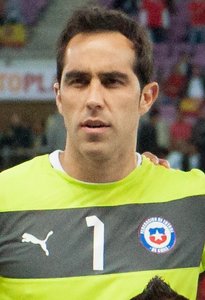
Claudio Bravo
1936 - 2011 , Chile
Kort om kunstneren
- Artistic Movement Or Style: Hyperrealisme
- Artists Or Movements Influenced By This Artist:
- Renaissance
- Barokk
- Artists Who Influenced This Artist:
- Velázquez
- Zurbarán
- Dalí
- Date Of Birth: 1936
- Date Of Death: 2011
- Full Name: Claudio Bravo
- Nationality: Chileansk
- Notable Artworks:
- Untitled (509)
- Untitled (401)
- Untitled (426)
- Place Of Birth: Valparaíso, Chile